Yes, StartMail can work well for alumni networking if you want a more private address that you can keep using over time.
It is usually a better fit than a disposable inbox, but you still need a clear sender name, steady reply habits, and a friendly professional tone so alumni contacts trust it.
Why people consider StartMail for alumni networking
Alumni networking sits in an awkward middle ground. It is not as formal as a cold job application, but it is not casual either. You may be reaching out to graduates from your university, former classmates, professors, alumni volunteers, or people who work at companies you hope to join later. Those conversations can lead to introductions, informational calls, referrals, event invitations, or advice months after the first message.
That is why your email choice matters. Many people want a little distance between their main personal inbox and networking outreach. They do not necessarily want alumni contacts mixed in with shopping receipts, newsletters, family threads, and social notifications. At the same time, they also do not want to look flaky by using a throwaway address that feels temporary or unprofessional.
StartMail appeals to that middle path. It can give you a dedicated address that feels more deliberate and private than your default everyday inbox, while still being stable enough for genuine follow-up.
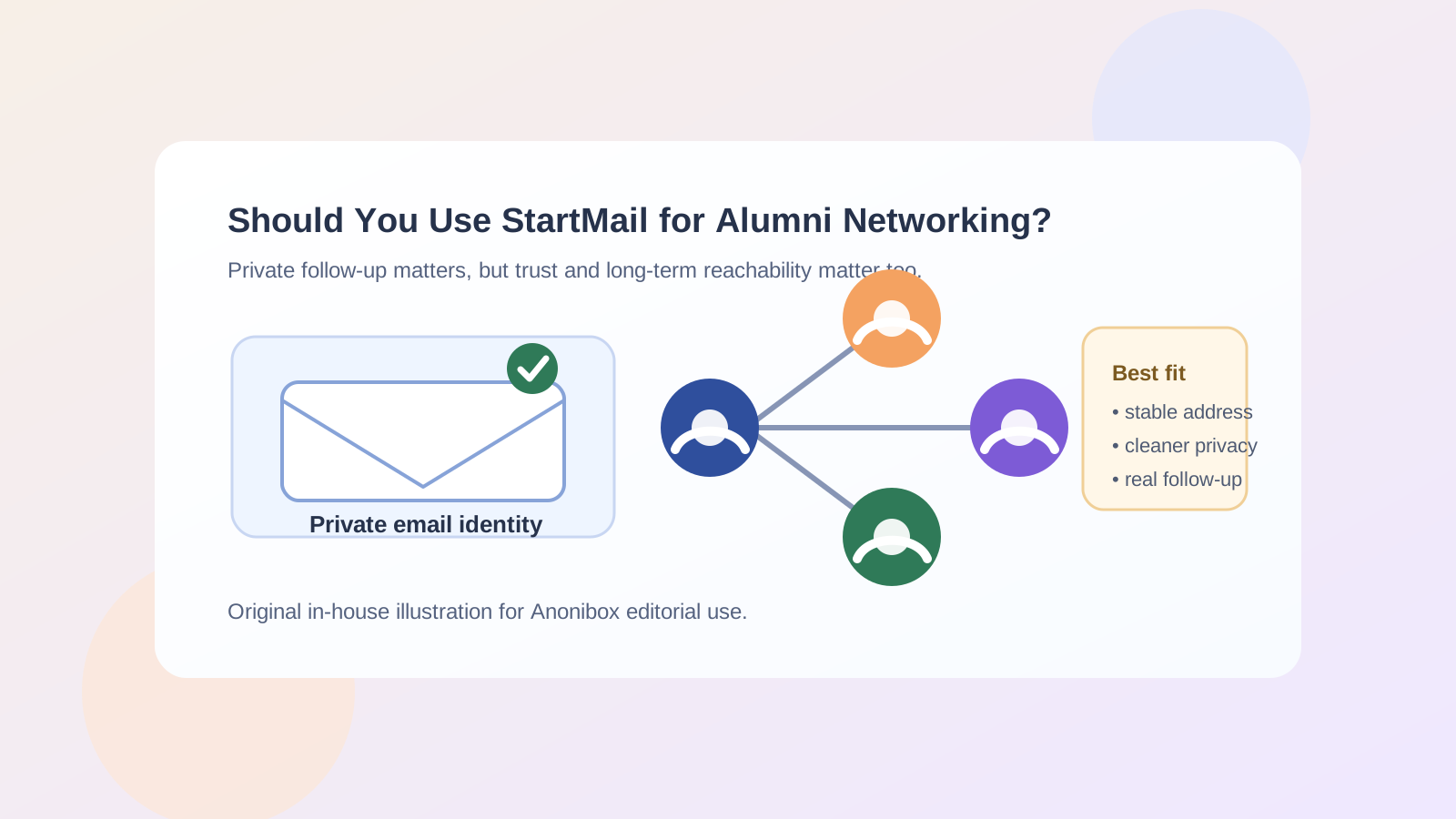
The short answer: good for privacy, only good for networking if you use it consistently
The biggest advantage of using StartMail for alumni networking is control. You can separate outreach from your main identity, keep your inbox cleaner, and decide how much of your long-term contact footprint you want to expose. That is useful if you are contacting many alumni across different industries, student groups, or regional chapters.
But privacy alone does not make an address good for networking. Alumni outreach depends heavily on trust, recognition, and continuity. If your email looks anonymous, if your display name is vague, or if you abandon the address after a few weeks, you lose much of the value that alumni networking is supposed to create. The address has to feel like a real professional contact point, not a temporary experiment.
When StartMail makes sense for alumni networking
StartMail is a sensible choice when you want a dedicated outreach identity without using your everyday personal inbox.
- You want cleaner separation: alumni outreach stays apart from your personal mail and random signups.
- You plan to network over months, not days: a stable address matters because alumni relationships often develop slowly.
- You care about privacy: you may prefer not to spread your main inbox across alumni databases, event tools, and one-off introductions.
- You are running a focused career search: a dedicated address makes follow-up easier to organize and search later.
- You want a more intentional first impression: a separate networking inbox can help you treat outreach like a real project instead of an afterthought.
If that is your situation, StartMail can be a practical option because it gives you a real inbox you can monitor and maintain, not just a temporary receiving slot.
When StartMail may be the wrong choice
It is not the best fit for everyone.
- If you rarely check it, the privacy benefit is not worth missed replies.
- If your name is unclear in the sender profile, alumni may ignore the message because they do not immediately know who you are.
- If you plan to abandon the inbox after a short campaign, you risk losing long-tail opportunities that show up later.
- If you already have a polished personal or custom-domain address dedicated to professional outreach, switching may not add much.
In other words, StartMail is only helpful if you treat it like a real professional contact channel. A good inbox that you never maintain is worse than a simple inbox you actually use well.
How alumni contacts are likely to perceive it
Most alumni are not running a forensic review of your email provider. What they notice first is simpler: your display name, your message quality, and whether your outreach sounds thoughtful. If the note is specific and polite, most people will respond based on the content, not the provider.
That said, alumni networking works best when your email feels stable and human. Use your real name. Make sure your signature explains who you are, your school connection, and why you are reaching out. If you send a message from an unfamiliar address with no context and no signature, you create friction that has nothing to do with StartMail itself.
A good structure is simple:
- Your real first and last name in the sender field
- A short subject line that mentions the alumni connection
- A brief introduction that explains the shared school, program, club, or industry interest
- A small ask, such as a short call or a few questions by email
That combination does more for reply rates than the provider name ever will.
StartMail versus a temporary or burner inbox
This is where the distinction matters most. Alumni networking is usually not a disposable interaction. A person may reply next week, three months later, or after meeting you at an event. They may forward your message to another alum or reconnect when an opportunity opens up. A temporary inbox is bad at supporting that kind of relationship.
If you use Anonibox or another temporary email workflow, it is better suited to one-off signups, gated downloads, or early-stage lead capture where long-term identity is not the goal. Alumni networking is different. You want a real, monitored address that can handle ongoing replies without making the other person wonder whether you are still there.
That is why StartMail is usually a better option than a disposable inbox for this use case. It preserves privacy better than dumping everything into your oldest personal address, but it still supports real continuity.
Best practices if you use StartMail for alumni networking
1. Use your real name everywhere
Do not make the contact guess who you are. Your sender name should look like a person, not a project. The inbox can be separate, but your identity should be clear.
2. Keep the address simple and readable
A clean format is easier to trust and easier to type if someone wants to forward or reply later. Avoid cluttered handles that look like spam or gaming accounts.
3. Add a short professional signature
Include your school, degree program or graduation year if relevant, and one line about your current focus. This helps alumni place you quickly.
4. Check the inbox consistently
If you are going to use a separate address, commit to it. Alumni replies are often polite but brief. If you wait too long, momentum disappears.
5. Save important threads
Alumni networking can lead to warm introductions, referrals, or event invites later. Tag or archive useful conversations so you can return to them without digging through clutter.
6. Do not sound overly anonymous
A privacy-minded inbox is fine. A message that feels hidden is not. Be open about who you are and why you chose to reach out.
What to avoid
- Sending alumni messages from an inbox you barely monitor
- Using a vague display name like “Career Contact” or just initials
- Treating alumni networking like a bulk outreach campaign
- Switching addresses midway through conversations without explanation
- Using the same inbox for random newsletters, trials, and professional relationship-building
Those mistakes make the address feel less credible, even if the provider itself is perfectly fine.
Should you use your personal email instead?
Sometimes yes. If your personal email already looks professional, you are comfortable sharing it, and you prefer one central inbox, that can be the simplest option. Alumni outreach is relationship-driven, so simplicity has value.
But if your personal inbox is overloaded, tied too closely to your private life, or already circulating across too many signups, a dedicated address can be the better long-term choice. The right answer depends less on the brand name and more on whether the inbox supports organized, respectful follow-up.
A quick decision checklist
StartMail is probably a good fit for alumni networking if most of these are true:
- You want a dedicated networking inbox you can keep long term.
- You care about keeping your main personal inbox more private.
- You will use your real name and a clear signature.
- You are willing to check the inbox regularly and respond fast.
- You want a stable address, not a throwaway one.
If you mainly want something disposable, then the fit is weaker because alumni networking usually rewards continuity, not short-term anonymity.
Final answer
Yes, you can use StartMail for alumni networking, and for many privacy-conscious people it is a smart middle-ground choice. It gives you more separation than your main personal inbox without the obvious drawbacks of a temporary address.
The catch is that alumni networking only works when the inbox supports trust and long-term follow-up. Use your real name, write thoughtful messages, keep the address active, and make it easy for people to understand who you are. If you do that, StartMail can support alumni outreach well. If you treat it like a disposable identity, it will work against you.