Yes — you can use Mailfence for alumni networking if you want a separate, professional inbox that stays active over time. It is usually a better fit than a throwaway address, but only if you will monitor it consistently and use it like a real long-term contact channel.
That is the key distinction. Alumni networking is not a one-click signup or a one-week software trial. It is relationship building. If you email an alum today, follow up next month, reconnect after a conference, or ask for advice six months later, the address you use needs to look credible, stay reachable, and remain organized.
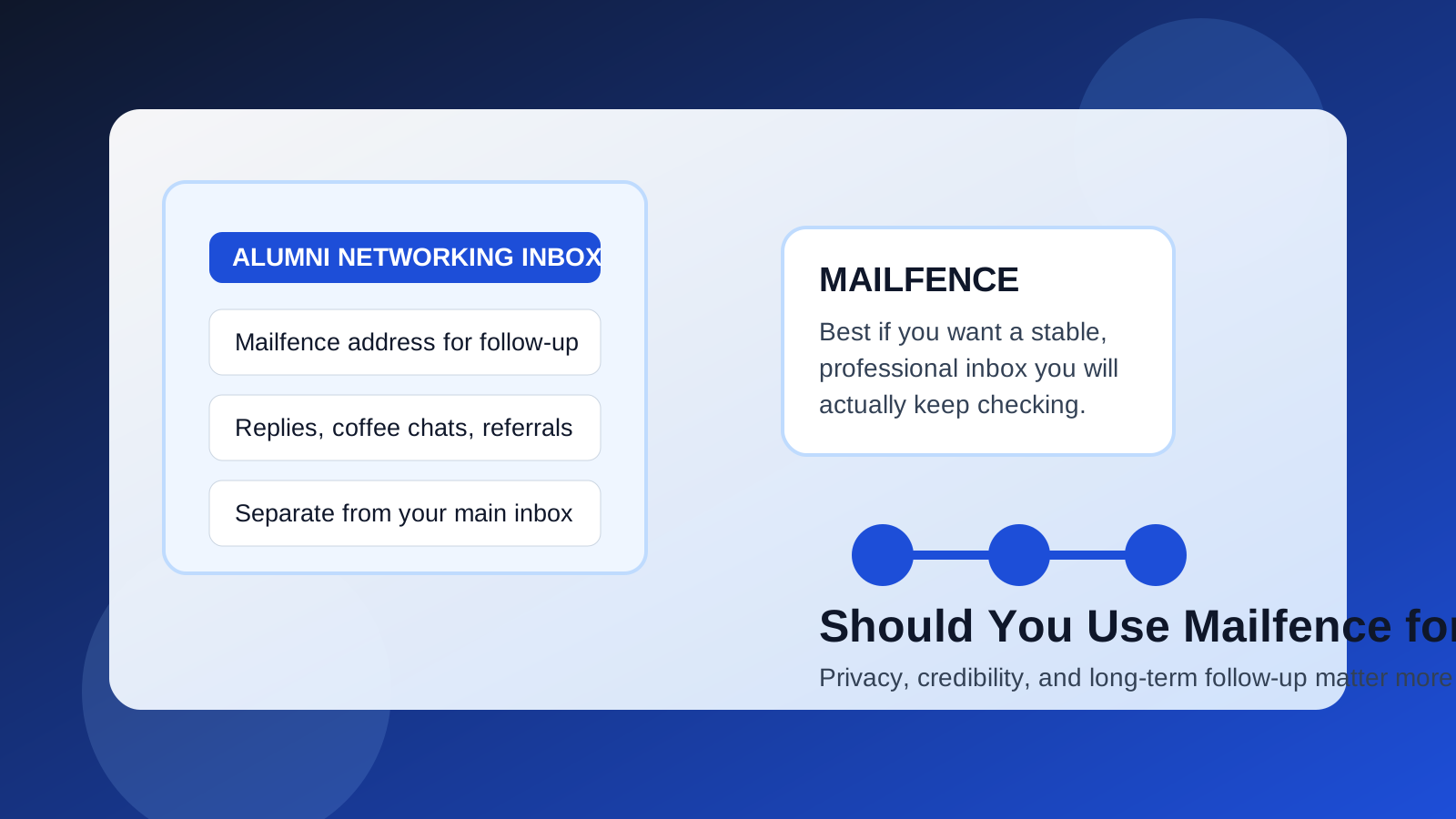
Why alumni networking needs a different email strategy
People sometimes treat alumni outreach like any other top-of-funnel job-search activity, but it behaves differently in practice. A disposable inbox can be fine for downloading a guide, joining a webinar, or testing whether a form works. Alumni networking is more personal. You are usually asking for a conversation, a perspective, a referral, or a longer-term professional connection.
That means your email address sends a signal before the other person ever reads your message. A stable mailbox says, “I expect this conversation to continue if it goes well.” A temporary or obviously disposable address can suggest the opposite, even if your note is thoughtful.
So the real question is not whether Mailfence is “allowed.” It is whether it supports the kind of trust, continuity, and separation you want. In many cases, it can.
When Mailfence makes sense for alumni networking
Mailfence is most useful here when your goal is to keep alumni outreach separate from your main personal inbox without looking anonymous or temporary. That can be smart if you are reaching out to dozens of alumni, testing different versions of your outreach message, or managing networking alongside a broader job search.
- You want separation: alumni replies do not get buried under newsletters, receipts, and personal mail.
- You expect ongoing follow-up: you can keep the same address active across several months of conversations.
- You care about privacy boundaries: you are not handing your oldest personal inbox to every alumni group, directory, or event signup.
- You want a more deliberate identity: a separate networking mailbox can make your outreach process feel more organized and intentional.
If that sounds like your situation, using Mailfence for alumni networking can be a reasonable middle ground between oversharing your everyday address and relying on a disposable inbox that you may abandon too quickly.
Where it can go wrong
The main risk is not the provider name by itself. The real risk is behavior. A separate inbox only helps if you treat it like a serious communications channel.
Problems start when people create a side mailbox and then check it once every few days, forget to set up notifications, or fail to respond after an alum writes back. That creates the exact opposite impression you want. Alumni networking depends on responsiveness and consistency more than novelty.
It can also go wrong if you use an address that feels too experimental, too random, or too disconnected from your actual name. People do not need a perfect branded identity from you, but they do need enough confidence that the person behind the message is real and reachable.
Is it more credible than a temporary or burner inbox?
Usually, yes. A stable mailbox is generally more credible than an address that looks obviously disposable, expires quickly, or signals that you may not be reachable later.
That matters because alumni networking often moves in stages:
- Initial outreach
- Reply and scheduling
- Conversation
- Thank-you note
- Occasional future follow-up
A temporary email workflow is often fine for low-stakes gating steps, such as downloading a resource or joining a mailing list you do not fully trust yet. It is much less ideal for a person-to-person relationship you hope to maintain. If an alum sees a throwaway address, they may not say anything, but it can still create a subtle trust problem.
That is why a separate long-term mailbox can be better. It preserves privacy without telling the other person, intentionally or not, that this channel may disappear.
Should you use Mailfence instead of your personal inbox?
Often, yes — especially if your personal inbox is old, overloaded, or connected to parts of your life you do not want blended into professional outreach. Alumni networking can produce bursts of replies, calendar follow-ups, introductions, and event invites. Keeping that traffic in its own lane can make you noticeably more organized.
But there is a difference between “separate” and “hidden.” Your alumni mailbox should still feel human. Use your real name. Write a normal signature. If you are comfortable, include a LinkedIn profile or another professional reference point. The goal is not secrecy. The goal is cleaner boundaries.
Best practices if you use Mailfence for alumni networking
1. Use a name-based address if possible
An address built around your real name or a professional variation is usually easier to trust than something generic or overly clever. Alumni are more likely to reply when the sender identity feels straightforward.
2. Check it daily during active outreach
If you are contacting alumni this week, treat the inbox like a live channel. Slow replies can quietly kill momentum, especially when someone is busy and willing to help only within a narrow window.
3. Keep a simple signature
Your signature does not need to be elaborate. Name, a short context line, and maybe a LinkedIn link are enough. What matters is that it matches the tone of the message and makes you easy to recognize later.
4. Organize by relationship stage
Use folders, labels, or a basic tracking habit for “contacted,” “replied,” “scheduled,” and “follow up later.” Alumni networking gets messy when every thread looks equally urgent.
5. Do not disappear after the first thank-you
If the whole point of using a separate inbox is to stay organized, use that advantage. Send the thank-you note. Reconnect when you have a real update. A stable address is most useful when it supports respectful long-term follow-through.
When another option may be better
Mailfence is not automatically the best choice for every person. If you already have a clean personal professional inbox that you like, splitting channels may just add complexity. If you are bad at checking multiple inboxes, a second address can hurt you more than it helps.
You may also want a different setup if your main issue is not credibility but short-term spam control. For example, if you are signing up for alumni newsletters, event reminders, or resource downloads and you do not yet want those messages in your main inbox, a temporary workflow can still be useful at the edges.
That is where a tool like Anonibox can fit naturally. It can help with low-trust forms, webinar signups, or one-off downloads when your goal is protecting your primary inbox from clutter. But for direct one-to-one alumni outreach, a durable mailbox is usually the better move.
A practical way to combine privacy and professionalism
If you want the cleanest setup, think in layers:
- Main professional mailbox: for your most established relationships or ongoing career communications.
- Separate alumni networking mailbox: for outreach, follow-up, and relationship building you want to keep organized.
- Temporary inboxes: for low-stakes signups, gated downloads, and channels you do not yet trust with your long-term address.
This layered approach keeps you from using one email identity for everything. It also reduces the odds that alumni conversations get mixed with marketing noise, job board spam, or unrelated personal mail.
Common mistakes to avoid
- Using a disposable-looking address for human networking: it can reduce trust before the message is even opened.
- Creating a separate inbox and then ignoring it: separation only helps if you stay responsive.
- Over-optimizing privacy to the point of awkwardness: alumni networking is still about real relationships, not hiding.
- Sending the same cold template to everyone: the inbox choice matters less than whether your message is relevant and respectful.
- Making follow-up impossible: if you might want to reconnect in six months, choose an address you will still own and check.
So, should you use Mailfence for alumni networking?
Yes, if you want a separate inbox that still feels professional and stable. Mailfence can make sense when you are protecting your main address, organizing outreach, and planning to maintain the relationship beyond a single exchange.
No, if you are treating it like a disposable identity, checking it inconsistently, or using it as a substitute for thoughtful follow-up. In that case, the problem is not the provider. It is the workflow.
The best alumni networking setup usually balances three things: credibility, privacy, and continuity. If Mailfence helps you keep those in balance, it is a reasonable choice. If you only need a short-lived buffer for low-stakes signups, use a temporary inbox for that edge case and save your real networking conversations for an address you plan to keep.
That way, you protect your inbox without accidentally making yourself harder to trust — or harder to reach — when an alum is finally ready to reply.