Yes, a separate Gmail account can be a smart choice for alumni networking if you want to protect your main inbox and keep long-term outreach organized.
It works best when the address looks professional, stays active for years, and is used for real relationship follow-up rather than as a disposable throwaway.
Why this question matters more than it seems
Alumni networking often starts casually, but it rarely stays casual for long. One message to a former classmate can turn into a coffee chat, an introduction, a referral, a panel invitation, or a year-long professional relationship. That means the contact method you choose matters more than it would for a one-time download or a quick store coupon.
A separate Gmail account sits in the middle ground between two extremes. On one side, you have your main personal inbox, where alumni outreach can easily get buried under receipts, newsletters, and everyday messages. On the other side, you have short-lived temporary inboxes that may be fine for low-stakes signups but are a poor fit for relationships that might matter six months from now. A dedicated Gmail account can give you privacy and organization without making you look unreachable.
When a separate Gmail account is a good idea
A separate Gmail account makes the most sense when alumni networking is becoming a meaningful part of your career strategy rather than a one-week experiment.
- You are reaching out regularly: maybe you are messaging alumni from your university, former internship program, industry association, or bootcamp every week.
- You want better inbox control: alumni introductions, event invites, reply threads, and follow-up reminders stay in one place instead of mixing into your everyday mail.
- You are protecting your primary identity: using a separate account lets you keep your oldest personal inbox off public directories, event forms, and wide distribution lists.
- You want searchability and labels: Gmail is useful when you need folders, filters, stars, labels, and simple search to find an old conversation quickly.
- You are planning long-term follow-up: alumni networking often works because you stay in touch, not because you send one perfect message.
That last point is the big one. If you expect to follow up after a conference, a reunion, a mentorship conversation, or a warm introduction, a stable inbox is worth more than a clever privacy hack that disappears later.
When it is probably unnecessary
A separate Gmail account is helpful, but it is not required for everyone. If you only contact a few alumni each year and you already have a clean, professional personal email address that you check consistently, setting up a second inbox may add more friction than value.
It can also be unnecessary if you already maintain a dedicated professional inbox on another provider and it is working well. The real goal is not “use Gmail specifically.” The goal is to have a professional, stable, easy-to-manage address for networking.
Why a separate Gmail account is different from a temporary email
This is where people sometimes confuse privacy tools. A temporary inbox can be useful for one-off signups, gated downloads, or low-trust forms where you only need a verification email and do not want months of follow-up. That is one reason services like Anonibox exist. But alumni networking is different.
When you reach out to alumni, you usually want credibility, continuity, and reply reliability. If someone writes back three months later with, “Happy to chat next week,” you do not want that message landing in an expired inbox you stopped checking. A temporary address can protect privacy, but it can also quietly kill real opportunities if it is not built for long-term use.
A separate Gmail account keeps the privacy benefits of separation while still behaving like a normal, trustworthy email account. That is usually the better trade-off for alumni outreach.
What makes a separate Gmail account work well for alumni networking
Use a professional address format
The address should look like it belongs to a real person, not a burner. Ideally it includes your actual name or a clean variation of it. Avoid nicknames, random numbers, edgy jokes, or anything that makes the inbox feel disposable.
Keep the profile complete
Add a sensible display name, a simple signature, and recovery details you actually control. If the account looks half-finished, it feels less trustworthy. Alumni are more likely to respond when the message feels human and stable.
Connect it to your networking workflow
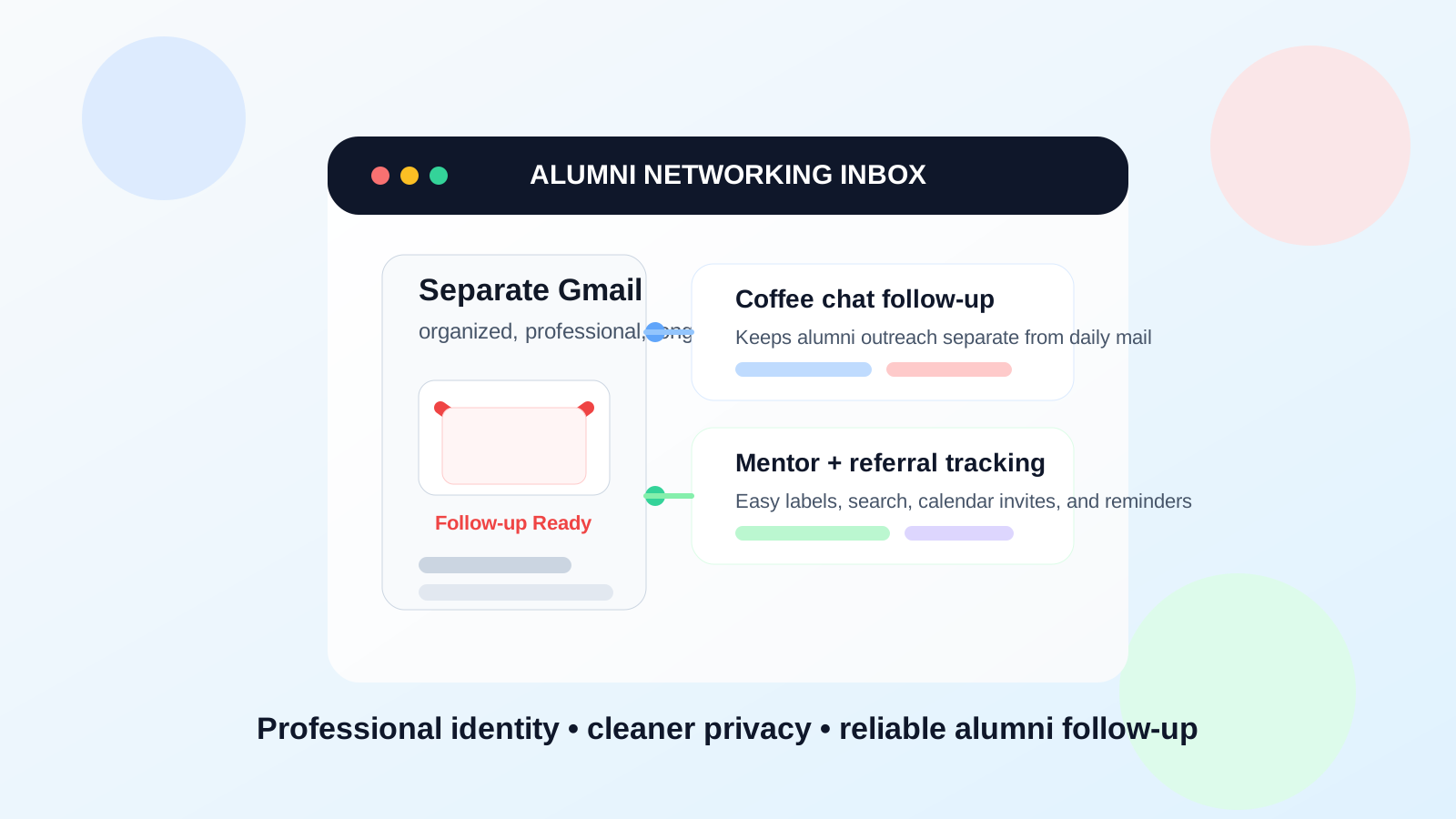
The advantage of Gmail is not just the inbox itself. It is the surrounding workflow. You can use labels for different schools or groups, stars for warm leads, filters for event confirmations, and calendar invites for calls or coffee chats. That makes the account more useful than a generic “extra email” sitting idle.
Check it consistently
A separate inbox only helps if you actually monitor it. Alumni networking is often slow and asynchronous. Replies may come days or weeks later. If you forget the account exists, the whole setup becomes counterproductive.
A simple setup that works in practice
If you want a low-friction setup, keep it boring and reliable:
- Create a clean account using your real name or a professional variation.
- Add a short signature with your name, current role or focus, and maybe a LinkedIn link if that is part of your outreach style.
- Create labels such as University Alumni, Coffee Chats, Mentors, Referrals, and Events.
- Set a recurring reminder to review unanswered messages once or twice a week.
- Use Google Calendar or another calendar you trust to track follow-up dates.
This is enough for most people. You do not need a complex system. You need a system you will keep using.
Where a separate Gmail account helps most
1. Alumni directories and event registrations
Some alumni networking starts with directory access, event RSVPs, chapter newsletters, or reunion signups. Those channels can generate more recurring email than the actual conversations do. A separate Gmail account lets you participate without feeding every message into your everyday inbox.
2. Informational outreach
If you are messaging alumni for advice, introductions, or industry insight, a dedicated Gmail account helps you keep those threads searchable and separate. That is especially useful if you are also running a job search and do not want networking threads mixed into application confirmations and recruiter emails.
3. Long-tail follow-up
Good networking often means circling back politely after months, not days. A separate Gmail account makes it easier to find an old conversation, remember what you discussed, and follow up without digging through a crowded primary inbox.
Mistakes to avoid
- Do not make it look anonymous. A separate account should feel organized, not shady.
- Do not forget the login. If you lose access, you lose the whole benefit of long-term networking history.
- Do not over-segment everything. You probably do not need one inbox for alumni, another for recruiters, another for events, and another for referrals unless your outreach volume is unusually high.
- Do not treat it like a burner. If the account goes stale, alumni contacts may assume you lost interest or ignored them.
- Do not let privacy become friction. The point is cleaner control, not a setup so complicated that it slows down every reply.
How this compares with using your main personal email
Your main personal email is not automatically the wrong choice. In fact, if it already looks professional and you prefer fewer moving parts, it may be the easiest path. But a separate Gmail account usually wins on organization. It gives you a clean place for alumni messages, reduces the chance of missing follow-up, and limits how widely your oldest personal inbox gets shared.
Think of it less as hiding and more as compartmentalizing. You are not pretending to be someone else. You are creating a stable lane for a specific kind of relationship-building.
How this compares with using a work email or school email
A work email can create employer-visibility concerns and may become awkward if you change jobs. A school email can lose value after graduation or look tied to a phase of life you are moving beyond. A separate Gmail account is often more portable than either one. You own it, you control it, and you can keep using it across job changes, moves, and career pivots.
A quick decision checklist
A separate Gmail account is probably a good fit if most of these are true:
- You expect alumni networking to continue for months or years.
- You want better privacy than your main inbox offers.
- You are attending alumni events, joining mailing lists, or reaching out at scale.
- You want a stable alternative to temporary inboxes.
- You are willing to check the account consistently and keep it professional.
If most of those are false, your current professional personal email may already be enough.
Final answer
Using a separate Gmail account for alumni networking is usually a smart move when you want privacy, cleaner organization, and reliable long-term follow-up. It is especially useful if you are active in alumni groups, sending regular outreach, or trying to keep networking separate from your main personal inbox.
The important part is not Gmail by itself. It is stability. If the address looks professional, stays active, and becomes part of a simple follow-up system, it can support real relationships much better than a temporary inbox or a neglected secondary account. Done well, it gives you more control without making you look hard to reach.