If you are comparing billing and collections platforms, the short answer is yes: a temporary email generator is a smart way to start accounts receivable automation software free trials without turning your main inbox into a long-term vendor follow-up channel.
It lets you verify the trial, review onboarding emails, and compare invoicing, dunning, cash-application, and collections features before you decide which platform deserves a permanent work address.
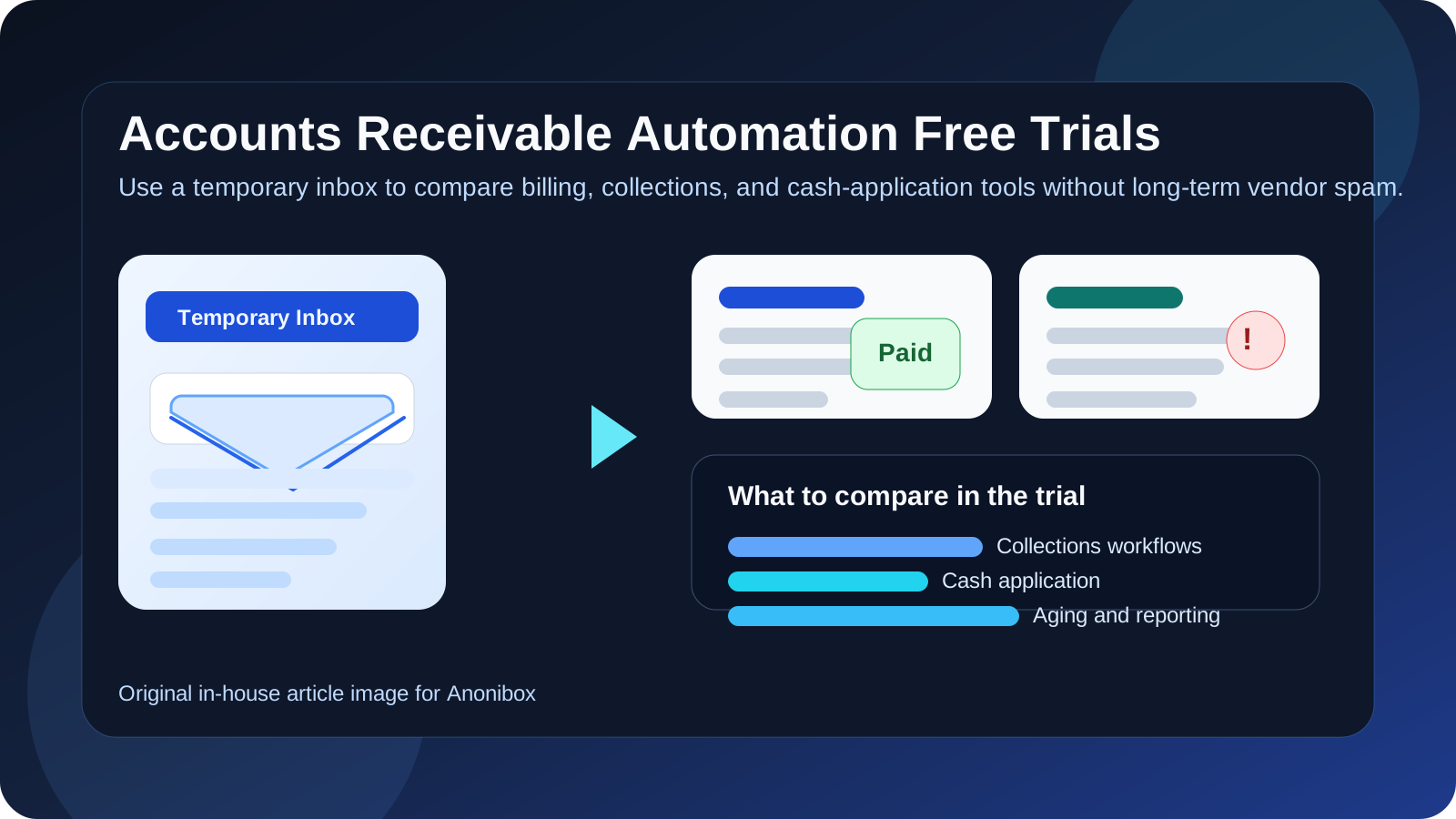
Why AR automation trials create so much inbox noise
Accounts receivable automation tools sit close to money, workflows, and team coordination. Even before you reach a serious buying stage, vendors often want an email address to unlock demos, sandbox environments, sample dashboards, AI collections workflows, aging views, cash-application features, customer reminder sequences, ERP connectors, and implementation calls.
That means a free trial rarely stops at a single verification email. You may get welcome sequences, product-tour messages, pricing prompts, ROI calculators, sales follow-up, webinar invites, integration guides, and “book time with a specialist” emails within the first day. If you are comparing multiple vendors at once, that clutter builds fast.
A temporary inbox keeps the early research phase separate from your long-term finance or operations email. You still receive the confirmation link and first-run instructions, but you do not have to commit your main address to every platform before you know which one is worth deeper evaluation.
When a temporary inbox makes sense for accounts receivable automation software free trials
A temporary email generator is most useful during the first-pass evaluation stage, when your team is still asking basic questions like:
- Does the product seem built for our invoice volume and customer mix?
- Are the collections workflows practical or just over-marketed?
- Does the dashboard clearly surface overdue balances, promises to pay, and customer risk?
- Can the platform actually reduce manual chasing and cash-application effort?
- Is the trial strong enough to earn a real finance-team review?
At that stage, your goal is not long-term account ownership. It is fast comparison. A temporary inbox helps you move through that stage without polluting your main work mailbox with months of vendor nurture campaigns from tools that never make the shortlist.
What AR automation buyers are usually trying to evaluate
Not every platform is solving the same problem. Some tools focus on invoice delivery and payment reminders. Others lean harder into collections prioritization, dispute handling, cash application, deductions, or customer self-service payment portals. A few push broad finance automation narratives while only lightly covering the day-to-day pain points of receivables teams.
That is why early trial isolation is useful. It gives you room to compare the real operating model of each product instead of getting dragged into a sales sequence too early.
During the trial, most teams care about a practical mix of capabilities:
- Invoice follow-up workflows: can the system send smart reminders without becoming clumsy or aggressive?
- Collections visibility: can you quickly see who is overdue, by how much, and what action is needed?
- Cash application support: does the platform help match incoming payments and reduce manual reconciliation?
- ERP and accounting integrations: how realistic is the sync with the tools you already use?
- Team workflow: can collectors, finance managers, and operators actually work inside the tool without constant friction?
- Reporting: are aging, DSO, promise-to-pay, and collections performance views actually useful?
A temporary inbox lets you access the trial quickly while keeping your long-term finance identity uncommitted until the platform proves it deserves more attention.
How to use a temporary email generator during an AR automation trial
1. Create the inbox before you hit the vendor form
Start with the inbox, not the signup page. That way every email tied to that trial stays grouped together from the beginning. If you are testing three or four platforms in parallel, using a separate temporary inbox for each vendor makes the comparison much easier to manage.
2. Use the temporary address for verification and first-run onboarding
This is the sweet spot. Use the temporary address to confirm the account, access the workspace, open the initial onboarding messages, and inspect the product. That lets you decide whether the platform is merely interesting or genuinely worth a deeper proof of concept.
3. Save the few emails that actually matter
In most cases you only need a handful of messages from the trial stage:
- the verification email
- the first login or workspace invitation
- an integration or setup guide worth reviewing later
- a support response if you asked a product question
Keep what matters and ignore the rest. A temporary inbox works best when you treat it as a clean staging area, not a permanent document archive.
4. Judge the product by workflow, not by marketing energy
Some vendors send polished email sequences that make the trial feel active and premium, while the actual collections workflow is shallow. Others send almost nothing but offer a more operationally useful product. Do not mistake email volume for product quality. The point of the trial is to see whether the software helps your team collect cash faster, work smarter, and reduce manual admin.
When a temporary inbox is helpful and when it becomes a bad idea
A temporary address is helpful for low-stakes evaluation. It becomes the wrong tool once the account starts to matter operationally.
It is usually fine when you are:
- screening vendors at the shortlist stage
- checking dashboard quality and onboarding friction
- reviewing basic reporting and automation flows
- testing whether the product fits your process at a high level
It is usually a bad idea when you are:
- connecting real finance systems or ERP data
- inviting multiple teammates who will need stable access
- routing live invoice or payment notifications through the account
- negotiating pricing, implementation, or security review
- depending on the inbox for account recovery or admin ownership
In other words, a temporary inbox is a good filter for early curiosity. It is not the right foundation for long-term receivables operations.
What to evaluate inside the product once you are in
Collections automation quality
Are reminder sequences flexible by customer segment, aging bucket, or risk profile? Can your team adjust tone, timing, and escalation logic without an implementation project? Good AR automation software should reduce repetitive follow-up, not create a brittle rules maze.
Cash-application and reconciliation support
If the platform mentions payment matching or remittance handling, look closely. Does the trial show realistic support for matching payments to invoices, identifying exceptions, and reducing manual work? This is a major difference between light reminder software and more serious receivables automation tools.
Dispute and exception handling
Late payment is not always a pure collections issue. Sometimes it is a dispute, a short pay, or a missing document problem. Check whether the product can track these workflows cleanly or whether it only shines on idealized demo paths.
Reporting that finance teams can actually use
Look for practical reporting rather than vanity charts. You want useful aging visibility, collector activity, dispute trends, broken promises, and maybe cash-forecasting support. If the reporting looks pretty but does not help prioritize action, that is worth noticing early.
Integration realism
Many AR vendors promise quick ERP or accounting integration. During the trial, try to separate what is genuinely self-serve from what really depends on a guided implementation. A temporary inbox is fine for accessing trial docs, but the product still has to prove it fits your environment.
Common mistakes during free-trial comparisons
- Using one inbox for every vendor: that makes it harder to keep trial messages organized and compare platforms cleanly.
- Leaving important setup emails unsaved: verification links and integration notes should be captured early.
- Keeping the temporary inbox too long: once the tool becomes a real finalist, switch to a stable work-owned address.
- Judging the vendor by demos alone: the real question is whether the product reduces manual receivables work in your environment.
- Forgetting internal ownership: finance operations, shared admin access, and account recovery matter more than a convenient trial once implementation becomes real.
A simple workflow that works well
- Create one temporary inbox per AR automation vendor.
- Open the free trial and verify the account.
- Review onboarding friction, dashboard clarity, and workflow depth.
- Compare collections automation, cash application, dispute handling, reporting, and integration claims.
- Save the useful setup messages.
- Move only the serious finalists to a permanent work-controlled email address.
This approach keeps your evaluation organized. You get the access you need for product comparison without committing your main inbox to every platform that wants a demo pipeline.
Where Anonibox fits naturally
If you are in the earliest stage of vendor research, Anonibox can help you separate trial verification from your day-to-day finance email. That makes it easier to test multiple platforms without immediately tying every one of them to a long-lived address. If one vendor stands out, that is the point where moving to a stable business-owned inbox becomes the smarter next step.
Final takeaway
A temporary email generator for accounts receivable automation software free trials is a practical way to compare billing and collections tools without taking on unnecessary inbox clutter too early. It helps you verify the account, inspect the workflow, and keep vendor follow-up contained while you decide which platforms deserve serious attention.
Use a temporary inbox for the first-pass evaluation, focus on the product signals that actually matter, and switch to a permanent work-owned address before real integrations, finance-team ownership, or account recovery depend on the account. That gives you the convenience of fast trials without treating early vendor curiosity like a long-term commitment.