Usually no — your work Gmail account is not the best default for alumni networking because those relationships often outlast your current job, while the account may still be governed by employer policies, admin controls, and workplace visibility.
If you want to reconnect with alumni safely and professionally, a personal professional address or a separate networking inbox is usually the better long-term choice.
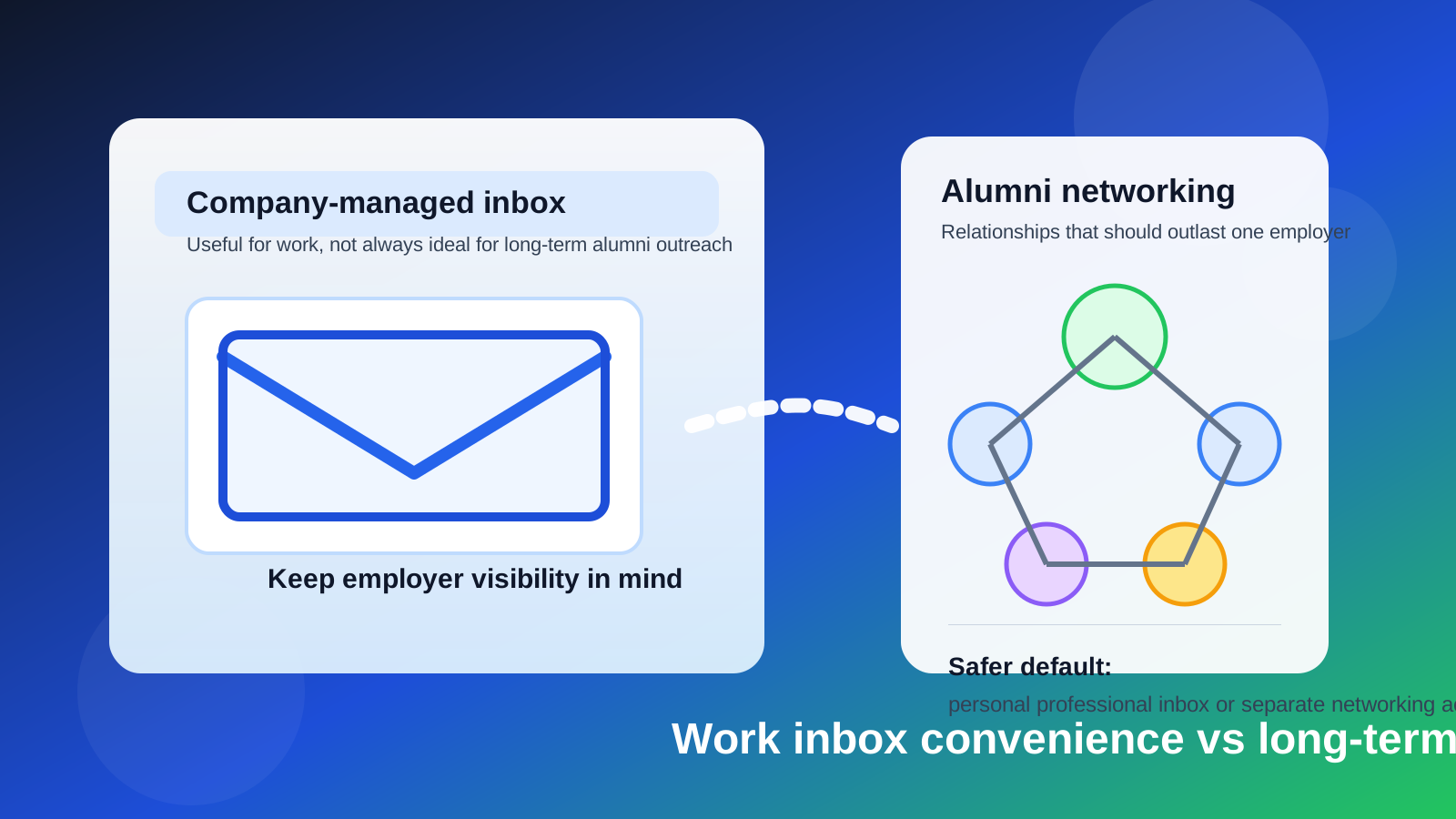
Why people consider using a work Gmail account in the first place
On the surface, using a work Gmail account for alumni outreach can feel practical. It is already set up, you probably check it every day, and it may look more established than a throwaway address. If your employer uses Google Workspace, your email might also sit under a recognizable company domain, which can make a first message feel polished.
That convenience is real. But convenience is not the same thing as control. Alumni networking is different from sending one quick work-related note. These are often long-tail relationships: former classmates, alumni mentors, people you may reconnect with months later, and contacts who may follow you across employers, industries, and career pivots. That is where a work-managed account starts to become a weak foundation.
The biggest risk: your employer may control more than you think
When people say “work Gmail account,” they often mean a Google Workspace inbox managed by their employer. Even if the interface looks familiar, the account is usually not fully yours in the way a personal Gmail account is. Depending on your company’s setup, administrators may control retention rules, access policies, forwarding rules, security settings, device access, and what happens to the account when you leave.
That does not mean someone is actively reading your alumni outreach. It means the account exists inside a system you do not own. For a relationship-building channel that may matter years later, that lack of ownership is a real downside.
1. You may lose the account when you change jobs
This is the most practical reason to avoid using it as your main alumni-networking identity. If you leave the company, get laid off, change departments, or lose access during an offboarding process, you may lose the inbox tied to those conversations. That can break follow-up threads, disconnect you from mentors, and make it hard to find old context when someone writes back months later.
Alumni networking works best when your contact method stays stable. A work-managed inbox is stable only as long as your job is.
2. Employer policies may shape how private the account really is
Some companies keep strict retention and compliance rules. Others archive messages, scan for security events, or limit what can be forwarded outside the organization. Even if your workplace is relaxed, you should not assume that a work account gives you the same privacy expectations as a personal one.
If an alumni conversation touches on a job search, a possible career move, compensation questions, or private professional concerns, many people would prefer that conversation not live inside an employer-controlled inbox.
3. It can blur personal and professional boundaries
Alumni networking often starts casually: a coffee chat, advice request, event invitation, mentor introduction, or warm referral conversation. Over time, those messages can drift into personal career planning. Mixing that activity into your daily company inbox makes it harder to separate your current employer’s work from your long-term career relationships.
That can also create noise. Important alumni follow-ups may get buried under internal threads, calendar updates, sales notifications, automated alerts, and everything else already hitting a busy work inbox.
4. Your identity may look more employer-centered than relationship-centered
If you contact alumni from a company-managed address, your note may read less like “I want to build a durable professional relationship” and more like “I am reaching out in my current employer identity.” Sometimes that is fine. Sometimes it is limiting, especially if you are exploring a career change or talking to alumni in a more personal capacity.
A separate address can make the relationship feel more portable and more clearly yours.
When using a work Gmail account might be acceptable
“Usually no” is not the same as “never.” There are situations where a work Gmail account can be acceptable for alumni networking:
- You are reaching out about a current employer-sponsored alumni partnership or event.
- The conversation is tightly related to your present role and not your personal career planning.
- You are making a one-off introduction and do not expect a long private thread.
- Your company explicitly allows this kind of outreach and the context is clearly professional.
Even then, it is smarter to treat the work account as situational rather than permanent. If the relationship becomes valuable, move it to a contact method you control.
Better alternatives for most people
Use a personal professional email address
The simplest option is a personal address you plan to keep for years. That could be a clean Gmail address based on your real name, a custom-domain address, or another stable mailbox you own. The key is long-term continuity. If an alum replies next year, you still want that message landing somewhere you can access.
Use a separate networking inbox
If you want stronger boundaries, create a dedicated inbox for alumni outreach, informational interviews, and job-search-adjacent networking. This gives you most of the organizational upside of a work account without handing control to an employer. It also makes it easier to keep alumni messages from getting lost in personal or work clutter.
For low-stakes signups, waitlists, or trial resources around a networking event, some people also use tools like Anonibox to protect their main inbox from spam. That can be helpful at the edges. But for real alumni relationships, a stable address you can keep long term is usually better than a disposable one.
Use an alias if you want filtering without fragmentation
If your email provider supports aliases, an alias can help you organize alumni messages while still keeping everything under one account you own. That gives you filtering and privacy benefits without creating yet another inbox to monitor.
What about credibility?
Some people worry that a personal address looks less credible than a company-managed one. In practice, credibility comes more from how you write than from whether the mailbox sits inside Google Workspace. A thoughtful subject line, a clear introduction, and a specific reason for reaching out matter more than sending from a current employer account.
A clean address such as yourname@domain.com or a sensible personal Gmail account is usually credible enough for alumni networking. What hurts credibility more is looking careless, generic, or overly transactional.
If you still decide to use your work Gmail account
If you have a good reason to use it, reduce the downside with a few habits:
- Avoid sensitive career-search details. Do not use a work-managed inbox for private discussions about leaving your employer unless you fully understand the risk.
- Move valuable threads later. If the connection becomes ongoing, shift the conversation to a personal or separate address you control.
- Check signatures and profile details. Make sure your automatic signature does not frame every note as an official company message unless that is intentional.
- Export or save important contact details. Do not let valuable alumni relationships live only inside a company account.
- Know your policy environment. If your employer has strict communications, compliance, or retention rules, be even more cautious.
Common scenarios and the better choice
You want advice from alumni while quietly exploring a new role
Do not use your work Gmail account unless you are unusually comfortable with employer visibility risk. A personal professional address is the safer move.
You are attending an alumni event connected to your current job
Using your work account may be fine for event logistics, especially if the event is employer-sponsored or directly role-related. For follow-up that becomes more personal or long-term, shift to your own inbox.
You want a clean system for alumni messages without mixing them into daily life
A separate networking inbox or alias is ideal. You stay organized without tying your professional network to one employer.
A quick checklist before you send from a work Gmail account
- Will I still control this account if I change jobs?
- Would I be comfortable if employer policies affected retention or visibility?
- Is this outreach really about my current role, or about my long-term career?
- Do I want this alumnus to know me through my employer identity or my own professional identity?
- Would a separate personal inbox make future follow-up easier?
If those questions make you hesitate, that hesitation is useful. It usually means a personal or separate address is the better channel.
Final answer
For most people, you should not use your work Gmail account as your default for alumni networking. It is convenient, but it is not fully portable, it may sit inside employer-controlled systems, and it can blur the line between your current job and your long-term professional relationships.
A personal professional email address or a separate networking inbox is usually the better choice. You keep control, preserve continuity, and make it easier to maintain alumni connections on your terms instead of your employer’s.