Usually yes for early-stage applications, job boards, and recruiter forms if you want more privacy and less inbox clutter. DuckDuckGo Email Protection for job applications can be a sensible buffer between your real inbox and the sites, agencies, and mailing lists you are not ready to trust fully.
But it should not be the only address you rely on for a serious job search. DuckDuckGo Email Protection is best understood as a forwarding layer, not a complete long-term job-search system. If a role turns into interviews, assessments, references, or an offer, a stable dedicated inbox is usually the safer choice.
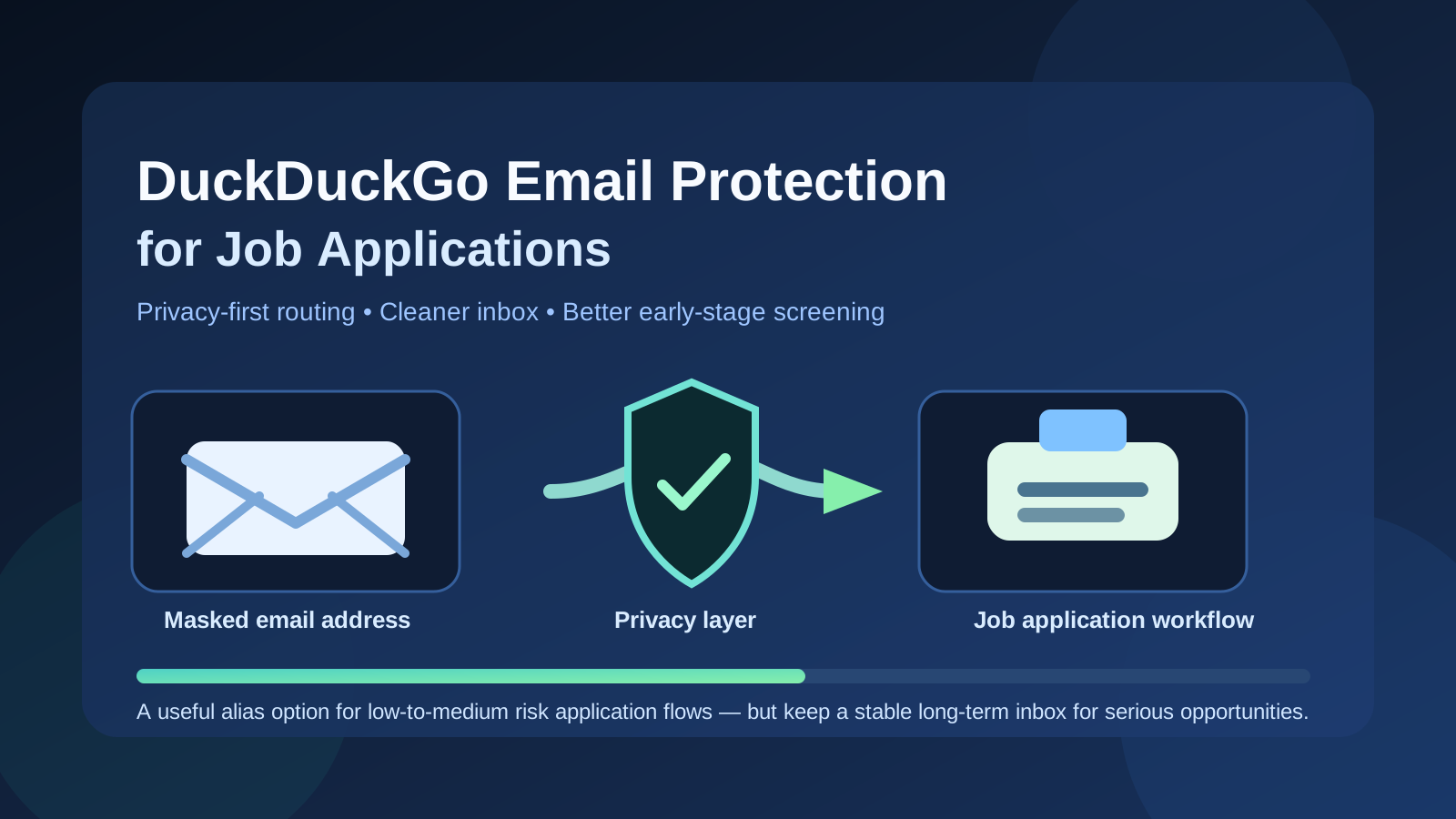
Why people consider DuckDuckGo Email Protection for job applications
Job searching spreads your contact details quickly. One application often leads to more than one message: confirmation emails, password setup links, recruiter outreach, interview scheduling, job alerts, talent network invites, and follow-up marketing from platforms you barely remember using. If you apply in volume, your main inbox can turn messy fast.
That is why alias and masking tools are appealing. They let you keep your real mailbox in the background while presenting a different address outwardly. In practice, that can reduce exposure, make incoming mail easier to classify, and help you understand which sources are generating useful leads versus noise.
DuckDuckGo Email Protection fits that mindset well. It is not the same thing as a fully disposable inbox like Anonibox, and that distinction matters. A disposable inbox is great for low-stakes signups and quick verification flows. A forwarding alias is better when you still want continuity and want messages to land in a real mailbox you control.
What DuckDuckGo Email Protection is actually good at
The biggest advantage is separation. Instead of handing your everyday address to every job board, recruiter, and third-party form, you place an alias in front of your real inbox. That gives you a cleaner boundary between your long-term personal email identity and your search activity.
It also helps with organization. If you notice that one source starts sending too much noise, you have a clearer way to cut off or isolate that stream. That is especially helpful when you are experimenting with multiple job platforms, resume tools, or recruiter marketplaces at once.
Just as important, it can lower the emotional cost of applying. A messy job search often feels more chaotic than it needs to because your inbox becomes a mix of serious employer communication, automated rejections, newsletters, and borderline spam. A masking layer will not solve everything, but it can make the process easier to manage.
When using DuckDuckGo Email Protection for job applications makes sense
1. You are testing job boards before trusting them long term
If you are signing up for several job boards, career communities, or recruiter directories just to see which ones are worthwhile, an alias can be a smart first step. You still receive confirmation emails and alerts, but you do not have to expose your main inbox immediately.
2. You want a privacy buffer during an active search
Many job seekers are not trying to disappear. They just want a little distance between their permanent email identity and a burst of search-related activity. If that is your goal, DuckDuckGo Email Protection is a reasonable middle ground between using your personal inbox everywhere and using a throwaway address that might be too temporary for real follow-up.
3. You expect a lot of recruiter noise
Some searches generate constant outreach from agencies, resumé databases, and matching engines. That can be useful, but it can also create clutter fast. An alias helps you take those opportunities seriously without letting them spill straight into the inbox you use for everything else.
4. You already have a stable real inbox behind the alias
This point is easy to overlook. Masking only works well if the mailbox behind it is dependable, monitored, and something you plan to keep. If your real inbox is unstable, rarely checked, or overloaded already, adding a forwarding layer will not magically fix the workflow.
When it can be the wrong choice
Serious applications need continuity
A good application can stay alive for weeks or months. Initial screening turns into scheduling, document requests, assessments, interview loops, references, and sometimes negotiation. That kind of process benefits from one clear, professional address you intend to keep using. If you think a role has a real chance of progressing, a dedicated long-term job-search inbox is usually better than staying behind an alias forever.
Some situations call for less abstraction, not more
If you are applying directly on a company careers page for a role you care about, you may not gain much from extra layers. Many employers simply want a stable way to reach you. A clean address made specifically for your job search often looks simpler and creates fewer questions than a more privacy-heavy setup.
It can encourage you to treat important opportunities like low-stakes signups
This is a subtle risk. Masking tools are excellent when you are screening sources, but they can also keep you in a temporary mindset too long. A serious employer conversation deserves more deliberate contact management than “I will just route this through whatever alias I used on day one.”
It does not replace your own inbox discipline
If you do not check messages consistently, label important threads, or move priority communication into a stable workflow, the alias itself will not save you. The real protection comes from using the right tool for the right stage of the search.
DuckDuckGo Email Protection vs temporary email for job applications
This is where people often confuse two different tools.
A temporary inbox is best for low-trust, low-importance interactions: quick signups, one-time access, lightly gated downloads, or experiments where you mainly want the verification email and nothing more. It is useful when you actively do not want a lasting relationship with the sender.
DuckDuckGo Email Protection is better when you still want messages to flow into a real inbox you control. That makes it more suitable than a disposable inbox for job boards, recruiter newsletters, or exploratory applications where follow-up could still matter.
For a real employer conversation, though, both can be the wrong long-term answer if they prevent stability. If the opportunity becomes serious, move toward a dedicated job-search mailbox you check constantly and plan to keep for the duration of the process.
DuckDuckGo Email Protection vs a dedicated job-search inbox
If your goal is simply to reduce exposure, DuckDuckGo Email Protection can absolutely help. But if your goal is to run a clean, professional search from start to finish, a separate job-search inbox usually wins.
A dedicated inbox gives you:
- one stable address for resumes, applications, and interview scheduling
- a sent-mail history that is easier to manage as a single workflow
- folders, labels, and rules built specifically for your search
- a professional identity you can keep using across months of follow-up
- less risk that an important opportunity gets buried under broader alias traffic
The most practical setup for many people is a hybrid one. Use masked or disposable addresses for low-trust intake points, then use a dedicated long-term inbox once a contact source proves legitimate or a role becomes important.
Best practices if you want to use it safely
Keep the real inbox behind it professional
Your alias is only the front door. The mailbox behind it should still be something you check daily, with a sensible display name, reliable access, and enough organization to avoid missing deadlines.
Use it for screening, not for everything forever
Think of DuckDuckGo Email Protection as an early-stage filter. It is ideal for sorting which platforms, recruiters, and listings deserve more trust. Once an interaction becomes clearly legitimate and valuable, consider moving it to your main job-search email workflow.
Do not use a temporary mindset for documents that matter
Background checks, tax forms, onboarding paperwork, benefits enrollment, and offer documents deserve a stable email setup. Even when the original application started behind an alias, the later stages of hiring usually benefit from more direct contact details.
Track where each alias or source came from
If you use privacy tools during a search, keep a simple note of which platform or employer got which address. That makes it easier to identify noisy sources, cut off spam, and understand where genuine opportunities are coming from.
Be ready to switch to a cleaner long-term address
The best moment to switch is before things become confusing, not after. If an employer starts scheduling interviews or sending sensitive next-step information, move the relationship into a dedicated inbox while everything is still organized.
A quick decision checklist
Before you use DuckDuckGo Email Protection for a job application, ask yourself:
- Is this a low-trust platform, or a real employer I already take seriously?
- Am I screening opportunities, or am I pursuing this role deeply?
- Do I have a stable real inbox behind the alias?
- Would a dedicated job-search email be clearer for this situation?
- If this turned into interviews next week, would I still want to use the same address?
If most of your answers point to exploration, privacy, and inbox control, using it makes sense. If most answers point to continuity, professionalism, and long-term follow-up, a dedicated mailbox is probably better.
Final answer
Yes, DuckDuckGo Email Protection for job applications can be a good idea when you are protecting your privacy, testing job platforms, or keeping recruiter noise out of your everyday inbox. It is a more practical option than a fully disposable inbox when you still want replies to reach a real mailbox you control.
But it is not the best final destination for every serious application. For roles you genuinely care about, the strongest setup is usually a stable dedicated email address for your search, with privacy tools used strategically around the edges. That way you get the benefit of cleaner inbox boundaries without making important employer communication feel temporary.