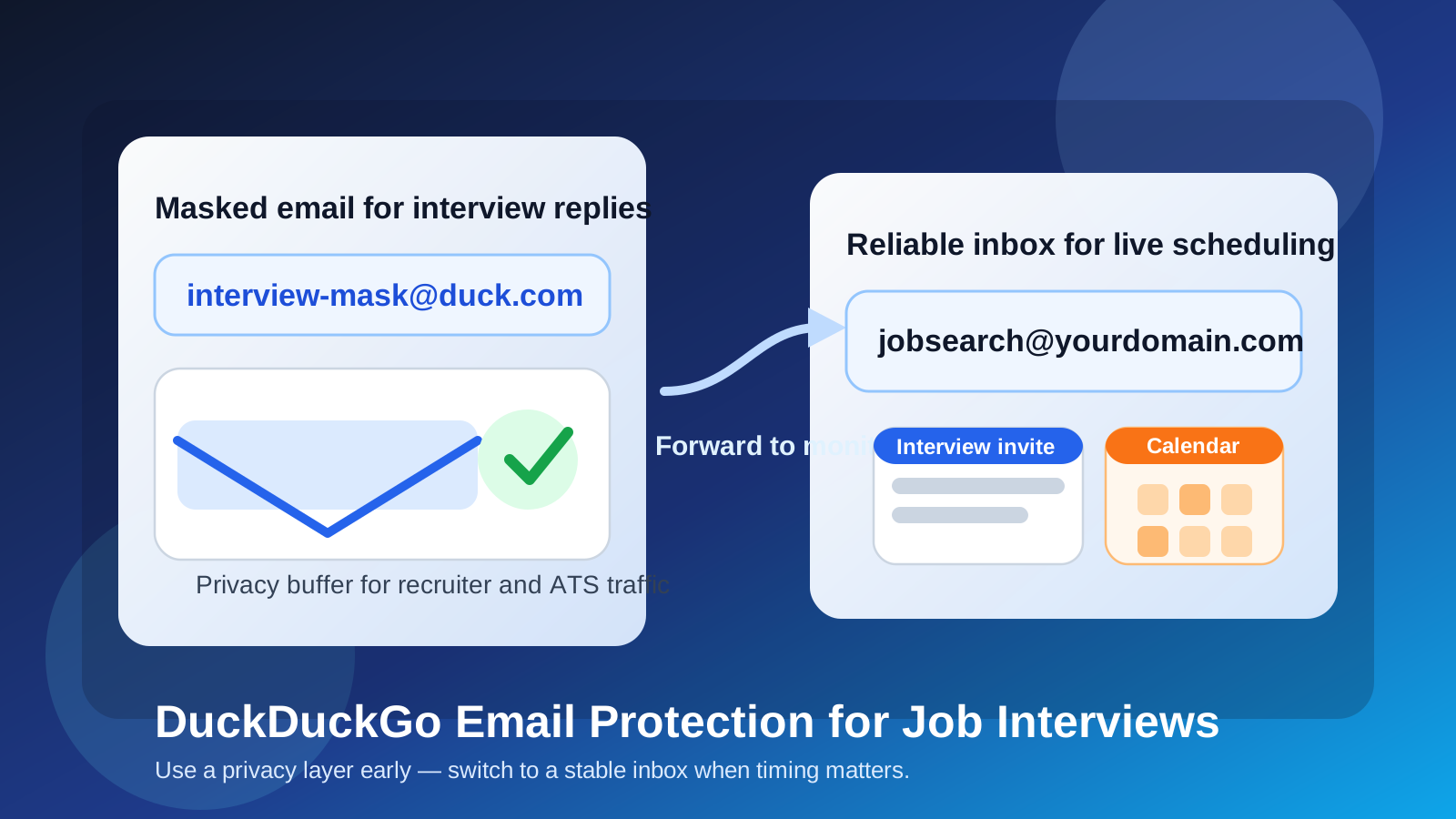
Yes — DuckDuckGo Email Protection can be useful for job interviews if it forwards into an inbox you check constantly and you keep that alias active for the entire hiring process. But when scheduling becomes time-sensitive, a stable dedicated email is usually safer than relying only on a forwarding layer.
That is the practical answer most job seekers actually need. Interview-stage communication moves faster than ordinary signups, and even a small delay can mean a missed recruiter reply, a lost calendar invite, or a scramble to find the right meeting link thirty minutes before a call.
Why people consider DuckDuckGo Email Protection for job interviews
There is a sensible reason this question comes up. By the time you reach interviews, your contact information may already be spread across job boards, recruiter databases, staffing firms, applicant tracking systems, and company talent pools. Many people do not want every employer, agency, or resume portal to have their oldest personal email address forever.
DuckDuckGo Email Protection is appealing because it adds distance between your real inbox and the outside world. Instead of handing over the address you use for everything else, you can use a masked address and keep your underlying inbox less exposed. That can reduce clutter, limit casual data sharing, and make your job search feel more controlled.
The catch is that job interviews are not the same as applying for a newsletter, downloading a white paper, or creating a one-off account. At the interview stage, the messages matter more. They may include scheduling links, reschedule notices, take-home instructions, panel details, assessment deadlines, office directions, video call links, or follow-up questions from several people at once. Privacy still matters, but reliability matters more than it did earlier in the funnel.
What DuckDuckGo Email Protection does well in interview-stage workflows
Used carefully, a masked forwarding address can still be helpful during interviews.
It protects your long-term personal inbox
If you are interviewing with companies you found through job boards or third-party recruiters, a masked address creates useful separation. That matters when you are not yet sure which contacts will become serious opportunities and which ones will quietly add you to future outreach lists.
It keeps your search more organized
Many job seekers mix applications, recruiter outreach, interview invites, networking notes, and normal personal email in the same account. A forwarding alias can help you isolate search-related traffic so interview messages are easier to spot and less likely to get buried.
It gives you a reversible layer of privacy
If an opportunity turns out to be low quality, spammy, or suspicious, it is better to have shared a masked address than your oldest personal inbox. That privacy buffer can be especially useful when you are talking to staffing agencies, niche job boards, resume databases, or unfamiliar startup teams that have not earned much trust yet.
Where a forwarding alias becomes risky during job interviews
The problem is not that DuckDuckGo Email Protection is useless. The problem is that interview communication is more fragile than many people expect.
One extra layer means one extra failure point
Any forwarding setup adds another place where messages can get delayed, filtered, missed, or forgotten. Even if the forwarding works exactly as intended, the destination inbox still has to receive the message cleanly, classify it correctly, and surface it fast enough for you to act on it.
That matters because interview emails often arrive from domains you have never seen before: recruiter systems, scheduling tools, HR platforms, assessment vendors, executive assistants, or individual employees writing from different subdomains. If one of those messages lands in spam, promotions, or a cluttered secondary tab, you may not realize it until the deadline is already tight.
Interview logistics move faster than application emails
At the application stage, waiting an extra hour to see a confirmation email is usually not a disaster. During interviews, the tempo changes. A recruiter may ask whether you can speak today. A coordinator may offer two time slots and expect a reply before the afternoon. A panel invitation may include several moving parts. In those moments, the more direct and boring your contact setup is, the better.
You may forget how the alias is configured
People are good at setting up privacy tools and bad at remembering the exact details weeks later. If you used a masked address early in the search, then paused for a while, it is easy to forget which alias you gave to which employer, where it forwards, or how replies appear from your setup. That uncertainty is not ideal once live interviews are happening.
Long hiring processes punish fragile setups
Some companies move from recruiter screen to hiring manager call to panel to take-home to final round over several weeks. Others go quiet and reappear a month later. If your email strategy only feels reliable when you are watching it obsessively, it is probably not the best system for a hiring process with unpredictable timing.
So should you use it?
Usually, yes for early interview coordination with lower-trust sources — but not as your only long-term plan for every serious opportunity.
If DuckDuckGo Email Protection forwards into an inbox you monitor all day, and if you already trust your setup, it can be perfectly reasonable for first recruiter screens, staffing-agency outreach, or early conversations where you still want some privacy. But if a company becomes a genuine finalist, a dedicated long-term email account is often the smarter default.
That distinction matters. This is not really a question of “good” versus “bad.” It is a question of which stage of the process you are in, how much you trust the sender, and how much communication risk you can tolerate.
When it makes sense to keep using DuckDuckGo Email Protection
- You are still deciding whether the opportunity is real, relevant, or worth deeper attention.
- The interview is an early recruiter screen rather than a late-stage multi-round process.
- You are working with outside recruiters or job platforms you do not fully trust yet.
- Your underlying inbox is clean, well monitored, and you have already tested that forwarding works reliably.
- You want privacy from spam and list-building, but you do not want to use a fully disposable inbox.
In these cases, the masked-address approach can give you a reasonable balance between privacy and practicality.
When you should switch to a dedicated job-search inbox instead
- The company has moved you into multiple rounds.
- You are getting calendar invites, take-home assignments, or interview packets.
- Several people are emailing you from different systems.
- You need absolute confidence that every reply, attachment, and scheduling message will be easy to find.
- You may want the same employer to reach you again months later for follow-up or future openings.
A dedicated job-search inbox is often the sweet spot. It gives you more privacy than handing out your oldest personal address everywhere, but it is still stable and boring enough for important communication. That is a better long-term fit than either a pure temporary inbox or an alias setup you only half remember.
How this compares with a temporary inbox
This is where many people blur two different tools together. A temporary inbox and a forwarding alias are not the same thing.
A temporary inbox is best for low-trust, short-lived tasks: one-time signups, gated downloads, coupon tests, or early forms you do not want tied to your long-term identity. For that kind of use, a service like Anonibox can be handy because the goal is speed and separation, not deep relationship management.
Interviews are different. Once a company is coordinating real conversations with you, the cost of missing one message goes up sharply. That is why a disposable inbox is usually too fragile for active interviewing, and why even a forwarding alias should eventually give way to a stable dedicated account if the process gets serious.
A practical checklist before using a masked address for interviews
- Send yourself a real test message from another account. Do not assume forwarding is fine just because it worked once in the past.
- Check where the message lands. Confirm it does not disappear into spam, promotions, updates, or another folder you rarely open.
- Test attachments and calendar invites. Interview logistics often depend on them.
- Add expected domains to contacts. That can help legitimate interview emails stand out sooner.
- Keep the alias active for the full process. Do not rotate, retire, or forget it midway through interviews.
- Reply promptly and consistently. If your configuration makes replying awkward or confusing, switch to a simpler inbox before the process deepens.
- Move finalists to a dedicated account. Once the stakes rise, reduce complexity.
Red flags that matter more than the alias question
Sometimes privacy tools become a distraction from the bigger issue: whether the opportunity itself is trustworthy.
- The recruiter will not identify the company clearly.
- You are asked to move immediately to WhatsApp, Telegram, or another channel without a normal email trail.
- The company wants personal documents unusually early.
- The job details are vague, inconsistent, or strangely urgent.
- You receive “interview” messages that feel automated, generic, or unrelated to the role you applied for.
If those signs are present, the main problem is not whether DuckDuckGo Email Protection is the right tool. The main problem is that the opportunity itself may not deserve your trust yet.
The most practical setup for privacy-conscious job seekers
For most people, the best system looks like this:
- Use a temporary inbox for low-trust signups, list-gated content, or one-off forms that are not tied to serious hiring conversations.
- Use a masked alias when you want privacy from job boards, recruiters, and early-stage outreach but still need messages to reach a real inbox.
- Use a dedicated long-term job-search inbox once interviews become active, important, or likely to stretch over time.
That layered approach is usually more reliable than trying to force one tool to do every job. Privacy matters, but interview communication is one of the worst places to accept avoidable friction.
Final answer
DuckDuckGo Email Protection can be a reasonable choice for job interviews when you want some privacy and you trust the forwarding setup completely. It is especially useful in early interview stages, recruiter-heavy workflows, or situations where you do not want your main personal inbox exposed too quickly.
But if the process becomes serious, fast-moving, or multi-round, a stable dedicated inbox is usually the better call. Interviews are too time-sensitive to gamble on a setup you do not monitor closely. Use privacy tools where they help, keep your workflow simple when the stakes rise, and switch to the most reliable contact method before one missed message costs you a real opportunity.