Yes — DuckDuckGo Email Protection can be useful for career fairs if you want a privacy buffer for registrations and early recruiter outreach, but a stable dedicated inbox is usually safer once interviews, deadlines, or multi-step follow-up start to matter.
The practical answer is to use it for early-stage exposure if you want separation from your main inbox, then switch to a dependable long-term hiring address when the conversation becomes real.
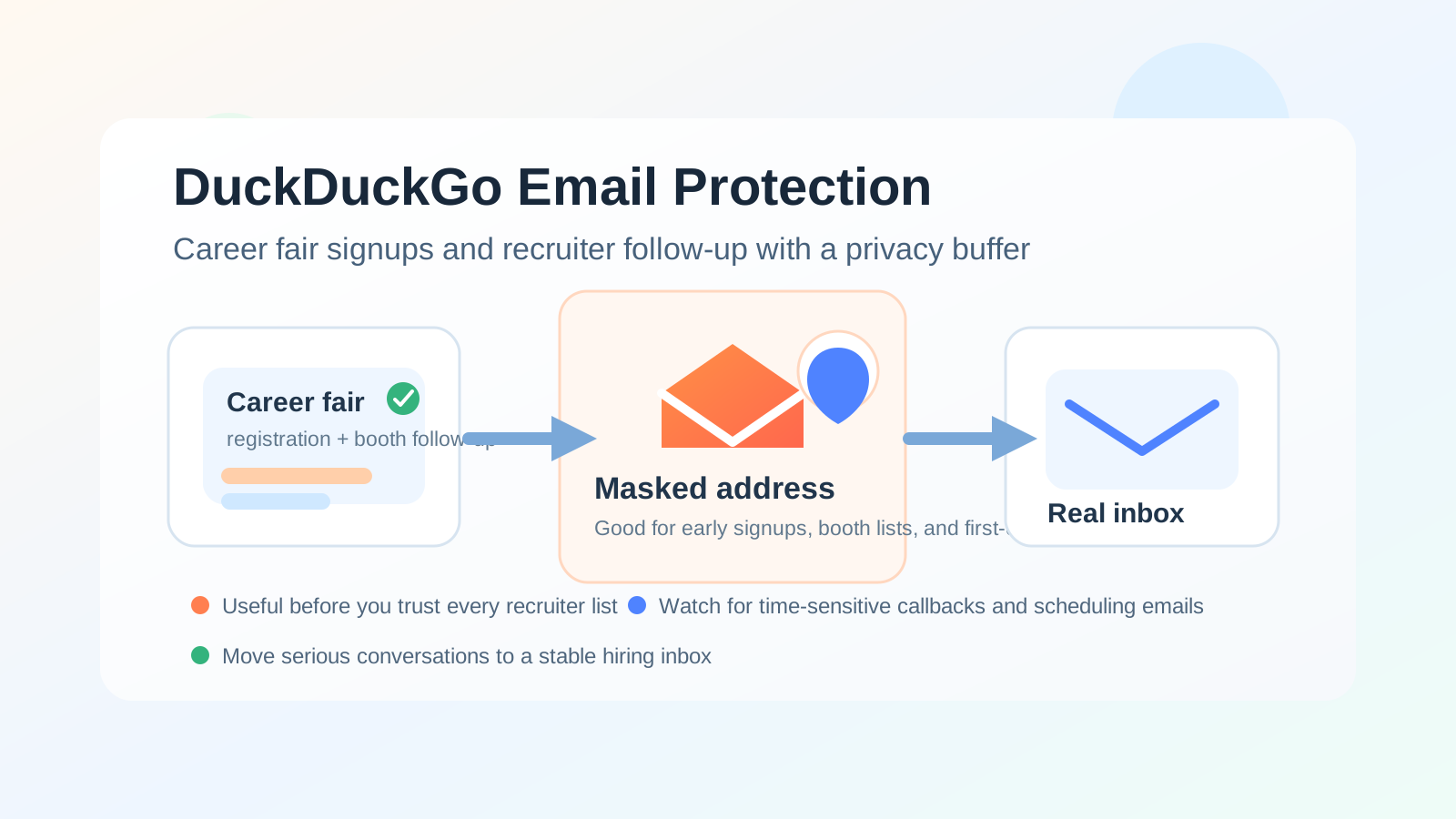
Why career fairs create a real email-privacy problem
Career fairs are one of the fastest ways to spread your contact details across many recruiters, talent coordinators, event platforms, and follow-up systems in a single day. That is useful when you are trying to create momentum, but it also means your inbox can get crowded quickly. A single event can produce résumé requests, “stay in touch” templates, talent-community invites, company newsletters, recruiter outreach, and messages from employers you barely remember speaking to.
That is why privacy-minded job seekers often wonder whether an alias service like DuckDuckGo Email Protection is a smart fit. The appeal is obvious: you can give out an address that forwards to your real inbox without exposing the address you use for your personal life, long-term accounts, or older professional history.
The catch is that career fairs are not just signup forms. They often turn into fast-moving hiring conversations. The same recruiter who scans your badge or takes your résumé at a booth may follow up later with interview availability, a direct application link, or a request for extra materials. The email strategy that works for casual marketing signups is not always the best strategy for time-sensitive job search communication.
What DuckDuckGo Email Protection does well at career fairs
1. It keeps your oldest inbox less exposed
If you use one personal email for everything, career fairs can dump a lot of noise into it. An alias layer helps protect that inbox from becoming the permanent landing zone for every recruiter list and event follow-up thread.
2. It gives you cleaner separation
Some job seekers want all job-search communication in one controlled channel instead of mixing it with bills, travel, family communication, and personal subscriptions. That is a sensible goal. A forwarding alias can be one way to create that separation without giving every employer direct access to the inbox identity you value most.
3. It helps with lower-trust exposure
At a fair, you may talk to excellent employers, average employers, staffing firms, event sponsors, and random list builders all in one afternoon. Not every name you meet deserves permanent access to your primary email. DuckDuckGo Email Protection gives you a small buffer while you sort out which contacts are real opportunities and which ones are mostly noise.
4. It can make source tracking easier
If you are disciplined about how you use aliases, you can keep event-based outreach more organized. That matters when several employers contact you after the same fair and you want to remember who came from where.
Where it gets less comfortable
The problem is not that DuckDuckGo Email Protection is unreliable in principle. The problem is that career fairs often move from casual to serious faster than people expect.
Recruiter follow-up can become time-sensitive fast
You may hand over a résumé at 2 p.m. and receive a screening request the next morning. Sometimes a recruiter wants you to apply through a specific link that day. Sometimes they want a writing sample, portfolio, or quick availability note within 24 hours. If your forwarding setup adds even a little confusion, that delay matters more in a career-fair context than it does in a casual newsletter signup.
Multiple people may contact you
Career fair conversations do not always stay with the original recruiter. A coordinator may step in. A campus hiring team may send event-specific follow-up. A regional recruiter may ask you to route the conversation through another system. Once several people are involved, the best workflow is usually the simplest one: an inbox you monitor closely, reply from comfortably, and plan to keep active through the whole process.
Forwarding is still one extra layer
Privacy layers are useful, but every extra layer creates one more place for confusion. If your destination inbox has aggressive tabs, filters, or clutter folders, you need to pay attention. If you are already using lots of aliases, you can also create a management problem for yourself: which employer got which address, which thread matters, and when should you switch to a more permanent channel?
So should you use DuckDuckGo Email Protection for career fairs?
Usually yes for early-stage exposure, but not as your only plan for serious follow-up. That is the balanced answer.
If you are going to a career fair mainly to explore, collect information, and avoid handing your long-term inbox to every booth and event sponsor, DuckDuckGo Email Protection can be a smart early filter. It is especially reasonable when you expect a lot of low-quality follow-up or you are still deciding which employers deserve deeper attention.
But if your goal is active interviewing, fast recruiter response, or same-week follow-up with employers you care about, a stable dedicated job-search inbox is usually the safer choice. That gives you privacy without turning the conversation into something you may later want to migrate.
When it works best
- Large events with lots of unknown employers: you want a buffer before deciding who deserves your long-term contact details.
- Early exploratory attendance: you are gathering options, not yet investing deeply in every conversation.
- Sponsor-heavy or lead-gen-heavy fairs: you expect some irrelevant follow-up and want to limit long-term spam.
- Events where you are sharing contact details widely: especially when the fair includes QR scans, résumé databases, or shared attendee systems.
When it is a weaker choice
- You are targeting a small set of employers seriously: those conversations may deserve a stable inbox from the beginning.
- You expect fast recruiter scheduling: screening requests and availability emails are easier to manage from a durable address.
- You already have a dedicated job-search email: in that case, the privacy benefit of adding another forwarding layer may be too small to justify the extra complexity.
- You are bad at monitoring multiple inbox workflows: if you know you only reliably check one place, keep your process simple.
A better middle ground than your main personal email
Many people frame the choice too narrowly: either use your main personal inbox or use an alias service. In practice, the best option is often a dedicated long-term job-search address that you control fully. That gives you separation, cleaner organization, and enough stability for applications, recruiter outreach, referrals, interviews, and offers.
If you want even more separation during early event registrations, you can still use an alias or early-stage privacy tool first and then move promising conversations to your main job-search inbox. That is often cleaner than trying to run the entire hiring process through a masking layer forever.
For example, some job seekers use Anonibox or another temporary-email workflow for low-trust signups and broad event registrations, then switch to a stable hiring inbox for any employer that proves worth pursuing. That approach keeps spam down without making serious follow-up harder than it needs to be.
Best practices if you decide to use it
Test the forwarding path before the event
Do not assume everything will feel smooth when the real messages arrive. Send yourself a test email, open it on mobile and desktop, and make sure you know where those messages land.
Check the destination inbox aggressively for a few days
The first 48 to 72 hours after a career fair often matter most. Recruiters may send a fast next step while the interaction is still fresh in their minds. Treat the destination inbox like a live hiring channel, not like a side inbox you remember whenever convenient.
Reply promptly to strong leads
If a recruiter you actually want to talk to follows up, do not let the privacy workflow slow you down. Fast, clear, professional replies matter more than preserving perfect alias separation.
Move promising threads to a stable address if needed
You do not need to stay loyal to the first address you used. If the conversation becomes more serious, switching to a stable dedicated inbox is normal and often smarter.
Do not treat every fair contact as equally important
One reason privacy tools help is that not every conversation deserves long-term space in your life. Keep the serious threads organized, archive the weak ones, and avoid turning broad event outreach into permanent inbox clutter.
Quick decision checklist
- Am I going to this fair mainly to explore, or to push specific applications forward?
- Do I trust the event platform and recruiter lists enough to give out my long-term inbox immediately?
- Would missing one scheduling email hurt me this week?
- Do I already have a stable job-search inbox that solves the privacy problem well enough?
- Am I disciplined enough to monitor forwarded messages closely after the event?
If your answers lean toward exploration, spam prevention, and low trust, DuckDuckGo Email Protection can be a sensible option. If your answers lean toward urgency, active interviewing, and serious employer follow-up, use a stable job-search inbox instead.
Final takeaway
DuckDuckGo Email Protection can be a good fit for career fairs when your main problem is early exposure: registrations, recruiter list collection, and uncertain follow-up from many employers at once. It helps create a privacy buffer and can keep your long-term inbox cleaner.
But career fairs are also one of the places where promising opportunities can accelerate quickly. Once real follow-up begins, the best system is usually the one that is easiest to monitor and hardest to miss. Use DuckDuckGo Email Protection if you want early separation, but move important conversations to a stable dedicated hiring inbox as soon as the opportunity becomes real.