Yes, you can use Google Chat for alumni networking if there is already context and a shared Google identity, but it is usually better as a light follow-up channel than as your main long-term networking home.
It works best when the relationship is already warm, the message is timely, and you are not exposing a work or school account you would rather keep separate.
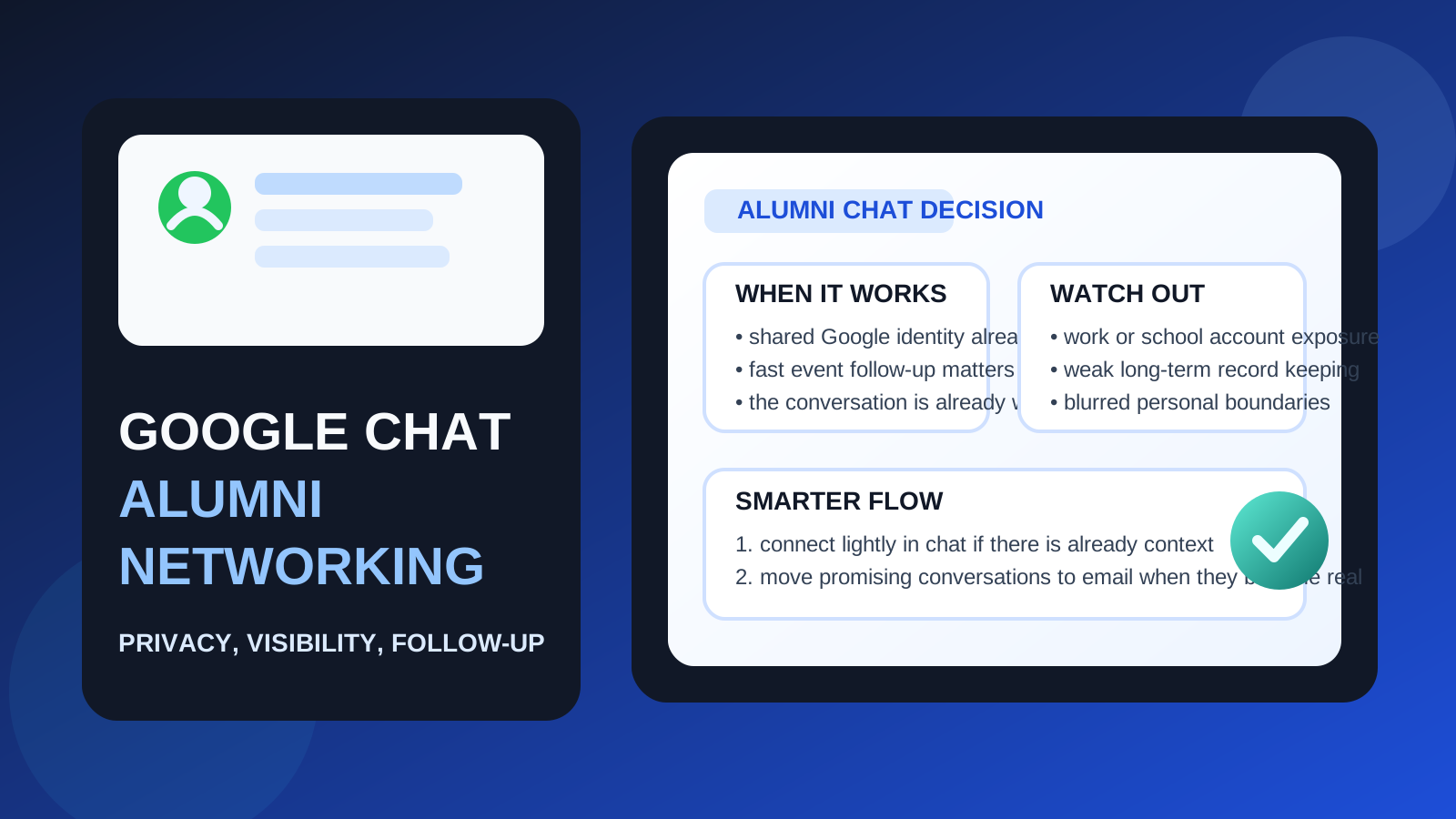
That is the practical answer behind the question should you use Google Chat for alumni networking. On paper, Google Chat sounds convenient. A lot of alumni, students, recruiters, and professionals already have Google accounts. Chat feels faster than email, less public than social media, and more direct than hoping someone notices a LinkedIn message days later. If an alumni event, volunteer group, university chapter, or shared introduction already lives inside Google Workspace, using Google Chat can feel like the natural next step.
But convenience is not the same thing as fit. Alumni networking works best when you can stay reachable without oversharing, keep conversations organized, and avoid creating unnecessary visibility into your personal, work, or school accounts. Google Chat can support that in some situations, but in others it is too tied to the wrong identity, too casual for the stage of the relationship, or too weak for long-term follow-up. The useful question is not whether Google Chat is “professional enough” in the abstract. It is whether it helps the specific relationship move forward without causing privacy friction you will regret later.
If you already use tools like Anonibox to keep your main inbox out of low-trust signups, early outreach, or event-related clutter, the same basic logic applies here: keep communication convenient, but do not confuse convenience with good boundaries.
Short answer: sometimes yes, but mostly as a secondary channel
Google Chat is usually a reasonable choice when you already know the other person through a shared alumni space, Google Workspace environment, or recent conversation, and the follow-up is quick and specific. It is usually a weaker choice when you are making cold first contact, when your chat identity is tied to a work account, or when the conversation needs a more durable, organized thread than chat naturally provides.
In other words, Google Chat can help you keep momentum after an alumni event. It is not always the best place to build the whole relationship.
Why alumni networking is different from ordinary messaging
Alumni networking often lives in a middle zone. It is warmer than cold outreach because there is already a school, program, club, or campus connection. But it is usually not warm enough yet for fully personal communication. Many alumni conversations start with small interactions: a panel chat, a career-center event, a reunion thread, an alumni Slack or Google group, or a mutual introduction from another graduate.
That creates a practical challenge. You want the follow-up to be easy, but you also want to protect your identity layers:
- your work identity if your Google account is employer-managed,
- your school identity if your alumni or student account may expire or still exposes campus details,
- your personal identity if you do not want every new contact folded into your everyday chat life too quickly.
Google Chat can be useful in that middle zone, but only if you are clear about which identity you are bringing into the conversation and why.
When Google Chat is a good fit for alumni networking
1. You already share a Google-based alumni space
If your alumni association, grad program, volunteer board, or affinity group already uses Google Workspace, Google Chat may be the lowest-friction follow-up option. In that case, you are not introducing a new channel out of nowhere. You are continuing the conversation inside a space that already exists.
2. The follow-up is light and timely
Chat works well for short, context-rich messages: thanking someone after a panel, sending the article you mentioned, checking whether a coffee chat time still works, or continuing a brief conversation from an event while it is still fresh. That is where chat can outperform email. It feels faster and less formal without being random.
3. You are dealing with people who actually use chat day to day
Some alumni communities are much more responsive in chat than over email. People working in product, startups, tech, operations, and internal collaboration-heavy roles often treat chat as normal professional traffic. If that is clearly the culture, using chat can reduce friction rather than create it.
4. You want a soft bridge before moving to email
Sometimes the smartest use of Google Chat is temporary. You use it to keep an active conversation moving, then switch to email once the relationship becomes a real mentoring thread, referral conversation, or ongoing professional connection.
When Google Chat is the wrong choice
1. Your account is tied to work
This is one of the biggest problems. If your Google Chat identity lives inside your employer’s Workspace, using it for alumni networking can expose more of your work context than you intended. Even if the content of the conversation is harmless, it can blur professional boundaries. You may not want alumni contacts to see your work account, availability habits, or company-tied identity as your default networking channel.
2. Your account is tied to school or a transitional identity
A university Google account can feel convenient, especially if you are still a student or recently graduated. But if that address or chat identity might change, expire, or stop feeling appropriate after graduation, it may not be the best foundation for a long-term alumni relationship. The same problem appears with internship, fellowship, or campus-organization accounts that no longer fit who you are becoming professionally.
3. The contact is still basically cold
Even with an alumni connection, many interactions are still near-cold at the beginning. If you barely interacted, jumping straight into chat can feel too forward. LinkedIn or email is usually a better first move when you need to establish context, remind the person who you are, and make the outreach feel measured instead of intrusive.
4. You need organized, durable follow-up
Chat is not great for everything. If you are discussing referrals, introductions, résumés, scheduling, or anything you may want to search later, email is often a better home. Chat can keep momentum alive, but it is weak as an archive.
Privacy questions people forget to ask
The biggest mistake with Google Chat is assuming it is just another neutral messaging tool. It usually is not. It is attached to an identity system.
Before you use it, think about what the other person may see or infer:
- Is the account clearly tied to your employer?
- Is it tied to a school identity you do not plan to keep using?
- Does it expose a name format, profile photo, or organization context you would rather control more carefully?
- Will you realistically keep using this account for the next year if the networking relationship becomes meaningful?
These are not paranoia questions. They are simple boundary questions. A lot of people are comfortable sharing an email alias or separate inbox before they are comfortable sharing a work-managed or school-managed chat identity. That instinct is usually sensible.
Google Chat versus email for alumni networking
Google Chat
Better for speed, quick check-ins, short follow-up, and conversations that are already warm.
Better for thoughtful introductions, durable follow-up, résumé or link sharing, calendar clarity, and anything you may need to reference later.
If you are unsure, email is often the safer default. It creates a cleaner record and usually feels more respectful for professional follow-up. Chat becomes stronger after the relationship is already active.
Google Chat versus LinkedIn Messages
LinkedIn is often a better first layer when the connection exists but the relationship does not yet. It lets you preserve context, keep things explicitly professional, and avoid exposing a more private identity too quickly. Google Chat becomes more reasonable after the other person already expects a quicker, more conversational channel.
A simple way to think about it is this:
- LinkedIn is good for establishing the connection.
- Google Chat is good for continuing a warm, active thread.
- Email is good for anything that needs structure and longevity.
Best practices if you do use Google Chat for alumni networking
Use the right account
If possible, avoid using a work-managed account for alumni networking unless there is a clear reason and you are comfortable with the visibility trade-off. A stable personal professional identity is usually safer than an employer-owned one.
Keep the first message contextual
A good alumni follow-up should remind the person where you met or what you discussed. Chat messages that begin with context feel helpful. Chat messages that skip context feel like interruptions.
Keep the ask small
Chat works best for modest goals: a thank-you, a promised link, or a simple next step. If you are asking for mentorship, a résumé review, or a deeper conversation, it is often better to move to email quickly.
Do not trap the whole relationship in chat
If the conversation becomes useful, move it somewhere more durable. A lot of promising networking threads fade because chat never turns into a structured follow-up.
Separate low-trust event exposure from long-term contact where you can
If you are meeting many new alumni contacts through panels, mixers, or open events, it can help to keep your first-contact strategy separate from your long-term communication strategy. That might mean using LinkedIn for the first message and a cleaner email identity for ongoing contact. If you already use Anonibox for signups, event lists, or lower-trust contact flows, that same boundary mindset is worth keeping here too.
When a separate email or account is smarter
Sometimes the best answer is not “use chat” or “do not use chat.” It is “use a cleaner identity.” If your current Google Chat account is tied to work, tied to school, or just not the version of yourself you want circulating in professional networking, a separate email strategy may be better. That gives you more control over how alumni relationships start and how they continue.
For many people, the cleanest path is:
- make first contact through LinkedIn or a professional email,
- use chat only when both sides naturally move there,
- keep long-term follow-up in a stable email identity you control.
That is usually more resilient than building everything around one chat account that may not match your long-term goals.
Quick decision checklist
- Do I already know this person well enough for chat to feel natural?
- Is my Google Chat identity tied to work, school, or an account I may not want to keep using?
- Would LinkedIn or email be clearer for first contact?
- Is the follow-up short and timely, or does it need a more durable thread?
- Am I staying reachable without oversharing the wrong identity?
If your answers point toward warm context, light follow-up, and a stable identity, Google Chat can work well. If they point toward cold outreach, employer-managed accounts, or long-term coordination, email is usually the smarter option.
Final answer
Yes, you can use Google Chat for alumni networking, but it is usually best as a secondary, context-rich follow-up channel rather than your default long-term networking system.
It works well when the relationship is already warm and the message is simple. It works poorly when the account is tied to work or school, when the contact is still basically cold, or when the conversation really belongs in email. If privacy and identity control matter to you, use Google Chat selectively, keep the first follow-up grounded in context, and move real alumni relationships to a stable professional channel once they start becoming meaningful.