iMessage can work for networking events, but it is usually better for trusted follow-up than for first contact because it often exposes your personal phone number and makes a new professional connection feel more personal than necessary. If you want cleaner boundaries, better organization, and less privacy leakage, start with email or LinkedIn whenever possible and move to iMessage only after the relationship is clearly legitimate.
That does not mean iMessage is always a bad choice. It can be useful for short logistics, day-of coordination, or quick follow-up after you have already met someone. The key is using it deliberately instead of letting a casual event conversation turn into permanent access to your personal number.
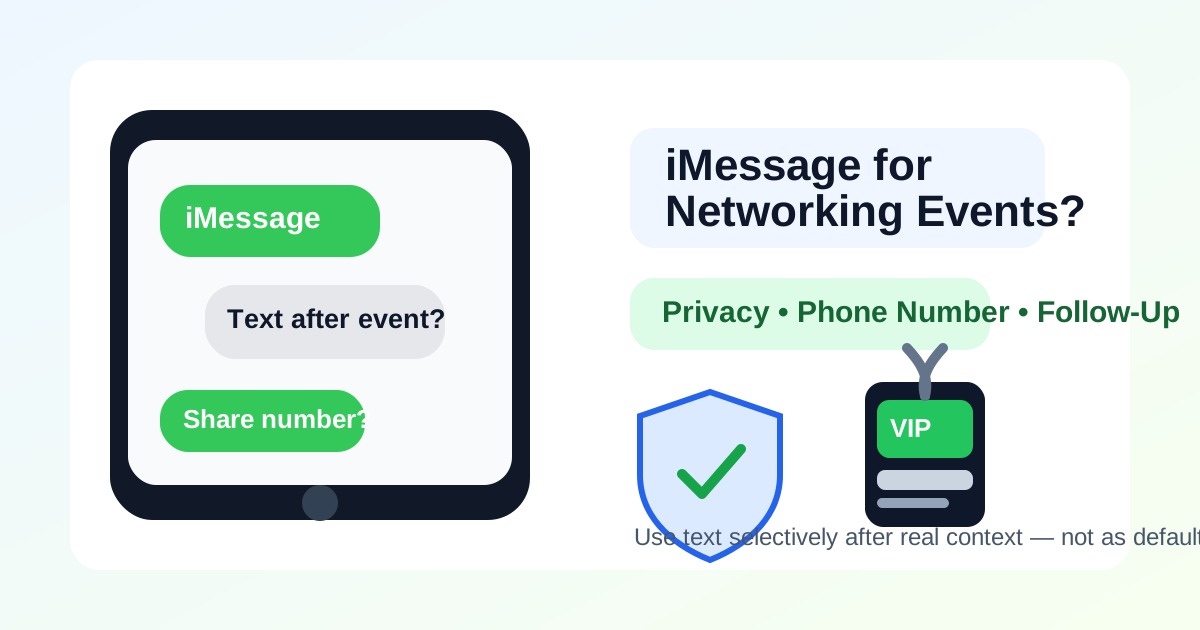
Why this question comes up at networking events
Networking events sit in an awkward middle ground between formal recruiting and casual social contact. You might meet someone at a conference, panel, coworking meetup, alumni mixer, startup event, online community gathering, or industry happy hour. The interaction is real, but it is usually fast. People exchange names, scan badges, trade LinkedIn profiles, share QR codes, or say something like “just text me and I’ll send that link later.”
That is where iMessage starts to look attractive. If both people use iPhones, it feels fast, familiar, and low-friction. You do not have to explain another platform, log into anything new, or draft a formal message. But convenience is not the same thing as privacy, and it is not always the same thing as professionalism either.
At a networking event, the real question is not whether iMessage technically works. Of course it works. The better question is whether it gives you the right amount of access, context, and control for a brand-new professional connection.
The short answer: useful for light logistics, weaker for first outreach
iMessage works best when a real conversation has already happened and the next step is simple. For example, it can be fine if someone is sending the room number for a small breakout session, confirming they are running ten minutes late, or following up with a quick “great meeting you” note after an event where you already exchanged numbers intentionally.
It works much less well as your main first-contact method for cold follow-up. If you barely met someone, do not know how they manage professional messages, and want a clean trail you can refer back to later, email or LinkedIn usually does that job better. Those channels feel more expected, easier to search, and easier to keep separate from personal life.
Main privacy drawbacks of using iMessage for networking events
1. It often gives away your personal phone number
The biggest issue is simple: iMessage usually means handing over a personal number. Once someone has it, they have a direct path into your everyday life, not just your event follow-up. That may be fine for a trusted contact, but it is a larger privacy step than many people realize in the moment.
A networking event can feel friendly, but not every new contact becomes valuable, relevant, or welcome long term. Some people follow up too often. Some move the conversation in a direction you did not expect. Some keep texting months later after the original reason for connecting has disappeared. A number is much harder to “take back” than a one-off email exchange.
2. It blurs professional and personal boundaries
Most people use iMessage for family, friends, and daily life. When professional networking starts happening in the same place as personal conversations, the boundary between the two can get fuzzy fast. That can make your networking activity feel more intrusive, especially if it starts generating weekend follow-ups, late-night replies, or conversations that drift away from a clear professional purpose.
This is one reason many people prefer a dedicated networking email workflow. A separate inbox or alias helps you stay reachable without making every new professional contact feel like a personal contact. Anonibox fits naturally into that kind of privacy-first setup when you want a cleaner layer for early signups, event registrations, or lower-trust follow-up paths.
3. It is weaker for searchable long-term follow-up
Networking is rarely about one message. It is about building a relationship over time. That means remembering where you met, what you discussed, what they offered to share, and when you should follow up again. iMessage is fine for short conversation bursts, but it is not ideal for keeping a polished long-term professional record compared with email.
If someone sends you a job lead, a slide deck, a calendar option, a referral detail, or an introduction path, you may eventually want that information somewhere easier to organize and revisit. Text threads are simple, but they are also easy to lose track of when the relationship matters months later.
4. It can feel too casual for a brand-new connection
Some industries are informal and text-heavy, especially startup, creator, sales, media, or event-driven communities. Even then, the first follow-up after a networking event often benefits from a little structure. A short email or LinkedIn message shows intent without assuming too much familiarity.
iMessage can accidentally signal a level of personal access that the relationship has not earned yet. That does not make it inappropriate in every case, but it does mean you should be selective.
When iMessage can be a reasonable choice
- You already had a real conversation: not just a badge scan or quick hello, but an actual exchange with context.
- The follow-up is time-sensitive: meeting location changes, arrival timing, or quick event logistics.
- The other person clearly prefers text: they asked for it directly and the interaction feels legitimate.
- You are comfortable sharing your number: either because the contact is low risk or because you use a separate number.
- The event culture is already text-oriented: for example, a small founder meetup or a tight-knit industry group where quick direct messaging is normal.
In those cases, iMessage can be practical. The point is not to ban it. The point is to use it where it genuinely adds convenience without creating unnecessary exposure.
When it is probably the wrong channel
- You barely know the person.
- You want a professional paper trail.
- The contact might turn into a job lead, referral, or client conversation.
- You do not want to expose your personal number.
- The event included lots of loose contacts you may never hear from again.
- The person is pushing for immediate off-platform contact in a way that feels rushed.
If any of those apply, email or LinkedIn is usually the safer first move. You can always switch channels later once the relationship has more trust behind it.
Better alternatives for first follow-up
Email is still the cleanest option for most event follow-up. It gives you a searchable thread, space for context, and a more professional tone. It also makes it easier to save shared resources, introductions, and next steps.
LinkedIn messages
LinkedIn is useful when you want a clear professional context without exposing personal contact details right away. It is often the safest first step if you met briefly and want to reconnect without overcommitting.
A separate phone number
If text-based follow-up matters in your field, a separate number is often a better compromise than using your main personal iMessage identity everywhere. It keeps the convenience of texting while reducing the downside of handing out your real everyday line at scale.
How to use iMessage more safely if you decide to use it
Wait until there is real context
Do not lead with iMessage just because it is easy. Use it after a genuine interaction, not before one.
Keep the message purpose-specific
Use it for short follow-up like “good meeting you,” “here is the article I mentioned,” or “I am near the lobby entrance.” If the conversation starts involving resumes, referrals, scheduling across weeks, or detailed career advice, move it to email.
Review what your phone number actually exposes
Before you start networking this way, think about whether your current number is tied to personal messaging, family contact, recovery flows, or long-term spam exposure. If yes, the convenience may not be worth the trade-off.
Check your messaging settings
Simple choices like how you handle read receipts or profile sharing can affect how personal the interaction feels. You do not need to obsess over settings, but you should be intentional.
Move important details into a more durable channel
If the connection matters, send a follow-up email after the initial text. That gives both people a better long-term thread to work from.
Example scenarios
Good fit: You met a founder at a small industry mixer, had a ten-minute conversation, and they said to text when you arrive at tomorrow morning’s breakfast roundtable. That is a narrow, practical use.
Weak fit: You met someone for thirty seconds at a crowded conference booth and want to ask about future job openings. A short LinkedIn request or email is cleaner than jumping straight into iMessage.
Mixed fit: You joined an event through a community where people casually exchange numbers. If you are open to that level of access, it can work, but a separate number is smarter than defaulting to your main one.
A quick checklist before you share your number
- Did I actually have a meaningful conversation with this person?
- Do I want them to have my personal phone number?
- Would email or LinkedIn do the job just as well?
- Am I using iMessage for convenience, or because it is truly the best channel here?
- If this contact matters in three months, will I wish I had started with a more organized thread?
Final answer
So, should you use iMessage for networking events? Sometimes, but selectively. It is best for trusted, low-friction follow-up after a real interaction, especially when the message is short and practical. It is usually not the best default for first outreach or for contacts you may want to manage professionally over time.
If privacy, boundaries, and long-term organization matter to you, start with email or LinkedIn and treat iMessage as a secondary option rather than the center of your networking strategy. That way you stay reachable without turning every new event contact into a permanent personal-text connection.