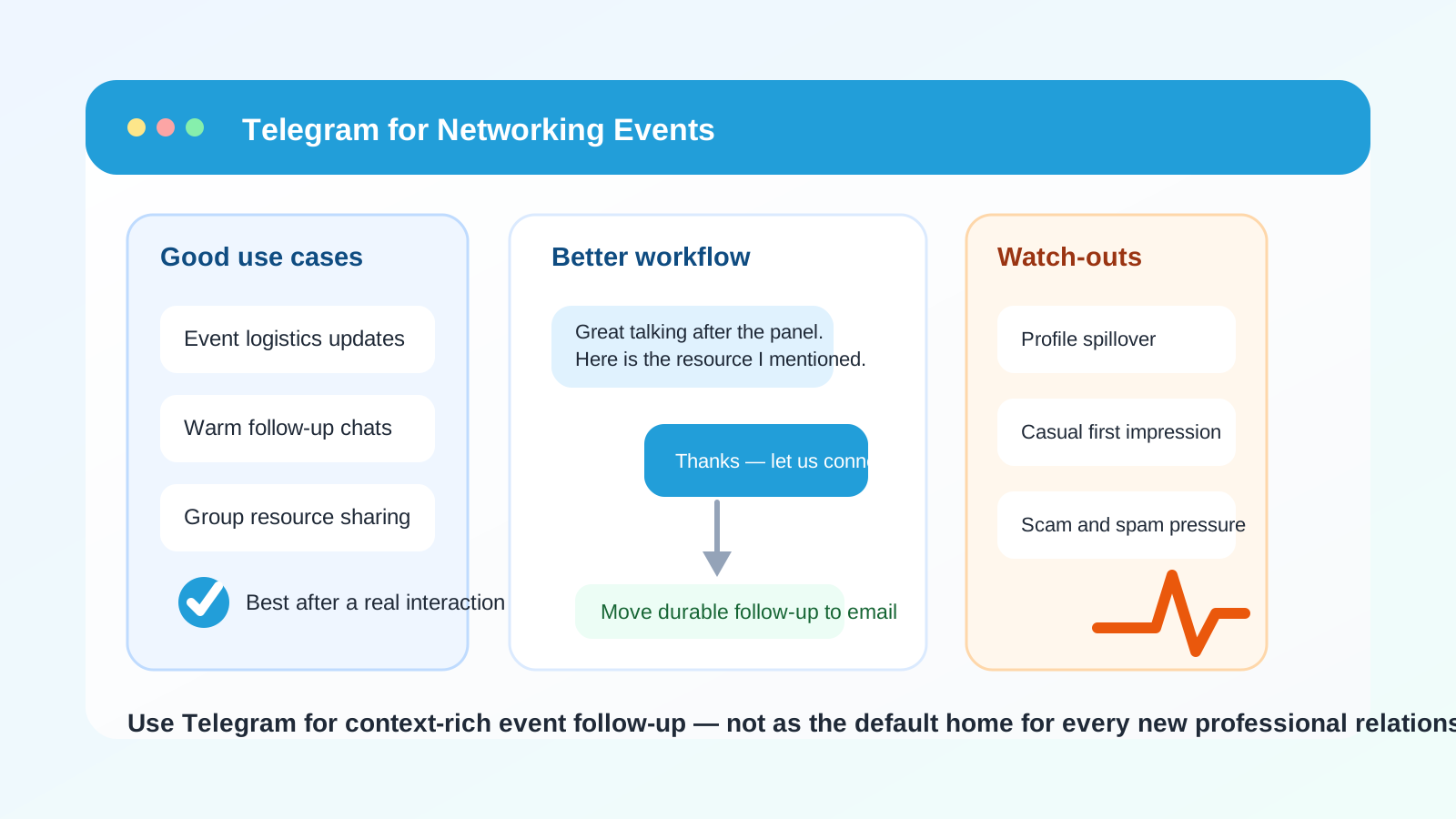
Telegram can work for networking events, but it is usually best as a follow-up channel after some context already exists. It is strongest for organizer updates, group logistics, and quick post-event coordination, not as your default first-contact method for every new professional connection.
If you want better boundaries and a cleaner long-term record, email or LinkedIn is usually the safer next step. Telegram can feel efficient, but efficient is not always the same as private or professional.
Why this question comes up
Networking events are messy in a very human way. You meet people quickly, trade a few ideas, promise to follow up, then go home with a half-remembered list of names, companies, and next steps. In that environment, messaging apps feel attractive because they seem faster than email and more immediate than waiting for someone to answer on LinkedIn.
Telegram shows up in that conversation for a few reasons. Some events already use it for announcements. Some communities prefer it for group chats. Some attendees like the idea of sharing a username instead of a more personal phone-based texting flow. And some international or startup-heavy communities simply treat Telegram as normal infrastructure.
That does not automatically make it the best place to build professional relationships. The real question is not whether Telegram works as chat software. The question is whether it helps you stay reachable without exposing more of your personal identity, notification flow, or casual online habits than you intended.
The short answer: useful for warm follow-up, weaker for cold outreach
Telegram works best when the networking event already has some Telegram-based context. Maybe the organizer runs a group there, a speaker shared a handle for quick follow-up, or an attendee community is continuing the conversation after the event ends. In those cases, Telegram can be a practical tool for timing updates, resource sharing, and short follow-up messages.
It works much less well when you are trying to make a polished first impression from scratch. If you barely spoke to someone, or if you want a durable professional thread you can revisit later, email or LinkedIn usually does the job better.
What Telegram can do well at networking events
1. Fast logistics after a real interaction
If you already spoke with someone at a meetup, conference, workshop, or mixer, Telegram can be fine for quick practical follow-up. Messages like “Great talking after the panel — here is the article I mentioned” or “The side meetup moved to the lobby café” fit the medium well. These are lightweight, time-sensitive exchanges where speed matters more than formality.
2. Group-based event coordination
Telegram is especially useful when the event itself already lives partly in group chat. Organizers may use it for schedule changes, room links, speaker updates, volunteer check-ins, or attendee Q&A. In that setting, using Telegram does not feel random. It feels like continuing the event in the place where the event is already happening.
3. Username-based contact can feel less exposing
Compared with ordinary texting, Telegram can feel like a middle ground. If your settings are thoughtful, a username may be easier to share than a primary phone number. That can make it appealing when you want to stay reachable without immediately turning a brief networking encounter into permanent direct access to your main number.
4. International or community-native contexts
Some industries and communities already rely on Telegram more than others. International startup circles, crypto communities, founder groups, open-source meetups, student collectives, and niche professional communities sometimes treat it as ordinary infrastructure. In those spaces, using Telegram may feel completely normal rather than odd.
The main privacy and professionalism risks
1. Your account may reveal more than you think
People often think of Telegram as “just chat,” but a Telegram account can still expose a lot of context: username, profile photo, display name, bio, activity cues, shared groups, and depending on your settings, links back to your phone number. Even if you never intend to overshare, the account itself can communicate more than a clean professional email would.
That matters because networking events are usually the beginning of a relationship, not the mature middle of one. Early-stage contact is exactly when you should be deliberate about what someone learns and how they learn it.
2. Casual chat tone can undercut a professional first impression
Networking events already blur the line between social and professional interaction. Telegram can blur it even more. A quick chat app lowers friction, which is useful, but it also makes it easier to sound too casual, too familiar, or too abrupt. What feels efficient to you may feel under-contextualized to the other person.
A recruiter, speaker, founder, or hiring manager may respond better to an email that clearly says who you are, where you met, and why you are following up. Telegram can carry that message too, but it is not the format most people expect for thoughtful first-contact outreach.
3. Important follow-up gets buried fast
Messaging apps are good at momentum and bad at memory. Networking conversations often lead to things you actually want to keep track of: promised introductions, article links, event resources, referrals, coffee chat invites, and reminders to reconnect. Telegram can handle those messages, but it is not always where you will remember to look for them a month later.
Email is still easier to search, label, forward, and revisit when a casual event conversation turns into a real opportunity.
4. Group environments can create social spillover
If the event is tied to a Telegram group, your networking conversation may not stay as neatly bounded as you expect. Shared groups can reveal more social context, encourage off-topic chatter, or make it harder to separate one event from the rest of your online life. That is not automatically bad, but it is worth noticing.
You may be comfortable using Telegram for one community and not want that same identity to become your default professional contact layer across unrelated events.
5. Low-friction channels attract low-friction scams
Any quick-contact platform can attract impersonation, spam, fake opportunities, or suspicious links after public events. If someone immediately pushes you toward a “private role,” investment pitch, or off-platform application flow, treat that as a reason to slow down, not a reason to trust them more. Speed is useful, but it can also make bad outreach feel urgent.
When Telegram is actually a smart choice
- The event already uses Telegram: You are not forcing a new channel into the relationship; you are continuing in the event’s existing workflow.
- You already had a real conversation: The follow-up is warm, specific, and easy to place in context.
- The next step is short and practical: Timing, links, location updates, or quick resource sharing are all reasonable use cases.
- The community treats Telegram as normal: In some spaces, it carries no awkwardness at all.
- You are prepared to move durable follow-up elsewhere: Telegram can open the door, but it does not need to hold the entire relationship.
When you should choose email or LinkedIn instead
- You are contacting someone cold after only a brief encounter.
- You want a polished first impression with clearer professional boundaries.
- You are following up about a job, referral, portfolio, resume, or formal next step.
- You do not want to expose a personal-feeling account or notification channel yet.
- You want a reliable record you can find again later.
In most professional networking situations, email or LinkedIn wins by being slightly slower but much cleaner. That small difference matters more than people expect.
A practical workflow that works better than “Telegram for everything”
For most people, the strongest approach is not avoiding Telegram completely. It is using it in a narrower, more intentional way:
- Use the event chat, channel, or group if that is where the event is already happening.
- Send one short follow-up message only when you have real context from an actual interaction.
- Move anything important, durable, or career-relevant to email or LinkedIn once the conversation becomes substantive.
That approach gives you the speed of Telegram without making it the permanent home for every professional relationship you start at an event.
If the event involved signups, sponsor downloads, waitlists, newsletters, or organizer follow-up forms, a separate inbox can also help keep that outreach organized. That is one place Anonibox fits naturally: not as a magic privacy promise, but as a practical way to test communities, event registrations, and follow-up flows without pushing every organizer, vendor, or sponsor straight into your main inbox forever.
How to use Telegram more safely and professionally
Review your profile before the event
Check your display name, photo, bio, and privacy settings before you start sharing your Telegram handle. Ask yourself whether the account reflects how you want to appear in a semi-professional setting. It does not need to be stiff, but it should not create avoidable confusion either.
Do not send vague, context-free messages
If you follow up on Telegram, reference the event clearly. For example: “Hi Maya — great talking after the climate-tech panel today. You mentioned a useful hiring resource for early-stage operators. If you are open to it, I would love the link.” That is much better than “Hey, nice meeting you” with no context at all.
Keep sensitive details off chat until trust is clear
A messaging app is not the best first place to drop a resume, personal documents, detailed salary discussions, or anything else you would not want floating around in a casual thread. Use Telegram for momentum, not oversharing.
Watch for fake urgency
If someone you barely met starts pushing urgent links, “exclusive opportunities,” or pressure-heavy requests right after an event, slow down and verify. Public networking spaces attract opportunists precisely because people are already in follow-up mode.
Save the real next steps somewhere durable
If the conversation leads to an introduction, meeting, or future opportunity, move that information into email or your own notes. Otherwise, the most valuable part of the interaction may disappear into the normal chat flow.
A quick decision checklist
Telegram is probably reasonable if most of these are true:
- The event already has Telegram-based context.
- You actually interacted with the person before following up.
- The next step is short, practical, and time-sensitive.
- Your account settings and profile are something you are comfortable sharing.
- You are willing to move important follow-up to email or LinkedIn later.
Telegram is probably the wrong default if most of these are true:
- You are doing cold outreach.
- You want the most professional possible first impression.
- You are discussing job-search or referral details.
- You want stronger separation between personal chat life and professional networking.
- You need a durable record you can revisit later.
Final answer
So, should you use Telegram for networking events? Sometimes, yes — but mainly when the event already gives the conversation context and you are using Telegram for warm, lightweight follow-up. It is helpful for group coordination, quick resource sharing, and short post-event messages. It is much weaker as a default cold-outreach tool or a long-term home for important professional conversations.
If you want the safest general rule, use Telegram to continue an event that is already happening there, then move meaningful follow-up to email or LinkedIn. That keeps the speed and convenience of chat without giving up privacy, professionalism, or control.