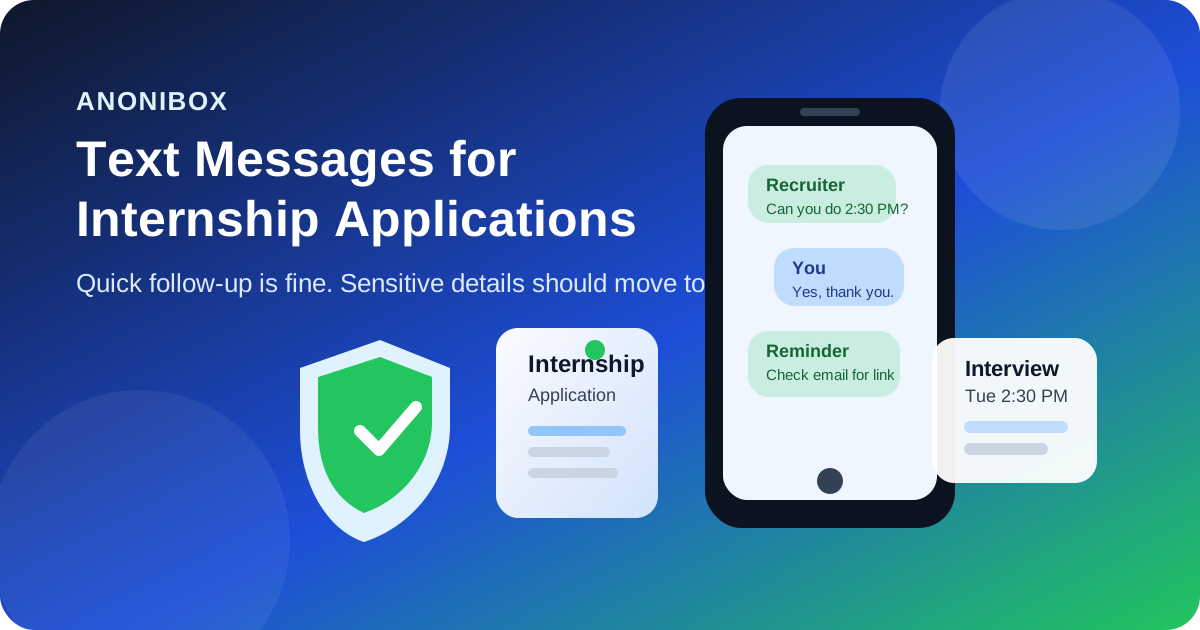
Yes, text messages can be useful for internship applications when they are limited to quick scheduling, recruiter follow-up, and simple logistics. They should support the application process, not replace email when you need a clear record, better privacy, or a more professional paper trail.
If a recruiter wants to confirm a screening call, send a reminder, or handle a same-day update, texting can work well. If someone wants to run the whole internship process by text, asks for sensitive information, or pressures you to move fast, that is a sign to slow down and protect your phone number.
Why texting comes up so often in internship searches
Internship hiring often moves faster and more informally than full-time recruiting. Students and early-career candidates may apply through campus portals, job boards, career fairs, alumni contacts, startup founders, and recruiters who are juggling dozens of applicants at once. In that environment, text messages feel convenient. They are quick to read, quick to answer, and easy to use when someone wants to confirm availability without writing a long email.
That convenience is real, especially for time-sensitive steps like confirming an interview slot, answering a simple question, or responding to a recruiter who is trying to finalize a shortlist. But texting also shifts the process into a more personal channel. Once your number is shared, it is much harder to pull it back. You may start getting follow-ups at odd hours, spam messages from old applications, or scam texts that pretend to be recruiters.
So the real question is not whether texting is allowed. It usually is. The better question is how to use it in a way that keeps you reachable for legitimate opportunities without turning your internship search into a privacy mess.
Short answer: texting is useful for speed, but weak as the main application channel
For most internship applications, email is still the safer home base. It gives you timestamps, attachments, links, and a cleaner record of what was said. Texting works best as a support channel around that process. Think reminders, confirmations, and quick logistics, not the full exchange of important information.
That distinction matters because internships sit in an awkward middle ground. Some employers treat them with the same professionalism as full-time roles. Others handle them more casually, especially at small companies, startups, agencies, and campus recruiting events. A text from a real recruiter is not automatically suspicious. But a text-only hiring process is often sloppy at best and risky at worst.
When text messages make sense for internship applications
1. A recruiter is confirming an interview or screening call
This is one of the strongest uses of texting. A short message like “Are you still available at 3 PM tomorrow?” or “Please check your email for the calendar invite” is normal and helpful. It saves time without forcing the entire process into a chat thread.
2. You need quick same-day logistics
If you are heading to an office, virtual event, or campus interview room, text messages can be practical for last-minute updates. They work well for things like:
- confirming that you found the building or event booth
- letting the recruiter know you are running a few minutes late
- receiving a quick room number, gate code, or callback window
- confirming a rescheduled time after a cancellation or delay
Those are low-risk, short messages where speed matters more than formality.
3. The recruiter explicitly invites text follow-up
Sometimes a recruiter or hiring manager will say, “Text me if you have trouble finding us,” or “Send me a quick note so I can connect your name to the application.” If the invitation is clear and the employer is legitimate, a short professional reply can be perfectly appropriate.
4. You are handling a campus or event-based internship lead
Internship recruiting often starts in crowded environments like career fairs, info sessions, student clubs, hackathons, or employer presentations. In those settings, texting can act as a bridge between the event and the more formal follow-up that happens later by email or portal.
When text messages are a bad primary channel
1. Someone wants to handle the entire hiring process by text
If the application, screening, interview details, and offer discussion all happen inside a text thread, that is a problem. It creates a weak record, makes important details easier to lose, and often signals an unprofessional or suspicious process.
2. The message is unsolicited and vague
Many internship scams start with generic texts that sound flattering but thin on details: “We reviewed your profile,” “Immediate internship opening,” or “Reply for fast onboarding.” If you do not recognize the company, the role, or the timing, do not assume the sender is legitimate just because they know your name.
3. They ask for sensitive information by text
Texting is the wrong place for copies of ID, banking details, tax forms, login codes, student portal credentials, or other personal documents. A real employer may eventually need some of that information, but not as a casual text exchange and not before the internship is clearly verified.
4. They push you to move off safer channels immediately
If a text message quickly turns into pressure to move to WhatsApp, Telegram, Signal, or another chat app for the “real interview,” be cautious. Plenty of legitimate people use those tools, but scammers also love fast channel switching because it reduces transparency and makes the interaction feel urgent and personal.
Privacy risks students and early-career applicants should think about
Your phone number is harder to rotate than an email alias
You can create a separate email address fairly easily. Your main phone number is usually more permanent. Once it is shared across job boards, internship portals, recruiters, and forms, it may keep circulating long after you stop applying.
Recruiter texts and scam texts can look similar
That is one of the biggest practical problems. A real recruiter might text you from a mobile number. A scammer can do the same. If you are actively applying, it becomes easier for fake outreach to sound plausible because you are already expecting messages about interviews and next steps.
Texts can blur your boundaries
Internship applicants are often balancing classes, part-time work, family obligations, and deadlines. Texting can make the job search feel like it follows you everywhere. You may start getting messages at dinner, during lectures, or late at night from unknown numbers asking whether you are still interested.
Text threads are a weak place for important details
Even when the sender is legitimate, text is not ideal for storing deadlines, onboarding links, role descriptions, or interview prep notes. Those details are easier to miss, harder to search later, and more likely to get buried under everyday messages.
Best practices if you do use text messages for internship applications
Use a separate number if privacy matters to you
If you expect to apply broadly, attend career events, or respond to multiple recruiters, a separate number can be a smart middle ground. It gives you the convenience of texting without exposing your main personal line everywhere. That can be especially useful if you are already keeping your internship search separate with a dedicated inbox.
Keep your texts short and professional
Treat recruiter texts like lightweight business communication. Use your name, answer clearly, and keep the tone clean. You do not need to sound robotic, but you should sound organized.
For example:
- “Hi Jordan, this is Maya Chen. Yes, 2:30 PM tomorrow works for me. Thank you.”
- “Thanks for the update. I just checked my email and received the calendar invite.”
- “I am outside the building now. Please let me know if there is a specific entrance I should use.”
Move important details back to email
If the discussion becomes more substantial, shift it. Interview links, assignments, written instructions, offer details, and onboarding steps are all better handled by email or an official portal. Texting can start the conversation, but it should not hold the whole process.
Verify unexpected messages independently
If you receive a surprise text about an internship, look up the company yourself. Check the official site, find the real careers page, and confirm whether the recruiter exists. Do not rely only on the phone number that contacted you.
Never share one-time codes or financial details
No legitimate internship recruiter needs a verification code from your phone. No legitimate recruiter needs your bank information before you have verified the company and the role. If a conversation starts going there, stop.
What if an internship application form requires a phone number?
If a trusted employer or campus recruiting portal requires a phone number, giving one is usually reasonable. The better question is which number you want to use. For some applicants, the main personal number is fine. For others, especially people applying widely or responding to a lot of low-context listings, a separate job-search number is the better choice.
If the field is optional, you have more flexibility. You can decide based on the employer, the source of the listing, and how much phone contact you actually want. Just remember that leaving the field blank works better when your email is professional, checked often, and easy for recruiters to use.
A practical checklist before you reply by text
- Do I know which company this message is from?
- Did I actually apply for this internship or meet this recruiter?
- Is this a simple logistics message or something that should move to email?
- Am I comfortable giving this sender ongoing access to my phone number?
- Would a separate phone number or separate email workflow make this easier to manage?
If the answers feel solid, texting can be a useful tool. If the message feels vague, rushed, or unusually personal, slow down and verify before you keep the conversation going.
Final answer
Yes, you can use text messages for internship applications, but selectively. They are best for fast recruiter follow-up, interview confirmations, and short logistical updates. They are much less reliable as the main channel for documents, detailed instructions, or anything sensitive.
A good rule is simple: let texting make the process faster, not messier. Keep the serious parts of the internship search in email, protect your number when you can, and use tools that preserve boundaries. If you already use a separate inbox strategy with Anonibox for early-stage signups or job-board exposure, pairing that with a more careful texting strategy can make your internship search both easier to manage and safer to navigate.