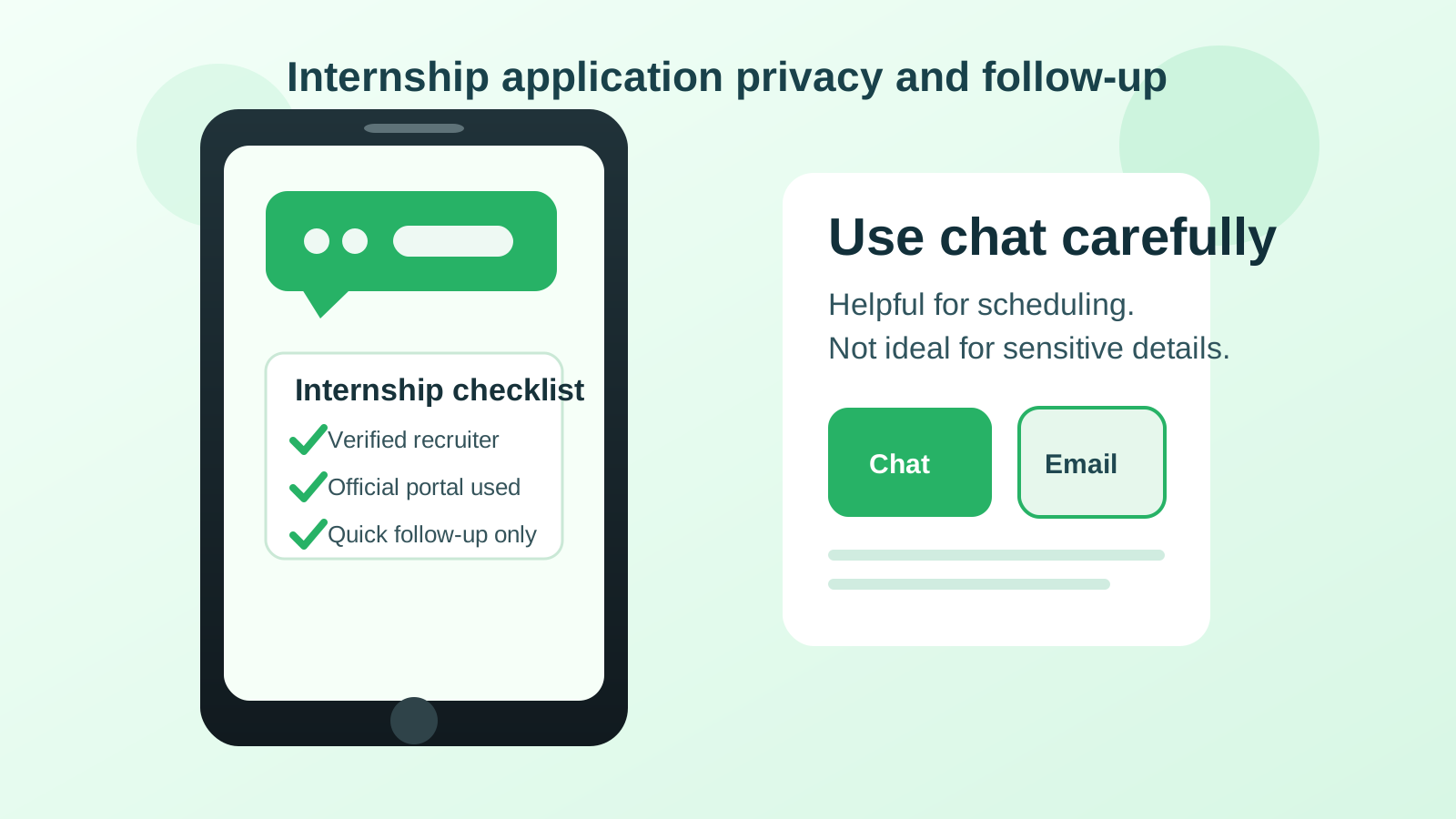
WhatsApp can work for internship applications, but it should not be your default first-contact channel.
Use it for verified recruiter follow-up and quick logistics, not for cold applications, sensitive documents, or replacing a real email and application trail.
Internship recruiting sits in an awkward middle ground. It is often more casual than full-time hiring, especially when the process starts through a campus event, startup founder, alumni contact, student organization, or recruiter message. That is why messaging apps come up so often. A recruiter may say “send me a quick WhatsApp,” a hiring coordinator may use it for scheduling, or an international company may treat it as a normal business tool.
The convenience is real. WhatsApp is fast, familiar, and easy to use on the go. But it also exposes your phone number, can reveal more profile information than you intended, and can pull a professional conversation into a very personal channel before you know whether the opportunity is even legitimate.
So the real question is not whether WhatsApp is allowed. It usually is. The better question is whether it is the right tool for the stage of the internship process you are in, and whether you are protecting your privacy while staying responsive.
Short answer: useful as a secondary channel, weak as the main one
For most internship applications, the safest home base is still the employer’s application portal plus email. That gives you a clear record of what you submitted, when you submitted it, and what the recruiter or company asked you to do next.
WhatsApp is best when the trust question is already mostly answered and you need speed. It can be practical for confirming a screening call, handling same-day logistics, or following up after a real conversation. It is much less ideal when someone wants to run the entire process inside chat, asks for sensitive information, or pushes you to move off an official channel too early.
Why WhatsApp comes up so often in internship searches
Internships often involve faster, looser communication than full-time roles. Students and early-career candidates may be applying through university portals, career fairs, startup websites, LinkedIn, alumni connections, or direct outreach from recruiters trying to fill openings quickly. In some industries and countries, WhatsApp is already a normal business communication tool, so it naturally spills into recruiting.
It also feels easier than email. A short message gets opened quickly. Scheduling can happen in minutes. If you are already juggling classes, projects, and multiple applications, that speed can look attractive.
Still, easy is not always better. A messaging app can reduce friction, but it can also reduce boundaries. Once your number is circulating, it is much harder to take it back. You may keep hearing from low-value leads, old recruiters, or outright scammers long after the internship search is over.
What WhatsApp does well
Fast scheduling
If a recruiter wants to confirm that you are available for a screening call tomorrow, WhatsApp is undeniably faster than waiting for a full email exchange. It works well for short, practical messages.
Same-day logistics
Messaging apps are good for situations like:
- confirming that you received the interview link
- getting a room number or building entry note
- letting a recruiter know you are running a few minutes late
- responding to a last-minute reschedule
Those are low-risk, time-sensitive moments where speed matters more than formality.
International or startup communication
Some small companies, remote teams, and international employers use WhatsApp more naturally than US-style corporate recruiting teams do. If the company is real and the role is real, matching the channel they already use can be reasonable.
Lower friction after a real conversation
If you already met the recruiter at a career fair, spoke to the hiring manager, or completed the first step of the process, WhatsApp can feel like a continuation of a real relationship rather than a random cold message.
Where WhatsApp creates privacy and professionalism problems
Your phone number is part of your identity footprint
When you use WhatsApp, you are usually sharing the same number tied to your everyday life. That is not automatically dangerous, but it does increase exposure. A number shared for one internship lead can later be used for spam calls, job scam texts, or vague follow-up from people you barely remember.
Your profile may reveal more than you mean to share
Depending on your settings, WhatsApp may show your profile photo, display name, status, read receipts, and last-seen behavior. None of that is catastrophic, but together it can reveal more personal context than you would usually want in an early recruiting conversation.
It is a weak place for important records
Internship applications usually involve deadlines, résumés, portfolio links, availability, interview instructions, and next steps. Email handles that better. It is easier to search later, easier to forward, and easier to keep professional. Important details buried in chat threads are easier to miss.
Scammers like to move people into chat
One of the oldest recruiting red flags is a push to move off the official channel too quickly. A job board message that turns into “talk to our manager on WhatsApp” is not always fake, but it is common scam behavior. That does not mean WhatsApp itself is the problem. It means you should treat channel-switching as something to verify, not automatically trust.
When WhatsApp makes sense for internship applications
1. You already applied through an official route
If you submitted the internship through the employer’s portal or a clearly legitimate company email and a recruiter later wants to use WhatsApp for scheduling, that is usually a reasonable use case.
2. The recruiter is verified
Look for a real company domain, a real company website, and enough context to confirm the person is who they say they are. Once that basic verification is in place, WhatsApp becomes much safer as a convenience tool.
3. The message is limited to quick logistics
Short messages like “Can you do 2 PM Thursday?” or “Here is the updated meeting time” are where WhatsApp works best. Keep it narrow and practical.
4. The local recruiting culture actually supports it
In some countries, WhatsApp is normal for professional communication. If you are applying internationally or to a team that clearly uses it in business settings, using it does not automatically look informal or unserious.
When WhatsApp is the wrong choice
Someone wants to skip email and the application system entirely
If the whole process is happening in chat, that is a bad sign. You want a durable record somewhere outside a casual message thread.
The outreach is unsolicited and vague
If you receive a random message about an internship you do not remember applying for, slow down. Ask for the recruiter’s name, company, job title, and official email. Verify independently before you continue.
You are asked for sensitive information
Tax forms, banking details, identity documents, one-time codes, or anything similarly sensitive should not be collected casually over WhatsApp at the early stage. A legitimate employer should have a safer, more formal process for that kind of information.
The tone is pushy or oddly secretive
If someone avoids company email, refuses to identify the employer clearly, or pressures you to respond immediately, protect yourself first. A real opportunity can survive a basic verification step.
How to use WhatsApp more safely if you decide to use it
Tighten your privacy settings first
Before you use WhatsApp for recruiting, review who can see your profile photo, status, last seen, and read receipts. You do not need to overshare just because the app makes it easy.
Keep your profile professional enough
You do not need a stiff corporate persona, but a clear display name and a neutral profile image are better than something that makes a first professional impression harder than it needs to be.
Move formal details back to email
If a recruiter sends you a quick message on WhatsApp, it is perfectly fine to reply and then say something like, “Thanks — please send the interview details to my email as well so I have everything in one place.” That keeps speed without losing structure.
Use a separate number if privacy matters a lot
If you are applying broadly and expect a lot of recruiter contact, a separate job-search number can create much better boundaries than using your main personal line everywhere.
Do not let chat replace judgment
A friendly message thread can make an opportunity feel more real than it is. Keep verifying the company, the role, and the recruiter, especially before you share documents or personal data.
Better alternatives for different stages of the process
If you are deciding what channel to use, this simple rule works well:
- Application stage: use the employer’s portal and email.
- First professional follow-up: email or LinkedIn is usually cleaner.
- Urgent scheduling or logistics: WhatsApp can be fine once the contact is verified.
- Sensitive documents or formal instructions: move back to email or the company system.
If you are privacy-conscious, it also helps to separate channels instead of letting everything hit your personal inboxes and phone. For example, some job seekers pair a dedicated phone number with a separate email workflow for internship searches. If you want to keep early-stage recruiter outreach, event signups, and application-related clutter away from your main inbox, using a separate address or an Anonibox-generated temporary inbox for low-stakes registrations can make the whole search easier to manage. Just do not use a temporary inbox where you might miss critical follow-up you actually need to keep.
A quick checklist before you use WhatsApp for an internship lead
- Did I already confirm the company and recruiter are real?
- Am I using WhatsApp for quick logistics rather than the full application trail?
- Am I comfortable sharing this phone number with this employer?
- Do my privacy settings expose more than I want?
- Would email or LinkedIn create a cleaner record here?
- Is anything about the outreach rushed, vague, or suspicious?
If those answers look good, WhatsApp can be a practical support channel. If several answers feel uncomfortable, step back and move the conversation somewhere more formal.
Final answer
Yes, you can use WhatsApp for internship applications, but it should usually support the process rather than replace it. It is most useful after a real application or verified recruiter contact, especially for quick scheduling and same-day updates.
For first contact, important documents, and anything that needs a reliable paper trail, email and official application systems are still better. The smartest approach is to use WhatsApp selectively, keep your privacy settings under control, and share your number only when the opportunity is credible enough to deserve it.