Yes — StartMail is usually a reasonable choice for internship applications if you want a privacy-focused inbox that still looks stable and professional to recruiters.
It works best when you use one consistent address, monitor it closely, and treat it like a real application inbox rather than a short-lived throwaway account.
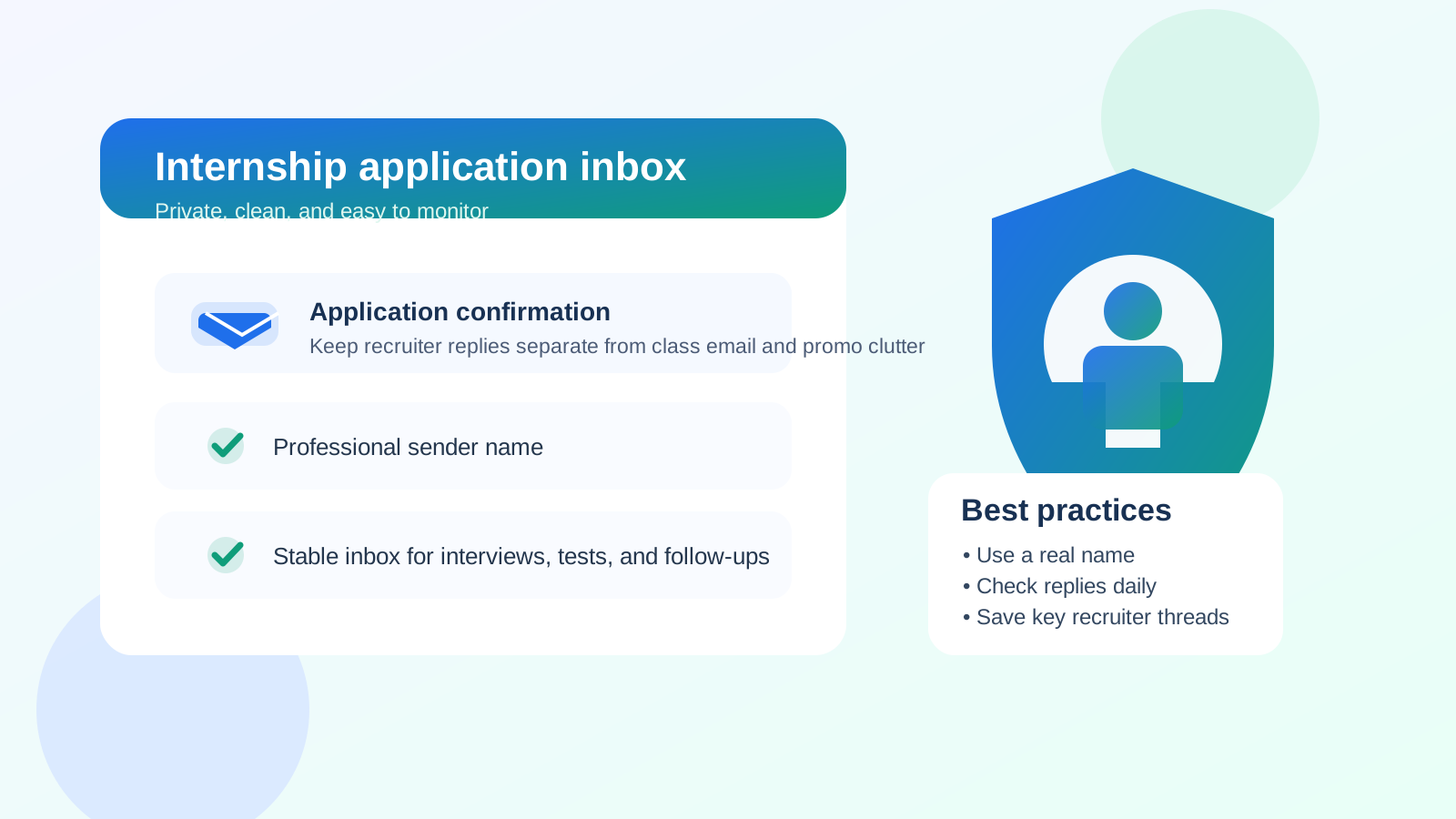
Why this question comes up in the first place
Internship applicants live in a weird middle ground. You need to look organized and reachable, but you also do not want your school inbox, personal inbox, or long-term primary address sprayed across every career portal, resume database, startup application, and “quick talent form” you touch during recruiting season. Many students apply to dozens of internships in a short window, and every application can create a tail of confirmation emails, assessment invites, scheduling messages, reminder sequences, and follow-up marketing.
That is why provider choice starts to matter. People are not only asking whether an email address can receive mail. They are asking whether it helps them look credible, whether it keeps their search organized, and whether it protects them from extra clutter and unnecessary exposure.
StartMail enters that conversation because it feels more stable than a disposable inbox while still appealing to people who care about privacy. It is not the same as using a temporary mailbox for a one-time signup. It is closer to choosing a separate, deliberate inbox for a serious but contained purpose.
Short answer: StartMail is usually fine if the address itself looks normal
Most recruiters do not care whether your inbox is hosted by Gmail, Outlook, StartMail, Fastmail, or another legitimate provider. They care more about three things: whether your address looks professional, whether messages reliably reach you, and whether you respond on time.
That means StartMail is not automatically a plus or a minus. It becomes a good option when it helps you stay organized and present yourself cleanly. It becomes a weaker option only when you use it in a way that looks confusing, overly anonymous, or easy to abandon.
When StartMail is a good choice for internship applications
You want a separate internship-search inbox
This is probably the strongest reason to use it. Internship recruiting creates a lot of message traffic: confirmations, coding tests, case-study deadlines, recruiter outreach, campus-event follow-ups, and rejection emails that you may or may not want mixed into your regular personal inbox. A separate application inbox gives you a cleaner workflow and makes it easier to track what matters.
You care about privacy without looking disposable
There is a difference between privacy and instability. A true throwaway address can be useful for low-trust situations, but it can also look temporary if you use it for real back-and-forth with employers. StartMail sits in a more credible middle zone. It lets you avoid using your oldest everyday address everywhere while still giving recruiters a normal-looking contact point.
You want distance from your school inbox
Students often default to a college email address because it feels official. But school inboxes can get buried under campus notices, course notifications, club mail, and career-center blasts. They may also become less convenient after graduation. Using a separate internship inbox can make it easier to keep your search independent from your academic admin traffic.
You already use a clean sender name
If your address is simple and readable — something close to your real name rather than a pile of numbers, jokes, or old usernames — StartMail can look perfectly fine. That matters more than the provider brand alone.
What recruiters actually notice
Applicants sometimes overestimate how much a recruiter will judge the specific mail service. In reality, most people on the hiring side are looking at the whole contact signal, not the brand on the domain. They notice:
- whether your address looks professional and easy to read
- whether you reply promptly
- whether your messages land in a normal thread without bouncing or disappearing
- whether your name in the inbox matches the name on your resume and application
So if your StartMail setup is clean, consistent, and monitored, it is unlikely to create meaningful friction by itself.
Where StartMail can create friction
If you treat it like a disposable inbox
The biggest mistake is not using StartMail. The biggest mistake is acting as if any separate inbox can be ignored for long stretches. Internship timelines move quickly. A recruiter may send an interview slot, a take-home assignment, or a same-day scheduling question and move on if you do not respond. If you create a separate inbox, you have to commit to checking it.
If the address looks overly anonymous
Privacy-focused does not need to mean suspicious-looking. An address like firstname.lastname@… is usually fine. An address full of random words, numbers, or odd branding can make your application feel less polished even if the provider itself is legitimate.
If you switch addresses mid-process without a reason
Consistency helps. If you apply with one address and then later start replying from another without explanation, you create needless confusion. For internships, where multiple people may touch the process, keeping one stable address is smarter.
If you use it for applications but fail to save important records
Internship recruiting can include offer letters, onboarding instructions, tax paperwork notices, and portal invites. A privacy-minded inbox is fine for recruiting, but once a role becomes real, you should make sure you preserve important threads and documents in the place you plan to monitor long term.
StartMail versus a temporary inbox
This is where the distinction matters. A temporary inbox is useful for very low-trust situations: one-off downloads, gated resources, rough early research, or signup flows you do not want tied to your real identity. But serious internship applications are usually not that. They often involve ongoing communication over days or weeks.
That makes StartMail a better fit than a disposable inbox when you expect actual human follow-up. If you use Anonibox or another temporary-email workflow for very early filtering, that can be reasonable for low-stakes scenarios. But once you are sending a resume to a real employer, a stable inbox you can watch every day is the safer choice.
How StartMail compares with more common providers
Gmail and Outlook have one obvious advantage: they are familiar to everyone. No recruiter has to wonder what they are. StartMail does not have that same universal familiarity, but that does not automatically hurt you. A lesser-used provider is usually fine when the address is readable and your communication is normal.
What matters more is whether StartMail helps you do the practical parts of the search well. Can you organize interview threads? Can you search old messages quickly? Can you keep spam separate from real opportunities? Can you respond fast from your phone and laptop? If the answer is yes, you are already solving the problems that actually affect internship outcomes.
Best practices if you use StartMail for internship applications
Use one professional address format
Keep it simple. Variations of your real name are usually best. Avoid anything playful, cryptic, or overly privacy-branded if it makes the address harder to trust at a glance.
Check the inbox every day during active recruiting
Do not create a separate application inbox and then forget it exists. Internship hiring often moves faster than full-time hiring, especially for smaller teams and seasonal roles.
Match your display name to your resume
If your resume says Jordan Lee, your inbox should not display as something unrelated. Matching identity signals makes life easier for recruiters and reduces accidental confusion.
Whitelist or star important threads
When you start hearing from real companies, mark those conversations clearly. That is often more important than obsessing over the provider itself. Good organization beats email-brand anxiety.
Move long-term records into your permanent system when necessary
If an internship turns into an offer, onboarding flow, or continuing relationship, save the important information where you will still have it months later. Separate inboxes are useful, but record-keeping matters too.
When StartMail is probably not the best choice
StartMail may be a weaker fit if you already have a polished, well-managed application inbox elsewhere and switching would only add complexity. It may also be unnecessary if you are applying to only a few internships and already have a clean personal address that you use solely for professional communication.
It is also the wrong tool if what you really want is a one-hour burner for extremely low-trust forms. In that case, a temporary inbox strategy makes more sense than pretending a long-term recruiting conversation will stay low stakes.
Scam awareness still matters
No email provider prevents internship scams by itself. Even with a separate inbox, you still need to watch for red flags: vague recruiter messages, pressure to move immediately to Telegram or WhatsApp, requests for payment, surprise equipment purchases, or demands for sensitive documents before the role is clearly real.
A separate privacy-focused inbox can reduce clutter and limit exposure, but it is not a substitute for judgment. Verify company domains, check whether the role exists on the employer’s real careers page, and be cautious with attachments and links if the outreach seems off.
A quick decision checklist
- Does the address look like a real professional inbox tied to your name?
- Will you check it consistently during recruiting season?
- Are you using it to stay organized, not to disappear?
- Can you preserve important messages if the internship process advances?
- Would a recruiter find your contact details clear and consistent with your resume?
If the answer is yes across the board, StartMail is probably a perfectly workable option.
Final answer
Yes — StartMail can be a smart choice for internship applications when you want more privacy and better inbox separation without looking like you are using a throwaway email. For most recruiters, the provider matters far less than whether your address is professional, your replies are prompt, and your contact details stay consistent throughout the process.
Use it as a real application inbox, not a disposable one. If it helps you stay organized, protect your main address, and keep internship communication easy to manage, it is doing its job well.