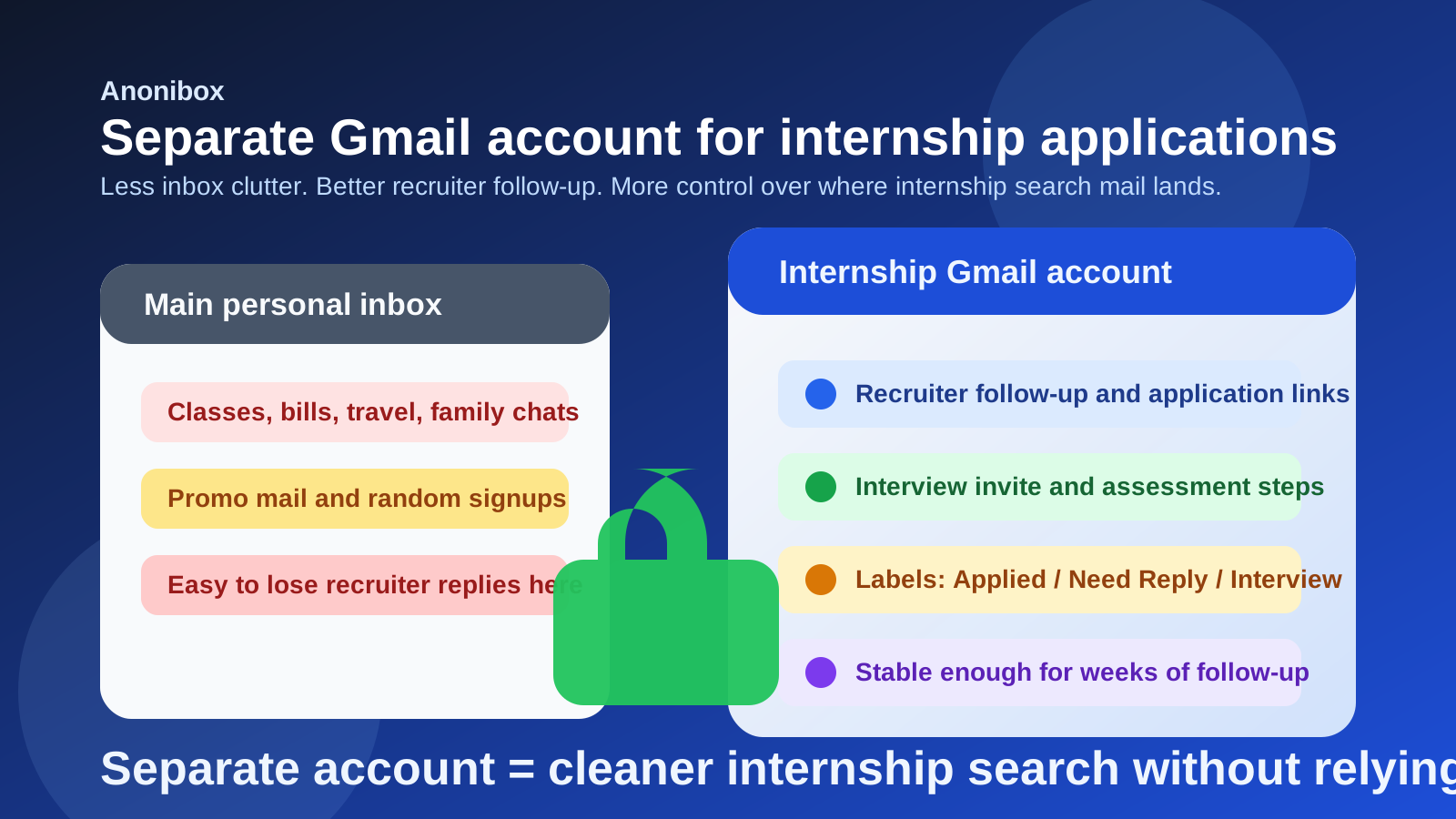
Usually yes. A separate Gmail account for internship applications is one of the simplest ways to protect your main inbox, stay organized, and keep recruiter follow-up from getting buried in personal mail.
For real internship opportunities, it is usually a better long-term choice than a disposable inbox. Temporary email still has a place for low-trust signups or one-off platform testing, but serious applications usually need a stable address you will keep checking.
Why this question matters for internship season
Internship searches create a strange kind of inbox overload. You might apply through company career pages, campus portals, startup forms, recruiter databases, scholarship networks, and student job boards all in the same week. Each one can trigger a long chain of messages: confirmations, assessment links, webinar invites, “join our talent community” follow-up, interview scheduling, and alerts for unrelated roles you never asked for.
If all of that goes to the same Gmail account you use for school, subscriptions, family messages, shopping receipts, and day-to-day logins, it gets harder to notice what actually matters. The point of a separate Gmail account is not to be dramatic. It is to give your internship search its own lane.
That also helps with privacy. Every application system, recruiter workflow, and student platform you touch does not need the same long-term address tied to the rest of your online life. A separate account will not make you anonymous, but it does reduce how widely your main inbox gets exposed during the search.
Short answer: yes, for most active applicants it is a smart default
If you are applying to more than a handful of internships, using a separate Gmail account is usually worth it. Gmail is familiar, easy to access on any device, simple to organize with labels and filters, and stable enough for a process that may stretch over weeks or months.
The important distinction is this: separate does not have to mean temporary. A serious internship application often needs a real inbox that stays available for recruiter replies, interview invites, assessment reminders, and sometimes offer paperwork. A separate Gmail account gives you that stability without forcing you to use your oldest personal address everywhere.
What a separate Gmail account helps you control
1. Recruiter follow-up is easier to spot
Internship recruiting can move fast. A recruiter may send an interview request with only a short window to reply. A campus employer may follow up after an event. A startup may send a skills assessment that expires quickly. When those messages land inside a crowded personal inbox, the risk of missing them is real.
A dedicated Gmail account makes triage easier because almost everything in that inbox is related to your search. You do not have to mentally sort internship mail from travel confirmations, friend group threads, app receipts, and old newsletters every time you check your phone.
2. Your main inbox stays cleaner
Even legitimate internship platforms can generate noise. You may start by applying to one role and end up receiving broad recruiting blasts, event announcements, or “similar opportunities” messages for months. Keeping those in a separate Gmail account protects the inbox you use for everyday life.
3. Labels and filters become genuinely useful
Gmail works well when you use its basic tools. A separate internship account lets you label threads by company, star anything involving interviews, create filters for assessment platforms, and keep active opportunities visible. That kind of organization matters more when you are balancing classes, deadlines, and maybe part-time work at the same time.
4. You get a cleaner off-ramp later
When internship season ends, you may not want all that recruiting traffic following you forever. A separate account is much easier to mute, clean up, or retire than your primary personal Gmail. That makes the long-tail spam problem much smaller.
When a separate Gmail account is usually better than temporary email
Temporary email is useful, but it is not the right tool for every step. If you are testing a sketchy internship board, unlocking a one-off download, or trying an unfamiliar signup flow you do not trust yet, a disposable inbox can be helpful. That is where a tool like Anonibox fits naturally: it lets you shield your real address during early, low-stakes, or low-trust interactions.
But once an internship opportunity becomes real, stability matters more than throwaway privacy. Recruiters may reply days later. Interview instructions may arrive after you forgot the original form. Assessment links may need to be re-opened from the same thread. In those situations, a separate Gmail account is the safer workflow because it keeps the communication channel alive without exposing your main inbox everywhere.
That is why a separate Gmail account often beats a pure disposable strategy for real applications. You still get separation, but you do not lose continuity.
Why Gmail specifically works well for this
There is nothing magical about Gmail, but it is a practical choice. Most students already know how to use it, mobile notifications are familiar, search is strong, and labels are easy enough to maintain without becoming a whole productivity project. If you need an account that is simple, stable, and unlikely to confuse recruiters, Gmail is a safe default.
A separate Gmail account also works well if you later want to forward selected messages, create calendar events from interview invites, or keep internship-related files together. The main advantage is not brand prestige. It is low friction.
How to set up the account the right way
Choose a professional address
Keep it simple. Your name or initials are enough. Avoid joke handles, random numbers that make the address look abandoned, or anything that feels too close to a throwaway inbox. The goal is a normal address you would be comfortable putting on a résumé, application form, or recruiter reply.
Use your real display name
Recruiters usually notice the display name before they notice the full address. Make sure it reflects your actual name so replies do not look mismatched or suspicious.
Set recovery and security details immediately
If the account is going to hold important recruiter threads, lock it down properly. Add a recovery option you control, use a strong password, and turn on the security features that fit your setup. You do not want to lose access halfway through interview scheduling.
Create a minimal label system
You do not need a complicated setup. A few labels are usually enough:
- Applied
- Need Reply
- Interview
- Offers / Next Steps
That small amount of structure can save a surprising amount of stress later.
Check it regularly
The separate account only helps if you actually monitor it. During active application periods, that usually means at least once or twice a day, with closer attention around interview windows or assessment deadlines.
When a separate Gmail account may be especially useful
- You are applying to many internships at once.
- You are using multiple job boards, career pages, and campus systems.
- You want to keep internship mail separate from school and personal life.
- You are worried about missing interview requests in a crowded inbox.
- You want a stable alternative to disposable email once a company starts real follow-up.
If several of those apply to you, the case for a separate Gmail account is pretty strong.
When it may be unnecessary
If you are only applying to one or two internships through trusted employers, already keep your main Gmail very organized, and do not mind some extra recruiting mail, then a separate account may be optional. It is helpful, but not mandatory in every situation.
The moment your search becomes wider, though, the benefits show up quickly. Volume changes the equation.
Common mistakes to avoid
Using too many addresses
One separate Gmail account is usually enough. If every application gets a different address, you create confusion for yourself and make follow-up harder to track.
Treating the separate account like a disposable account
If you hand the address to recruiters, keep it active and checked. The whole point is to create a stable professional buffer, not a half-throwaway mailbox you forget exists.
Switching addresses in the middle of a process without tracking it
If one company has your school address, another has your personal Gmail, and a third has your new internship inbox, note that somewhere. Mixed contact records can create missed replies and awkward confusion.
Assuming Gmail solves every privacy problem
A separate Gmail account improves separation and organization. It does not automatically stop scams, phishing, fake recruiters, or spam forever. You still need normal caution with suspicious messages, links, and attachments.
A practical three-layer setup
For many people, the cleanest workflow looks like this:
- Main personal inbox: everyday life, long-term accounts, family, school, and personal communication.
- Separate Gmail account for internship applications: real applications, recruiter replies, interview scheduling, and anything tied to actual opportunities.
- Temporary inbox when needed: low-trust signups, one-off platform testing, or early exploratory forms where you are not ready to share a stable address.
That setup gives you the best of both worlds. You do not flood your main inbox, but you also do not run serious internship communication through an address you might stop using tomorrow.
Final answer
Yes, in most cases you should use a separate Gmail account for internship applications. It is one of the easiest ways to make your internship search more organized, reduce spillover into your personal inbox, and keep real recruiter communication easier to spot.
The best version of this strategy is simple: use a stable, professional Gmail account for real opportunities, and save temporary email for low-trust or low-stakes signups where long-term follow-up does not matter. That gives you better privacy than using your main address everywhere and better reliability than relying on disposable inboxes alone.
If your internship season is getting noisy, this is a small workflow change that usually pays off fast.