Usually yes. A separate email for apartment applications is often the smartest option because it keeps rental paperwork, screening updates, and landlord follow-up out of your main inbox without the instability of a disposable address.
The practical rule is simple: use a stable separate inbox once you move past casual listing inquiries and into real applications, fees, screening links, document requests, and lease-related communication.
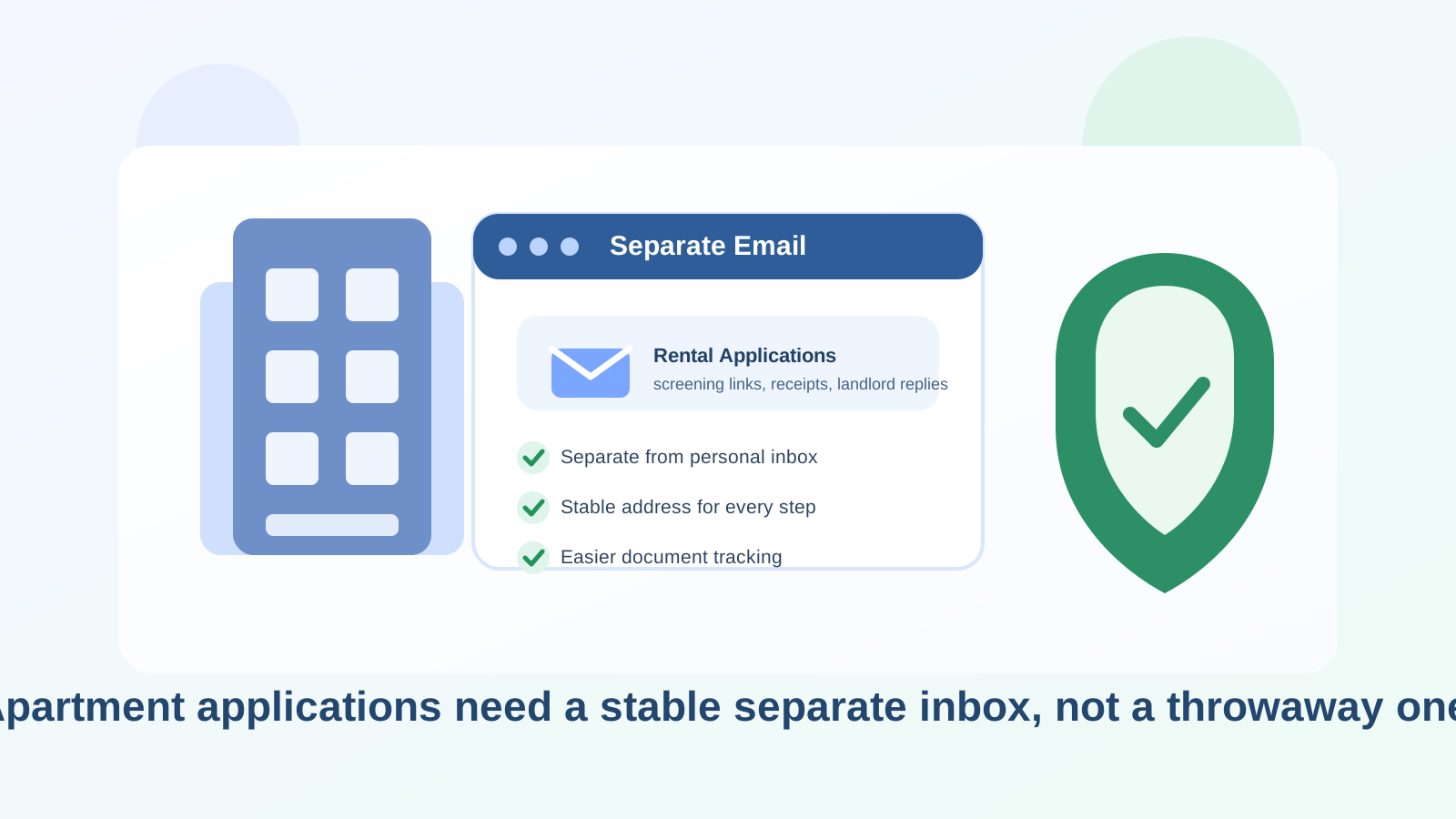
Why apartment applications deserve more care than apartment inquiries
Asking whether a unit is still available is one thing. Completing an apartment application is something else entirely. Once you apply, the email thread often starts carrying more personal information, more deadlines, and more documents than people expect.
You may receive screening invitations, application receipts, proof-of-income requests, pet-policy follow-ups, identity-verification steps, co-applicant instructions, move-in forms, and messages from property managers or leasing software. If those emails are mixed into your everyday personal inbox, it becomes easier to miss something important. If they go to a throwaway inbox, it becomes easier to lose access entirely.
That is why a separate email for apartment applications is often the sweet spot. It gives you privacy and organization without sacrificing continuity.
What “separate email” should mean in this context
A separate email is not the same thing as a temporary inbox that may disappear in a few hours or days. It is a dedicated address you control and can keep checking throughout the rental process. That could be a second Gmail or Outlook account, a privacy-focused paid mailbox, or another stable inbox you manage specifically for housing searches.
The point is not to look mysterious. The point is to create a clean boundary. Your apartment search can generate a surprising amount of noise, and a dedicated inbox lets you contain that noise without putting actual application steps at risk.
Why a separate email is often better than your main personal inbox
1. It limits long-tail spam
Rental websites, listing syndication networks, brokers, and “similar property” alerts can keep emailing long after you stop caring about a listing. If your main inbox is attached to every application and inquiry, that clutter can stick around for months.
2. It keeps your application trail easy to follow
Apartment applications often move quickly. One property may ask for pay stubs, another may send a screening link, and a third may request a deposit receipt or co-signer form. A separate inbox makes those threads much easier to search, label, and review when you need proof of what was sent and when.
3. It reduces accidental personal-data spillover
Your primary inbox may already contain years of receipts, personal contacts, subscription emails, and account recovery messages. Using a separate email for apartment applications lowers the odds of confusing autofill suggestions, replying from the wrong address, or mixing housing paperwork with unrelated personal correspondence.
4. It creates a cleaner decision point later
Once you get approved and sign a lease, you can decide whether to keep using that inbox for move-in and tenant communication or gradually move important contacts into a more permanent channel. Either way, you have options. If you use your main inbox from day one, there is no clean separation later.
Why a separate email is usually better than a temporary or burner inbox at the application stage
Temporary inboxes can be useful during the earliest research stage, especially when you are testing unfamiliar listing forms or trying to avoid immediate marketing spam. But actual apartment applications usually require a more reliable setup.
Landlords and leasing teams may send important follow-ups several days later, not just a few minutes after you apply. If your inbox expires, gets blocked by a portal, or simply looks too disposable, you create unnecessary friction for yourself.
That is the real distinction:
- Temporary email: useful for early low-trust inquiry forms and rough market research.
- Separate stable email: better for real apartment applications, screening steps, and paperwork.
- Main personal email: workable, but often messier and less private than necessary.
If you use Anonibox or another disposable tool early in the process, that can still make sense for low-trust listing experiments. Just do not let a throwaway address remain attached once you are paying application fees, uploading documents, or waiting for approval decisions.
When using a separate email for apartment applications makes the most sense
- You are applying to several properties at once and want cleaner organization.
- You expect a mix of portal emails, agent replies, and screening notices.
- You want to protect your main inbox from future listing spam.
- You are using multiple rental platforms and do not fully trust all of them equally.
- You want one clear channel for co-applicant, guarantor, or document-related follow-up.
In short, the more active or competitive your apartment search is, the more helpful a dedicated inbox becomes.
When your main email may still be good enough
You do not always need a second inbox. If you are applying to one or two well-vetted properties, you already keep your main mailbox organized, and you are comfortable sharing that address, your primary email may be perfectly fine.
But even in those cases, a separate inbox can still be the lower-friction choice if you expect listing sites to keep marketing to you later. Think of it less as a hard privacy requirement and more as a practical control tool.
How to set up the right separate email for apartment applications
Choose a stable provider
Pick an email service you can reliably access for weeks or months, not just a temporary inbox. Familiar mainstream providers are fine. Privacy-focused providers can also work if they are stable and easy for you to monitor.
Use a normal, professional-looking address
An address based on your name is usually the safest choice. Apartment applications are not the place for joke usernames, random numbers if you can avoid them, or anything that makes a landlord wonder whether the inbox will vanish tomorrow.
Turn on basic security
Use a strong unique password and enable two-factor authentication if the provider supports it. Apartment applications can involve income details, addresses, identity documents, and screening links, so the inbox should be treated like a real account, not a disposable convenience.
Create simple labels or folders
Even one or two labels can help: one for active applications, one for approved or rejected properties, and one for receipts or screening messages. This takes minutes and can save real confusion later.
Check it consistently
A separate inbox only works if you actually monitor it. If you tend to forget secondary accounts, set notifications or a calendar reminder during the apartment hunt.
Privacy mistakes to avoid
- Using your work email: housing searches are personal, and work-managed inboxes may create visibility, retention, or boundary issues.
- Using a disposable inbox too long: fine for testing, risky for actual application steps.
- Letting autofill overshare: double-check what forms are filling in, especially phone numbers, current address details, and saved payment or identity information.
- Ignoring suspicious requests: if a “landlord” rushes you into sending sensitive documents before you can verify the listing, slow down.
- Forgetting to save receipts: keep copies of confirmation emails, application-fee receipts, and any timeline promises you may need to reference later.
Separate email vs email alias vs separate Gmail account
These options overlap, but they are not identical.
- Separate email: the broad strategy of using a dedicated inbox just for apartment applications.
- Email alias: a forwarding layer that can help hide your base address, but may add complexity if reply handling is awkward.
- Separate Gmail or Outlook account: a common way to implement the broader separate-email strategy.
If you want the simplest reliable setup, a dedicated full inbox is often easier than relying on forwarding tricks alone. Aliases are useful, but apartment applications can involve enough back-and-forth that some people prefer a standalone mailbox they fully control.
Red flags that matter more than the address itself
The email strategy helps, but it is not the only thing that matters. Be cautious if a listing asks for an application fee before you can verify the property, pressures you to continue only over chat apps, refuses to answer basic questions, or requests highly sensitive documents unusually early. A cleaner inbox can reduce clutter, but it does not replace common-sense scam screening.
A quick checklist before you apply
- Is this a real inbox I can access for the full application timeline?
- Does the address look normal and trustworthy?
- Have I separated this process from my work email and main personal inbox if needed?
- Do I have a way to save receipts, screening emails, and approval messages?
- Am I still using a temporary inbox after the process has become real? If so, it is probably time to switch.
Final answer
Yes, in most cases a separate email for apartment applications is a smart move. It gives you better privacy than using your main inbox everywhere, and it gives you better reliability than using a disposable address once landlords, screening services, and leasing offices start sending important next steps.
The best setup is a stable, dedicated inbox you can monitor closely throughout the rental process. That way you stay organized, protect your main email from long-tail listing spam, and still have a dependable place for every message that matters.