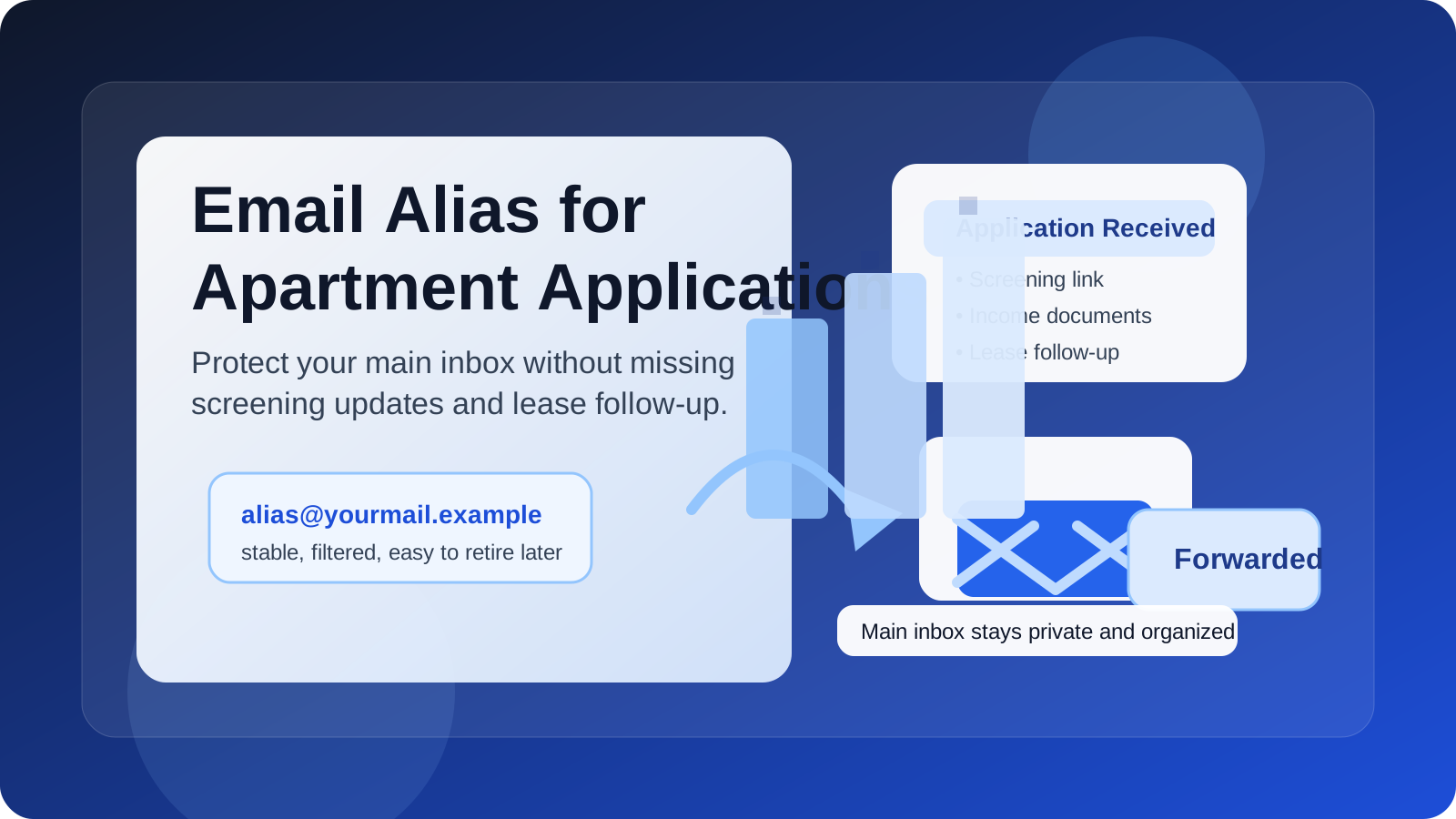
Yes — an email alias can be a smart choice for apartment applications when you want more privacy without losing access to screening updates, document requests, and lease follow-up.
It usually works best as a stable middle ground: safer than giving every rental platform your primary inbox, but more reliable than a short-lived temporary address once an application becomes real.
That distinction matters because apartment applications are not just casual listing inquiries. Once you move past “Is this unit still available?” and start sending formal applications, the inbox attached to that process may receive credit-check links, pay-stub requests, identity-verification notices, co-applicant instructions, application receipts, approval updates, and sometimes lease paperwork. At that stage, privacy still matters, but continuity matters too.
Why apartment applications are different from apartment inquiries
An apartment inquiry is often a low-commitment first contact. You may be messaging several listings, testing whether the property is real, and trying to avoid long-term listing spam. An apartment application is a different stage. It is more formal, more sensitive, and usually tied to deadlines.
That is why the best email choice often changes as the rental search becomes more serious. A fully disposable inbox can be fine for early browsing. A stable alias can be better once you are sharing real information and waiting for next steps. And in some cases, a separate dedicated mailbox is the cleanest option of all.
What an email alias actually does
An email alias is a secondary address that forwards messages to an inbox you already control. To the landlord, leasing office, or rental portal, it looks like a normal address. On your side, it gives you one layer of separation from the inbox you use for personal life, work, banking, healthcare, and everything else.
That makes an alias attractive for apartment applications because it gives you a practical mix of privacy and reliability. You can stay reachable for legitimate property communication without spreading your long-term personal address across every rental form, syndication network, and follow-up sequence involved in the housing search process.
Why an email alias can be a strong fit for apartment applications
1. It limits long-tail rental spam
Rental platforms rarely stop at one message. A single application or “start application” flow can trigger reminders, listing updates, similar-property promos, agent outreach, and CRM follow-up long after you stop caring about that building. If you use an alias, you get an exit strategy later. You can filter it, pause it, or retire it without touching your core inbox identity.
2. It keeps application messages easier to sort
Apartment applications create a surprising number of threads. One property sends a screening link, another asks for income verification, a third sends a portal login, and a fourth follows up about availability after you already moved on. Using an alias makes it easier to route those messages into a dedicated label or folder so they do not disappear under unrelated personal mail.
3. It gives you continuity that a temporary inbox may not
The big weakness of a throwaway inbox at the application stage is not privacy — it is persistence. Important housing messages do not always arrive five minutes after you apply. They may show up two days later, after business hours, or only after a property manager reviews your file. A stable alias preserves continuity while still keeping your real address one step removed.
4. It helps you trace which source generated future noise
If you use a distinct alias for one portal, one broker, or one property group, you get much better visibility into where later spam came from. That is useful if a platform starts marketing aggressively after your search ends.
When using an alias for apartment applications makes the most sense
- You are applying to several apartments at once and want cleaner organization.
- You expect screening emails, document requests, or portal links over the next few days or weeks.
- You want more privacy than your main inbox provides, but you do not want the fragility of a disposable address.
- You are using listing sites or rental software you do not fully trust to leave your inbox alone later.
- You want a smoother transition from early inquiry stage to formal application stage without creating a brand-new mailbox for every search.
For many renters, this is the sweet spot. An alias gives you more control than using your primary inbox everywhere, but less overhead than spinning up a completely separate mailbox if you do not need one.
When an alias may not be the best choice
An alias is not automatically the right tool in every case. Sometimes a full separate mailbox is cleaner.
- If you need shared access: A partner, roommate, guarantor, or family member may also need to monitor messages. A shared dedicated mailbox can be simpler than alias forwarding.
- If your reply workflow is awkward: Some alias systems handle outbound replies beautifully. Others are clunky. If you have to jump through hoops to reply from the same visible address, that is friction you do not want during a live housing application.
- If the property relationship may continue long term: If you expect to use the same address for move-in instructions, maintenance portals, and tenant communication, a stable separate inbox may be the better long-term home.
- If the application portal is picky: Some systems send magic links, account-verification flows, or password resets that are easier to manage in a regular mailbox you log into directly.
Alias vs. temporary email vs. separate mailbox
The easiest way to make the right choice is to match the tool to the stage.
Temporary email
Best for the earliest, lowest-trust phase: browsing listing sites, testing contact forms, or avoiding immediate marketing spam. If you are only trying to see whether a marketplace is noisy, a temporary inbox can be useful. If you are already paying application fees or expecting screening links, it is usually too fragile.
Email alias
Best for the middle ground: real applications, real follow-up, and real privacy concerns, but without the commitment of a fully separate mailbox. This is often the practical default if you want stable replies and a cleaner privacy boundary.
Separate mailbox
Best when you want maximum separation, long-term organization, or shared access. If your apartment search is intense, lasts for months, or involves multiple decision-makers, a dedicated rental mailbox can be worth the extra setup.
If you already use Anonibox or another temporary-email workflow during the earliest search stage, an alias can be the logical next step once a listing becomes serious enough that you need continuity. That staged approach usually makes more sense than trying to force one tool to cover the entire housing process.
How to use an alias for apartment applications without making a mess
Choose a stable alias provider
Do not use an alias setup you barely understand. Pick one that reliably forwards mail, lets you see messages promptly, and supports replies in a way you have already tested.
Make the address look normal
You do not need a flashy or overly clever address. Something simple and human-looking is usually best. The goal is not to look mysterious. The goal is to keep your actual primary inbox from becoming the permanent target of rental spam.
Test forwarding and replies before you apply
Send a message to the alias yourself. Reply to it. Check whether the visible sender still looks correct. This small test matters because apartment applications can move fast, and you do not want to discover a reply problem after a leasing office sends a time-sensitive request.
Create one folder or label for active applications
Even a minimal system helps. One label for active applications, one for completed or rejected ones, and one for receipts or screening messages is often enough to keep the process manageable.
Switch to a more permanent channel if you get approved
An alias is great for application-stage privacy, but once you sign a lease, it is worth deciding whether to keep using that alias, move important landlord contacts into a permanent mailbox, or preserve the alias only for portal-related traffic. The key is to make that transition deliberately instead of letting every application address become permanent by accident.
Risks and limitations to keep in mind
It does not stop scams on its own
An alias reduces exposure. It does not verify that a listing is real. You still need to watch for common rental red flags: pressure to send money before a tour, vague ownership details, requests to move off-platform immediately, mismatched photos, and deals that look far better than the market.
You can still lose track of messages if you are disorganized
Privacy tools only help if you actually monitor them. If you set up an alias and then forget to check the inbox it forwards into, you have not solved the real problem.
Some landlords may prefer a stable-looking address
Most professional leasing teams care more about responsiveness than the provider behind your email. Still, an alias that looks suspicious, disposable, or joke-like can create unnecessary friction. Keep it simple.
Applications often involve sensitive documents
Once you are sending pay stubs, IDs, tax records, or co-signer details, treat the receiving inbox seriously. Use strong passwords, enable two-factor authentication where possible, and avoid relying on any setup you would not trust for moderately sensitive communication.
A practical checklist before you use an alias on an apartment application
- Can you reliably receive messages for the next few weeks?
- Can you reply from the same visible address without confusion?
- Does the alias look normal enough for a landlord or leasing office?
- Do you have a folder, label, or workflow for active applications?
- If the application becomes a lease, do you know whether you will keep using the alias or switch to another inbox?
If the answer to those questions is yes, an alias is usually a reasonable choice.
Final answer
Yes — an email alias is often a smart option for apartment applications. It gives you more privacy than using your main inbox everywhere, but more stability than relying on a temporary address after the process becomes serious.
The best approach is to treat it as part of a staged workflow. Use temporary inboxes for low-trust browsing if you want, use a stable alias for real application traffic, and switch to a fully separate or permanent mailbox when the property relationship becomes long term. That way you stay reachable for screening updates and lease follow-up without handing your primary inbox to every rental platform you touch.