Yes, you can use your personal email for apartment applications if it is professional, stable, and easy to monitor — but it is not always the smartest default.
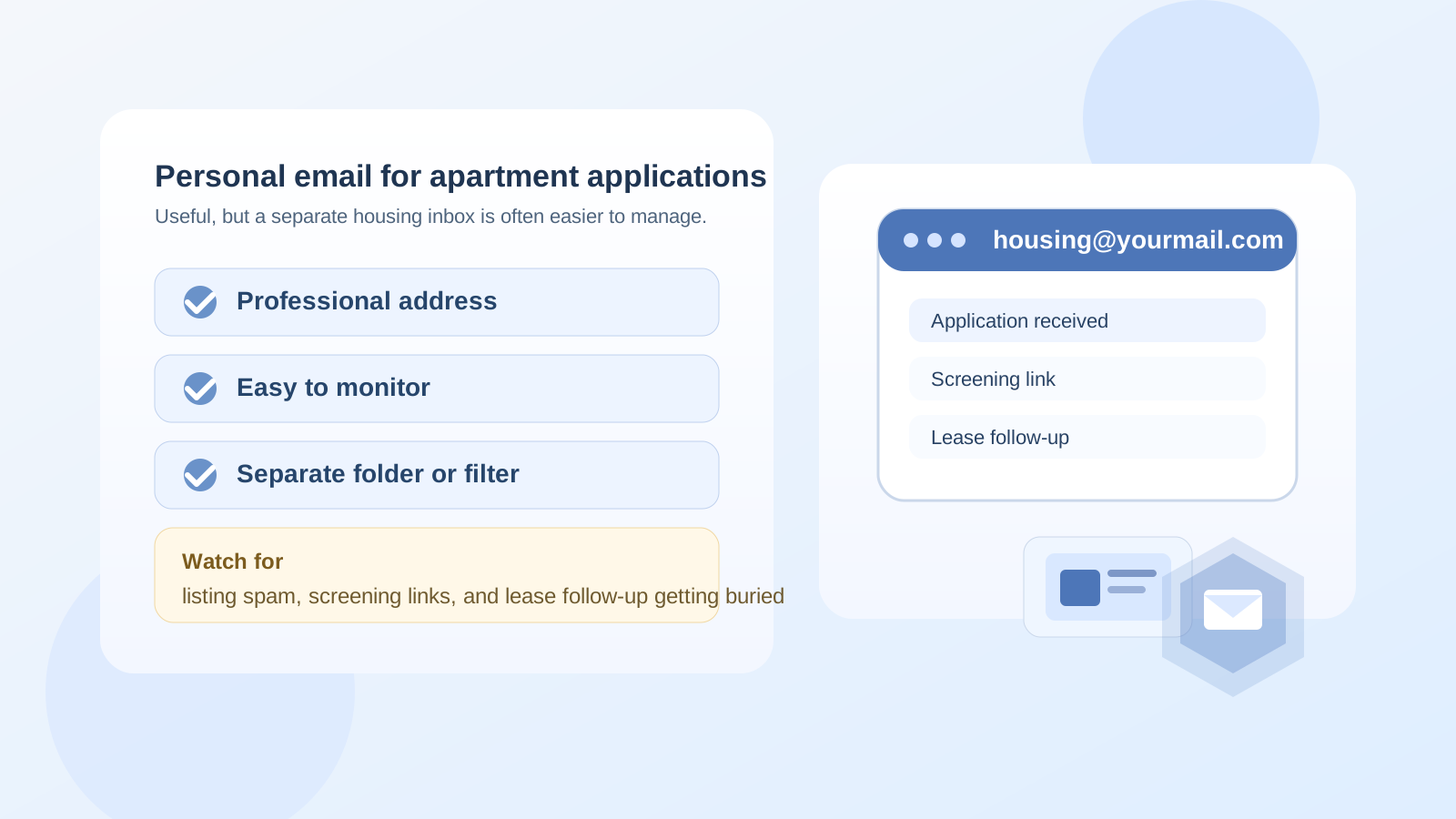
A separate housing inbox often gives you better organization, less long-term listing spam, and cleaner boundaries for screening links, receipts, and lease follow-up. If you only need a low-trust inbox for early listing contact, a temporary option like Anonibox can help, but serious applications should move to a stable address you control.
Why this question matters more at the application stage
Apartment inquiries and apartment applications are not the same privacy decision. An inquiry is usually a quick first contact: asking if a unit is still available, whether pets are allowed, or whether a tour is possible this week. An application is heavier. Once you apply, the email thread often expands into identity verification, screening invitations, fee receipts, income-document requests, co-applicant coordination, and lease paperwork.
That changes the role of your email address. It is no longer just a way to send one message to a landlord or property manager. It becomes the place where time-sensitive updates arrive and where parts of your housing record may end up living for weeks or months. The right email choice is the one that helps you stay reachable without making your long-term inbox harder to manage.
Short answer: personal email is usually acceptable, but not always ideal
Most landlords and leasing teams do not care whether you apply from your everyday personal inbox or a dedicated housing account. They care that the address is real, professional, and checked regularly. So if your personal email is something you plan to keep for years, you look at it often, and it does not already drown in clutter, using it for apartment applications can work perfectly well.
The catch is that “acceptable” and “optimal” are not the same thing. Many people use their oldest personal email for everything: shopping, travel, banking alerts, newsletters, school messages, loyalty programs, and old account signups. Adding rental applications on top of that can make important approval notices or missing-document requests harder to spot. In that situation, a separate housing inbox is often the cleaner choice.
When using your personal email makes sense
1. Your address already looks professional
If your email is some version of your real name and does not look chaotic or outdated, it is usually fine for apartment applications. Property managers are not expecting a special “renting-only” email. They just need an address that looks normal and easy to reply to.
2. You are applying selectively, not everywhere
If you are sending a small number of applications to buildings or landlords you have already vetted, your personal inbox may stay manageable. The spam and organization risk rises when you are applying widely across listing platforms, screening vendors, and management companies all at once.
3. You already manage your inbox well
Some people are excellent at using folders, labels, stars, filters, and notification settings. If you already keep your inbox under control, your personal email may not create much friction. The main risk with personal email is rarely the word “personal.” It is that the inbox might already be too noisy.
4. You want long-term continuity
This is a real advantage. A stable personal address stays with you even if you change jobs, move cities, or stop using a school email. Apartment timelines can drift. A property may go quiet for ten days and then suddenly send a screening link with a short deadline. A stable personal inbox is often better than a work or school address if long-term access is the priority.
When personal email becomes the wrong default
1. Your inbox is already overloaded
If your main account is full of promotions, package alerts, newsletters, family threads, and app notifications, apartment-application messages can disappear into the mess. Missing a background-check email or document request because it landed between store receipts and travel updates is an avoidable problem.
2. Your personal address is already exposed everywhere
If you have used the same address for years across dozens of services, job boards, and mailing lists, adding more rental forms can increase noise and make later spam harder to trace. You may also have a harder time telling which follow-up emails are genuinely connected to an application and which are just marketing or unrelated outreach.
3. You want a stronger boundary around your housing search
Apartment hunting can turn into a temporary project with its own paperwork, deadlines, and stress. Some renters simply prefer to keep that project out of the same inbox they use for family, healthcare, money, and everyday life. That is a perfectly reasonable reason to use a separate account even if your personal email would technically work.
4. You may be sharing or forwarding application details
If a partner, roommate, guarantor, or parent may need to see parts of the process, a dedicated housing inbox can be easier to organize around. A personal inbox often contains too much unrelated information, which makes selective forwarding and clean recordkeeping more annoying than it should be.
How personal email compares with the alternatives
Personal email vs. a separate housing inbox
For many renters, a separate housing inbox is the best middle ground. It gives you the stability of a real account without mixing every application update into your oldest personal mailbox. You still look credible, you still control the account long term, and you get a cleaner place for tour confirmations, screening messages, and lease follow-up.
Personal email vs. temporary email
A temporary inbox can be useful early on when you are checking low-trust listings, testing whether a marketplace form works, or protecting your main address from obvious spam bait. But a serious apartment application usually should not live in a disposable inbox. You may need access to the thread later for receipts, screening links, or next-step requests. That is where a stable personal or dedicated housing account is safer.
Personal email vs. a privacy-focused provider or alias
A privacy-focused provider, alias, or forwarding setup can work well if you already understand how it behaves and you trust yourself not to miss replies. The main question is not whether the address is fancy. It is whether you can monitor it reliably through the full application cycle.
Best practices if you do use your personal email
- Create a folder or label immediately. Do this before you start applying so everything lands in one searchable place.
- Set a simple filter. Route messages that mention the property name, “application,” “screening,” “lease,” or “tenant portal” into a dedicated view.
- Star action items. Treat screening links, fee receipts, and missing-document requests differently from ordinary listing updates.
- Verify before sending sensitive material. Make sure the listing, management company, and reply address look legitimate before you send documents or click unexpected links.
- Keep one stable address through the serious stage. Do not bounce between multiple inboxes once you are actively applying.
Signs you should create a separate apartment-application inbox today
- You expect to apply to many places in a short period.
- Your main inbox is already cluttered or stressful.
- You are worried about long-term listing spam.
- You want a clean record for receipts, screening notices, and lease communication.
- You may need to coordinate with a partner, roommate, or guarantor.
A quick decision checklist
Use your personal email if it is professional, calm, and easy for you to monitor every day. Create a separate housing inbox if your current account is messy, heavily exposed, or tied to too much of your daily life. Use a temporary inbox only for low-trust early contact, not for the full application workflow.
Final takeaway
You can absolutely use your personal email for apartment applications, and for some renters it is the simplest choice. But if you want better organization, less spam, and a cleaner boundary around a sensitive process, a separate housing inbox is often the smarter default. The best setup is the one that helps you notice important updates fast, keep a clear record, and stay in control of your search from first application to final lease decision.