Telegram can help with apartment applications after you verify the landlord, broker, or leasing office, but it should not be the main place for screening links, sensitive documents, fees, or lease paperwork.
If you use Telegram at all, use it for low-risk follow-up and scheduling while keeping the real application trail in the official portal or a stable email account you monitor.
Apartment applications create a very different privacy problem than casual apartment browsing. Once you move past “Is this unit still available?” you may be sharing proof of income, ID documents, employment details, screening consent, co-signer information, move-in timing, and payment questions. That means the channel you use matters more than it did during the inquiry stage.
Telegram feels appealing because it is fast, familiar, and less formal than email. Some renters also like that it can rely on usernames, which makes it seem more private than ordinary texting. But privacy and safety are not the same thing. A chat app can make communication faster while still making it easier to lose records, trust the wrong person, or get pushed into a scammy process.
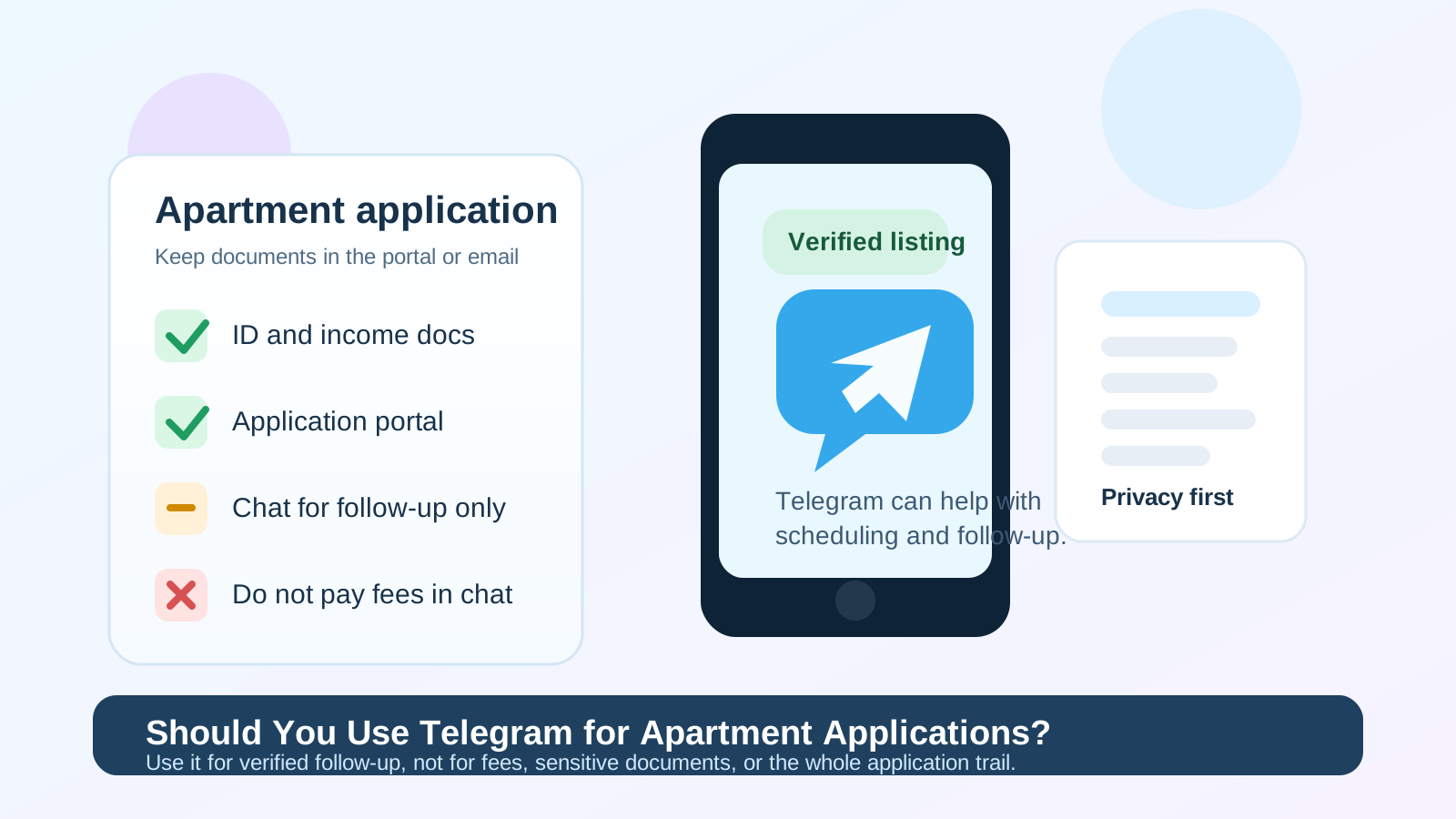
Short answer: useful for follow-up, weak as the main application channel
If a legitimate leasing team uses Telegram for quick updates, that is not automatically a red flag. It can be convenient for confirming a showing time, checking whether an application was received, or answering a simple question about one missing document.
What Telegram does poorly is everything that benefits from structure, accountability, and a durable record. Apartment applications often involve deadlines, uploaded forms, receipts, and highly sensitive personal details. Those are usually safer in the property’s portal or in email than in a fast chat thread.
Why renters even think about Telegram during apartment applications
Rental markets can move fast. A leasing assistant may want quick answers, a broker may be coordinating multiple applicants at once, or a landlord may prefer chat because it feels easier than long email threads. Telegram also comes up when renters want more control over who gets their main phone number or personal inbox.
That instinct makes sense. If you already use a separate apartment-search email or a privacy-focused workflow, Telegram can look like the chat equivalent of that separation. The problem is that apartment applications are not just about convenience. They are about trust, identity, and documentation. A faster channel is only helpful if it does not weaken those things.
What Telegram can do well during apartment applications
Fast scheduling and short updates
Telegram works well for messages like “I uploaded the pay stub,” “Can we move the call to 4 PM?” or “Please resend the application link.” Those are low-risk coordination messages where speed is useful.
A cleaner boundary than ordinary texting
If you do not want apartment-related messages mixed into your everyday SMS inbox, a separate chat app can help keep follow-up contained. That can make it easier to notice time-sensitive replies during a busy rental search.
Username-based communication in some cases
Depending on how you set up your account, Telegram can give you more control over how you present yourself than plain texting does. That can be helpful if you want a little distance between a housing search and your main personal contact identity.
What Telegram does not solve
It does not prove the property or the contact is real
This is the biggest mistake people make with chat apps. Telegram may protect message delivery better than ordinary SMS, but it does nothing by itself to verify a listing, confirm ownership, or prove that the person collecting your application fee is legitimate. A scammer inside a smooth chat is still a scammer.
It does not create the best paper trail
Apartment applications generate details you may need later: exactly when you sent a document, what fee instructions you received, what move-in date was discussed, and whether a concession or approval condition was promised. Email and official portals are usually much better for that kind of recordkeeping.
It does not eliminate identity exposure
People sometimes assume Telegram means anonymity. Real life is messier. Depending on your settings, the other person may still learn your name, profile photo, username, or phone-number-linked details. Even if you limit that exposure well, the conversation can still become a long-term contact route you did not really want to hand out.
The real risks of using Telegram for apartment applications
1. Weak verification at the exact moment the stakes rise
At the application stage, you are no longer just chatting about availability. You may be close to sharing highly personal documents or sending money. If someone pushes you into Telegram before you independently verify the property and the contact, the app can reduce the friction that would normally make you pause and check.
2. Pressure to move the whole process off better channels
A legitimate landlord might use Telegram for quick coordination. A shady operator might use it to avoid a cleaner record in the listing portal or email. If the other side wants everything to happen in chat, including fees, screening links, and file exchange, that is a meaningful warning sign.
3. Poor document handling
Chat threads are not ideal places for pay stubs, ID scans, bank documents, tax forms, or signed lease files. Even when the contact is real, it is easy to lose attachments in a fast thread or forget what was sent to whom.
4. Scam urgency
Apartment scams often depend on speed: “Someone else is ready to pay now,” “Send the deposit immediately,” or “We can only hold the unit if you finish this tonight.” Telegram is not the cause of that pressure, but it can make that pressure feel more personal and immediate.
5. Reusable contact exposure
A username or chat identity may feel lighter than your permanent email address, but it can still become a reusable route for future messages, follow-up, or spam. That matters if you are applying to many places or dealing with loosely vetted listing contacts.
When Telegram is reasonable for apartment applications
- You already verified the property through an official site, real management company, or trustworthy listing source.
- The actual application exists in a portal or a clear email workflow outside Telegram.
- The messages are about scheduling, status checks, or one simple missing item.
- The contact behaves normally, answers basic questions, and does not pressure you to avoid more accountable channels.
- You reviewed your privacy settings before starting the chat.
In that setup, Telegram is just a convenience layer. It helps you move quickly without becoming the entire system.
When you should avoid or delay Telegram
- The listing is vague, underpriced, or inconsistent.
- The contact tries to move you off-platform immediately.
- You are asked to send fees, deposits, or sensitive documents only in chat.
- The person refuses normal verification such as a company website, office number, or company-domain email.
- The tone becomes urgent as soon as you ask reasonable questions.
If any of those happen, the question is no longer whether Telegram is okay. The better question is whether the apartment opportunity is trustworthy at all.
A safer workflow if you want to use Telegram
Start with the official application path
If the property has an application portal, use it. If the management company uses email for attachments and next steps, keep the core process there. Telegram should come after the legitimate workflow begins, not instead of it.
Use chat only for low-risk follow-up
Keep Telegram for reminders, simple status checks, scheduling changes, and short clarifications. Do not let “quick follow-up” turn into “this entire application now lives in chat.”
Keep important facts somewhere durable
If something important is confirmed in Telegram, save it elsewhere or ask for the same point by email. Fee instructions, move-in promises, and screening details deserve a cleaner record than a scrolling chat thread.
Separate your inbox strategy from your chat strategy
Telegram does not solve inbox clutter. If you want better control over where apartment-search replies land, use a separate apartment-search inbox. For low-trust listing signups or early lead forms, a tool like Anonibox can help you avoid giving out your long-term address too early. Once you are submitting a real apartment application, though, you should switch to a stable email account you will keep checking.
Review your privacy settings before you start
Use a neutral profile, check what new contacts can see, and understand how your username or phone-related settings behave. Chat apps feel casual, but they still expose more context than many renters realize.
What should stay out of Telegram
- application fees or deposit instructions that you cannot verify elsewhere
- full identity-document sets
- banking information
- credit or screening authorizations
- signed lease files that are not backed up in a more formal channel
That does not mean you can never send a quick screenshot or simple message. It means high-stakes application materials should live in channels built for records, not just speed.
Quick checklist before you agree to Telegram
- Did I verify the property and the contact independently?
- Is the real application happening in a portal or monitored email account?
- Am I using Telegram for convenience rather than because someone is dodging better-documented channels?
- Would I feel comfortable if an important step stayed only in this chat thread?
- Have I avoided sending money or sensitive documents through chat?
If the answers are mostly yes, Telegram can be a practical follow-up tool. If several answers make you hesitate, keep the process in the portal or email until trust is established.
Final answer
Telegram can be useful for apartment applications, but usually only as a secondary channel after you verify the landlord, broker, or leasing office. It is good for quick follow-up, scheduling, and short status updates. It is usually a poor choice for fees, identity documents, screening authorizations, or anything else you may need to prove later.
The safest approach is simple: let the formal application live in the official portal or a stable email inbox, and use Telegram only when it clearly adds convenience without reducing accountability. That way you stay responsive without handing the most important parts of your apartment application to a chat thread that is too easy to rush, lose, or abuse.