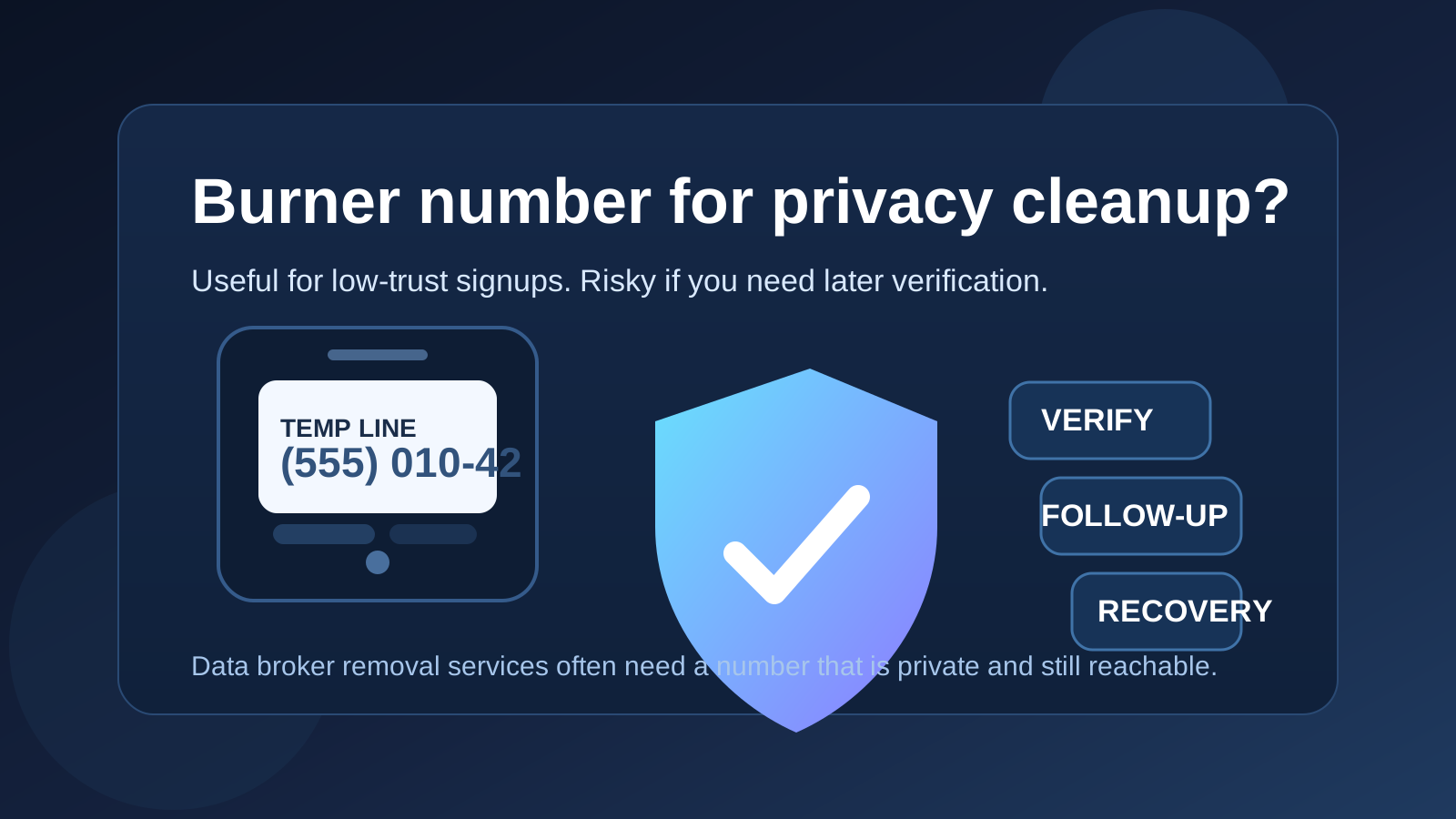
A burner phone number can work for data broker removal services if your goal is to avoid handing your main number to every privacy site you test, but it is usually not the best default.
In most cases, a stable separate number is better. Data broker removal often involves verification codes, support replies, account alerts, and later follow-up, so a short-lived number can create a new mess just when you were trying to reduce your exposure.
Why this question matters
People often focus on email when they think about privacy. That makes sense, but phone numbers matter just as much. A phone number can be used for sign-in checks, text-message verification, support callbacks, billing questions, and account recovery. It is also a durable identifier that tends to stick around in systems far longer than most people expect.
That creates an awkward tension with data broker removal services. The whole point of using one is to reduce how widely your personal details circulate. If you sign up with your main personal number every time, you may solve one privacy problem while quietly expanding another.
That is why searches for burner phone number for data broker removal services make practical sense. People want a buffer between their everyday number and a category of services they may only be testing, comparing, or using for a limited period.
Short answer: a burner number can help, but it is usually a first-contact tool, not a long-term account solution
If you are still evaluating unfamiliar providers and you do not yet trust them with your main number, a burner line can make sense for early contact. It can reduce exposure during signup, filter marketing follow-up, and help you keep low-trust outreach away from your main line.
But once an account may matter for weeks or months, the tradeoff changes. Data broker removal is rarely a one-click event. You may need to confirm a request, respond to support, review a status update, or re-verify something later. If the number disappears or becomes hard to monitor, you have turned privacy into an access problem.
When a burner phone number actually makes sense
1. You are comparing providers before you commit
If you are testing multiple services and you are not sure which one deserves a real account, a burner number can create a layer of separation during that early stage. It is especially helpful when a site feels sales-heavy, pushes for contact too soon, or does not clearly explain why it needs your number.
2. You expect one-time contact only
Sometimes the number is only being used for an initial text, a callback, or a basic access check while you decide whether to move forward. In that narrow window, a burner number can be reasonable.
3. You want to test the trustworthiness of the service
If a provider immediately turns a simple sign-up into aggressive calling or repeated promotional texts, finding that out on a disposable line is less disruptive than finding out on the number your family, bank, and doctors already use.
4. You already separate your privacy workflows
Some people already use separate inboxes, browser profiles, and limited-purpose accounts when dealing with sensitive or spam-prone categories. A burner number can fit that same approach during the research phase. If you are using a tool like Anonibox to avoid exposing your main inbox while you test low-trust sign-up flows, the phone side often deserves the same kind of thinking.
Why a burner number often backfires for this use case
Verification does not always end on day one
Data broker removal services often sound simpler than they are. You might get an initial code today, then a support reply next week, then a renewal or account notice later. A number that was perfect for a quick sign-up may be useless when that later message arrives.
Account recovery can become painful
If a provider ties your account to a phone number for login recovery or security checks, losing access to that number can slow everything down. You may end up contacting support just to prove you still own the account you created.
Burner numbers are easy to ignore
A dedicated channel only helps if you actually watch it. A common failure mode is creating a burner number, feeling safer for five minutes, and then forgetting to check it until an important message is already missed.
Short-term numbers can undermine the point of organized privacy management
Many people do not need maximum disposability. They need controlled separation. That is a different goal. A burner number solves for disposability. A stable second number solves for privacy plus continuity, which is often the better fit for an account you may keep active.
Some services may treat temporary or unusual numbers differently
Not every verification workflow is equally friendly to every kind of number. Even if a burner line works at sign-up, you may still run into friction later if the service expects more stable contact behavior.
What is usually better than a burner number?
A stable separate phone number
For most people, this is the strongest default. A separate number gives you distance from your main line without making you unreachable. That means you can still receive codes, callback requests, and support messages while keeping the relationship compartmentalized.
This is why a dedicated privacy number often beats both extremes. It is safer than handing over your main number everywhere, and more reliable than a number you may abandon too soon.
A lawful virtual number you can keep long term
Depending on your region and setup, a long-term virtual number can provide the same benefit: controlled separation with ongoing reachability. The important question is not whether it feels clever. The important question is whether you will still have it, monitor it, and trust it when the account needs attention later.
Google Voice or a similar managed second line
For people who want something more durable than a burner number but still separate from their primary mobile line, a managed second-number setup can be a better middle ground. It usually works best when you treat it like a real account instead of a throwaway experiment.
Burner number vs separate number: the real difference
A burner number is mainly about limiting exposure quickly. A separate number is about limiting exposure while staying reachable. That second part matters more than it sounds.
Data broker removal is not like joining a random mailing list for a weekend discount. If you choose a service that you might keep, continuity matters. You want privacy, but you also want working access, clean follow-up, and a way to receive unexpected but legitimate messages without going back to your main line.
That is why the best answer is often stage-based:
- Early research: a burner number can help when trust is low and commitment is unclear.
- Provider shortlist: move toward a stable separate number if the service seems legitimate.
- Long-term account: use a reachable dedicated number you can keep active and monitor.
If you still want to use a burner number, do it carefully
Use it only for the lowest-trust stage
The safer way to use a burner number is as a screening tool, not as the final long-term account anchor. It is most useful when you are deciding whether a service deserves any deeper relationship at all.
Save important details immediately
If you receive a one-time code, a case number, a support email, or a dashboard link, save it somewhere secure right away. Do not assume you will be able to reconstruct the workflow later from memory.
Do not use it for critical recovery unless you are sure you can keep it
If the account depends on that number for security or recovery, think twice before attaching a disposable line. A burner number only helps if it does not later lock you out.
Switch before the relationship becomes serious
If a provider appears legitimate and useful, it is usually smart to update the account to a more stable dedicated number before you rely on it for ongoing account access.
Red flags around phone-number requests
Even if you have a burner number available, it should not replace judgment. Be cautious when a provider:
- asks for a phone number before you can review basic pricing or service details,
- treats a number as mandatory without explaining why,
- pushes for sales calls immediately after a simple sign-up,
- asks for more personal information than seems necessary for the stage you are in,
- has a sloppy, vague, or inconsistent support and security flow.
A burner number can reduce the cost of a bad choice, but the better move is still avoiding bad providers in the first place.
A practical decision checklist
- Am I just testing the provider, or am I likely to keep this account?
- Will I need later verification, support, or account recovery?
- Do I want to avoid exposing my main number, or do I also need a channel I can reliably monitor for months?
- Would a stable separate number solve this better than a fully disposable one?
- Does the provider’s signup flow give me confidence, or does it make me want more distance?
If you mainly need a short buffer during low-trust evaluation, a burner number can be useful. If you need real continuity, a stable second number is usually the smarter answer.
Final answer
A burner phone number for data broker removal services can be a reasonable short-term privacy tool, especially when you are comparing providers and do not want to expose your main line too early. But it is usually not the best long-term setup.
For most people, the better answer is a dedicated number that stays reachable. That gives you privacy, control, and follow-up reliability without tying yet another account category to your everyday number. In other words: use a burner number to test trust if you need to, but use a stable separate number if you expect the relationship to last.