Usually no — using your work phone number for data broker removal services is rarely the best choice because it ties a personal privacy project to a line your employer may manage, monitor, or reclaim later.
If a service wants phone verification or support contact, a separate number you control yourself is usually safer than a company-issued mobile, desk line, or shared office number.
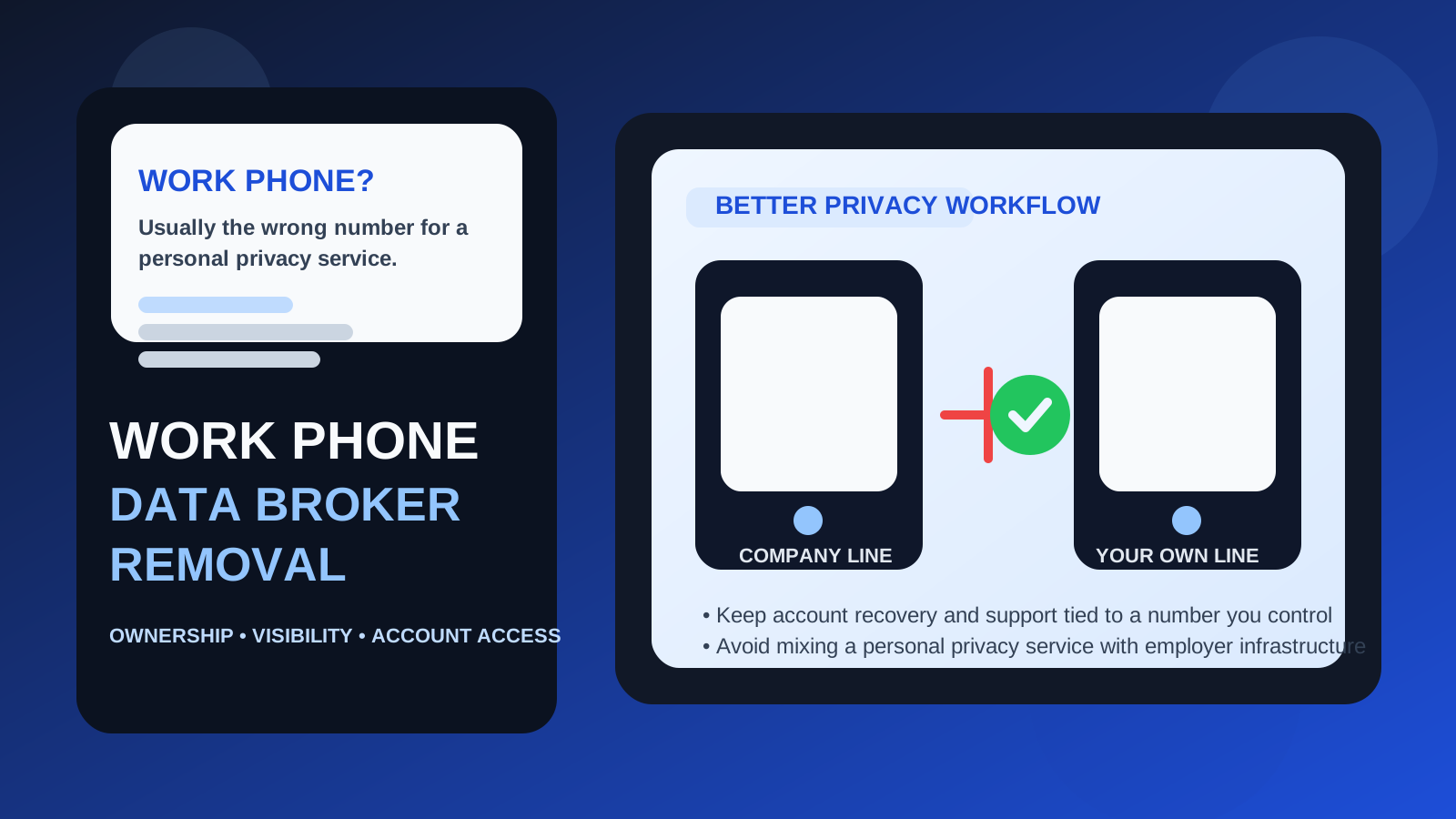
That is the practical answer behind searches for work phone number for data broker removal services. The question sounds narrow, but it points to a real privacy decision. Data broker removal services often ask for contact details during signup, identity verification, support, billing, or account recovery. Some people reach for the easiest number they have available — and if they already use a company phone all day, that number can feel convenient. In most cases, though, convenience is not the same thing as a good privacy workflow.
A work number changes who can potentially see the relationship, who technically controls the line, and how easy it will be to keep access later. If the point of using a broker-removal service is to reduce unnecessary exposure, attaching the account to employer infrastructure can undermine that goal. The better approach is usually to keep the service tied to contact channels you control personally, even if they are separate from your main everyday number.
Why data broker removal services ask for a phone number in the first place
Not every service asks for one, but some do. The reasons are often ordinary rather than sinister:
- account verification: to confirm that a real person is opening the account
- support follow-up: for troubleshooting identity checks, subscription issues, or opt-out exceptions
- billing contact: for payment problems or renewal reminders
- security alerts: for login confirmation or suspicious activity notices
- sales or onboarding: to offer setup help, consultations, or upgrade nudges
Those uses are not automatically unreasonable. The problem is that a work phone number introduces risks that do not exist with a dedicated personal privacy number. A service may treat the number as just another contact field, but for you it can become an employer boundary, a continuity problem, and a signal you did not mean to expose.
The biggest risks of using a work phone number
1. The number may not really be yours
This is the most important issue. If the line belongs to your employer, you may use it every day, but you do not fully control its long-term availability. You can change roles, lose the device, switch employers, or hand the number back entirely. That becomes a problem if the number is tied to account recovery, login verification, billing alerts, or support callbacks for a privacy service you still need months or years later.
Data broker removal is often ongoing, not one-and-done. Opt-out monitoring, rescans, new broker coverage, and subscription renewals all create a longer timeline than people expect. A number that disappears when your job changes is a bad anchor for that kind of relationship.
2. You blur personal privacy work with employer systems
A broker-removal account is usually a personal privacy activity. Putting it on a work-managed line can mix a personal concern into a business communication channel. Even if no one at work is actively reading your calls or texts, the line may still be part of company billing, device management, recordkeeping, or support processes. That is an unnecessary overlap for an account category that should stay under your own control.
Some people do use a business line for personal odds and ends without trouble, but the privacy goal here matters. If you are intentionally trying to reduce the spread of identifiers, it makes little sense to connect the account to a number associated with your employer.
3. Employer visibility can become awkward
Sometimes the risk is not dramatic surveillance. It is simply visibility. A company-administered phone may show messages in backups, carrier portals, MDM logs, help-desk transfers, call history reviews, reimbursement paperwork, or device migration workflows. That does not mean someone is scrutinizing every text, but it does mean the relationship can become more visible than you intended.
Even the existence of the account can reveal something about your habits, concerns, or personal life that you would rather keep separate from work.
4. Shared or office numbers are even worse
If by “work phone number” you mean a general office line, front-desk number, departmental extension, or shared team mobile, the answer is an even clearer no. Verification codes, callbacks, and support messages can end up with other people. That is not just inconvenient — it can break the account workflow completely.
Privacy services work best when the contact method leads back to one person with predictable access. Shared numbers do the opposite.
5. You may miss important account messages
Work phones are often noisy. Teams chats, internal calls, customer escalations, and operational notifications compete for attention. If a broker-removal service sends a verification code, a billing problem alert, or a support callback request, it can disappear into that stream. What looks like a reliable channel on paper may be a poor one in practice.
For the same reason, many people use a separate inbox for privacy-related services. A tool like Anonibox can help with the email side when you want distance from your main address during signups or comparisons. The phone side benefits from the same logic: keep it controlled, intentional, and separate enough that important messages do not get lost.
When a work number might be acceptable
There are a few edge cases where using a work number is not automatically wrong.
- You are self-employed and the “work” number is still fully under your personal ownership and control.
- The broker-removal service is for business exposure rather than personal exposure, and the number belongs to the business entity you intentionally want attached.
- You have a personally controlled business line that you expect to keep long-term and you deliberately use it for privacy-management accounts.
Even then, think through continuity. The question is not just whether the number works today. It is whether you will still want that number attached to the account later, and whether it still supports the privacy boundary you actually want.
Why a separate personal-use number is usually better
A dedicated number you control yourself solves most of the problems above without making communication impossible. It gives you:
- ownership: the number stays with you, not your employer
- continuity: you can keep receiving follow-ups, renewals, and account-recovery codes
- cleaner boundaries: privacy services stay separate from work communications
- better organization: you can tell which signups or services are generating texts and calls
- an easier off-ramp: if the number starts attracting noise, you can rework or retire that setup on your own terms
This does not have to mean your main personal number. In many cases, the better answer is a separate line, a secondary SIM, or another lawful number-management option that you personally control. The principle matters more than the exact tool: the contact method should belong to you and fit the privacy purpose of the account.
What about Google Voice, virtual numbers, or burner numbers?
The right alternative depends on how long you expect to keep the service and how important the account will be.
Google Voice or another stable virtual number
This can be a good middle ground when you want separation without using a truly disposable channel. It is usually better than a work number because you control it personally and can keep it tied to your broader privacy workflow.
A separate long-term personal mobile number
This is often the cleanest option if the service matters enough that you want durable access for renewals, support, and recovery.
A burner number
This can work for early testing, but it becomes risky if the account turns into something you need to keep managing. Disposable access is great for short-lived evaluation, not always for an ongoing subscription or monitoring relationship.
That same distinction applies to email. Anonibox is useful when you want a temporary inbox for initial verification, comparisons, or low-trust signups. If you keep the service, you may eventually want a more durable mailbox or alias workflow. Phone contact works the same way: choose the level of permanence that matches the relationship.
How to set up a safer contact workflow
1. Decide whether the service is just a test or a long-term tool
If you are only comparing services, a lighter setup may be fine. If you expect ongoing monitoring, billing, or annual renewal, build for durability from the start.
2. Keep phone and email decisions aligned
Do not protect one channel and ignore the other. If you use a separate number, pair it with an intentional email setup too. A dedicated email alias, separate mailbox, or temporary inbox for early-stage evaluation keeps the whole account cleaner.
3. Save account-recovery details somewhere secure
Whichever number you use, make sure you know where recovery codes, confirmation emails, billing receipts, and support records are going. Losing track of the account is one of the easiest ways to make a privacy tool less useful.
4. Set a professional voicemail if the number can receive calls
Some services or support teams still call. A simple neutral voicemail is enough. You do not need to expose more personal detail than necessary.
5. Revisit the setup after signup
If the service turns out to be more useful than expected, ask whether the current number is still the right one. It is easier to clean up early than after months of support history and account alerts pile up.
Red flags that make a work number an even worse idea
- the service pushes hard for calls or texts before explaining why
- the signup flow asks for more personal data than seems necessary
- you are not confident the provider is legitimate
- you expect to change jobs, roles, or devices soon
- your employer centrally manages the line or device
- the number is shared, public-facing, or visible to colleagues
In those cases, a work number adds exposure without giving you much real benefit.
Quick decision checklist
- Do I personally control this number long-term?
- Would I still have access if I left my job tomorrow?
- Could this relationship become visible through work systems?
- Am I mixing a personal privacy service with employer infrastructure for no good reason?
- Would a separate personal number give me the same convenience with fewer downsides?
If the answers make you hesitate, that is your signal. The safer route is usually to keep the service off the work line.
Final answer
No — in most cases you should not use your work phone number for data broker removal services. It creates ownership, continuity, and visibility problems that conflict with the purpose of a privacy-focused service.
A number you control yourself is usually the better option. Whether that is a dedicated personal line, a stable virtual number, or another separate setup, it keeps the account tied to your own privacy workflow instead of your employer’s systems. That gives you better long-term access and a cleaner boundary while you work on reducing your exposure online.