Yes — you can use Google Voice for car dealership quotes, and for many shoppers it is one of the cleanest ways to compare prices without handing their everyday number to every dealer form.
It works best when you want a stable separate number for calls, texts, and voicemail during the shopping process, not a throwaway line you might lose before the quote cycle ends.
That is the real question behind searches for Google Voice for car dealership quotes. People usually start by worrying about email spam, but dealership quote requests often create just as much pressure on your phone. A single price inquiry can turn into calls from sales staff, text follow-ups, trade-in questions, financing check-ins, and inventory alerts that keep showing up long after you have moved on. If you want written quotes and legitimate callbacks without making your main number the permanent home for every early inquiry, a separate number can help a lot.
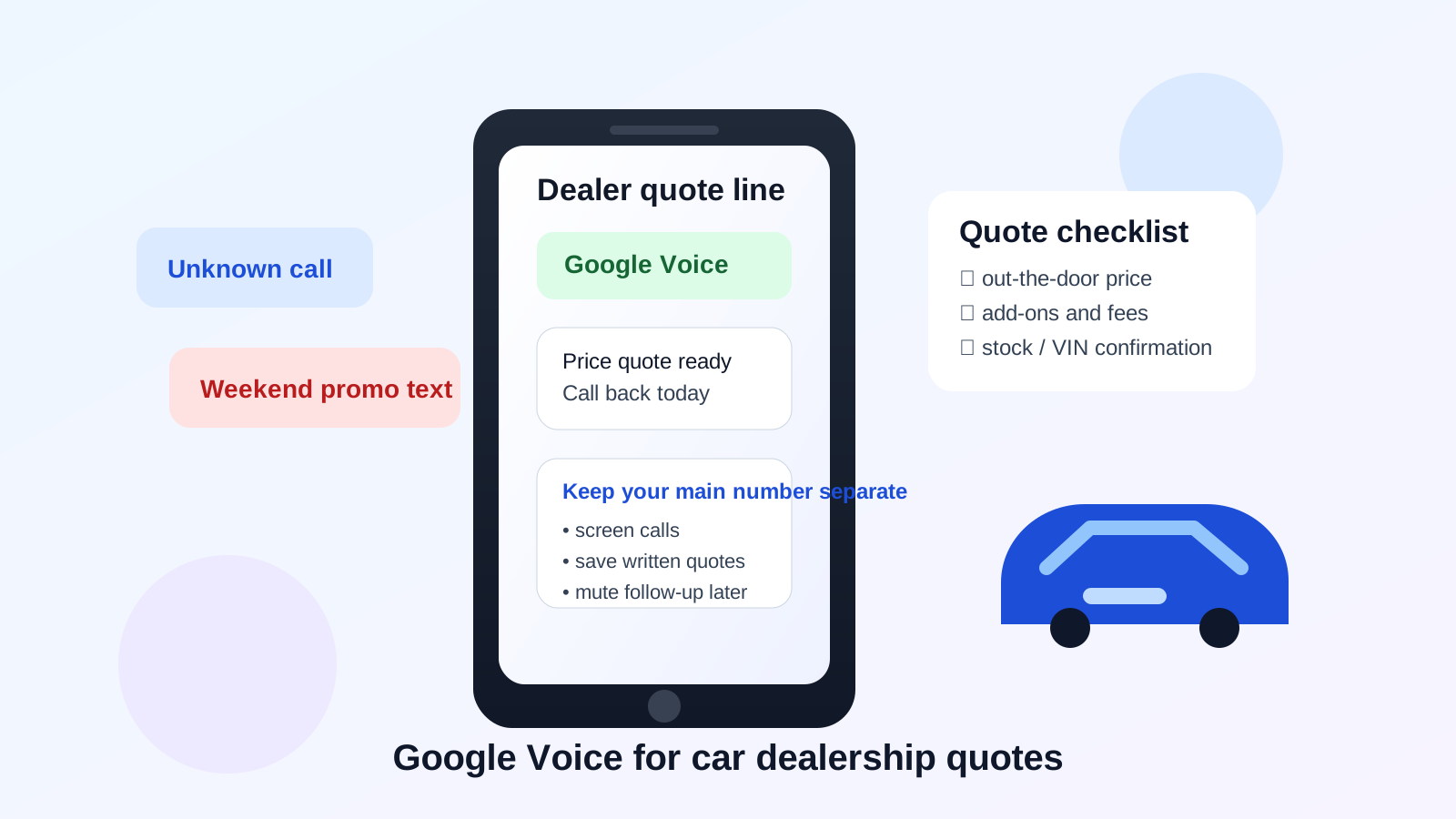
Why the phone-number question matters so much with dealerships
Dealerships do not treat quote requests like quiet email-only conversations. Many stores are built to respond fast, qualify leads by phone, and move the conversation toward an appointment. Even when you fill out a form hoping for a written out-the-door price, you may quickly get:
- same-day sales calls,
- text messages from one or more salespeople,
- automated “just checking in” follow-up,
- trade-in prompts,
- inventory alerts for similar vehicles, and
- weekend or end-of-month promotions after you already bought elsewhere.
That does not mean every dealership is doing something shady. It is simply how a lot of automotive lead handling works. The privacy issue is that your main phone number does not need to absorb all of that early-stage activity if you would rather keep car-shopping separate from family calls, work contacts, banking alerts, and everything else tied to your daily life.
Short answer: usually yes, if you want a stable separate number
For many shoppers, Google Voice is a sensible middle ground. It gives you a dedicated number for dealership calls and texts without forcing you to publish your primary line everywhere. That separation can make quote comparison calmer, cleaner, and easier to shut down later.
The important nuance is stability. Dealer quote conversations sometimes stretch longer than people expect. A dealership may text a written price, call back when a car is back on the lot, or follow up when a salesperson’s manager approves a discount. So the goal is not maximum disposability. The goal is a number that is separate enough for privacy but reliable enough for a real shopping process.
What Google Voice does well for car dealership quotes
1. It keeps your everyday number out of more lead systems
Every quote request usually passes through more systems than the form itself. Your number can land in a dealership CRM, a group-wide lead platform, a texting tool, a call-tracking system, or a marketplace handoff. Using Google Voice helps create a buffer. The dealer still gets a working way to reach you, but your main number does not have to be the one copied into every sales workflow.
2. It makes dealer follow-up easier to identify
When dealership calls and texts all land on a dedicated quote-shopping number, context becomes obvious. You do not have to wonder whether an unknown number is a school call, a relative, a doctor’s office, or a salesperson asking whether you can come in today. That sounds small, but it changes how stressful the whole process feels.
3. It works better than a vanishing burner for serious comparison
A lot of shoppers like the idea of a burner number, but dealer quote workflows are not always one-and-done. If you ask five stores for out-the-door pricing, two of them may answer clearly, one may text a VIN or stock number, and one may call back three days later with a revised offer. A stable separate number is usually more useful than a disposable one that may be ignored, lost, or retired too quickly.
4. It helps you screen calls without going fully unreachable
Some people do want the fastest possible dealership responses. Others mainly want written quotes and only occasional calls. Google Voice can fit that middle ground well because it keeps you reachable while still letting you compartmentalize the conversation. You can listen to voicemail, return the useful calls, and ignore the repetitive ones without letting the whole process spill onto your main line.
5. It creates a cleaner exit when the search is over
Once you buy a car, pause the search, or decide the market is bad, dealership follow-up does not always stop immediately. A dedicated number makes it much easier to filter, mute, or gradually retire that contact channel later than it is to reclaim peace on the number you use for everything else.
Where Google Voice can fall short
Some quote forms or follow-up flows may still be imperfect
Not every dealership website or lead form behaves the same way. Some forms are cleaner than others, and some sales teams still prefer to push the conversation into direct calls no matter what number you provide. A separate number helps with control, but it does not guarantee a neat, text-only, low-noise process.
You still need to monitor it like a real shopping channel
A separate number only helps if you actually check it. If you request quotes and then ignore the voicemail, miss the useful text with the written price, or fail to notice a callback from the one dealership that was willing to negotiate, the privacy benefit turns into shopping friction.
It can tempt people to over-contact too many dealerships
When privacy feels protected, some shoppers blast forms everywhere without a plan. That can still create chaos. A better workflow is to use the separate number strategically: contact the dealers you genuinely want to compare, track their replies, and save the important written details.
Google Voice vs your personal number
Your personal number will usually work. That is not the question. The better question is whether using it gives you any real advantage at the quote stage. In most cases, not much. A dealer can call or text a separate number just as easily as your primary one. If both numbers are equally reachable to you, the separate line usually wins on privacy and organization.
Your personal number may still make sense if you already know the dealership is a serious finalist, you are deep in the purchase process, and you do not care about keeping the interaction segmented. But for broad price shopping, trade-in testing, or outreach to multiple stores, your main number is often more exposure than you need.
Google Voice vs a burner phone number
This is where people often choose the wrong tool. A burner number sounds privacy-friendly because it feels disposable, but the thing that makes it attractive can also make it weak. Car shopping can involve callbacks, follow-up texts, appointment reminders, and revised offers. If the number is too temporary, you may lose access to information that actually matters.
For dealership quotes, a stable separate number is usually more useful than a fragile one. A burner-style approach may still be fine for very low-trust early experiments, but if you genuinely want to compare dealers, preserve written quotes, and stay reachable for a week or two, continuity matters.
Google Voice vs a second dedicated line
A conventional second line can also work well. If you already maintain one, it may be the simplest option. The choice is less about brand loyalty and more about behavior: use a number that is separate from your everyday line, easy to monitor, and reliable enough for real follow-up. Google Voice is appealing because it often gives people that separation without needing another device or a bigger commitment.
A practical workflow for dealership quote shopping
1. Set the number up before you submit any forms
The privacy benefit is strongest when you start clean. If three dealerships already have your main number, switching later helps less. Create the separate contact route first, then use it consistently.
2. Add a simple voicemail greeting
You do not need anything fancy. A short, neutral greeting is enough. If a salesperson calls while you are busy, you still sound reachable and organized.
3. Pair it with a separate email workflow
Phone privacy works better when your email setup is just as deliberate. If you are requesting quotes, signing up for marketplace alerts, or testing whether a site will flood you with follow-up, use a separate inbox too. For very early research or lower-trust lead forms, some shoppers use Anonibox to keep dealership emails out of their main inbox while they compare responsiveness. Combining that with a separate phone number gives you a much cleaner quote-shopping workflow.
4. Save the messages that actually matter
Written out-the-door pricing, VIN confirmations, fees, appointment times, and trade-in notes are worth preserving. Do not rely on memory when you are comparing several stores at once.
5. Decide when a dealer becomes “real”
Not every inquiry deserves the same access. Early quote requests can stay on the separate number. If one dealership becomes a serious finalist and you are moving into test drives, financing details, or final delivery coordination, you can decide whether to keep using the separate line or move the conversation to your main number later.
Red flags a separate number helps you manage
- Pressure to jump on a call before they will answer a basic pricing question.
- Repeated attempts to avoid written confirmation of fees or add-ons.
- Aggressive follow-up from multiple people at the same store.
- “This deal expires in one hour” urgency before you have verified availability.
- Requests for unnecessary personal information too early in the process.
A separate number does not solve bad dealership behavior, but it makes that behavior easier to observe without letting it dominate the phone line you rely on for everyday life.
A realistic example
Imagine you want quotes on the same used SUV from six dealerships. You ask each one for the out-the-door price, whether dealer-installed add-ons are mandatory, whether the vehicle is still available, and whether they will discuss a trade-in range before you come in. Within a day, you may get two helpful texts, one voicemail, one missed call from a salesperson you did not ask to call, and three automated follow-up messages.
That is annoying on your everyday number. On a dedicated quote-shopping number, it is manageable. You can spot patterns, compare seriousness, and preserve the useful messages without mixing them into family, work, or account-recovery traffic. That is the real value of Google Voice here: not invisibility, but cleaner boundaries.
So, can you use Google Voice for car dealership quotes?
Yes. For many shoppers, Google Voice is a smart way to request car dealership quotes without tying their main number to every dealer form and follow-up sequence. It is especially useful if you want a separate number that is more durable than a burner but still easier to contain than your everyday personal line.
The best setup is simple: use a stable separate number, pair it with a separate email workflow when needed, save the written quote details that matter, and stay realistic about how dealerships communicate. If you do that, you can stay reachable for genuine offers without turning your main phone number into a long-term container for every sales follow-up you triggered while shopping around.