Tutanota can be a good choice for car dealership quotes if you want a real separate inbox with stronger privacy boundaries than your everyday personal email. It works best when you want to receive real dealer replies over days or weeks without mixing quote traffic, inventory alerts, and sales follow-up into the account you use for everything else.
That does not make Tutanota a magic shield. Dealership lead forms can still trigger follow-up from sales staff, automated CRM systems, and finance departments, and you still need to think about your phone number, written quote records, and how long you expect the conversation to stay active. But if your main goal is to keep car-shopping noise out of your core inbox while still preserving a durable paper trail, Tutanota is a reasonable option.
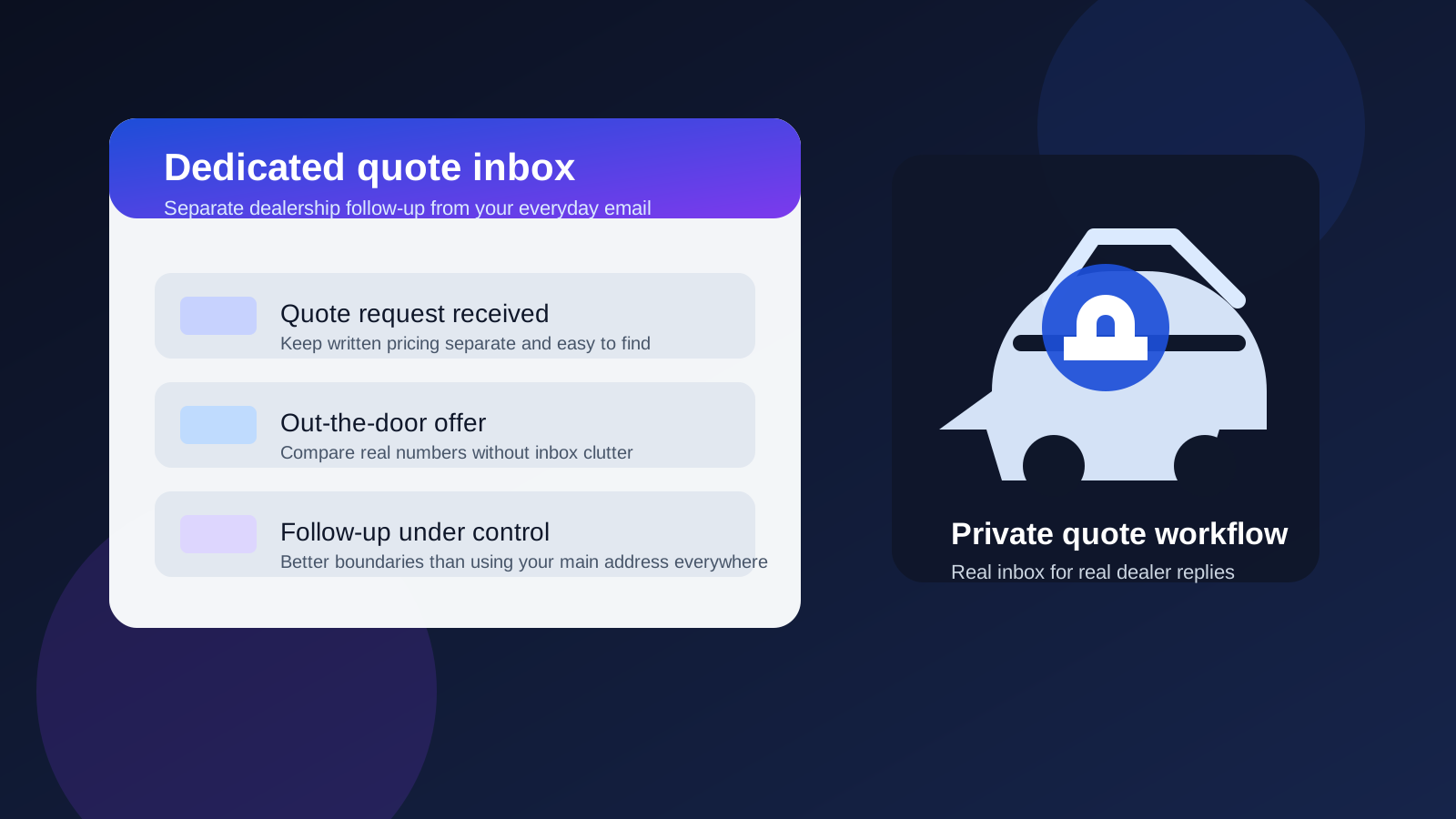
Why people consider Tutanota before requesting dealer quotes
Car dealership quote shopping creates a very specific kind of inbox problem. You may only want a few out-the-door numbers, but one request can quickly lead to availability updates, “checking in” emails, appointment prompts, financing messages, trade-in questions, and reminders from more than one salesperson. None of that necessarily means the dealer is doing something shady. It is just how many dealership follow-up systems are built.
That is why privacy-minded shoppers look at Tutanota in the first place. They want a real mailbox that feels separate from banking alerts, family messages, account recovery emails, receipts, and personal correspondence. A dedicated account for vehicle shopping gives you breathing room. Even if every dealer interaction is legitimate, the process is still easier to manage when it is compartmentalized.
Short answer: Tutanota is usually better than using your main inbox, but it is not always better than a temporary inbox
If you are seriously comparing multiple dealers, Tutanota is often a better fit than giving out your long-established personal email everywhere. It gives you a real inbox you control, and it keeps dealership traffic separate from the account tied to the rest of your life.
At the same time, Tutanota is not automatically the best first step for every situation. If you are only testing a low-trust marketplace form, checking whether a listing is real, or poking at a quote funnel before you decide whether to engage, a temporary inbox can be lighter. A service like Anonibox is useful for that early filtering phase. Once a dealer or lead source proves worth continuing with, a more durable mailbox like Tutanota becomes the more practical place for an ongoing conversation.
What Tutanota does well for car dealership quotes
1. It gives you real separation from your everyday email
This is the biggest benefit. If you create a Tutanota address specifically for vehicle shopping, quote requests and dealership follow-up stay out of the inbox you use for personal life, security notifications, subscriptions, travel confirmations, and account recovery. That matters even when the individual messages are harmless. The value is not only “privacy” in the dramatic sense. It is also cleanliness, focus, and less long-term clutter.
2. It is durable enough for a buying process that may take time
Car shopping often lasts longer than people expect. You might request quotes this week, compare trade-in numbers next week, revisit inventory later, and still need the original written offer when you negotiate. A short-lived disposable inbox can be risky once the conversation becomes real. Tutanota works better when you need a mailbox that stays available long enough to hold revised offers, buyer’s orders, VIN-specific follow-up, and appointment details.
3. It supports a cleaner quote-comparison workflow
A dedicated quote mailbox changes behavior in a useful way. Instead of reacting to whichever dealership sends the most messages, you can organize your search. Put each dealer in its own folder or label, archive weak follow-up, star the written offers you want to compare, and keep finance-related questions separate from inventory chatter. That structure is practical. It makes it easier to compare written numbers instead of making decisions from memory.
4. It reduces the cost of saying “no thanks” later
One hidden advantage of a separate mailbox is that you are not forced to keep dealership traffic in your primary identity forever. If the search ends, the account can stay dormant, be monitored less often, or simply remain isolated as a record archive. That is much easier than cleaning marketing-style follow-up out of an address that also handles your normal life.
Where Tutanota is not the perfect solution
It is still a real long-term account
Tutanota is better for sustained conversations than a throwaway inbox, but that also means more setup and more commitment. If your only goal is to test one form or shield yourself from a single uncertain lead source, creating a dedicated long-term mailbox may be more than you need.
It does not solve phone follow-up by itself
Dealership sales processes often move from email to calls or text messages quickly. A better mailbox helps with inbox control, but it does not stop a lead form from asking for your phone number or a salesperson from trying to move the conversation off email. If you want tighter boundaries, pair your email strategy with a separate phone strategy rather than assuming the email choice solves everything.
You still need to monitor it consistently
A separate mailbox only helps if you actually check it. If you ask five dealerships for written quotes and then forget to monitor the account, you may miss the one useful response. The point of separation is control, not neglect.
Tutanota vs a temporary email for dealer quote requests
This is the practical decision many people are really making.
- Use a temporary inbox first when you want to test a low-trust form, limit exposure during very early research, or avoid committing a permanent address before you know the source is worth your time.
- Use Tutanota when the conversation is real enough that you want dependable access to quote threads, attachments, follow-up, and written records over a longer window.
In other words, temporary email is better for cautious first contact, while Tutanota is better for sustained quote management. Many privacy-conscious shoppers use both at different stages. They might start with Anonibox for low-trust marketplace funnels and then move serious dealer conversations into a dedicated Tutanota inbox once a real salesperson begins sending useful numbers.
When Tutanota is a strong choice
- You plan to contact multiple dealerships and compare written quotes.
- You want a durable mailbox that stays separate from your normal personal account.
- You care about privacy boundaries, but you still need a practical long-term conversation space.
- You expect the process to involve follow-up over several days or weeks.
- You want cleaner organization for trade-in questions, out-the-door pricing, and appointment scheduling.
When it may be more than you need
- You are only checking one trusted local dealer and expect very little follow-up.
- You are still in the “is this listing even worth it?” phase and would rather use a temporary inbox first.
- You do not want another account to check, manage, and secure.
A practical setup for using Tutanota with dealership quotes
1. Create the account before you start sending quote requests
Do this before the first lead form, not after. Starting with a clean mailbox means every dealer message lands in the same controlled place from day one.
2. Use it only for vehicle shopping
Do not mix car-shopping traffic with unrelated signups. The cleaner the mailbox, the easier it is to tell which messages matter and which ones are just automated follow-up.
3. Ask for written out-the-door numbers
If you are requesting quotes, try to steer dealers toward written details: price, fees, add-ons, VIN, financing conditions, and appointment timing. A dedicated inbox is most valuable when it preserves concrete written records.
4. Pair it with a phone boundary plan
If you expect calls or texts, decide in advance whether you will use your main number, a separate number, or a call-screening workflow. Email privacy is only part of the larger contact strategy.
5. Organize by dealer, not by emotion
Create folders or labels for each store, keep the strongest written offers easy to find, and archive the low-value drip messages. That makes negotiation calmer and comparison more rational.
6. Decide when to graduate from “privacy mode” to “purchase mode”
Once one dealership becomes the clear finalist, you may be comfortable continuing in the same Tutanota inbox or switching to the email you want tied to ownership paperwork and long-term service communication. The right moment depends on how separate you want your shopping phase from your ownership phase.
Mistakes to avoid
- Using your oldest personal email everywhere just because it is convenient.
- Using a disposable inbox too long and losing access to a real quote thread.
- Assuming a privacy-focused mailbox removes the need to think about phone exposure.
- Failing to save the written numbers that actually matter.
- Letting multiple dealerships pile into one unorganized inbox and then guessing which offer was best.
The bottom line
So, should you use Tutanota for car dealership quotes? Usually yes—if you want a durable separate inbox, better privacy boundaries, and a cleaner way to manage follow-up than using your main personal account. It is especially useful when quote shopping will stretch beyond one quick form submission and you want written records you can revisit.
Just remember what Tutanota is actually solving. It helps with inbox separation and ongoing email control. It does not guarantee anonymity, and it does not replace good judgment about low-trust forms, phone-number sharing, or dealership follow-up tactics. Used thoughtfully, though, it is a solid middle-ground option between a throwaway inbox and exposing your everyday email to every dealership you contact.