Yes — using a separate phone number on job applications is often a smart privacy move, especially if you are applying broadly, using job boards, or want recruiter outreach separated from your daily life.
It gives employers a real way to reach you without forcing your main personal number into every application system, recruiter database, or third-party form you touch during a job search.
Why this question matters
Your phone number seems small compared with your résumé, work history, or references, but it travels farther than most people expect. Once you enter it into multiple job boards, application portals, staffing firm forms, and “quick apply” workflows, it can keep generating calls and texts long after you have stopped applying. Some of that follow-up is legitimate. Some of it is just noise. Some of it is outright scam bait.
That is why a separate phone number can be useful. It creates a boundary. You stay reachable for real employers, but you do not have to give every application direct access to the same number your family, bank, doctor, and two-factor authentication may also rely on.
If you already use a separate inbox strategy for job searching, a separate number is the phone version of the same idea. Anonibox can help keep early-stage email exposure lower; a separate phone number can do the same for calls and texts.
What counts as a separate phone number?
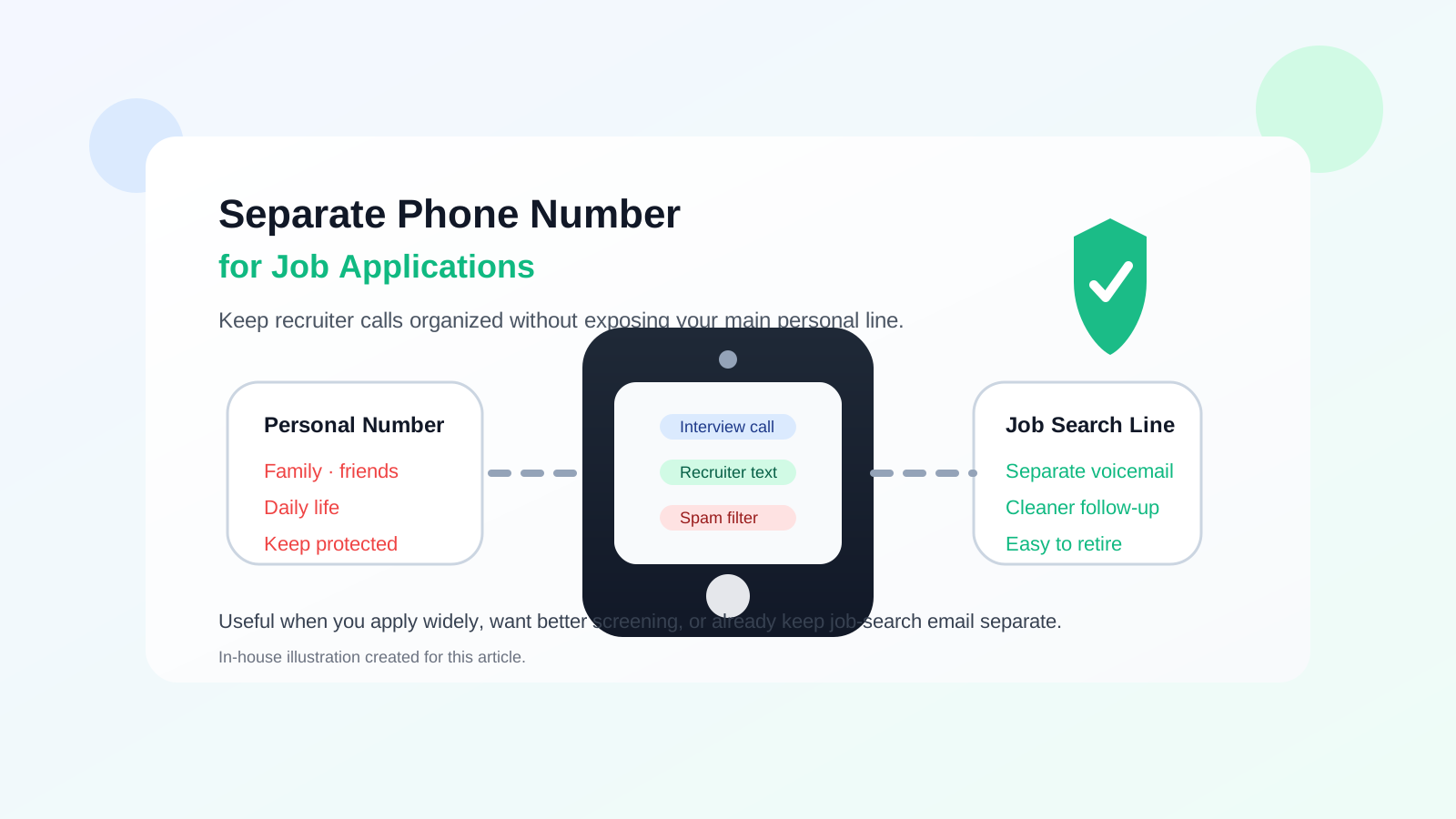
A separate phone number does not have to mean a burner phone from a movie. It can be any additional number you control specifically for job-search activity, such as:
- a second SIM or eSIM on your current phone
- a dedicated mobile line for applications and recruiter calls
- a secondary number service that you manage yourself
- a business-style forwarding number you can retire later
The point is not the technology. The point is separation. You want a number that is stable enough for legitimate follow-up, but isolated enough that you can mute it, monitor it, or shut it down if it starts attracting junk.
When a separate phone number makes the most sense
A separate number is not mandatory for every job seeker, but it is especially useful in a few common situations.
1. You are applying to a lot of roles quickly
The more applications you send, the more places your number spreads. High-volume job searching increases the odds of duplicate recruiter outreach, robocalls, vague staffing messages, and late follow-up from roles you no longer want. A separate number keeps that traffic contained.
2. You are using job boards and third-party “easy apply” forms
Direct company career pages are not perfect, but they are usually cleaner than broad aggregator workflows. If you are using several job boards at once, your contact data may pass through more systems than you realize. A separate line lowers the privacy cost.
3. You want clearer work-life boundaries
Some people do not mind recruiter calls on their personal number. Others absolutely do. If you do not want interview scheduling texts mixed in with family group chats, delivery updates, and weekend plans, a dedicated job-search line is simpler.
4. You are worried about scam texts
Job scams often move fast and lean on text messages because texts feel urgent. A separate number makes suspicious outreach easier to spot. If the line starts receiving generic “remote data entry job” texts from unknown senders, you know where the exposure came from.
5. You are job searching while currently employed
Discretion matters more when you are searching quietly. A separate number reduces the chance that recruiter calls land on the same line you use for coworkers, clients, or shared employer contacts.
When your personal number is probably fine
You do not always need a second number. Your personal number is usually fine when:
- you are applying selectively to a small number of trusted employers
- most applications are going directly through official company career pages
- you are comfortable taking screening calls on your main line
- you already have strong spam filtering and do not mind occasional recruiter traffic
If your search is narrow and deliberate, a separate number may be helpful but not necessary. The best choice depends on how much exposure you expect, not on a rigid rule.
Main benefits of using a separate number
Better privacy control
Your personal number stays out of more databases, recruiter CRMs, and unknown third-party intake forms. That does not eliminate risk entirely, but it reduces the number of places tied to your primary line.
Cleaner recruiter follow-up
When a number is used only for job searching, every incoming call or voicemail has context. That makes it easier to return legitimate calls quickly and ignore obvious junk.
Easier voicemail setup
You can record a professional voicemail greeting specifically for your search without changing the greeting tied to your everyday life. This sounds small, but it helps.
Less long-tail clutter
Some hiring systems and staffing firms keep following up for months. If those messages pile up on a separate line, you can eventually pause notifications or retire the number instead of dealing with the residue on your main phone.
Potential downsides to think about
A separate number is useful, but it is not perfect.
- It adds one more thing to monitor. If you forget to check it, you can miss real interview requests.
- Some services are less stable than a standard mobile line. That can matter if you expect time-sensitive callbacks.
- Not every employer loves unfamiliar numbers. This is less about the number itself and more about whether your voicemail, response time, and overall professionalism feel solid.
- It is not a substitute for judgment. A separate number helps with privacy, but it does not make sketchy recruiters trustworthy.
The right setup is one you will actually manage. A neglected second number is worse than a well-managed personal number.
How to use a separate phone number well
Use it consistently during active searching
Switching back and forth between numbers creates confusion. Pick one line for applications, résumés, and recruiter callbacks during your search window, then stay consistent.
Set up a simple professional voicemail
Use your name, speak clearly, and keep it brief. You do not need a speech. You just need employers to know they reached a real person who checks messages.
Turn on notifications you will actually notice
If the number is separate, make sure it is not too separate. Missed interview scheduling because the line was buried in an app folder defeats the whole point.
Log who gets it
If you are applying heavily, keep a lightweight note of which roles, recruiters, and platforms received that number. When follow-up arrives weeks later, you will know whether it is relevant.
Retire or downgrade it after the search
One of the biggest benefits of a separate line is that it gives you an exit path. Once you land a role or pause your search, you can reduce exposure instead of carrying every old lead forward forever.
Separate number vs virtual number vs Google Voice
These ideas overlap, but they are not identical. A separate phone number is the broad strategy. A virtual number or Google Voice-style setup may be one way to implement that strategy. In other words, “separate number” is the decision; the tool is just the method.
That distinction matters because some people fixate on the service and miss the real question. The real question is whether you want a dedicated communication channel for job-search traffic. If yes, you can choose the setup that fits your region, reliability needs, and comfort level.
Red flags that a separate number will not solve by itself
A second line helps with organization and exposure, but it will not protect you from every bad actor. Be extra careful if a recruiter or employer:
- refuses to email from a company domain
- asks you to move immediately to Telegram, WhatsApp, or another off-platform chat
- promises a job before any serious interview process
- asks for money, gift cards, or equipment payments
- requests sensitive personal or banking information too early
- asks you to share one-time verification codes
Privacy tools are useful, but they do not replace common-sense screening. A suspicious employer is still suspicious even if they only have your separate number.
Should you put a separate phone number on every application?
Usually, yes — if you set one up specifically for job searching, it makes sense to use it consistently across your applications during that period. Consistency helps employers reach you and helps you keep your search organized. Just make sure the number is reliable, answered professionally, and checked often enough that you will not miss real opportunities.
If you only apply occasionally, or only to a handful of trusted employers, your personal line may still be the simpler choice. This is a practicality question, not a purity test.
A quick decision checklist
- Am I applying through many platforms or mostly direct employer sites?
- Do I expect a lot of recruiter traffic, texts, or unknown callbacks?
- Do I want job-search contact separated from my personal life?
- Will I reliably monitor a second line?
- Do I want an easy way to retire this contact channel later?
If you answer yes to most of those, a separate phone number is probably worth it.
Final answer
Using a separate phone number on job applications is often a smart, practical privacy upgrade — not because your personal number is always unsafe, but because job searching creates more contact exposure than most people notice in the moment.
If you want cleaner recruiter follow-up, less long-term spam, and more control over who reaches your main line, a separate number is a sensible move. Pair it with a dedicated email workflow when appropriate, stay responsive, and treat it as a boundary tool rather than a magic shield. Done well, it helps you stay reachable without giving your everyday phone number to every hiring pipeline you touch.