Usually no — a college phone number is only a good choice for internship applications if you fully control it, it receives calls and texts reliably, and it will stay active through the full hiring timeline.
For most students, a personal mobile number or dedicated job-search number is safer because internship recruiting often stretches across exams, summer break, relocation, and even full-time conversion follow-up months later.
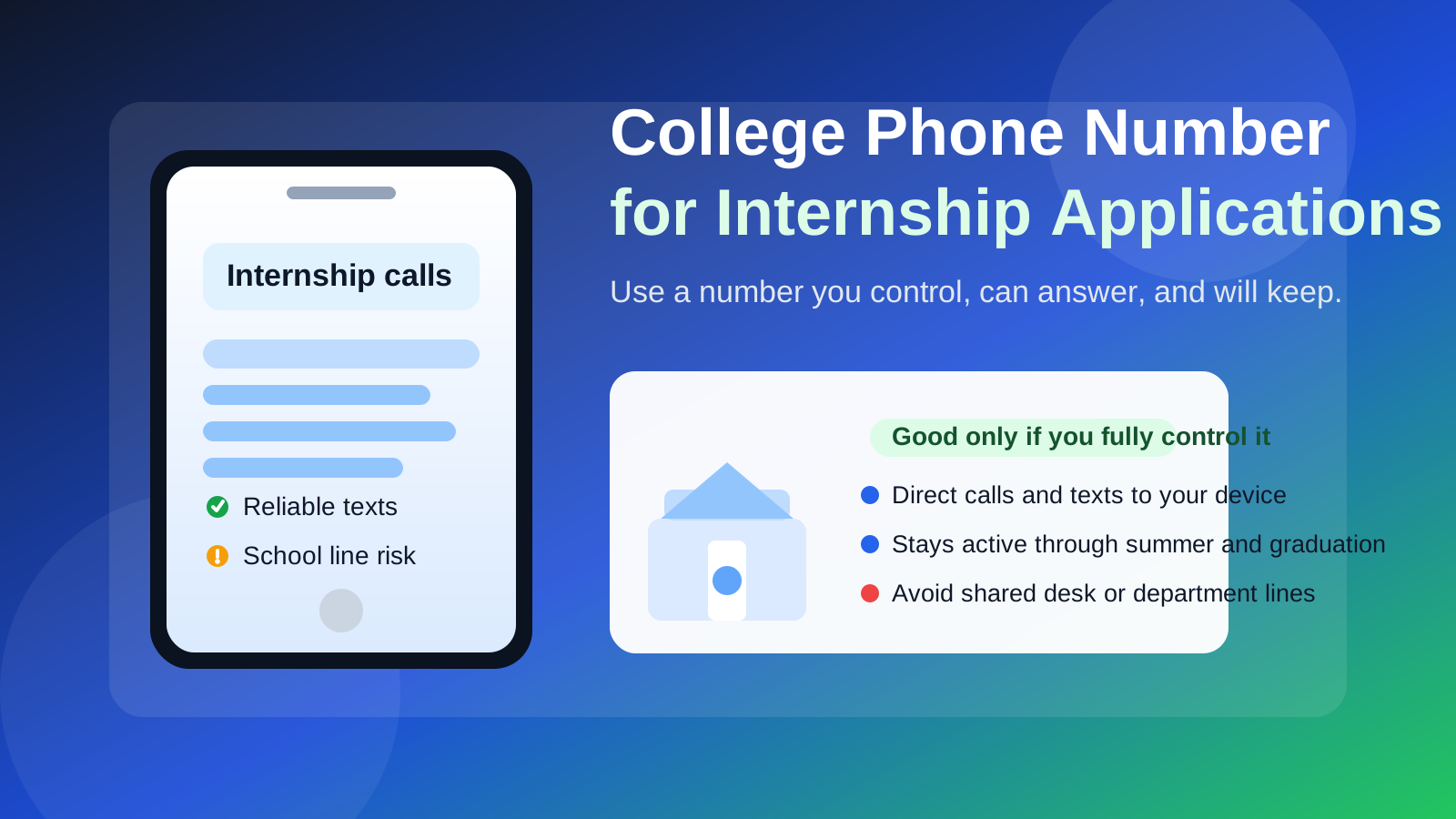
Internship applications make this question trickier than it first appears. On one hand, being a student is part of the point. You may be applying through your career center, a university job board, a department mailing list, or a campus event where your school identity actually matters. On the other hand, the employer still needs a contact method that works like a professional hiring channel, not like a campus convenience that disappears at the end of the semester.
That is why the real question is not whether a college phone number looks student-appropriate. It is whether it behaves like a stable, private, recruiter-friendly number. If it does not, it can quietly create missed calls, awkward privacy issues, and follow-up problems at the exact moment an internship starts moving.
What counts as a “college phone number”?
People use this phrase in a few different ways, and the answer changes depending on what you mean.
- A campus office or department line: usually a bad idea. It may be shared, staffed by others, or only monitored during certain hours.
- A dorm, student newspaper, lab, or club phone: also usually a bad idea, because the line is tied to a place or organization rather than to you personally.
- A school-issued device or softphone number: possible, but only if you control it directly and know it will not disappear when the term ends.
- Your own mobile number that you mainly use for college life: this can be fine, but then it is basically your personal number, not a true campus-managed line.
If the number depends on a school office, a campus job, a department account, or university access rules, it is usually the wrong default for internship applications.
Why internship applications change the calculation
Internships are not quite the same as full-time job applications and not quite the same as casual student event signups either. They sit in the middle. That creates a few internship-specific issues that make phone choice matter more than many students expect.
Recruiters often move faster
Internship hiring can be surprisingly compressed. A company might review résumés after a campus event, text to confirm availability, and try to book interviews within a few days. If your number only works during office hours, requires a front desk, or is not good for texting, you create unnecessary friction.
The timeline may outlast the semester
You can apply in spring and still be hearing from employers in late summer. You can interview for a summer internship and later get contacted about a fall extension or a full-time opening after graduation. A number that is convenient on campus today can become unreliable exactly when a delayed follow-up finally arrives.
Student identity helps less than people think
A college phone number does not carry the same credibility signal that a college email sometimes can. Employers care far more about whether they can reach you than whether the number feels campus-related. For phone contact, reliability usually beats student branding.
When a college phone number can make sense
There are a few cases where using a college-associated number is reasonable.
- You alone control it: nobody else answers, screens, or receives the calls.
- It rings your actual device: no receptionist, voicemail tree, desk phone, or campus office dependency.
- It handles texts normally: many internship coordinators text for scheduling.
- It stays active across breaks and graduation transitions: you are not going to lose access mid-process.
- You can keep a professional voicemail on it: the caller should hear your name, not a generic department greeting.
If all of those conditions are true, the number can work. But notice how narrow that list is. Once a college-linked number meets every requirement above, it is basically functioning like a personal job-search number anyway.
Why it is usually the wrong default
1. It may not really be private
A surprising number of school-linked lines are not truly personal. They may be tied to a student worker role, a shared office, a residence desk, a lab, a newsroom, or a club. Even if no one else regularly picks up, the simple fact that the line is not fully yours is enough reason to be cautious.
Internship applications often include your résumé, class year, schedule availability, and career interests. That information should not drift through a semi-public or semi-shared contact channel.
2. Campus availability is not the same as employer availability
Universities run on semester logic. Employers do not. Breaks, move-out dates, summer office hours, graduation changes, and role transitions can all affect a campus-managed number. Recruiters will not know that your student office closed early, that you lost access after a program ended, or that a department line stops routing texts during the summer. They will simply move on if they cannot reach you.
3. Internship communication is often text-heavy
Phone contact during internship hiring is not always a formal call. It may be a quick “Are you free Thursday at 3?” text, a same-day interview change, or a reminder to check your email for an assessment link. A number that does not support direct, reliable texting is weaker than it looks.
4. It can create a strange professionalism signal
A campus department line or shared school number can make you look harder to reach, not more legitimate. Most employers expect the listed phone number to belong directly to the candidate. If someone else answers, or if the voicemail sounds institutional rather than personal, that can create avoidable confusion.
Better alternatives for most students
Your own personal mobile number
If you already have a stable mobile number that you control completely, that is usually the simplest and best option. It is direct, familiar, good for calls and texts, and likely to stay with you longer than a campus-linked line.
A dedicated job-search number
If privacy is a big concern, a dedicated number for applications can be a smart middle ground. It keeps recruiter traffic separate from family, banking alerts, and everyday life while still giving employers a real number you control.
This is often the strongest option for students who are applying broadly through career fairs, startup directories, third-party job boards, and networking communities all at once.
A separate email workflow for the noisiest channels
Your phone number should usually be stable, but your email can be segmented more aggressively. For example, if you are signing up for low-trust career resources, newsletters, or event-gated downloads, a separate inbox can reduce clutter. Tools like Anonibox can help keep those early signups away from your main inbox, while your actual employer-facing contact details stay consistent for serious opportunities.
The key idea is balance: use disposable or separate email workflows where missed messages would not ruin a real opportunity, but use a dependable phone number for the stages where fast human follow-up matters.
What about campus recruiting events and student-only programs?
This is the strongest argument in favor of a college-associated number, but even here the benefit is limited. If the employer already knows you are a student because you met them at a university event or applied through a campus portal, the number itself does not add much. Your résumé, school email, or the context of the program already does that work.
In other words, a student-only setting may make a college phone number feel normal, but it still does not solve the core requirements of reliability, privacy, and long-term control.
A quick checklist before you use a college phone number
Ask yourself these questions:
- Do I alone answer and control this number?
- Can it receive texts and calls directly on my device?
- Will it still work during summer break, after a campus job ends, or after graduation?
- Would a recruiter get me immediately, or could they hit a desk line, extension, or generic voicemail?
- Am I choosing it because it is truly better, or just because it feels school-related?
If any of those answers make you hesitate, use a different number.
Common mistakes to avoid
- Using a shared line because it looks official: official is not the same as private or reachable.
- Assuming campus services will stay unchanged: they often do not.
- Forgetting about voicemail: a generic campus message can make you sound harder to contact than you really are.
- Treating internship contact info like a one-week event signup: a good internship lead may turn into a longer relationship.
Final answer
Usually no. You should only use your college phone number for internship applications if it is effectively your own number: private, direct, text-friendly, and stable long after the semester changes.
For most students, a personal mobile number or dedicated job-search number is the better choice because it gives recruiters a clearer path to reach you and gives you more control over privacy, follow-up, and future opportunities. That is the safer default for internship applications, especially if you want to stay reachable without tying your hiring process to campus systems you may not control for long.