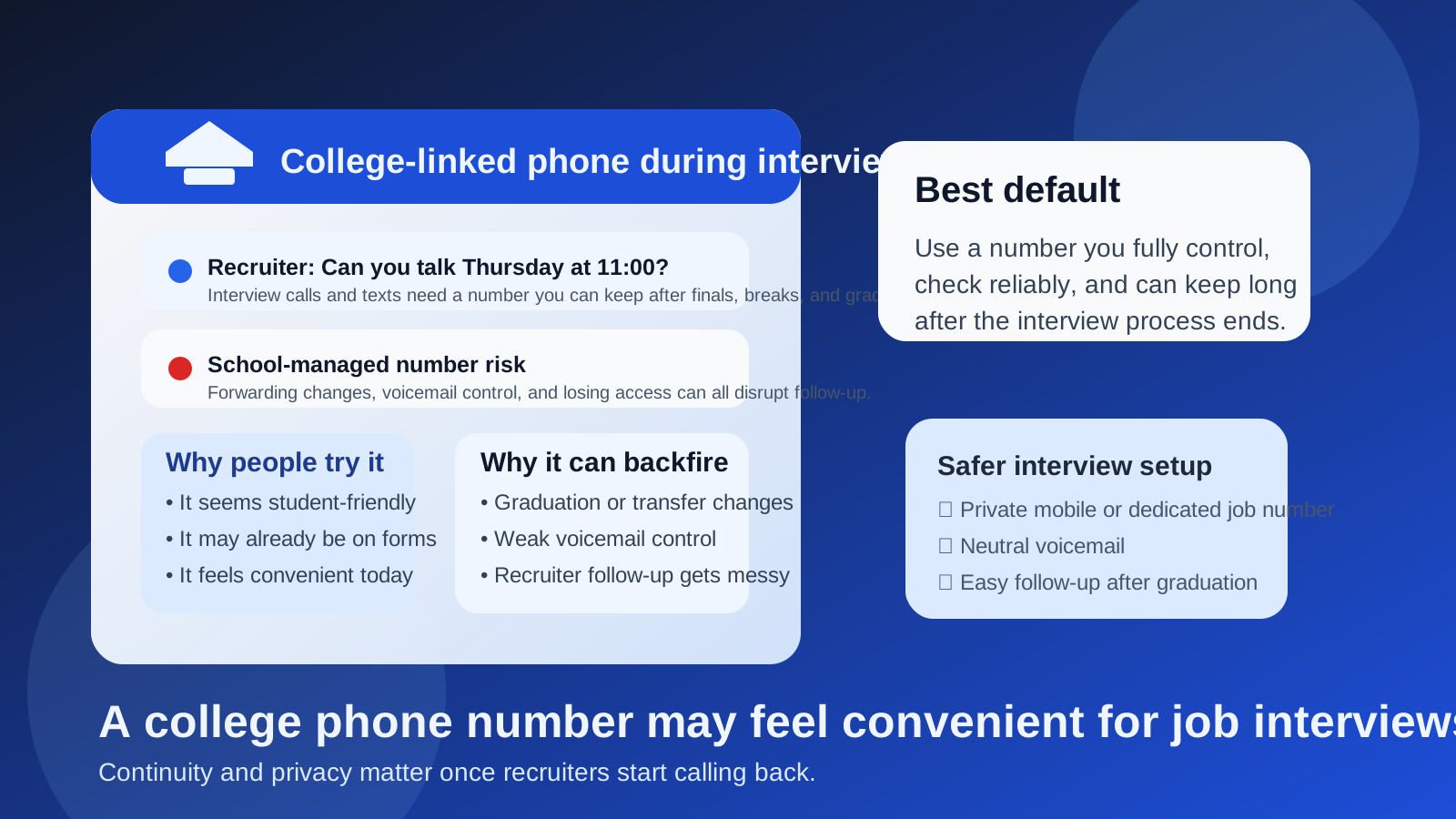
Usually no — you generally should not use your college phone number for job interviews unless it is a number you fully control long-term and check reliably.
A personal number or dedicated job-search number is usually safer because interview scheduling, recruiter texts, and follow-up can easily outlast your access to a school-linked line or setup.
Why this question comes up
Students and recent graduates often use whatever contact details are already tied to campus life. Maybe your college helped set up a number, maybe you mostly use a phone associated with school housing or a student plan, or maybe you have been treating one number as your “college number” because that is what professors, classmates, and career services already know. When interviews start happening, it is natural to wonder whether that same number is fine to keep using.
Sometimes the answer is yes. But not always for the reasons people assume. The important question is not whether the number feels “student” or “professional.” The real question is whether you actually control that number, can keep it for the full hiring process, and can handle interview calls, texts, and voicemails privately.
Short answer: only use it if it is truly yours
If your so-called college phone number is really just your personal mobile number under your control, and you will keep it after graduation, then there is usually no special problem. In that case, it is not risky because it is “college.” It is fine because it is stable, reachable, and belongs to you.
The risk appears when the number depends on a school-managed system, a temporary arrangement, a department-controlled line, a phone or plan you may lose, or any setup where access could change when the semester ends, your housing changes, or your student status changes. Job interviews are exactly the stage where that instability starts to matter.
Why job interviews raise the stakes
Early applications can sit quietly for weeks. Interviews are different. Recruiters may text the day before. Coordinators may call because a meeting link changed. A hiring manager may need to reschedule. A company may go silent for ten days and then suddenly ask whether you can speak that afternoon.
That means your interview phone number needs to do three things well:
- Stay active: you should not be worried about losing access right as the process gets serious.
- Stay private enough: voicemails, caller ID, and notifications should not create unnecessary exposure or confusion.
- Stay consistent: the same number should still work if the process extends into the next term, a break, or graduation season.
A college-linked number sometimes fails one or more of those tests.
The biggest risks of using a college phone number for job interviews
1. You may not control it as fully as you think
If the number is tied to a school-managed plan, campus service, shared family arrangement you do not control, or a device/setup that might change when your student situation changes, that is a weak foundation for interview follow-up. Hiring timelines do not always match academic timelines. A role can move quickly, or it can drag on for months.
You do not want to wonder whether a recruiter’s callback will get lost because your setup changed after finals week.
2. Voicemail and routing can become messy
Interview calls are not just about picking up. They are about what happens when you miss the call. Does the voicemail sound neutral and professional? Can you access it easily? Are forwarded calls and text notifications working the way you think they are? If the answer is “mostly” or “I think so,” that is not ideal for interview-stage communication.
A private number you fully manage is much better than a number with unclear forwarding or administrative control.
3. Graduation or status changes can interrupt follow-up
This is one of the biggest college-specific issues. Interview processes do not always end before a semester, internship, study-abroad period, or graduation transition. Even if you are available today, the real question is whether the number will still be dependable if a company reaches out three weeks from now with another round, reference request, or offer conversation.
If there is any chance the number becomes awkward, temporary, or inaccessible after a school milestone, it is safer not to make it your main interview line.
4. It can make your communication stack harder to manage
Job searching goes better when your channels are organized. One reliable number for recruiter calls. One clean inbox for applications. Clear voicemail. Easy callback history. If your phone setup depends on school context while your email and resume strategy are moving toward long-term professional use, your system gets fragmented fast.
That fragmentation leads to missed messages, sloppy follow-up, and extra stress right when you need to look composed.
5. It can look stable when it is not
Recruiters do not need a fancy number. They need a reliable one. A college-linked number can appear normal on the surface, but if the backend situation is shaky, the problem shows up later — during voicemail, callback attempts, or schedule changes.
That is why “it works today” is not a strong enough test. Interview communication needs continuity, not just short-term convenience.
When it may be perfectly fine
There are situations where using your college phone number is completely reasonable:
- The number is actually your personal mobile number and you own the account or fully control the line.
- You plan to keep it long-term regardless of graduation, transfer, or housing changes.
- Your voicemail is neutral and professional and you can access it reliably.
- You check calls and texts consistently and can return them quickly.
In other words, if “college phone number” just means “the personal number I have had throughout college,” that is usually not a problem. The issue is not the label. The issue is whether the number is truly yours.
When you should avoid it
- The setup is school-managed or temporary.
- You might lose access after graduation, a break, or a program change.
- Your voicemail, forwarding, or message access is inconsistent.
- You are already building a separate professional contact setup for your job search.
- You want cleaner boundaries between student life and recruiter communication.
If any of those sound familiar, a different number is the better default.
Better options for job interviews
Your personal mobile number
If you already have a personal number you control and plan to keep, this is usually the easiest answer. Most recruiters do not care whether the number looks “student” or “adult.” They care whether you answer, return calls, and sound organized.
A dedicated job-search number
This is often the best setup for active applicants. A dedicated number keeps recruiter calls, interview reminders, and spam-prone follow-up separate from the rest of your life. It also makes it easier to change your strategy later without losing important messages during the search.
A separate number is especially useful if you are applying broadly, attending multiple interviews, or expecting a lot of outreach from job boards.
A lawful secondary-number service you control
Depending on where you live, a secondary number may be a practical middle ground. The brand matters less than the principle: the number should belong to you, be stable enough for follow-up, and let you control voicemail and message access.
A simple decision test
Before giving any number to a recruiter, ask yourself:
- Will I still have this number in three to six months?
- Can I answer or return calls reliably from it?
- Can I control the voicemail greeting and message access?
- Would I feel comfortable using this same number during later interview rounds or offer discussions?
- Am I choosing it because it is truly best, or just because it is already attached to my school life?
If those answers are shaky, use a different number.
What to do if you already shared it
If you have already used your college phone number on applications or with a recruiter, do not panic. You do not need to create drama around it. If the setup is still working, you can simply transition carefully.
- Update your resume and application materials with the better number going forward.
- If a recruiter is actively in touch, reply once with a calm note like: “Here is the best number to use for interview scheduling moving forward.”
- Make sure the old number still forwards or stays monitored until the current process is clearly finished.
- Check voicemail on both numbers during the transition.
The main goal is continuity. You do not want to switch so abruptly that a follow-up disappears.
Pair your phone choice with a cleaner email strategy
Interview logistics usually feel easier when your whole job-search setup is intentional. A stable phone number, a neutral voicemail greeting, and a dedicated application inbox all work together. If you already use a separate email for applications, recruiter outreach, or spam-heavy signups, your phone strategy should match that same logic.
That is one reason tools like Anonibox can be helpful on the email side: they let you keep your main inbox cleaner while you decide which opportunities deserve long-term access to your real contact channels. The phone side is similar. The best interview number is not the one that is merely available today. It is the one that gives you reliable, long-term control.
Common mistakes to avoid
Assuming “college” automatically means “unprofessional”
The problem is not student identity by itself. Plenty of students get interviews and job offers every day. The real issue is stability and control, not whether the number sounds young or academic.
Ignoring what happens after the first missed call
People think about answering calls but forget about voicemail, callback windows, and message access. Those details matter more than the label attached to the number.
Using a number that may disappear right after the interview stage
If the number is fragile, temporary, or school-dependent, it is the wrong number for time-sensitive hiring communication.
Final answer
So, should you use your college phone number for job interviews? Usually not — unless it is really just your own long-term personal number that you fully control.
If the number depends on school access, may change after graduation, or creates uncertainty around voicemail and follow-up, use a personal or dedicated job-search number instead. Interview communication should be easy to manage, private enough for your needs, and stable from the first recruiter text through the final decision.