Hushmail can work well on a resume if the address looks professional, stays active, and is an inbox you actually monitor during your job search.
Yes, you can use Hushmail on your resume, but it is a smart choice only when it behaves like a stable professional mailbox rather than a privacy experiment or a rarely checked side account.
Why people ask about Hushmail on a resume
People usually ask this because they want more control over their job-search contact details. Maybe their oldest Gmail or Outlook inbox is packed with promotions and old signups. Maybe they are applying while still employed and want a little more separation between work life and job-search life. Maybe they simply prefer a privacy-minded email provider and want to know whether it will look odd to recruiters.
That concern makes sense, but it is easy to overthink. Most hiring teams are not ranking email providers the way job seekers imagine. They are not giving bonus points for a big-name free provider or subtracting points because you chose something less common. What they care about is simpler: does the address look professional, is it easy to use, and will you actually see their message when they send it?
That is where Hushmail can fit. If you already use it as a stable personal inbox, it can be a perfectly reasonable resume email. If you are treating it like a short-term workaround, the answer changes.
What recruiters actually notice
Recruiters usually notice the address itself more than the provider behind it. They are scanning quickly, often across many resumes, and they care about a few practical questions:
- Does the address look clean and professional?
- Is it easy to read, type, and repeat over the phone?
- Will the candidate check it consistently?
- Does the same address appear on the resume, applications, and cover letter?
- Will this inbox still be active if the process drags on for weeks?
If your Hushmail address passes those tests, the provider itself is rarely the problem. A clear Hushmail address is usually better than a messy mainstream address full of old nicknames, random numbers, or joke references.
When Hushmail is a strong choice on a resume
1. You have a simple, name-based address
If your address is based on your real name or a close professional variation, Hushmail can look completely normal on a resume. Think in terms of clarity, not cleverness. The best resume email is the one nobody hesitates to use. If a recruiter can glance at it, type it correctly, and move on, it is doing its job.
2. You want a separate inbox for your job search
One of the biggest advantages of using a dedicated inbox is focus. Recruiter follow-ups, interview requests, assessment links, and scheduling emails do not have to compete with shopping receipts, newsletters, or years of unrelated personal mail. If Hushmail is your job-search inbox, that separation can make your search calmer and easier to manage.
This is especially useful if you are applying to many roles at once. A cleaner inbox reduces the odds of missing a time-sensitive message because it got buried under normal life admin.
3. You want personal control instead of school or employer ownership
Your resume should usually point to contact details that you control personally. That is why a personal Hushmail inbox can be better than a current work address or a school account you may lose after graduation. Hiring processes often move slowly. You want an address that still works next month, next season, or even next year if someone returns to your application later.
4. Privacy matters to you, but reliability matters more
Some people like Hushmail because it feels more deliberate than an old catch-all inbox. That can be fine. The important part is that privacy should not come at the expense of reliability. A resume address must still feel stable, readable, and professional. Hushmail can meet that standard if you use it like a long-term inbox, not like a disposable shield.
5. You check it every day
No provider helps if you ignore the inbox. Hushmail is a good resume choice only if you monitor it closely, keep notifications where you need them, and respond quickly when employers reach out. A polished email address is wasted if you miss the interview request sitting inside it.
When Hushmail may not be the best choice
1. The address itself looks awkward
The biggest risk is usually not Hushmail. It is the address you made on top of it. If your email is cluttered, overly clever, hard to spell, or packed with numbers, it creates friction. Recruiters should not need to wonder whether they copied it correctly.
2. You treat it like a backup account
If your main inbox gets all your attention and Hushmail is something you only open every few days, it is not a good resume address. Slow replies cost opportunities. Employers may move on if they cannot reach you quickly.
3. You plan to rotate away from it soon
A resume has a long tail. A hiring team may save your application and return to it later. A recruiter may reopen a search weeks after you applied. If you are likely to stop using the address soon, do not put it on your resume now. Stability matters more than provider preference.
4. You want maximum familiarity for conservative contexts
Most recruiters will not care, but if you are applying in very traditional environments and want the path of least resistance, a highly familiar provider may feel safer to you. That does not mean Hushmail is unprofessional. It just means some candidates prefer to remove every possible point of unfamiliarity, even small ones.
How Hushmail compares with other email choices
Hushmail vs. Gmail or Outlook
Gmail and Outlook have one obvious advantage: almost everyone recognizes them immediately. That familiarity can feel reassuring. But familiarity is not the same thing as quality. A clean Hushmail address is usually better than a cluttered Gmail address like an old hobby username you made years ago. What matters is how professional the full address looks and whether you manage it well.
Hushmail vs. a work or school email
Hushmail usually wins on control. Work and school addresses can create real continuity problems. If you leave a job or lose access to a school account, you may miss follow-ups at exactly the wrong time. A personal inbox you control is usually the safer long-term choice for resume use.
Hushmail vs. a temporary email or throwaway inbox
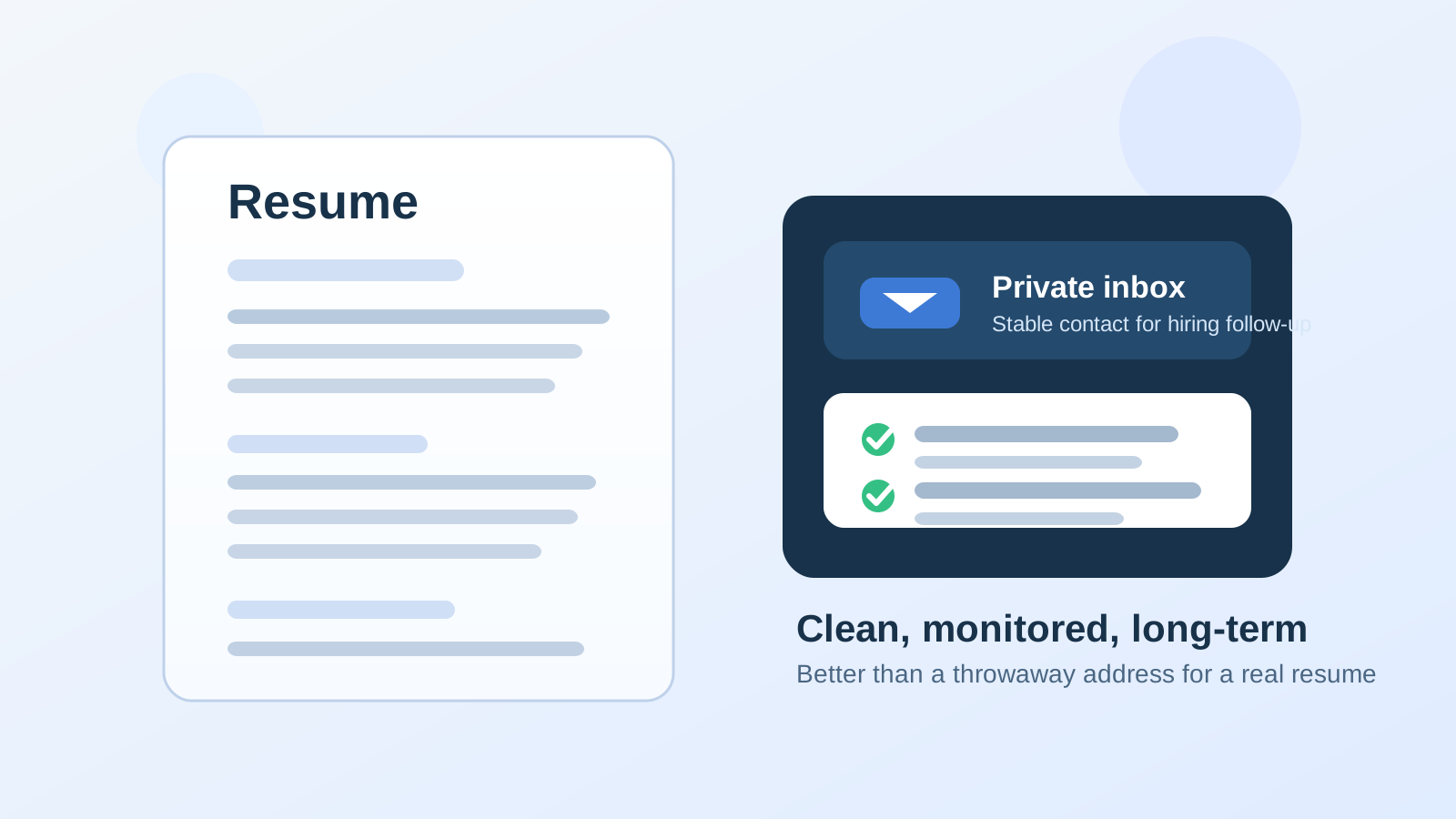
This is the comparison that matters most for Anonibox readers. A temporary or disposable inbox can be useful for low-trust signups, one-off downloads, or early-stage job-board experiments when you want to protect your main identity footprint. But a resume is different. A resume should lead to a stable contact channel that can stay alive through callbacks, interview loops, take-home assignments, and delayed recruiter follow-up.
If you use Anonibox or another disposable workflow for quick research, that can still be smart. Just do not paste a short-life address into the version of your resume that real employers may revisit later. For that job, a durable inbox like Hushmail is far better.
Hushmail vs. an alias or forwarding setup
An alias can work if it is stable, easy to manage, and tied to an inbox you watch closely. But if you rotate aliases often, test lots of forwarding rules, or sometimes disable addresses, that complexity can become a liability. Resume contact details should be boring in the best possible way.
Best practices if you use Hushmail on your resume
- Keep the address simple. Use your real name or a professional variation of it.
- Use the same address everywhere. Your resume, applications, LinkedIn, and cover letter should not conflict.
- Check the inbox daily. Faster replies make you easier to hire.
- Set up a clean signature and display name. Small details reinforce professionalism.
- Separate stable contact from throwaway workflows. Use disposable inboxes for low-trust experiments, not for the resume itself.
- Test it before applying. Send yourself a message from another account, make sure notifications work, and confirm you can reply smoothly from your phone and computer.
A quick decision checklist
Hushmail is probably a good resume choice if most of these are true:
- Your address looks professional.
- You control the account personally.
- You expect to keep using it for a long time.
- You check it often enough to catch interview requests quickly.
- You want a separate, organized inbox for job-search traffic.
It is probably not the best choice if several of these are true:
- The address looks complicated or unusual.
- You rarely log in.
- You may abandon the inbox soon.
- You are using it as a temporary privacy layer rather than a real communication channel.
Final answer
Yes, you can use Hushmail on your resume. In fact, it can be a very solid choice if the address looks professional, stays active, and gives you better organization than your older everyday inbox.
The key is to treat it like a serious long-term contact point. Recruiters care more about clarity, consistency, and responsiveness than about whether your email provider is the most common one on the internet. If your Hushmail inbox helps you stay reachable and organized, it is doing exactly what a resume email should do.