Usually no — your resume should list one primary email address, not two, unless you have a very specific reason both are necessary.
One stable, professional inbox makes you easier to contact, while two addresses often create confusion, split replies, and unnecessary privacy headaches during a job search.
That answer can feel surprisingly unsatisfying, because the idea of listing two email addresses seems practical at first. Maybe you want a personal address and a job-search address. Maybe you want a backup in case one inbox filters something incorrectly. Maybe you are trying to protect your privacy without missing recruiter messages. All of that is understandable.
But resumes work best when they reduce friction, not when they add choices. A recruiter scanning your header for five seconds should immediately know how to reach you. If they see two email addresses, the most likely outcome is not “great, more options.” It is usually “which one should I use?” That tiny hesitation is not catastrophic, but it is unnecessary.
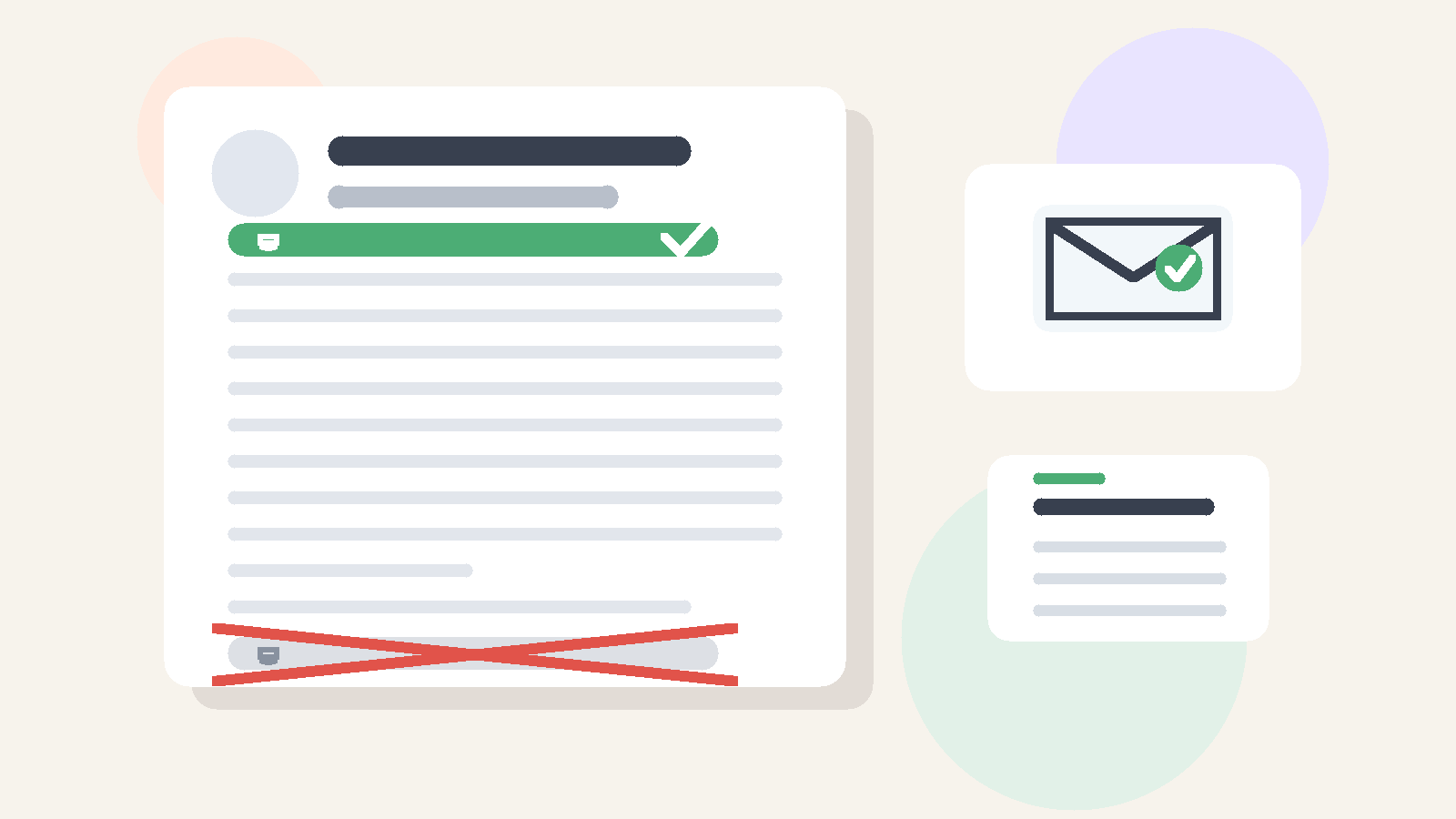
Short answer: one email is usually the better move
For most job seekers, the cleanest setup is one professional email address that you control, monitor closely, and plan to keep active throughout the search. That can be your main personal inbox, a dedicated job-search inbox, or a stable alias that forwards into a mailbox you check every day. What matters is clarity and reliability.
Two email addresses on the resume itself usually do not improve your chances. They tend to create avoidable uncertainty, especially if one looks personal and the other looks more formal, or if one belongs to a provider the employer recognizes more easily than the other. The employer may guess, use whichever address seems best to them, or send messages to both. None of those outcomes is as clean as one obvious contact point.
Why people consider putting two email addresses on a resume
The idea is not irrational. People usually think about two addresses for one of four reasons:
- Privacy: they want to keep job-search traffic away from the inbox used for everyday life.
- Backup: they worry one provider may filter or lose an important interview email.
- Professional presentation: they have an older personal address and a newer, cleaner one.
- Transition: they are moving from school to work, from one country to another, or from one identity setup to a more polished one.
Those are real concerns. The mistake is assuming the resume itself needs to show every option. In most cases, the better solution is to choose the best single address for the resume and handle the rest behind the scenes.
Why two email addresses can hurt more than they help
1. They create decision friction
Hiring teams move quickly. If your resume shows two addresses, you are asking the reader to make a small decision before they contact you. Most will not overthink it, but some will wonder whether one is preferred, whether one is older, or whether one should only be used for certain types of contact. A good resume header should not create even minor ambiguity.
2. Replies can get split across inboxes
If one recruiter writes to the first address and another uses the second, your communication history becomes fragmented. That makes it harder to search, follow up, label threads, and keep track of where each company conversation lives. A job search already creates enough moving parts without splitting your message trail from day one.
3. It can look a little messy
Two email addresses do not usually make you look unprofessional, but they can make the contact section feel crowded or overexplained. Resumes work on simplicity. One name, one phone number if you use one, one primary email, one LinkedIn or portfolio link if relevant. Clean formatting signals organization.
4. It does not really solve privacy on its own
If your goal is privacy, listing two addresses may actually expose more of your digital footprint rather than less. You are giving out two routes into your inbox ecosystem instead of one. If one of them is your longtime personal address, you may be undoing the privacy benefit you were trying to create in the first place.
When two email addresses might make sense
There are a few edge cases where listing two addresses is defensible, but they are rarer than people assume.
- You are in transition between addresses and one of them may still be in circulation on active applications.
- You have a custom-domain professional address but want a mainstream backup because you are worried the custom domain looks unfamiliar or has had deliverability issues.
- You are applying in a context where different contacts truly serve different functions, such as a public-facing press address and a private hiring address.
Even in those cases, two addresses are usually the second-best answer. A better fix is often to stabilize one address, forward from the other, and keep a single visible contact point on the resume.
Better alternatives than listing two email addresses
Use one dedicated job-search inbox
If you want separation from your everyday personal email, create one stable inbox just for your search. This is often the best option for people applying broadly, dealing with recruiter outreach, or posting resumes on multiple platforms. It keeps job-search traffic organized without making the resume itself more complicated.
Use one professional alias
If you do not want a whole separate account, a stable email alias can be a smart middle ground. A clean alias that forwards into your main mailbox gives you privacy and organization while preserving one visible contact address. This works especially well if you want to know instantly which messages came from resume circulation.
Keep backup logic behind the scenes
If your real worry is missing a message, solve that with forwarding rules, labels, notifications, and careful spam-folder checks. Do not solve it by printing two competing contact addresses on the document. The employer does not need to see your backup plan. They just need one reliable way to reach you.
Use temporary email only around the edges
This is where Anonibox fits naturally. Temporary inboxes can be useful for low-trust or one-off job-search activity like downloading resume templates, testing resume builders, opening gated career resources, or checking whether a noisy job board starts sending junk. But your actual resume should usually point to a long-term inbox, not a temporary one, and not two separate addresses at once.
How to choose the one email address that belongs on your resume
If you are deciding which single email to use, evaluate it against four questions:
Is it stable?
The address should still work if an employer responds next week, next month, or after a slow hiring cycle. Avoid anything tied to a soon-expiring school account, a current employer, or a short-term privacy tool designed for one-click signups.
Does it look professional?
Your resume email should be simple, readable, and name-based if possible. A recruiter should be able to type it accurately and feel comfortable replying to it. If your old personal address includes jokes, fandom references, or random strings, this is a good moment to upgrade.
Do you actually monitor it?
The best-looking email address in the world is useless if you only check it every few days. A resume inbox should be part of your daily routine while you are actively applying. Interview scheduling often moves faster than people expect.
Does it match the rest of your application materials?
Consistency matters. Use the same primary email on your resume, cover letter, job applications, and LinkedIn when appropriate for your strategy. Mixed contact details create avoidable confusion, especially when files get downloaded and forwarded internally.
What if you already put two email addresses on your resume?
It is not a disaster. Plenty of employers will simply choose one and move on. But if you are updating your resume now, it is worth simplifying.
- Pick the stronger of the two addresses as your public-facing option.
- Set up forwarding or notifications so you do not miss anything tied to the other address.
- Update your master resume, cover letter template, and job-board profiles.
- Keep the retired address active for a while if you already used it in active applications.
That gives you the practical benefit of continuity without permanently carrying two visible email addresses on every version of the document.
Examples of good and bad resume contact setups
Better: one dedicated inbox like firstname.lastname.jobs@example.com, or one clean alias that forwards into a mailbox you already monitor.
Usually worse: a personal address plus a second “backup” address listed side by side, forcing employers to guess.
Avoid: a work email, an expiring student inbox you may lose access to, or a temporary/disposable inbox as the actual resume contact point.
A quick checklist before you send the resume
- Is there one obvious email address in the header?
- Will that address still work for the full job search?
- Do you check it daily?
- Does it look professional and easy to read?
- Have you handled backup, filtering, and forwarding behind the scenes instead of on the page?
If the answer is yes, your setup is probably cleaner than most.
Final answer
No, you usually should not put two email addresses on your resume. One professional, stable, closely monitored address is clearer for employers and easier for you to manage.
If you want more privacy, use one dedicated inbox or one polished alias on the resume, then use tools like Anonibox for the lower-trust signups around your job search rather than as a second visible resume address. That keeps your contact section simple while still giving you better control over spam, privacy, and organization.