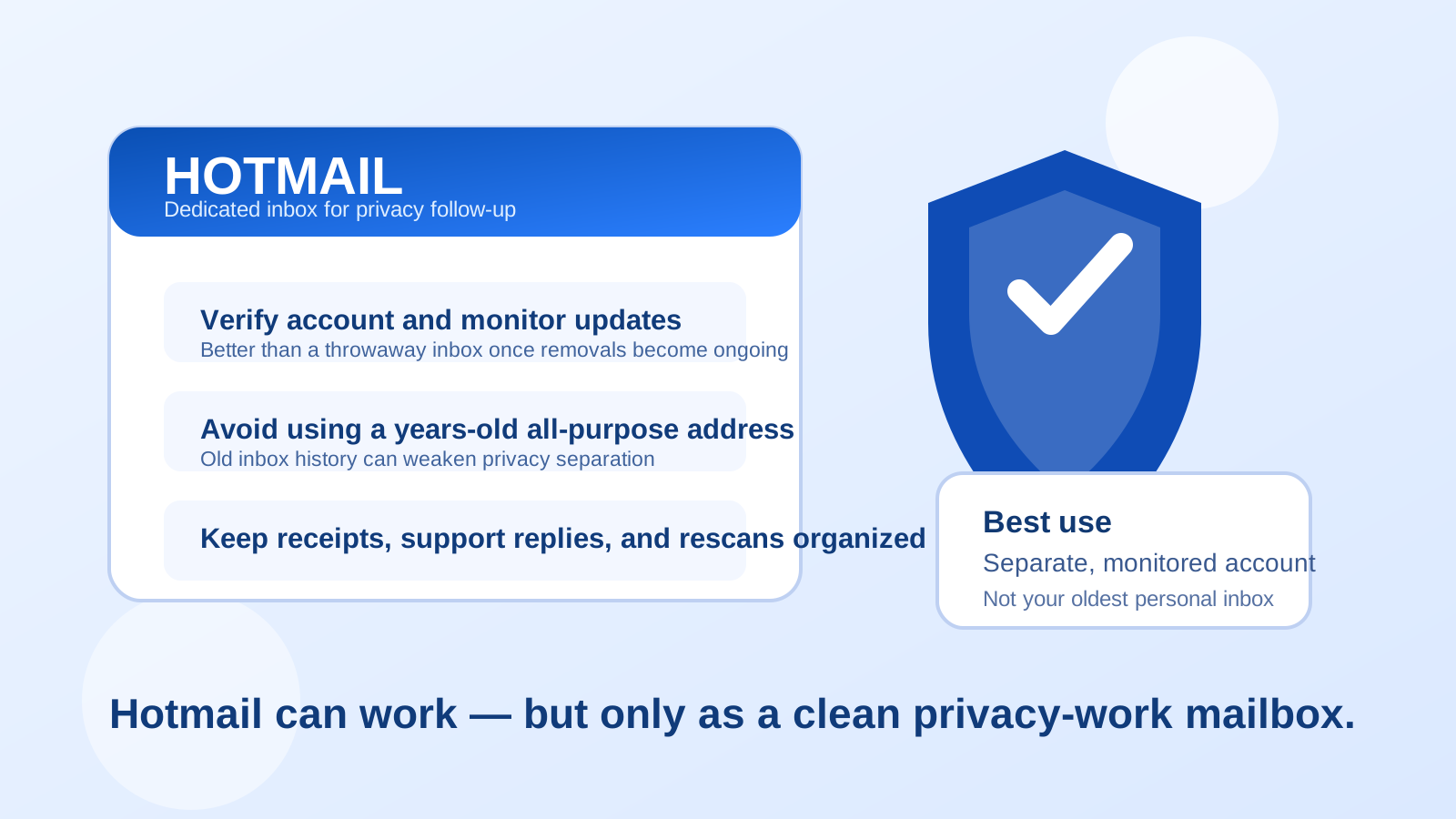
Yes — Hotmail can work for data broker removal services if you use a separate, monitored Hotmail address rather than an old all-purpose inbox tied to the rest of your life.
It is usually better than a throwaway inbox once removals turn into ongoing follow-up, but a legacy Hotmail account can create extra privacy and organization problems if it is already connected to years of personal logins.
That is the practical answer behind searches for Hotmail for data broker removal services. The email you use for privacy services matters because these services are rarely one-and-done transactions. Even when the signup feels simple, the relationship can continue for weeks or months through verification messages, progress updates, support replies, renewal reminders, billing notices, and account-security emails.
If you choose an inbox that is too temporary, you can lose access to messages you still need later. If you choose an inbox that is too exposed, you may connect a privacy-sensitive task to an address already tied to shopping accounts, social profiles, recovery flows, and old online activity. Hotmail sits in the middle. It is durable enough for ongoing follow-up, but only if you use it deliberately.
Why your email choice matters for data broker removal services
People use data broker removal services because they want less personal information floating around online. That makes the contact details you hand over part of the privacy decision too. The provider may need to send:
- signup confirmations and account-verification links
- support replies when a broker record needs clarification
- status updates about removals, rescans, or unresolved listings
- billing receipts, renewal notices, and security alerts
- messages asking you to confirm identity details before an opt-out can continue
Those are not the kinds of messages you want to lose because you used a throwaway inbox that expired too soon. But they are also not the kinds of messages you want mixed into the same mailbox you use for everything else if your goal is better separation and less exposure.
When Hotmail is a sensible choice
Hotmail can be a reasonable option in a few situations:
- You made a separate Hotmail address for privacy-related signups. A clean address used only for data-removal tools, opt-out services, and similar admin work is much safer than reusing your oldest personal inbox.
- You expect long-term follow-up. Data broker removal services often require later check-ins, rescans, or support conversations. A real mailbox is more practical than a disposable inbox once the relationship continues past day one.
- You already manage Microsoft email well. If you are comfortable monitoring folders, using strong account security, and keeping the inbox separate from your public-facing identity, Hotmail can be perfectly workable.
For many people, the real issue is not whether Hotmail is acceptable. It is whether the specific Hotmail account they plan to use is clean, compartmentalized, and easy to monitor.
The biggest risk: reusing an old Hotmail address
The biggest problem with Hotmail is not deliverability. It is history.
Many people still have an old Hotmail address that has been around for years. Even if the account now runs through Outlook.com behind the scenes, the address may still be tied to old forums, shopping accounts, travel bookings, password resets, newsletters, cloud storage, or personal contacts. That kind of long-lived inbox creates a few avoidable privacy problems.
1. It can expose a more complete identity trail
If the same address appears across many services, it becomes easier to connect privacy-service activity to the rest of your digital life. That is the opposite of what most people want when they start cleaning up data-broker exposure.
2. Important messages can get buried
Legacy inboxes often carry years of clutter. A verification request or broker-removal update is easier to miss when it lands in a mailbox already full of promotions, account notices, and old subscriptions.
3. Shared recovery links can weaken separation
If your old Hotmail account is also the recovery email for other services, using it for privacy tools can blur boundaries you were trying to create. One inbox starts acting like the control center for everything.
Can you use a temporary email instead?
Sometimes, but not as the long-term answer.
A temporary inbox is useful at the research stage. If you are comparing several data broker removal services, reading trial material, or checking how aggressively companies follow up before you commit, a disposable address can help keep your main inbox clean. That is where a tool like Anonibox makes sense: early exploration, quick comparisons, and low-stakes first contact.
But once you pay for a service, start a real support conversation, or expect rescans and billing notices over time, a fully disposable inbox usually becomes the wrong tool. You need a mailbox that will still exist when a service asks you to confirm a removal, respond to support, or review a renewal later.
That is why Hotmail can be a workable middle ground: more durable than temporary email, but still separable from your everyday inbox if you create or dedicate the account intentionally.
How to use Hotmail safely for data broker removal services
If you decide to use Hotmail, treat it like a dedicated privacy-work inbox instead of just another random address.
Create a separate account if possible
If your current Hotmail account has years of personal history attached, do not default to it. A separate mailbox is cleaner than trying to retrofit privacy boundaries onto an old account that has already been everywhere.
Use strong account security
Data broker removal services may send links, identity-related confirmations, and billing information. Protect the inbox with a unique password and strong sign-in security so that one convenience account does not become an easy target.
Keep the display name neutral and professional
You do not need to overcomplicate this. A straightforward name is enough. The point is to keep the account usable for support conversations while avoiding a goofy or overly revealing identity label.
Set up folders or rules
If multiple services start sending updates, folders make a real difference. Separate confirmations, support replies, and billing messages so you can find them later without hunting through a noisy inbox.
Save important service details outside the inbox
Do not rely on search alone. Keep a simple note of which service used which address, when you signed up, and what renewal or follow-up dates matter. That way you are not rebuilding the story later from scattered email threads.
When Hotmail is not the best choice
Hotmail is probably not your best option if:
- the only Hotmail account you have is an old personal inbox linked to years of accounts and contacts
- you rarely check it and are likely to miss time-sensitive messages
- you want stronger alias control or more deliberate compartmentalization than a legacy mailbox gives you
- you are choosing it only because it already exists, not because it fits your privacy workflow
In those cases, a cleaner dedicated mailbox, alias-based setup, or privacy-focused address may be more sensible. The best inbox for this job is not necessarily the most famous one. It is the one that keeps follow-up reliable without tying the task to the rest of your online identity.
A practical workflow that usually works well
- Use a temporary inbox only for low-stakes comparison. If you are just evaluating services, a disposable address can help you avoid unnecessary marketing clutter.
- Switch to a durable dedicated inbox before you commit. Once billing, rescans, or support threads matter, move to a monitored mailbox such as a separate Hotmail account.
- Keep data-removal email isolated from daily life. Do not mix it with your oldest personal inbox unless you accept the privacy trade-off.
- Review the account occasionally. Data broker removal is often ongoing work, not a one-time event.
Quick checklist before you use Hotmail
- Is this a separate Hotmail account, not your oldest all-purpose one?
- Will you actually monitor it for confirmations and support replies?
- Does it have strong password and sign-in protection?
- Can you keep it limited to privacy-service use instead of everything else?
- Would a more privacy-focused or alias-based setup suit you better long term?
If the answer to most of those questions is yes, Hotmail can be a practical choice. If not, it is better to set up a cleaner option before you start connecting it to privacy services.
Final answer
Yes, you can use Hotmail for data broker removal services — but it works best when it is a separate, intentional inbox rather than an old address carrying years of personal history.
That is the real trade-off. A disposable inbox may be too short-lived for an ongoing privacy service, while an old personal Hotmail account may expose more than you want and make follow-up harder to manage. If you want the convenience of a familiar mailbox without the mess, use a dedicated Hotmail account, keep it organized, and reserve truly temporary email for the earliest research stage only.