Yes — a virtual phone number can work for employment verification if the number is stable, monitored, and easy for a real employer or verifier to reach. It is a poor choice only when the number expires quickly, hides important calls behind spam filters, or adds friction during a time-sensitive verification request.
In practice, the best answer is not “always use one” or “never use one.” Employment verification sits late in the hiring process, so reliability matters more here than it does during early browsing or low-trust outreach. A virtual number can be a smart privacy layer, but only if you treat it like a serious contact channel rather than a throwaway line.
What employment verification usually involves
Employment verification happens when an employer, recruiter, background-check provider, staffing agency, landlord, or lender wants to confirm job details. Depending on the situation, they may verify your current employer, past employer, job title, dates of employment, or whether they can reach you for supporting details.
Sometimes the process is entirely email-based. Other times, a verifier needs to call you, return a missed call, send a one-time scheduling text, or confirm the right person before continuing. That is why the phone number question matters. If the number you provide feels unstable or is difficult to reach, you may create delays at the exact stage where you want things to move smoothly.
Why people consider a virtual phone number here
There are good reasons to avoid using your main personal number everywhere in a job search. Once your number lands in recruiter databases, third-party verification systems, and old application records, it can keep attracting calls and texts long after the search ends. A virtual number gives you more control over that exposure.
People usually choose a virtual number for employment verification because they want to:
- keep their main personal number private
- separate job-search communication from family and everyday life
- track who is calling about hiring or verification
- shut down or mute that line later if it turns into spam
- avoid giving a current employer, former employer, or third-party verifier unnecessary access to their primary number
Those are all reasonable goals. The trick is choosing a setup that preserves privacy without hurting responsiveness.
When a virtual phone number is a good fit
A virtual phone number usually makes sense for employment verification when you control it directly and check it consistently. If it rings reliably, accepts voicemail, can receive legitimate texts, and forwards cleanly to you when needed, it can work just fine.
It is especially useful when:
- You want a dedicated job-search channel. Verification calls do not get mixed with personal calls, delivery notifications, or random spam.
- You are applying through multiple employers or agencies. A separate number makes it easier to tell which calls belong to the search.
- You are privacy-conscious. You may be comfortable sharing a work-search line without wanting your primary mobile number copied into every HR system.
- You expect short-term volume. Verification often happens in bursts near offer stage, onboarding, or background checks. A dedicated number can help you manage that burst cleanly.
In other words, a virtual number is a good fit when it behaves like a real professional contact method rather than a disposable trick.
When a virtual number can cause problems
The risk is not the word “virtual.” The risk is unreliability. Employment verification is one of the last places in a hiring process where you want a missed call, silent block, or delayed text to create confusion.
A virtual number can create problems when:
- The number expires or changes too quickly. Verification may happen later than you expect, especially if the employer pauses, reopens the process, or runs checks close to a start date.
- Calls do not ring consistently. Some virtual setups handle app-based notifications poorly or bury missed calls.
- Text delivery is unreliable. If a verifier sends a simple scheduling text and you never receive it, that can slow everything down.
- Your voicemail is unprofessional or full. A separate line still needs a clean voicemail greeting and room for messages.
- You rarely monitor it. A privacy line you never check is worse than a main number you actually answer.
If you are going to use a virtual number, use one you trust enough to put on real forms. Employment verification is not the stage for an experimental setup.
How employment verification is different from earlier job-search stages
This is where people sometimes make the wrong comparison. A temporary inbox or lightly used alias can be helpful early in the funnel when you are testing job boards, checking recruiter quality, or controlling spam. Employment verification is later and more serious.
At this stage, the goal is no longer just privacy. The goal is privacy plus continuity. The verifier may already have your application, your résumé, your offer details, and your onboarding paperwork. If they reach out, you want them to get a stable answer quickly.
That is why a virtual number can work, but a truly disposable phone workflow often does not. You want separation, not disappearance.
What employers and verifiers actually need from your number
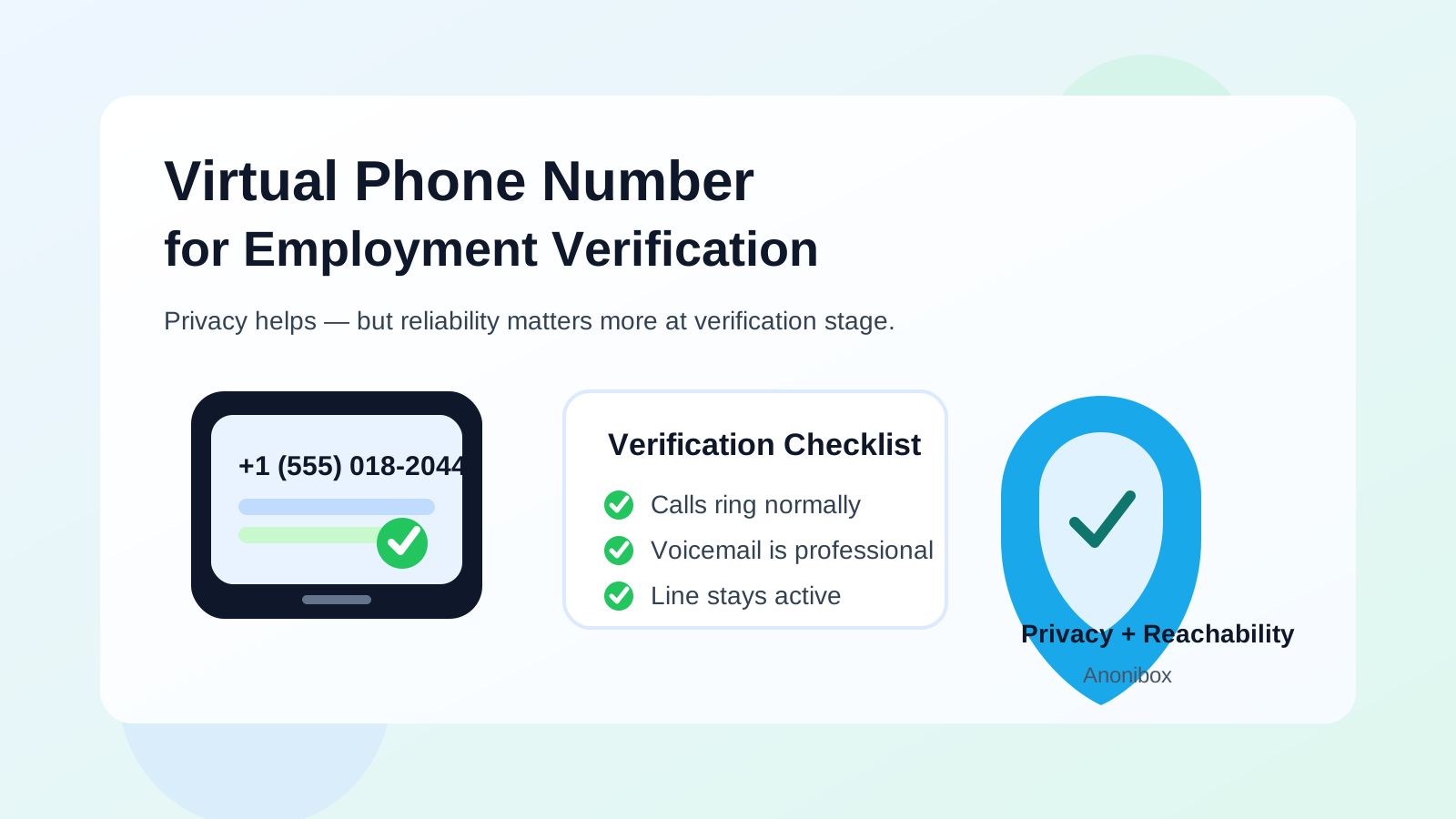
Most legitimate verifiers do not care whether your number is virtual, mobile, or attached to a second line. They care whether it works. In practice, the number should do four things well:
- Receive calls reliably.
- Allow voicemail with your name or a neutral professional greeting.
- Handle texts if the verifier uses text scheduling.
- Stay active long enough to cover the full verification window.
If your virtual number does those four things, most of the practical objections disappear.
Best practices if you use a virtual phone number for employment verification
1. Keep the line active longer than you think you need it
Verification can come after interviews, after an offer, during a background check, or even right before onboarding. Do not retire the number too soon.
2. Set up a simple professional voicemail
A basic greeting is enough: your name, a note that you will return the call, and no jokes or clutter. The point is to sound reachable and organized.
3. Test it before you share it
Call it from another line. Send yourself a text. Leave a voicemail. Make sure forwarding, notifications, and recordings behave the way you expect.
4. Check it like a real work channel
If you give the number to an employer, treat it as active. That means checking missed calls, voicemail, and text messages regularly until the process is fully done.
5. Do not pair a “privacy” number with sloppy communication
If you miss three verification calls and answer days late, the issue is not that the number was virtual. The issue is that the contact channel was not maintained.
6. Use a matching email strategy
A separate phone number works best when it matches the rest of your contact setup. For example, many privacy-conscious job seekers pair a dedicated phone line with a separate job-search inbox so calls, texts, and employer email all stay organized in one lane. If you use a tool like Anonibox for early-stage inbox separation, that can work well alongside a stable verification-ready phone line later in the process.
When you should avoid a virtual number
You probably should not use a virtual number for employment verification if any of these are true:
- the number is temporary enough that it may disappear before verification finishes
- it cannot reliably receive calls or texts from normal business lines
- you only check it occasionally
- the employer has already told you they are struggling to reach you
- you are in a very time-sensitive onboarding process and want the lowest possible friction
In those cases, a main personal number or a more stable dedicated line is usually safer.
Simple examples
Good use case: You have a dedicated virtual number for your job search, it forwards properly, you check it daily, your voicemail is clean, and you keep the line active through onboarding. That is a practical privacy-first setup.
Bad use case: You used a temporary app-based number for applications, turned notifications off, forgot to test text delivery, and stopped checking it after the interview round. That is likely to create delays when a verifier calls.
Borderline case: You are using a virtual number from a provider you trust, but only for early outreach. Once you reach offer stage or background checks, you switch to a more permanent contact number. That can also be a smart approach if you know the first line is not ideal for long-tail verification.
A quick decision checklist
- Does the number ring reliably every time?
- Can it receive normal calls, voicemails, and texts?
- Will it still exist a few weeks from now?
- Do you monitor it closely enough for time-sensitive verification?
- Would you feel comfortable if an employer used it again during onboarding?
If the answer to all five is yes, a virtual number is probably fine. If several answers are no, use a more stable contact method.
Final answer
Yes, you can use a virtual phone number for employment verification — but only if it acts like a dependable real-world contact line. Privacy matters, and a separate number can absolutely help you control exposure, reduce spam, and keep hiring communication organized. But at verification stage, reliability matters just as much as privacy.
The safest approach is to use a virtual number that you control, test, monitor, and keep active long enough to cover the whole verification window. That gives you the benefits of separation without creating the kind of communication problems that can slow down a legitimate offer, background check, or onboarding process.