Usually yes — a separate phone number is often the smartest choice for background checks if you want privacy without missing important screening calls or texts.
The best version of that strategy is a stable number you control and actually monitor, not a short-lived throwaway line that could disappear before the screening process is finished.
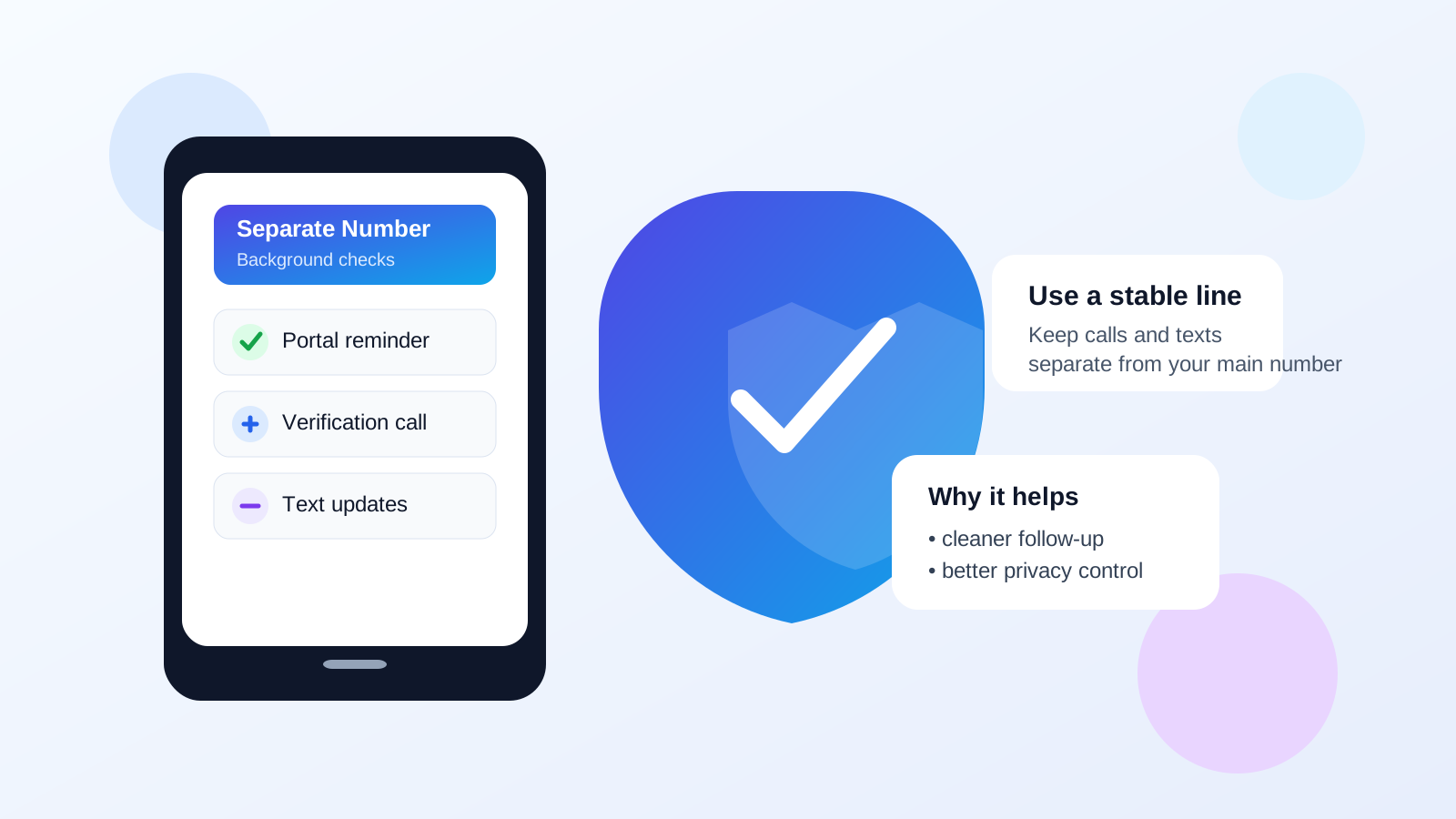
That is the practical answer to should you use a separate phone number for background checks. Background checks sit in an awkward middle ground: they usually happen late enough in hiring that reliability matters a lot, but they can still involve third-party vendors, follow-up texts, missed-call callbacks, secure portal reminders, and personal details you may not want tied to your main everyday number.
For many job seekers, a separate phone number gives the best balance of reachability and control. It helps you stay available for legitimate hiring communication while reducing the chance that your personal number gets spread across screening vendors, recruiter databases, or long-term follow-up lists. It is not mandatory for everyone, but it is often a very sensible privacy move.
Why background checks are different from early job applications
People sometimes treat every job-search contact decision the same way, but a background check is not the same as uploading a résumé to a job board or replying to a cold recruiter. By the time a background check starts, there is usually already a real employer, a real screening process, and a real deadline attached to the communication.
That changes the stakes. You may receive:
- calls to confirm identity details or next steps
- texts reminding you to complete a screening form
- messages from a third-party screening company rather than the employer itself
- follow-up questions about dates, addresses, or documents
- time-sensitive notices when a form is incomplete or a portal task is missing
Because those messages matter, you want a number that is dependable. Because they also involve personal information and outside vendors, you may not want to use the number that every friend, family member, group chat, and old app account already touches.
Why a separate number is often a good idea
A separate phone number creates a cleaner lane for hiring communication. Instead of background-check calls and texts landing in the same place as delivery spam, social notifications, and random robocalls, they go to a number you can manage on purpose.
That has a few practical benefits.
1. Better privacy
Your main phone number is a durable personal identifier. Once it gets into multiple systems, it tends to stay there. A separate number helps limit how widely your primary line spreads during a job search.
2. Cleaner organization
If a screening vendor calls, you immediately know what kind of communication it is. That makes it easier to respond quickly, keep voicemails straight, and notice if something looks suspicious.
3. Easier spam control later
Even legitimate hiring systems can produce lingering text messages, check-in calls, or recruiter follow-ups months later. A separate number gives you the option to mute, archive, or retire that lane without affecting your personal life.
4. Better boundary-setting
Some people do not want every hiring interaction tied to the same number they use for family, healthcare, banking, and two-factor authentication. That is a reasonable boundary, especially if they are applying to many roles at once.
What kind of separate number works best?
The ideal separate number for background checks is not the most disposable one. It is the most stable one you can comfortably keep active through the entire hiring cycle.
In practice, the best choice is usually a long-term secondary number that you control well enough to:
- answer or return calls promptly
- receive text messages reliably
- set a professional voicemail
- keep the line active for as long as the hiring process may take
That matters because background checks can drag on longer than people expect. A screening process may involve delays, clarification requests, or late follow-up even after you think everything is done. If your separate number disappears too early, you create a new problem instead of solving one.
When a separate number is especially useful
A separate number makes the most sense when one or more of these are true:
- you are applying to many roles and expect a lot of follow-up traffic
- you want to keep job-search activity away from your main personal line
- you already receive too much spam or robocall noise on your regular number
- you are dealing with third-party background-check vendors and want tighter compartmentalization
- you are job hunting discreetly and want more control over missed calls, voicemails, and text previews
- you want a number you can eventually retire without disrupting everyday contacts
It can also help if you are moving, interviewing across several employers, or juggling multiple late-stage processes at once. In those situations, clean communication lanes reduce mistakes.
When your main personal number is probably fine
A separate number is helpful, but it is not required for every person. Your main personal number is often perfectly acceptable when:
- you are in a focused search with only a small number of legitimate employers
- you trust the employer and the screening partner
- your personal number is already the one you reliably answer
- you do not expect privacy spillover to be a big issue
- you would be more likely to miss messages on a secondary line
That last point matters. A privacy tactic is only useful if it does not make you less reachable. If you never check the secondary line, forget the voicemail PIN, or silence the notifications too aggressively, then your “safer” setup becomes the risk.
Why a work number is usually a worse choice
Compared with a separate personal line, a current work number is usually the weaker option for background checks. Work devices and work-managed numbers can create visibility, logging, access, and ownership issues you do not control.
That can be awkward for obvious reasons. Background checks can involve personal data, employment transitions, and communication with outside vendors. Most people would rather keep that off employer-owned devices, employer-managed call records, and shared office systems.
If your decision is between your main personal line and a work line, your personal line is usually better. If your decision is between your personal line and a stable separate line, the separate line often gives you more control.
Do not confuse “separate” with “temporary” or “disposable”
This is where people sometimes make the wrong move. A separate number for background checks should usually be separate, but not necessarily temporary in the short-lived sense.
Background checks are not like one-click newsletter signups. They can continue across days or weeks. If you use a number that may expire, stop receiving texts, or get recycled before the process is fully done, you risk missing an important message that slows down your hiring timeline.
In other words, the goal is not maximum disposability. The goal is controlled separation with enough stability to carry you through the full process.
How to set up a separate number well
Use a clear voicemail greeting
A simple professional greeting with your name is enough. Screening vendors and HR teams should be able to leave a message without wondering whether they reached the right person.
Turn on notifications you will actually see
If texts or missed calls go to a secondary device or app, make sure you will notice them. Background-check requests are often time-sensitive.
Keep the line active longer than you think you need
Do not shut it down the moment you submit your consent form. Keep it available until you have fully cleared screening, started the job if appropriate, and no more follow-up is likely.
Use it consistently during the screening stage
If you start with one number and then suddenly reply from another, you create avoidable confusion. Pick the number you want to use and stay consistent unless you have a good reason to change it.
Red flags to watch for even with a separate number
A separate number can improve privacy, but it does not make a bad hiring interaction safe by itself. Stay cautious if:
- the caller cannot clearly identify the employer or screening company
- the message pressures you to move off normal channels immediately
- you are asked for sensitive data by text when the request seems excessive
- someone asks for verification codes or account credentials
- the role itself still feels vague, rushed, or inconsistent
A separate number reduces exposure. It does not replace normal judgment.
How it fits with a separate email strategy
For privacy-conscious job seekers, a separate phone number often works best alongside a separate email approach. The logic is similar: keep hiring communication organized, easy to monitor, and less entangled with your main personal accounts.
For example, some people use Anonibox or another controlled email setup early in the job-search process to avoid unnecessary inbox clutter while still staying reachable. By the time a background check begins, they may switch to a more stable inbox and pair it with a stable separate phone number. That kind of staged approach is usually more practical than treating every hiring step with the exact same level of openness or the exact same level of disposability.
A quick checklist before you decide
- Will I reliably answer or return calls on this number?
- Can it receive text messages from legitimate screening vendors?
- Will the line stay active long enough for the whole process?
- Does it give me better privacy than my main number?
- Is it more appropriate than using a current work number?
- Will using it reduce confusion instead of creating it?
If most of those answers are yes, a separate number is probably a smart move.
Final answer
So, should you use a separate phone number for background checks? In many cases, yes. It is often the best balance between privacy and reliability, especially if you want hiring communication to stay organized and off your main personal line.
The important part is using the right kind of separate number: stable, monitored, professional, and available for as long as the screening process may continue. If you set it up that way, you can protect your privacy without making yourself harder to reach — which is exactly the balance most job seekers need at the background-check stage.