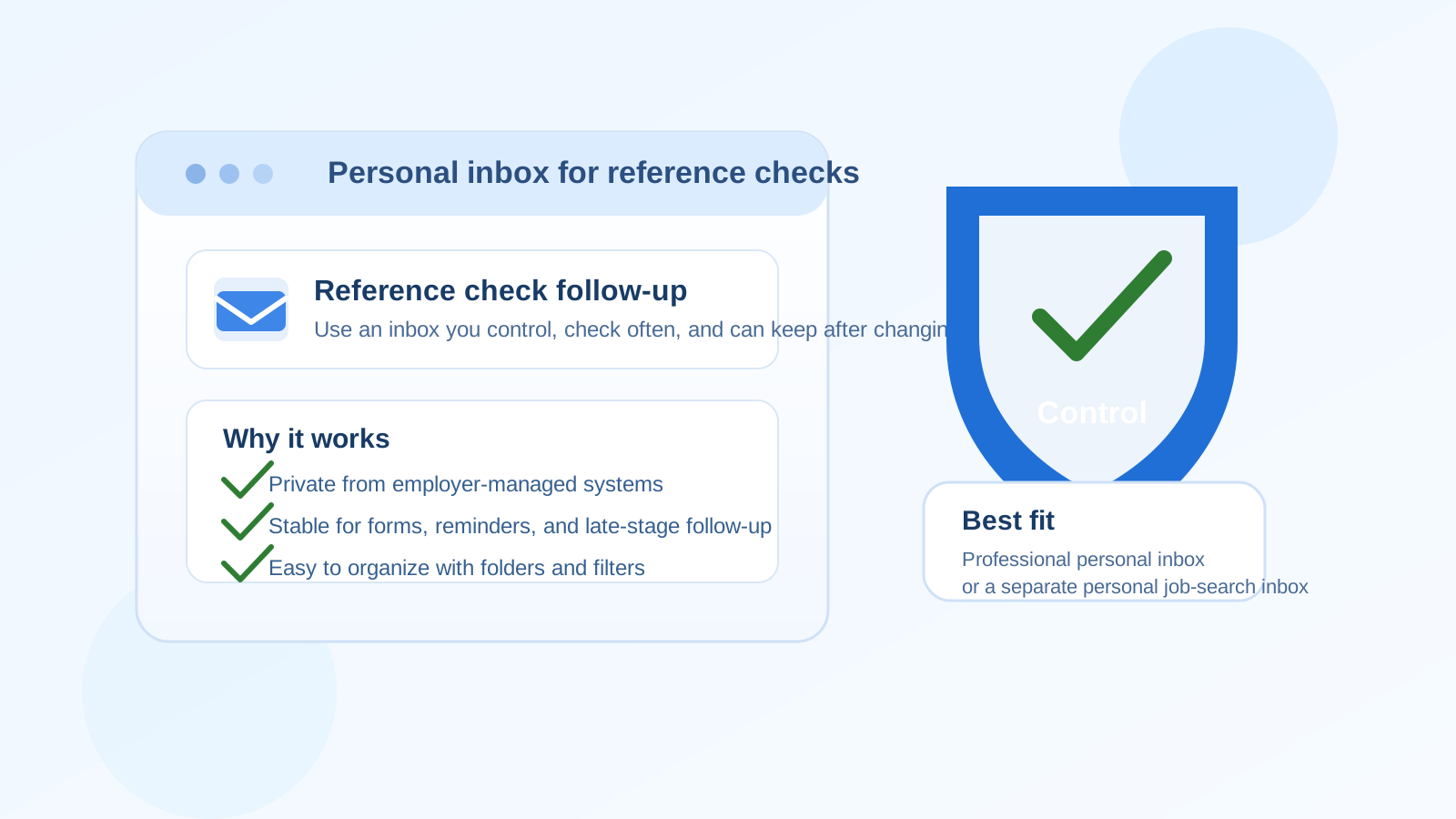
Usually yes — a personal email is often the safest default for reference checks because it is stable, private, and easy for recruiters or HR teams to reach without involving your employer’s systems.
The best version of that choice is a professional inbox you own and check often; avoid work addresses, and avoid disposable inboxes if the reference-check process may continue for several days or weeks.
Why a personal email is usually the right default
Reference checks usually happen late in the hiring process, when small communication problems suddenly matter more. By that stage, an employer may already be narrowing finalists, confirming dates, sending consent forms, or asking quick follow-up questions after speaking with your references. You do not want those messages trapped in a mailbox you rarely check, attached to a job you might leave, or tied to an inbox that may expire before the process ends.
That is why a personal email is usually the safest choice. It stays under your control, follows you if your job status changes, and keeps a sensitive hiring step separate from your current employer’s infrastructure. A personal inbox also tends to be easier to search, organize, and revisit if a recruiter circles back later.
In other words, the question is not just whether a personal email works. It is whether it gives you the right mix of reliability, privacy, and professionalism for a stage of the process that can move quickly. In most cases, it does.
What makes reference checks different from early job-search signups?
People often use different contact strategies at different stages of a job search, and that makes sense. Early on, you may be testing job boards, employer forms, networking pages, or lower-trust signups where inbox protection matters a lot. Later, once a company is serious enough to ask for references, the balance shifts. Stability matters more than throwaway convenience.
That is why the best answer to Should You Use Your Personal Email for Reference Checks? is not identical to the best answer for job-board experiments or cold outreach forms. Reference checks are usually connected to a real hiring workflow, not a casual marketing funnel. You want a contact method that can handle follow-up, reminders, and documentation without disappearing.
If you used Anonibox or another temporary inbox earlier in your search to protect your main address from spam, that may still have been a smart move. But reference checks are often the point where many candidates switch back to a stable inbox they own, because the priority changes from filtering noise to preserving continuity.
Why employers and references need a dependable email at this stage
Reference checks are not always just one message. Depending on the employer, they can involve several moving parts:
- Requests to confirm a reference’s correct email address or phone number
- Scheduling questions if a recruiter plans to call a reference directly
- Third-party screening links that expire after a set time
- Consent or disclosure forms that need a signature
- Follow-up notes if a reference does not respond on the first try
- Status updates while the employer finishes the final hiring steps
A personal email usually handles all of that better than a work inbox or a disposable address. It is yours, not your employer’s. It is less likely to be blocked by company filtering rules. And if you are between roles, traveling, or quietly managing a confidential search, it is still available.
When a personal email works especially well
A personal email is usually the best fit when:
- You are already in a real interview process with a legitimate employer
- You want one reliable place for consent forms, recruiter follow-ups, and reference-related questions
- You are currently employed and do not want reference-check traffic touching employer-owned systems
- You may need access to the same messages later for clarification, record-keeping, or negotiation follow-up
- You want your references to have a clean, stable address for confirming details
In these cases, a normal personal inbox is not a red flag. It is usually the practical choice. Most employers care more about whether they can reach you quickly and reliably than whether the address is hosted on Gmail, Outlook, Fastmail, or a custom domain.
When a personal email may not be enough on its own
“Use a personal email” does not always mean “use the same cluttered inbox you use for coupons, family logistics, app receipts, and years of random notifications.” If your main inbox is chaotic, unprofessional-looking, or easy to miss messages in, a separate personal job-search inbox may be better.
That is still a personal email strategy — you own it, control it, and can keep it after changing jobs — but it gives you more separation. This is often the sweet spot for privacy-conscious job seekers: not a temporary inbox that may disappear, and not a work inbox that your employer controls, but a dedicated personal address for hiring communication.
Examples where that approach makes sense include:
- Your main inbox receives too much noise and you worry about missing time-sensitive messages
- Your everyday address is old, awkward, or not especially professional
- You want reference-check communication separated from broader job-board signups
- You are running a confidential search and want tighter control over how you track each hiring stage
What not to use if you can avoid it
1. A current work email
This is usually the worst option for reference checks. It can expose your job search inside an employer-managed system, create access problems if you resign or get locked out, and leave sensitive hiring traffic sitting in a mailbox you do not truly control.
2. A disposable inbox you may lose access to
A temporary inbox can help at the very top of the funnel, but reference checks are often too important for something short-lived or lightly managed. If a consent form arrives two days later, or a recruiter needs to resend a link, you do not want the message chain to vanish.
3. An inbox you never monitor
Even a perfectly good personal email becomes the wrong choice if you only check it once every few days. Reference checks can move fast. A stable address only helps if you actually watch it.
Common mistakes people make with personal email during reference checks
- Using an unprofessional address: something jokey or outdated can make communication feel sloppier than it needs to.
- Missing follow-up: a personal inbox is only useful if notifications, filters, and habits are set up properly.
- Mixing everything together: if you are applying widely, one overloaded inbox can hide important messages.
- Switching addresses too late: if you began with a lower-trust signup address, do not wait until confusion builds before moving reference-check communication to a more stable inbox.
- Assuming email alone is enough: some employers may still call or text if something is time-sensitive, so your overall contact setup should still be reachable.
Best practices if you use your personal email for reference checks
Use a professional-looking address
Your inbox does not need to look corporate, but it should look normal and credible. A variation of your real name is ideal. If your everyday address is messy or informal, create a cleaner one specifically for job-search communication.
Check it more often than usual
During late-stage hiring, check the inbox several times a day. Reference-check requests can be time-sensitive, especially if a recruiter is trying to keep the process moving before a final decision.
Create a folder or filter
Set up a folder or label for recruiter, hiring, and reference-check messages. That makes it easier to find consent forms, reminder emails, and any instructions your references may need you to confirm.
Keep your references aligned
If you are telling a recruiter to use a particular email for updates, make sure your references also know how you prefer to be reached if they need to confirm anything. Consistency reduces back-and-forth.
Respond promptly and clearly
You do not need to write long replies. Quick, organized answers are usually better. If a recruiter asks you to confirm a reference’s title, relationship, or best phone number, answer directly so the process does not stall.
Personal email vs. a separate personal inbox
Many people hear “personal email” and assume that means one specific inbox. It does not. You can think about the choice in two layers:
- Main personal inbox: best if it is already professional, organized, and easy to monitor.
- Separate personal job-search inbox: best if you want cleaner separation, stronger organization, or less spillover into your daily life.
Both options are usually better than a current work address for reference checks because they stay under your control. The question is really how much separation you want, not whether a personal address can be acceptable. It usually is.
What to do if you already used another address earlier
If you started the process with a different address, you can still shift gracefully. A simple note is enough: “For reference-check and final hiring communication, please use this address going forward.” That is not unusual. Late-stage hiring often becomes more structured than early application traffic.
The important thing is to switch before confusion builds. Do not wait until a form expires, a recruiter follows up to the wrong inbox, or a reference misses context because your contact trail is scattered across multiple addresses.
A quick decision checklist
- Do I fully control this inbox?
- Will I still have access to it if my current job situation changes?
- Does it look professional enough for late-stage hiring?
- Will I notice time-sensitive messages quickly?
- Would a separate personal job-search inbox keep things more organized?
- Am I avoiding both employer-controlled systems and disposable addresses that may be unreliable?
If the answer to most of those questions is yes, then a personal email is probably the right choice for your reference checks.
Final answer
Yes — in most cases, you should use your personal email for reference checks. It usually offers the best balance of privacy, continuity, and professionalism, especially compared with a work inbox you do not control or a temporary inbox that may not be reliable enough for a late-stage hiring step.
If your everyday address is clean and well managed, it may be enough on its own. If not, use a separate personal job-search inbox that you own. Either way, the goal is the same: stay easy to reach, protect your privacy, and keep an important hiring step organized from start to finish.