DuckDuckGo Email Protection can work for background checks if forwarding is reliable and you monitor the real inbox behind it closely, but a dedicated long-term inbox is usually safer once screening becomes time-sensitive. Yes — sometimes, but only if you treat it as a forwarding layer for a real inbox you check constantly, not as a throwaway address for a late-stage hiring step.
That distinction matters because background checks are not just another job-search signup. They often involve consent forms, portal invitations, deadline reminders, identity questions, and follow-up requests from recruiters, HR teams, or third-party screening vendors. Privacy still matters, but once the process is real, reliability matters even more.
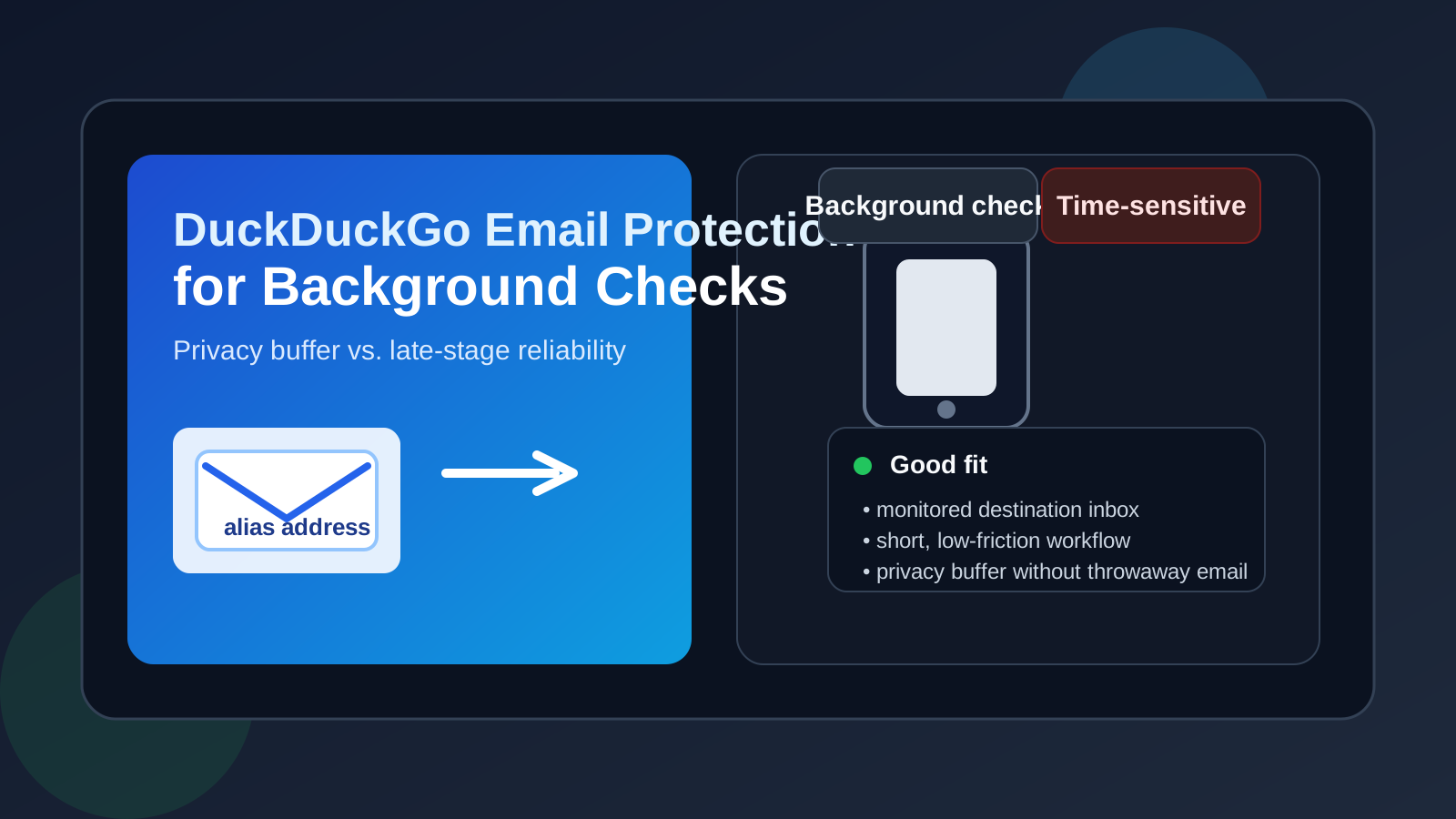
If your goal is to reduce exposure of your main inbox without making yourself harder to reach, DuckDuckGo Email Protection can be a reasonable middle ground. But it is not automatically the best tool for every screening workflow, and it should not be treated like an anonymous or disposable mailbox.
What DuckDuckGo Email Protection is actually doing
DuckDuckGo Email Protection is an email forwarding layer. Instead of giving a recruiter, employer, or screening vendor your main address directly, you give them an alias that routes mail into the inbox you already control.
That is different from a classic temporary inbox. A temporary inbox is usually best for low-trust, low-stakes moments such as one-time verification links, gated downloads, or forms that are likely to create spam. Background checks are different. They can stretch across several days, involve more than one sender, and sometimes require quick back-and-forth communication. A forwarding alias is much more suitable than a public throwaway inbox, but it still adds one extra step between an important sender and your attention.
That extra step is fine only when it stays boringly dependable. If you are experimenting with an alias setup for the first time while a screening deadline is already moving, you are making a late-stage hiring process more fragile than it needs to be.
Why background checks are a tougher test than early applications
Many privacy habits that work well at the start of a job search become less comfortable during background checks.
- The timing is tighter: consent forms or portal links may need same-day action.
- The stakes are higher: one missed message can slow down an offer or start date.
- More parties may be involved: recruiter, HR, employer, and a third-party screening company may all send messages.
- The content can be more sensitive: legal names, previous employers, dates, and identity-related follow-up may all appear in the thread.
That means the real question is not just, “Does this protect my inbox?” The more useful question is, “Will this still let me handle a time-sensitive screening workflow cleanly, quickly, and with as few moving parts as possible?” If the answer is yes, an alias can be fine. If the answer is maybe, simplify.
When DuckDuckGo Email Protection can make sense for background checks
1. You want a privacy buffer without using a disposable inbox
Some job seekers do not want to give every recruiter, vendor, or hiring team the same long-term personal address. That is reasonable. A forwarding alias can create some separation without the instability of a public disposable inbox.
If your goal is controlled exposure rather than anonymity, DuckDuckGo Email Protection is much more appropriate than a one-time throwaway address.
2. The real inbox behind it is stable and heavily monitored
The alias itself is not the important part. The destination inbox is. If the alias forwards into an inbox you already trust, check frequently, and plan to keep active through the whole hiring process, the setup can work well.
If the destination inbox is cluttered, filtered unpredictably, or checked only once in a while, the alias is not solving your real problem. It is just hiding that problem behind a cleaner-looking address.
3. You want cleaner source separation
One useful advantage of alias tools is tracking. If you use a distinct address for a particular employer or screening workflow, it becomes easier to see who is contacting you and how often. That can make it simpler to keep background-check traffic separate from general job-search noise.
4. You are still cautious about who gets your permanent inbox
Sometimes the employer seems legitimate, but the screening vendor is unfamiliar or the workflow still feels impersonal. In those cases, an alias can provide a light privacy buffer while still keeping you reachable.
When DuckDuckGo Email Protection is the wrong choice
The process has become urgent
If the employer or screening vendor is sending same-day requests, simpler is better. Background checks often happen near the finish line, and that is not the best moment to depend on an email setup you only check casually.
You expect repeated follow-up or account recovery
Some screenings are simple. Others involve portal resends, clarification requests, attachment reminders, login issues, and multiple contacts. The more moving parts there are, the less appealing an extra forwarding layer becomes.
You are already confused about which address you used
This is one of the quiet failure modes in privacy-focused workflows. The alias may work perfectly, but you still forget which employer used which address, where the forwarded messages are landing, or whether you already replied from the right thread. Once that confusion appears, the privacy gain is not worth the friction.
You need maximum continuity from interview stage to onboarding
If you can already tell the company is serious, formal, and process-heavy, a dedicated direct inbox often makes more sense than staying behind an alias. You want the cleanest path possible for messages, attachments, and search history.
Common risks people underestimate
Assuming the alias is the system
The alias is only a front door. The real system is still the inbox behind it. If that mailbox is messy, overloaded, or poorly monitored, your reliability problem has not been solved.
Treating late-stage hiring like early-stage lead capture
Background checks are not the same as signing up for a newsletter, downloading a PDF, or testing a vendor demo. Late-stage hiring deserves a communication setup built for continuity, not cleverness.
Forgetting that reply behavior matters too
Receiving the first message is not the whole story. You may need to respond quickly, find old attachments, confirm dates, or handle a resend. A setup that feels awkward when replying can slow you down even if the original email arrived correctly.
Overvaluing privacy theater
Privacy is useful. Extra complexity for its own sake is not. The goal is to limit unnecessary exposure of your long-term inbox while still making it easy for legitimate contacts to move the process forward.
DuckDuckGo Email Protection vs a temporary inbox like Anonibox
These tools solve different problems, and mixing them up leads to bad decisions.
A temporary inbox such as Anonibox is excellent for early, low-trust interactions: one verification link, one gated signup, one form you do not want tied to your main inbox forever. That is where disposable email shines.
Background checks are different. You may need multiple messages, consistent reply history, and reliable access over several days. That makes a forwarding alias much more appropriate than a throwaway inbox. Even so, a forwarding alias is still less direct than using a dedicated job-search mailbox from the start.
In short:
- Anonibox or another temporary inbox: best for low-trust, low-stakes early interactions.
- DuckDuckGo Email Protection: a middle ground when you want privacy separation but still need continuity.
- Dedicated job-search inbox: usually the safest option once a real employer or screening vendor is moving quickly.
Best practices if you decide to use it
Test the forwarding setup before you need it
Do not wait until a screening request is live. Make sure the alias forwards correctly, shows up where you expect, and does not get buried in filters or promotions tabs.
Keep the destination inbox clean
The easiest way to make an alias setup reliable is to keep the inbox behind it focused. If possible, use a mailbox that is not flooded with newsletters, receipts, and unrelated personal traffic.
Check it aggressively while screening is active
When a background check is underway, check the inbox more often than usual. If you normally look twice a day, increase that. Screening timelines can tighten without much warning.
Save important emails and portal links immediately
Do not rely on memory or search later. When the screening invite or consent link arrives, save it somewhere obvious so a buried thread does not slow you down later.
Be ready to switch to a direct inbox if things get complicated
If the employer, recruiter, or screening vendor starts sending repeated follow-ups, account recovery messages, or attachment-heavy threads, moving to a direct dedicated inbox is often the smarter choice. Switching early is better than limping through a fragile setup.
What is usually better than an alias for background checks?
For many job seekers, the best answer is a dedicated long-term job-search inbox. It gives you:
- a direct address with no forwarding layer,
- a full searchable history in one place,
- clean separation from your oldest personal inbox, and
- an address you can keep active through offers, onboarding, and start-date changes.
That setup often gives you most of the privacy benefit people want from aliases, while reducing the risk of missed or confusing communication.
A quick decision checklist
- Is the employer and screening workflow clearly legitimate?
- Is the inbox behind the alias one you check constantly?
- Do you expect a simple, short workflow or several rounds of follow-up?
- Would a direct dedicated inbox make replies, attachments, and search history easier?
- Are you using the alias for real privacy value, or just because it feels clever?
If your answers point toward reliability and active monitoring, DuckDuckGo Email Protection can work. If your answers point toward urgency, complexity, or uncertainty, simplify the setup before it costs you time.
Final answer
Yes, you can use DuckDuckGo Email Protection for background checks, but it is best used as a carefully monitored forwarding layer, not as a disposable identity. It makes the most sense when you want some privacy separation and the real inbox behind it is stable, searchable, and watched closely.
If the screening process becomes time-sensitive, document-heavy, or more complex than expected, a dedicated job-search inbox is usually the safer option. Use privacy tools to reduce unnecessary exposure, but do not let them make a legitimate background check harder to finish.