Yes, usually. Zoho Mail is usually a good choice for salary negotiations if it is a personal inbox you control, check closely, and plan to keep active through offer review and follow-up.
It gives you more separation than a noisy personal inbox or an employer-managed mailbox, while still working like a stable professional account rather than a disposable address that could break an important negotiation thread.
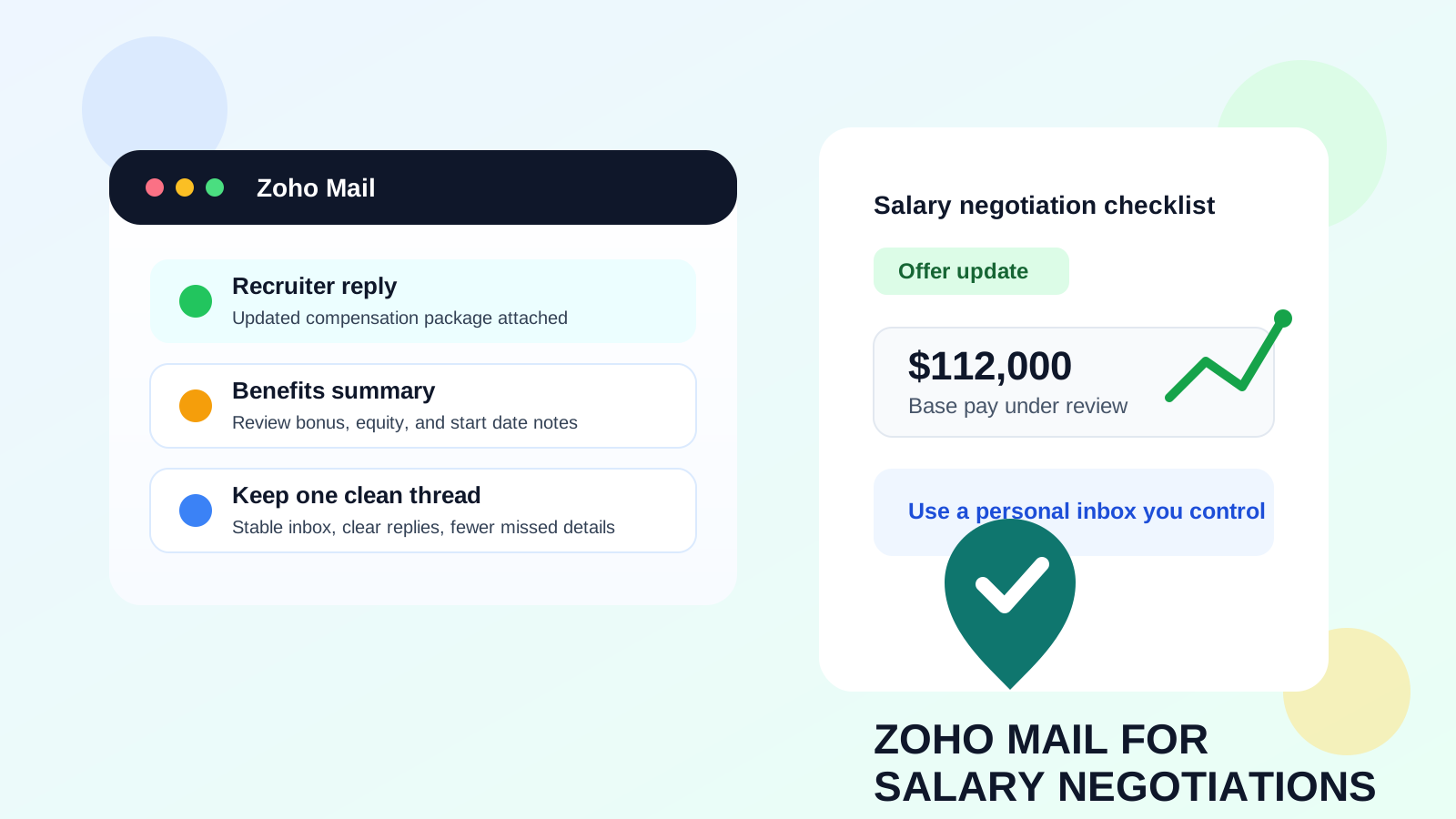
Why the inbox matters once salary talks begin
Early in a job search, email is often just plumbing. You need it for application confirmations, recruiter outreach, screening invites, and calendar coordination. Salary negotiations are different. Once compensation enters the conversation, email becomes part of the written record for base pay, bonuses, equity, relocation support, start-date changes, benefits questions, and revised offer details.
That means the best email choice is not the one that looks clever or ultra-private in theory. It is the one that helps you stay reachable, organized, and calm while protecting your boundaries. If you are using Zoho Mail as a real mailbox you own and monitor, it can do that well.
Short answer: Zoho Mail is usually a solid fit
If you are wondering whether you should use Zoho Mail for salary negotiations, the practical answer is yes in most cases. Recruiters and hiring managers usually care far more about reliability, response time, and clarity than they do about the mail provider itself.
What they notice is whether the thread stays consistent, whether attachments arrive properly, whether your address looks normal and readable, and whether you answer important questions without long delays. Zoho Mail can handle all of that just fine when used like a serious inbox.
Why Zoho Mail can work well for salary negotiations
1. It gives you separation without looking disposable
Salary negotiations are not the place for a throwaway inbox. You may need to revisit the thread for several days or weeks, compare written changes, and carry the same address into the formal offer stage. Zoho Mail gives you separation from your everyday inbox without creating the fragility or weird optics of temporary email.
If you used Anonibox earlier in your search to test job boards, gated resources, or low-trust recruiter funnels without dumping spam into your primary inbox, that was sensible. But negotiations are a later, higher-stakes stage. At that point, a stable mailbox is usually the better tool. Zoho Mail can provide that stability while still keeping your main address less exposed.
2. It helps you avoid using a current employer’s email
One of the worst habits in a job search is negotiating through a current work email account. Even if nobody is obviously reading it, that account still belongs to your employer and may be subject to retention, monitoring, admin access, or future lockout. Salary conversations should live in an inbox you control personally.
Zoho Mail can be a clean alternative as long as the account is truly yours. If you run a personal custom domain through Zoho Mail, that can work well too. The important part is ownership and continuity, not brand prestige.
3. It can keep important compensation details organized
Offer discussions get messy fast. You might receive one message about base salary, another about bonus structure, another about equity, and a later revision that changes the start date or title. A quieter inbox makes it easier to compare those details without losing context.
That matters because negotiation mistakes are often organizational mistakes. People miss deadlines, reply to stale numbers, or forget which version of the package they were evaluating. Using a dedicated Zoho Mail inbox can reduce that noise if your everyday email already feels overloaded.
4. It is usually professional enough for late-stage hiring
Most employers are not grading your provider the way consumers compare luxury brands. They want an address that works and a candidate who communicates clearly. A clean Zoho Mail address based on your name is usually perfectly acceptable for salary discussions.
The fact that Zoho Mail is a normal long-term mailbox matters more than whether every recruiter uses it personally. It does not signal “temporary” the way a disposable inbox might, and that is important when negotiation details may lead directly into offer letters or onboarding forms.
Where Zoho Mail can create friction
Zoho Mail is usually a good option, but a few common mistakes can make it less smooth.
If the account is tied to a business context that confuses the employer
Zoho Mail is often used with custom domains. That can be a plus, but it can also create questions if the address appears tied to a side business, agency, or current employer-adjacent identity that makes your situation unclear. If you use a personal domain, keep the address simple and professional so it reads as your contact point, not as an attempt to look like a company.
If you barely check the inbox
No provider fixes inattentiveness. Salary negotiations can move quickly when approvals are lined up and the company wants an answer. If you only check the mailbox every few days, you increase the risk of missed deadlines or awkward follow-up.
If you keep switching between multiple inboxes
Switching from one address on your resume to another in recruiter chats and then another for compensation details creates friction you do not need. Pick the inbox you want to use for serious employer communication and keep the negotiation thread there unless there is a strong reason to move it.
If the address itself looks chaotic
An email address does not need to be elegant, but it should be readable. Something based on your name is usually better than old gamer tags, random numbers, or joke phrases. Negotiations are easier when the other side does not pause to wonder whether they typed the address correctly.
What recruiters actually care about
People often overthink the provider and underthink the practical basics. In real salary negotiations, recruiters and HR teams usually care about a much shorter list:
- Can they reach you reliably?
- Do you reply within a reasonable time?
- Can the inbox receive documents and attachments without confusion?
- Does the same address stay in use throughout the thread?
- Does the address look like it belongs to a real professional?
If the answer is yes, your inbox is probably doing its job. Zoho Mail easily clears that bar when the account is set up and monitored properly.
Zoho Mail vs temporary email for salary negotiations
This is the key comparison for Anonibox readers. Temporary email and Zoho Mail solve different problems.
- Temporary email is useful for low-trust signups, one-off verification links, gated content, waitlists, and early experiments where spam control matters more than continuity.
- Zoho Mail is better for an ongoing written conversation that may include negotiation rounds, attachments, formal offers, and next steps.
Salary negotiations clearly belong in the second category. By that stage, you are not just shielding your inbox from noise. You are managing details that affect pay, timing, and the final shape of the offer. Stability matters more than disposability.
Best practices if you use Zoho Mail for salary negotiations
Use a clean, recognizable address
If possible, use a simple name-based address. If you are on a personal custom domain, keep it straightforward. The goal is to look easy to work with, not clever.
Turn on notifications and check the thread daily
Do not assume you will remember to look. Compensation discussions often move in bursts. A same-day response is not always required, but vanishing for days at a time can slow momentum or signal disorganization.
Keep one thread per employer whenever possible
Replying in the existing thread makes it easier to track numbers, conditions, and written promises. It also reduces the chance that important details become scattered across disconnected emails.
Save attachments and written details locally
Offer summaries, compensation tables, and benefits PDFs should not exist only in one mailbox. Download what matters so you can compare it calmly and keep your own record.
Do not negotiate from an employer-managed Zoho account
This is a Zoho-specific nuance worth stating plainly. Some people use Zoho Mail through a business or organizational domain. If that account is administered by your current employer, a client, or another organization, it is not the right place for outside compensation talks. Use a personal account you control end to end.
Stay consistent into the offer and onboarding stage
If the negotiation succeeds, the same inbox may receive revised terms, the formal offer, and onboarding instructions. Keeping everything in one stable place reduces confusion right when the process becomes document-heavy.
When Zoho Mail is an especially good choice
- You already use it for the rest of your job search and want continuity.
- You want a quieter mailbox than your oldest personal email account.
- You use a personal domain and want a stable, professional inbox you control.
- You want more privacy than a heavily exposed everyday address gives you.
- You are still employed elsewhere and want clear distance from company-managed systems.
A quick decision checklist
- Is this a personal Zoho Mail inbox you control rather than a work-managed account?
- Will you monitor it closely while negotiations are active?
- Does the address look professional and easy to recognize?
- Can you keep the negotiation, offer, and follow-up in the same mailbox?
- Are you choosing it instead of a disposable inbox for this later-stage conversation?
If the answer is yes across the board, Zoho Mail is usually a practical choice.
Final answer
Yes, in most cases you should use Zoho Mail for salary negotiations if it is a personal inbox you control, monitor regularly, and keep consistent throughout the process. It is usually a better fit than a disposable address, and it is far safer than using an employer-managed mailbox for outside compensation talks.
The key is not just the provider name. It is how you use it. Keep the inbox stable, save important documents, answer promptly, and avoid switching channels mid-negotiation. Do that, and Zoho Mail can give you the privacy and organization benefits you want without making the conversation harder for the people trying to hire you.