Usually yes. An email alias for job boards is often one of the smartest ways to protect your main inbox without breaking alerts, recruiter replies, saved searches, or password resets.
The catch is that the alias should forward to a stable inbox you actually monitor. For real job-board accounts, an alias is usually safer than a throwaway temporary address because job hunting often lasts longer than one signup session.
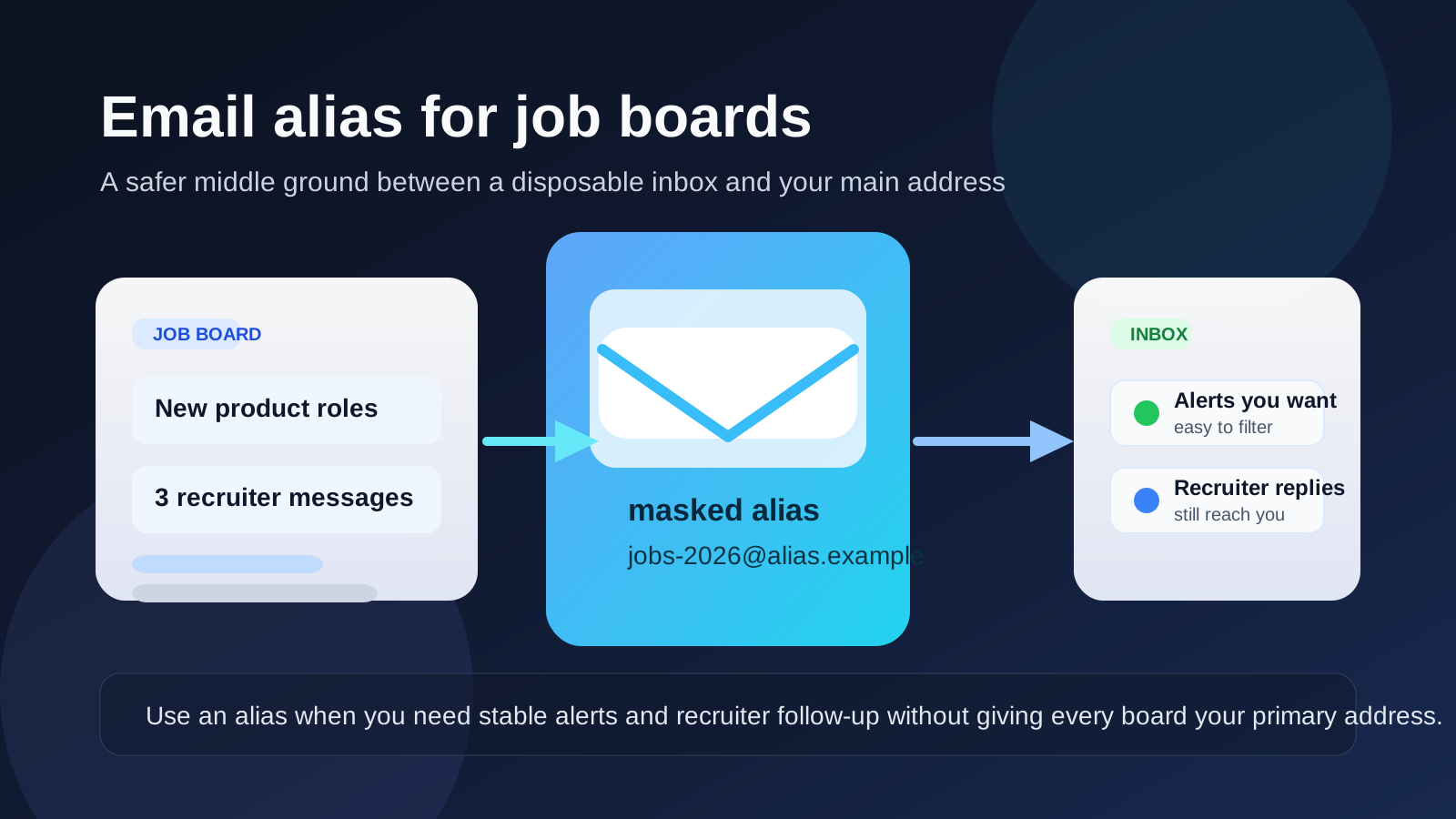
Job boards are messy by design. They send opening alerts, recommendation emails, profile prompts, recruiter messages, webinar invites, sponsored roles, salary reports, hiring-event announcements, and frequent reminders to finish your profile. Some of that is useful. A lot of it is not. If you use your main personal address everywhere, job-board activity can spill into your everyday inbox for months.
An email alias gives you a middle path. You do not have to expose your primary address directly, but you also do not cut yourself off from the account recovery and follow-up messages that matter during a real search. That balance is why aliases fit job boards better than most fully disposable inboxes.
Short answer: an alias is usually a strong choice for job boards
If you want one practical recommendation, it is this: use an alias when you plan to keep a job-board account active long enough to receive alerts, recruiter outreach, and application updates. A masked or forwarding address lets you separate job-search traffic from your main inbox while keeping the relationship stable.
That matters because job boards are rarely one-and-done tools. You may sign up today, save searches next week, apply to jobs over the next month, and still need password-reset links or recruiter follow-ups later. A temporary inbox often falls apart in that kind of timeline. An alias usually does not, as long as the forwarding setup is reliable and you keep it active.
Why job boards create privacy problems in the first place
Job boards collect more than a single application email. They often become long-running contact hubs. Even if the platform itself is legitimate, your address can end up tied to:
- daily or weekly alert emails
- recommended jobs based on your clicks and profile
- recruiter or employer outreach
- resume-view notifications
- marketing campaigns for premium features, resume services, or partner offers
- re-engagement emails after you stop using the account
That does not mean every job board is shady. It means the inbox cost is real. Many people start with good intentions, sign up for several boards at once, then realize they handed their main address to a whole ecosystem that keeps mailing them long after the search cools down.
Why an email alias works well for job boards
An alias is useful because it gives you separation without forcing you into an unreliable or short-lived setup. Instead of creating a brand-new permanent mailbox for every site, you can route job-board traffic through a controlled address that points back to an inbox you trust.
That gives you a few practical advantages:
- Privacy: the board does not need your primary address directly.
- Organization: you can filter messages from one alias into a dedicated job-search folder.
- Control: if one board becomes noisy, you can disable, rotate, or relabel that alias instead of touching your whole inbox setup.
- Continuity: alerts, recruiter notes, and reset links still arrive in an inbox you already use.
That combination is exactly what many job seekers want: less exposure, but no missed opportunities.
Alias vs temporary email: which is better for job boards?
For most real job-board accounts, an alias is better.
A temporary inbox can still help in narrow situations: maybe you only want to unlock one salary guide, one webinar registration, or one low-commitment content download connected to a board. In that case, a temporary inbox like Anonibox can be handy because it keeps your main address out of early funnel traffic.
But a full job-board account is different. Once you are saving searches, uploading a resume, responding to recruiter messages, or depending on future alerts, a disposable inbox becomes fragile. If the address expires, stops forwarding, gets blocked, or is hard to monitor, you can lose legitimate follow-up.
That is the real distinction:
- Temporary inbox: better for one-off exploration and low-stakes gated content.
- Email alias: better for ongoing job-board use where reliability still matters.
When using an alias for job boards makes the most sense
An alias is especially useful if any of these apply to you:
- You are signing up for multiple job boards and want cleaner inbox separation.
- You expect a search to last weeks or months rather than one weekend.
- You want recruiter replies and alerts to keep working without exposing your main address everywhere.
- You want to shut off one source of spam later without changing your real inbox.
- You are privacy-conscious but still need a professional, dependable contact path.
It is also a good fit if you already use different channels for different parts of your search, such as a separate resume version, a dedicated calendar, or a phone number you use mainly for recruiters.
The main risks and limitations
An alias is not magic. It lowers exposure, but it does not solve every problem.
1. Forwarding can still fail
If the alias provider has outages, filtering problems, or reply limitations, messages can get delayed or lost. For something time-sensitive, reliability matters more than cleverness.
2. You still need to monitor the destination inbox
Some people set up an alias and then forget that all the important messages still land somewhere. If you never check the destination mailbox, the alias did not really help your job search.
3. Reply behavior matters
Some alias systems make replying easy. Others are awkward, limited, or inconsistent. Before you rely on an alias for a board that may produce recruiter outreach, make sure you understand how replies work.
4. It does not prevent job scams by itself
An alias can reduce exposure, but it does not make every employer message legitimate. You still need to watch for fake recruiter texts, suspicious attachments, requests to move off-platform too quickly, and anything that asks for money or sensitive information too early.
How to set up an alias for job boards the smart way
You do not need an elaborate system. You just need one that is stable and easy to manage.
Use one dedicated alias or one alias per board
If you only use a couple of boards, one dedicated job-board alias may be enough. If you want tighter control, use a different alias for each platform. Per-board aliases make it easier to see which site is driving useful leads and which one is mostly noise.
Send everything to a stable inbox
The destination inbox should be something you check consistently and plan to keep for the full job-search cycle. Do not build your workflow on an inbox you rarely open.
Create filters immediately
As soon as you create the alias, set rules in your main inbox so alerts, recruiter messages, and application-related mail land in a dedicated folder or label. The point is not just privacy. It is also sanity.
Test a reply before you need one
Send a test message through the alias and confirm you can receive and reply cleanly. Do this before a recruiter reaches out with something time-sensitive.
Keep the alias active until the search phase is truly over
Do not disable it the second you feel overwhelmed. Some of the most important messages arrive late: reopened roles, follow-ups from recruiters, or password resets when you want to revisit an old account.
Should you use the same alias for every board?
That depends on your tolerance for clutter and how much control you want.
Using one alias for every board is simple and still protects your primary address. Using separate aliases for LinkedIn, Indeed, niche boards, remote-work boards, and resume marketplaces gives you better tracking and easier shutoff later.
If you are actively applying across several sites, separate aliases are often worth it. If you only monitor one or two boards casually, a single dedicated alias is usually enough.
What about putting the alias on your resume too?
You can, but think about consistency. If your resume, job-board account, and direct applications all use different addresses, you may create unnecessary confusion for yourself. A stable alias can work well on a resume if it looks professional and forwards reliably, but the bigger point is that your contact path should stay consistent across the parts of your search that matter most.
If a board account is just for alerts while your direct applications happen through a different address, that can also be fine. Just make sure you know which inbox an employer is likely to use when responding.
Red flags that mean an alias is better than your real address
- The platform sends too many promotional emails during the first few days.
- You are testing multiple boards and do not trust them equally.
- The board seems more interested in lead generation than quality roles.
- You want to measure which site is leaking your address or creating noise.
- You know you will want to cut off one source later without changing your main inbox.
In those cases, using your primary personal address directly gives away more than you need to.
A simple decision checklist
- Do I need this account to stay reachable for weeks or months?
- Will I rely on saved searches, recruiter messages, or password resets?
- Do I want job-board mail separated from my daily inbox?
- Can I trust my alias setup to forward and reply reliably?
- Would a disposable inbox create too much risk of missing something important?
If the answer to most of those is yes, an alias is probably the better tool.
Final verdict
Yes, using an email alias for job boards is usually a smart move. It protects your primary address, keeps job-search traffic easier to manage, and gives you more control than handing every platform your everyday inbox.
It is not the same as using a throwaway address. For genuine job-board accounts, the goal is not to disappear after one verification email. The goal is to stay reachable without opening the door to endless inbox clutter. A reliable alias does that well.
If you are only poking at a one-off download or early low-commitment signup, a temporary inbox can still be useful. But if you plan to use a board for real alerts, real applications, and real recruiter follow-up, a stable alias is usually the better long-term choice.