Usually yes — an email alias for recruiter outreach is one of the safest ways to protect your main inbox without making yourself hard to reach.
The important part is that the alias should forward to a stable inbox you check regularly, because good recruiter conversations can turn into screening calls, interview loops, and offer discussions faster than people expect.
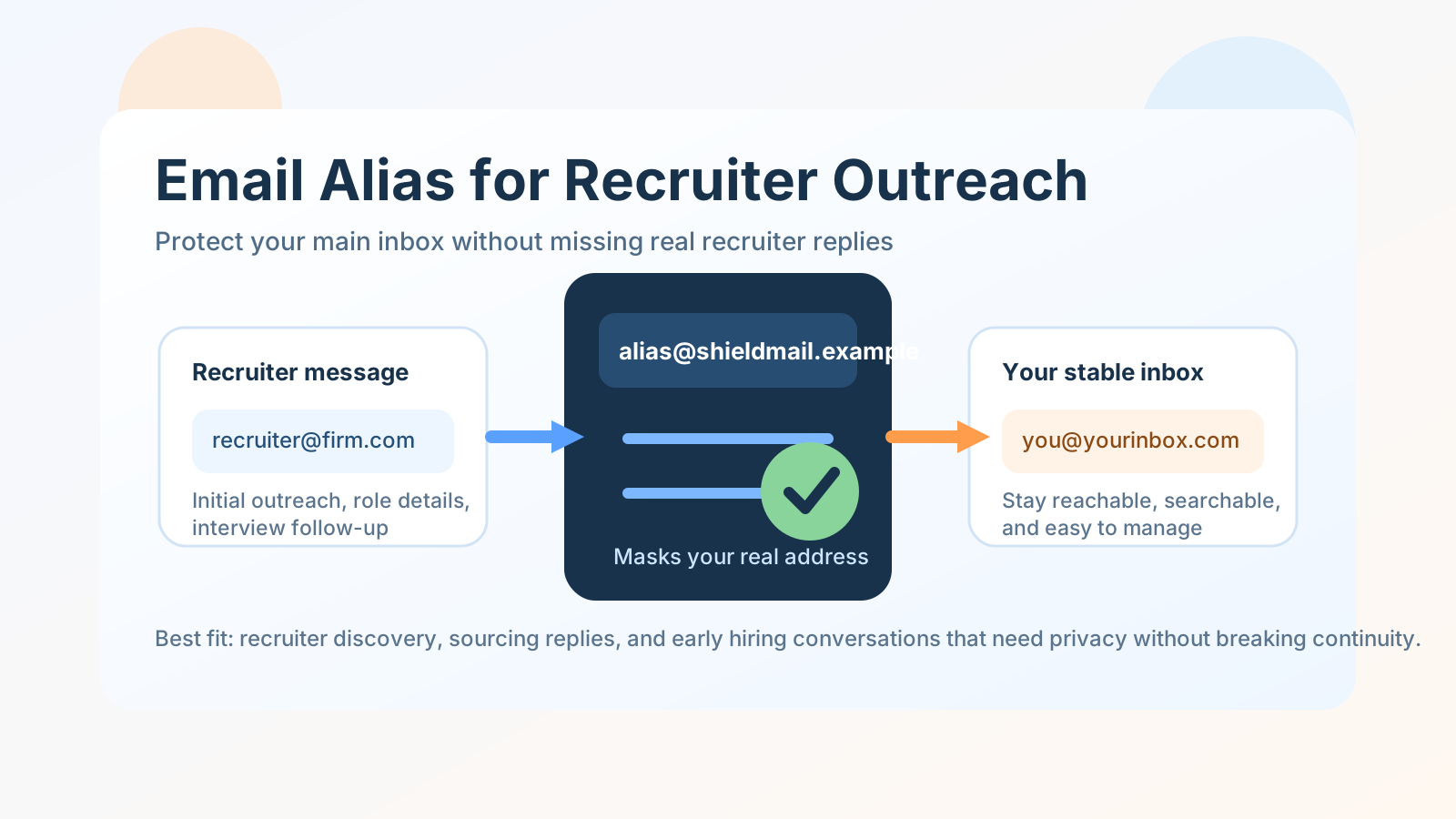
Recruiter outreach sits in an awkward middle zone. It is not as disposable as a one-time signup form, but it is also not as formal as the late-stage paperwork you handle during reference checks, background checks, or offer negotiations. That makes privacy decisions a little less obvious. If you use your main personal email everywhere, recruiter messages can pile into the same inbox as family, bills, travel confirmations, and everything else. If you use a fully temporary inbox, you may miss replies, lose thread continuity, or create confusion when a legitimate recruiter tries to follow up later.
An alias gives you a more practical middle path. It can hide your real address, reduce spam spillover, and help you track where recruiter messages are coming from, while still letting real conversations continue in a dependable way. For many job seekers, that balance is exactly what they need.
Short answer: an alias is usually a strong choice for recruiter outreach
If a recruiter might contact you more than once, an alias is often better than either extreme. It is more private than handing out your primary address everywhere, and it is more reliable than using a throwaway inbox that may disappear or go unchecked.
The reason is simple: recruiter outreach is often uncertain at the start, but it can become important quickly. A sourcing email may go nowhere, or it may lead to a same-week screen, résumé request, or referral conversation. An alias keeps that door open without forcing you to expose your main inbox to every recruiter, staffing firm, or hiring campaign that crosses your path.
Why recruiter outreach creates privacy problems
Not every recruiter message is low quality, but recruiter outreach is noisy by nature. Some messages come from excellent internal recruiters with real roles. Others come from third-party staffing firms sending broad outreach to anyone who vaguely matches a search. Some are irrelevant. Some are duplicated across platforms. Some are borderline spam. And a small number are outright scams.
That creates three common problems:
- Inbox clutter: role pitches, follow-ups, talent-pool messages, and automated reminders can keep coming long after you ignore the first note.
- Identity spread: once your primary address circulates across recruiter databases, it is hard to pull it back.
- Low-trust first contact: early recruiter emails often arrive before you know whether the person, company, or role is worth your time.
An alias helps because it gives you separation without cutting off communication. You can keep recruiter traffic contained, filter it, label it, or even retire the alias later if it becomes too noisy.
When an email alias works especially well
An alias is a particularly good fit when you are open to hearing about opportunities but do not want every recruiter to get your long-term personal address immediately.
It works well when:
- you are passively job searching and want to screen outreach before engaging deeply
- you are active on LinkedIn or job boards and expect more inbound recruiter traffic
- you want to tell which messages came from recruiter channels versus direct applications
- you want to reduce spam exposure without risking missed replies
- you may later disable or rotate the alias if a source becomes noisy
It is also useful if you are applying across multiple industries or geographies and want cleaner separation. A dedicated alias for recruiting activity can make your search feel much more organized.
Why an alias is usually better than a temporary inbox here
This is where many people make the wrong trade-off. A temporary inbox can be fine for one-off low-trust forms, promo-gated downloads, or very early research. Recruiter outreach is different because continuity matters.
A recruiter may:
- reply days later with a calendar link
- send an updated job description after an initial conversation
- come back weeks later when a better-matched role opens
- loop in a hiring manager or coordinator on the same thread
If the address disappears, stops forwarding, or lives in an inbox you only meant to use once, you create avoidable friction. That is why a stable alias usually beats a disposable inbox for any conversation that might evolve.
If you use Anonibox or another privacy-first tool, the best use is often earlier in the funnel: low-trust signups, one-off forms, or situations where you do not expect an ongoing relationship. Once an actual recruiter conversation starts, a reusable alias is the safer choice.
What can go wrong with an alias?
An alias is not automatically perfect. It still needs to be set up sensibly.
Reply handling can break if you choose the wrong setup
Some alias tools only forward inbound mail cleanly but make replying awkward. If a recruiter gets a strange reply path, missing threading, or inconsistent sender identity, the conversation can get messy. Before using an alias for recruiting, test whether replies preserve a normal, professional flow.
A sloppy alias can look unprofessional
An address like nightowl4837@randomdomain.example may not inspire confidence. You do not need a luxury custom domain, but the alias should still look calm, readable, and professional.
You still need to monitor the destination inbox
An alias is only as good as the inbox behind it. If the forwarding destination is cluttered, rarely checked, or badly filtered, you have not solved the real problem.
You should not keep rotating addresses mid-process
If you start talking to a recruiter through one alias, keep that channel stable until the conversation naturally moves forward or ends. Constantly changing contact details makes you harder to track and easier to lose.
How to use an email alias for recruiter outreach the right way
1. Pick one stable recruiter-facing alias
Do not create a new alias for every single recruiter unless you have a very specific tracking reason. For most people, one well-managed recruiting alias is enough. It keeps the workflow simple and makes follow-up easier.
2. Forward it to an inbox you genuinely monitor
This sounds obvious, but it is where people fail. If your alias forwards to a neglected mailbox, you will still miss time-sensitive messages. Use an inbox you check daily during a search.
3. Test both receiving and replying before you rely on it
Send yourself a message, reply from the forwarded thread, and confirm that the result looks normal. Make sure names, reply paths, and threading behave predictably.
4. Use a professional display name
Your display name matters more than people think. Recruiters often skim quickly. Use your real name or the professional name you use on résumés and LinkedIn so they can recognize you immediately.
5. Keep the alias active for the whole outreach cycle
If a recruiter conversation is still alive, keep the alias working. Even if you are not interested today, a thoughtful follow-up from a solid recruiter a month later can still be useful.
Red flags that mean you should slow down anyway
An alias improves privacy, but it does not make bad recruiter outreach trustworthy. Be more careful if:
- the recruiter will not identify the company or client clearly
- the message pressure is unusually high from the first contact
- the role details are vague, copied, or inconsistent
- they want personal documents before a normal screening process
- they push you off email immediately to a less accountable channel
In those situations, the right move is not just “use more privacy.” It is to verify the opportunity before you invest more time.
Should you switch away from the alias later?
Sometimes, yes. Early recruiter outreach and résumé exchange are one thing. Later-stage hiring coordination can be another. If a conversation becomes serious, you may decide to keep the alias all the way through, or you may move the relationship to a more permanent dedicated inbox you control directly.
What matters most is continuity. Do not switch addresses casually in the middle of a fast-moving process unless you clearly explain the change and make sure the recruiter updates their records.
Quick checklist
- Use an alias that looks professional and is easy to read.
- Forward it to a stable inbox you check often.
- Test reply behavior before sharing it publicly.
- Keep the same alias active throughout an active recruiter conversation.
- Do not confuse an alias with a disposable inbox meant for one-time use.
- Verify suspicious outreach before sharing more personal information.
Final answer
Yes — for most job seekers, an email alias for recruiter outreach is a smart privacy move. It gives you separation from your main inbox, helps contain spam, and still keeps you reachable for legitimate opportunities.
The catch is that the alias needs to behave like a real contact point, not a gimmick. If it forwards reliably, supports clean replies, and stays active while conversations are live, it can be one of the most practical ways to manage recruiter emails without losing control of your personal inbox.
That is the sweet spot: more privacy than using your main address everywhere, and far more continuity than relying on a throwaway inbox for conversations that may actually matter.