Yes — you can use SimpleLogin for recruiter outreach if you want more privacy and cleaner inbox control, as long as the alias is stable and your reply workflow is dependable.
It is usually a better fit than a short-lived disposable inbox for ongoing recruiter conversations, but it can still backfire if you make yourself harder to reach once the conversation becomes real.
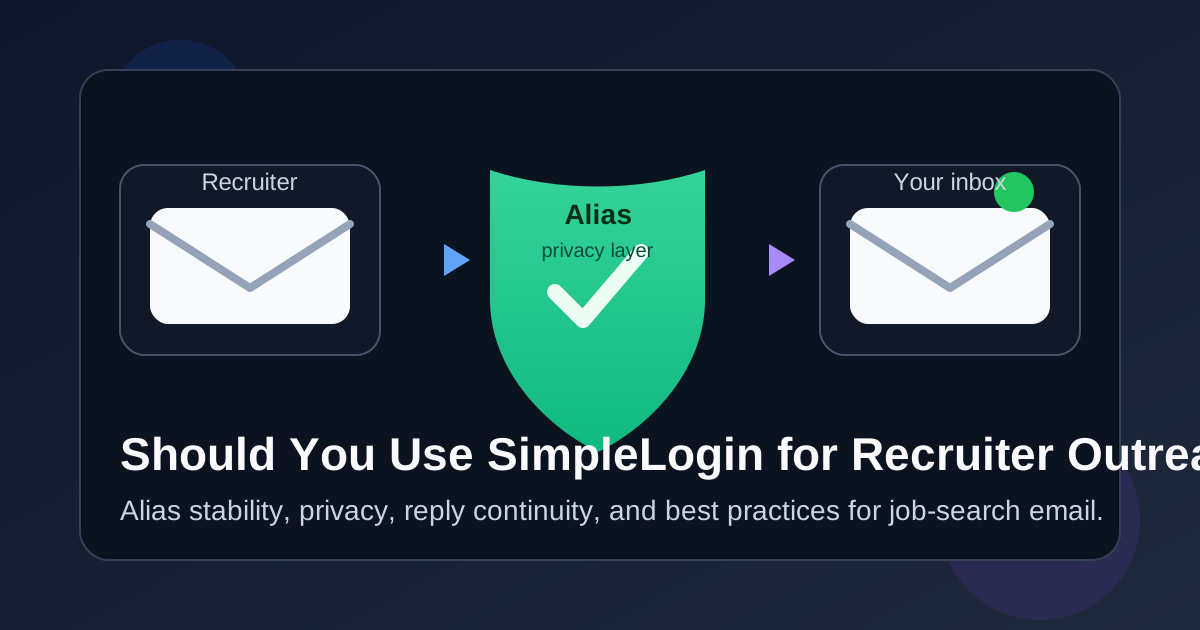
That trade-off matters because recruiter outreach sits in an awkward middle ground. You may want distance between your permanent inbox and every recruiter, sourcing tool, or resume database that touches your profile, but you also do not want to miss a screening invite because your forwarding setup was fragile. That is why people look at alias services like SimpleLogin in the first place: they want a layer of separation without losing continuity.
The short version is simple. If you are replying to cold recruiter messages, testing the market, or keeping early-stage outreach separate from your personal inbox, SimpleLogin can be a smart tool. If you are already deep in a hiring process, need zero-friction reliability, or do not fully trust your own alias setup, a dedicated long-term inbox may be safer.
Why this question keeps coming up
Recruiter outreach can generate more email than most people expect. One good recruiter can lead to a real interview loop. Five mediocre ones can lead to months of follow-up, newsletter-style check-ins, role blasts, and messages that keep arriving long after you are no longer interested. If you use your main personal inbox for all of that, the clutter tends to stick around.
There is also a privacy angle. Your long-term inbox is often tied to banking, shopping, personal contacts, and account recovery for half your digital life. Many job seekers would rather not hand that address directly to every recruiter or talent platform they encounter. An alias service creates a buffer: messages still reach you, but the sender does not automatically get your core address.
What SimpleLogin changes compared with a normal email workflow
SimpleLogin works more like a masking layer than a traditional mailbox. Instead of giving recruiters your primary email address, you give them an alias that forwards mail into the inbox you already use. That creates a middle ground between two less flexible options:
- Using your main inbox everywhere: easy, but it exposes your permanent address broadly and can create long-term clutter.
- Using a throwaway temporary inbox for everything: private at first, but risky if a recruiter replies days later and the address is no longer practical.
That middle ground is the main reason this keyword makes sense. Recruiter outreach often starts as low-trust, exploratory contact, but sometimes it turns into something real. A stable alias can give you privacy at the start while still preserving reply continuity if the conversation becomes useful.
When using SimpleLogin for recruiter outreach makes sense
1. You want a separate lane for recruiter traffic
If you are currently employed, casually open to opportunities, or juggling several job-search channels at once, keeping recruiter messages in their own lane is genuinely helpful. An alias lets you segment cold outreach from family mail, bills, account notices, and everyday personal communication.
That separation is not just about aesthetics. It reduces the chance that an interview request gets buried under unrelated mail, and it makes it easier to decide later whether you want to keep or shut down that recruiter-facing address.
2. You do not want every recruiter to have your permanent inbox
Not every recruiter relationship deserves direct access to the email address you plan to keep for years. Some outreach is excellent and specific. Some is low-effort list blasting. Some turns out to be irrelevant within two replies. Using an alias lets you evaluate the quality of the contact before exposing your core inbox more widely.
3. You want better source tracking
Alias-based workflows can help you see which channel generated the contact. If one recruiter, platform, or resume database starts producing noise, you can isolate that stream more easily. That makes troubleshooting spam, irrelevant job blasts, or over-aggressive follow-up much simpler than if everything lands in one permanent inbox with no separation.
4. You need more continuity than a disposable inbox offers
This is where SimpleLogin often beats a classic throwaway email approach. Recruiter conversations do not always resolve in a day. A recruiter might follow up next week with a revised role, a scheduling link, or a screening request. A stable alias gives you a better chance of maintaining that thread without tying everything to your primary address.
When it can be a bad idea
SimpleLogin is not automatically the right answer just because privacy matters. The main risk is not that aliases are suspicious by default. The real risk is operational: if your forwarding, reply path, or alias management is sloppy, you become harder to reach right when speed matters.
1. Your reply workflow feels confusing
If you are not fully comfortable sending and receiving through the alias setup, recruiter outreach is not the best place to improvise. You should know exactly where messages land, how replies appear, and whether the alias remains stable over time. If you hesitate every time you answer from an alias, the setup is too brittle for an active search.
2. The opportunity is already serious from day one
If a trusted recruiter is contacting you about a role you care about immediately, simplicity may beat cleverness. There is nothing wrong with using a dedicated long-term job-search inbox instead of an alias service if the priority is absolute reliability and low friction.
3. The alias or domain looks strange
Recruiters are mostly focused on responsiveness, not perfection, but first impressions still matter. If the alias format looks random, disposable, or difficult to recognize, it can create avoidable friction. A clean alias and a normal display name usually solve this, but it is worth thinking about before you start sending outreach replies.
4. You forget that late-stage hiring needs continuity
Early recruiter outreach is one thing. Interview loops, take-home assignments, portal resets, and offer-stage negotiations are another. Once a conversation clearly becomes important, do not let attachment to the privacy layer stop you from moving to the most stable contact method.
How to use SimpleLogin for recruiter outreach without making a mess
Set up one stable alias for recruiter conversations
A single recruiter-outreach alias is often better than spinning up new aliases carelessly for every individual conversation. Stability matters. You want an address you can monitor, remember, and keep active for the duration of your search.
Route it into an inbox you already check every day
The alias is only the front door. The inbox behind it is what determines whether you miss replies. Use a destination mailbox you already monitor closely. If you only check it once every few days, the privacy advantage is not worth the communication risk.
Test the full send-and-reply loop before using it live
Do not assume forwarding will behave exactly the way you expect under pressure. Send a few test messages, confirm they arrive quickly, and make sure replies work cleanly. Recruiter outreach is full of short scheduling windows, so this is one of the most important practical steps.
Use a normal display name
You do not need to make the alias the star of the show. What recruiters see most clearly is your display name, message quality, and response speed. Keep those professional and straightforward.
Move important threads to a long-term address when needed
If a recruiter moves you into active screening or interview scheduling, it is reasonable to switch to a long-term inbox you control confidently. Privacy tools are most useful when they support momentum, not when they start competing with it.
SimpleLogin versus a temporary email for recruiter outreach
This distinction matters on Anonibox because not every privacy tool solves the same problem. A temporary inbox is great when you want a quick buffer for low-trust signups, one-off forms, or early experimentation. But recruiter outreach often involves follow-up that arrives later than you expect.
That is why SimpleLogin is often the stronger choice for recruiter outreach specifically. It gives you separation without forcing you into a short-lived mailbox. If you only need a disposable layer for a one-time recruiter form or a low-trust platform, a temporary option like Anonibox can make sense. If you expect an ongoing back-and-forth, a stable alias usually fits better than a fully disposable inbox.
Best practices for privacy-conscious recruiter outreach
- Keep the alias stable for the whole conversation: do not rotate it mid-thread unless you have a strong reason.
- Respond quickly if you want to look serious: privacy does not excuse slow communication.
- Watch for scam patterns: vague roles, pressure to move off email instantly, or requests for sensitive information too early are still red flags.
- Do not overshare in the first exchange: an alias protects your inbox, but you should still be selective about resumes, documents, and personal data.
- Use separate channels intentionally: one address for recruiter outreach, another for direct applications, or another for job boards can make your search easier to manage.
Signs you should switch away from the alias setup
There is no prize for staying anonymous longer than necessary. Consider moving the conversation to a dedicated long-term inbox if:
- the recruiter is clearly legitimate and the role has become a real priority;
- you are entering interview scheduling or offer-stage communication;
- the employer wants you to use a candidate portal tied to a stable address;
- you find yourself double-checking the alias workflow instead of focusing on the hiring conversation.
At that point, simplicity is usually worth more than the extra layer of masking.
Final answer
Yes — SimpleLogin can be a smart choice for recruiter outreach when you want more privacy, better inbox separation, and more control over who gets your real address. It is especially useful in early-stage outreach, cold recruiter replies, and situations where you want more continuity than a disposable inbox can provide.
But it is only a good idea if the alias stays reliable and easy for you to manage. When a conversation becomes serious, a stable long-term inbox may be the better tool. The best workflow is usually not permanent maximum privacy or permanent maximum exposure. It is using the right level of separation at the right stage of the job search.
If you treat SimpleLogin as a practical privacy layer rather than a magic shield, it can help you stay reachable for real opportunities without turning recruiter outreach into permanent inbox clutter.