Yes—Hushmail can work for recruiter outreach if you use a stable address, keep the presentation professional, and make it easy for recruiters to reply without extra friction.
It is usually a better choice than a throwaway inbox when you want privacy and long-term access, but it only helps if the address looks credible, you monitor it closely, and you do not treat “private email” as a substitute for normal hiring judgment.
If you are thinking about using Hushmail to contact recruiters, the real question is not whether the service is “allowed.” It is whether it supports the kind of communication recruiter outreach actually requires: fast replies, clear identity, low friction, and enough privacy to keep your job search separate from your everyday inbox.
For many job seekers, that answer is yes. Hushmail can be a reasonable recruiter-outreach inbox when you want more separation than Gmail, Outlook, or your personal mailbox gives you. But it is not automatically the best choice in every scenario, and it does not make an outreach email stronger by itself. Your message, timing, credibility, and follow-up still matter much more than the provider name.
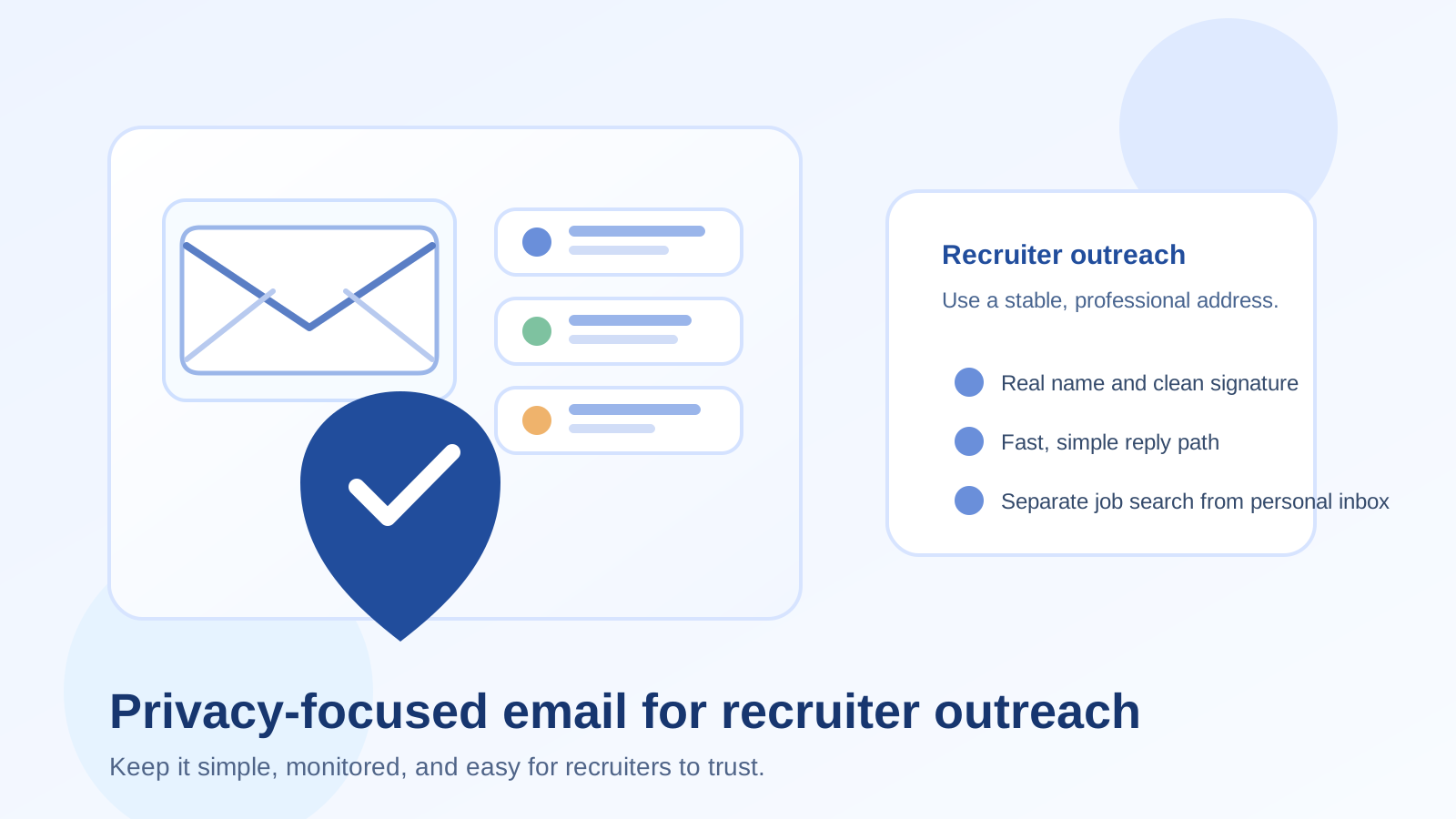
Why someone would use Hushmail for recruiter outreach
Recruiter outreach sits in an awkward middle ground. It is not as disposable as signing up for a random coupon, but it is also not as permanent as the email address you might want tied to payroll, benefits, or legal paperwork later. You want a channel that feels professional while still protecting your privacy.
That is why Hushmail can appeal to privacy-conscious job seekers. It gives you a dedicated inbox that is separate from your main personal account, which can make it easier to organize recruiter conversations, job leads, and interview follow-ups without mixing them into family mail, bills, newsletters, and everything else in your daily inbox.
That separation is useful even if nothing “bad” happens. A clean inbox helps you reply faster, spot real opportunities, and avoid losing a recruiter message inside unrelated clutter. Privacy is not only about secrecy. Sometimes it is about keeping your communication surface smaller and easier to manage.
What Hushmail does well in this use case
1. It keeps your job search separate from your personal inbox
If you are reaching out to several recruiters, staffing agencies, or hiring contacts, the volume can build quickly. A dedicated Hushmail address can keep that activity contained instead of spreading it across your longtime personal email.
That matters because recruiter outreach often generates more than one reply. You may get screening questions, scheduling emails, résumé requests, interview loops, follow-up nudges, and occasional silence from some contacts while others restart the conversation weeks later. Having that traffic in one place is genuinely helpful.
2. It can support a more privacy-conscious job search
Some job seekers do not want recruiter traffic tied to the same inbox they use for banking, medical portals, old social accounts, and years of personal correspondence. That instinct is reasonable. A separate mailbox can reduce exposure and make it easier to retire or de-emphasize the address later if it starts attracting too much marketing or low-quality outreach.
This is also where Hushmail differs from a temporary inbox. A temporary inbox is useful when you want quick verification and minimal long-term exposure. Hushmail, by contrast, makes more sense when you want privacy and persistence. Recruiter conversations can stretch across weeks or months, so long-term access matters.
3. It can look perfectly professional if the address is clean
Most recruiters care far more about whether your email is readable and trustworthy than whether it comes from the most common provider. A simple address like firstname.lastname@… or another real-name format is usually fine. If the rest of your outreach is polished, many recruiters will not care that you are using a privacy-focused service.
The key point is that Hushmail itself is not the issue. Presentation is. A clean address paired with a real display name, thoughtful signature, and well-written message can come across as organized and intentional.
Where Hushmail can create friction
1. An unfamiliar provider can raise mild hesitation
Not every recruiter recognizes every email provider immediately. That does not mean they distrust Hushmail, but unfamiliarity can create a small extra moment of hesitation compared with Gmail or Outlook.
Usually that hesitation is not a deal-breaker. Still, if your address is unusual, anonymous-looking, or full of random words and numbers, the provider unfamiliarity can combine with the address style to make the message feel less grounded. That is a presentation problem you can avoid.
2. Too much security friction can slow normal recruiter communication
Recruiter outreach works best when replies are easy. If you create a workflow that feels complicated, asks the recruiter to change how they normally respond, or adds extra steps before they can continue the conversation, you may reduce response odds.
For first contact, simplicity usually wins. Send a normal, professional outreach email. Make sure the reply path is obvious. Save the heavier privacy posture for situations that truly require it, not as a default performance of being “secure.”
3. Privacy email does not prevent normal hiring exposure
This part matters. Even if you use a privacy-focused inbox, recruiters may still copy your résumé into an applicant tracking system, forward your profile internally, or store your communication in the same business workflows they use for everyone else. In other words, Hushmail can help you control your side of the communication, but it does not create a private bubble around the entire hiring process.
That is why you should not assume the provider alone gives you meaningful protection from every kind of exposure. It helps with inbox separation and contact hygiene, not with eliminating all downstream sharing inside a legitimate hiring process.
When Hushmail is a good fit for recruiter outreach
- You want a dedicated job-search inbox that stays separate from your daily personal email.
- You are contacting recruiters directly and expect a conversation that may continue for weeks.
- You care about privacy, but you also need a stable address that you can monitor consistently.
- You want something more durable than a temporary email but less exposed than your main inbox.
- You are comfortable keeping the outreach simple and professional rather than overly anonymous.
In these cases, Hushmail can be a solid middle-ground option. It is more stable and serious than a disposable address, while still helping you avoid putting your oldest personal inbox everywhere.
When another option may be better
- Use a temporary inbox if you are only testing a low-trust signup flow or protecting your main address from early-stage spam.
- Use a common mainstream provider if you want maximum familiarity and do not care much about inbox separation.
- Use a custom domain email if you already own one and can keep it extremely clean, stable, and professional.
If your goal is pure short-term shielding rather than ongoing recruiter conversation, a tool like Anonibox often makes more sense for early disposable use cases. If your goal is a dedicated professional inbox you can keep checking throughout the job search, Hushmail is usually the more appropriate category.
Best practices if you use Hushmail to contact recruiters
Choose a simple address
Do not use a handle that looks anonymous, edgy, or left over from an old forum account. Use your real name or a close professional variation that a recruiter can immediately connect to your résumé and LinkedIn profile.
Keep your display name consistent
Your display name, résumé name, LinkedIn name, and signature should all line up. Minor differences are normal, but obvious mismatches create unnecessary confusion.
Check the inbox often
A privacy-focused address only works if you actually monitor it. Recruiter outreach loses momentum fast when replies sit unread for two days because the inbox is “separate.” Separation should improve your organization, not make you harder to reach.
Use a normal reply flow
Your first outreach message should feel easy to answer. Clear subject line, short context, relevant role or niche, one good reason to speak, and a normal signature. Make it effortless for a recruiter to continue the conversation.
Keep supporting details off the first email when they are not needed
You do not need to overexplain why you use Hushmail. Most recruiters do not need a privacy manifesto. They just need a competent candidate with a credible message and a reachable inbox.
Common mistakes to avoid
- Using a Hushmail address that looks temporary or anonymous.
- Assuming the provider alone makes you look more trustworthy.
- Missing replies because you forget to monitor the inbox.
- Adding unnecessary friction to the reply process.
- Using Hushmail when what you really want is a fully disposable address for one-off signups.
These are practical mistakes, not fatal ones. But recruiter outreach is often decided by small signals. Anything that slows recognition, trust, or response speed can cost you replies.
A quick decision checklist
Before you use Hushmail for recruiter outreach, ask yourself:
- Does this address look professional at a glance?
- Will I monitor it several times a day?
- Do I want a persistent inbox, not just a throwaway one?
- Am I keeping the recruiter’s reply path simple?
- Is inbox separation more important to me than mainstream provider familiarity?
If the answers are mostly yes, Hushmail is probably a reasonable choice.
Final verdict
Hushmail can be a good option for recruiter outreach when you want privacy, separation, and a stable inbox that does not expose your main personal email everywhere. It is usually strong enough for real recruiter conversations as long as the address looks professional and you keep the workflow easy to reply to.
It is not magic, though. It will not fix weak outreach, and it will not stop legitimate employers from handling your information inside normal hiring systems. But if you want a more privacy-conscious inbox for recruiter conversations without dropping down to a disposable throwaway address, Hushmail is a sensible choice.