Usually only as a secondary channel. WhatsApp for recruiter outreach can work when a recruiter has already introduced themselves, the role is real, and you are comfortable exposing your phone number — but for first contact, email is usually safer, more professional, and easier to control.
The biggest issue is not whether WhatsApp “works.” It usually does. The real question is whether you want a recruiter, and possibly anyone who gets that number later, tied directly to the same personal messaging identity you use for friends, family, group chats, and two-factor codes. In most job searches, keeping that boundary matters.
Why this question comes up
Recruiters increasingly use quick messaging channels, especially for fast-moving roles, international hiring, agency outreach, and follow-up after an initial application or referral. In some regions, WhatsApp is normal for business communication. In others, it can feel unusually personal unless the relationship is already established.
That is why the right answer is not a flat yes or no. WhatsApp can be convenient, but convenience is not the same thing as control. When you are job searching, you are trying to balance responsiveness with privacy, professionalism, and scam awareness. WhatsApp changes that balance because it exposes more about you than a simple email address usually does.
Short answer: fine for follow-up, weaker for first contact
If a real recruiter has already contacted you through a normal channel and wants to use WhatsApp just to coordinate timing, confirm availability, or answer quick logistical questions, that can be perfectly reasonable.
If the plan is to use WhatsApp as the main first-contact channel with strangers, the tradeoff usually gets worse. You are giving up phone-number privacy, opening another path for off-hours pings, and making it easier for scammy or low-quality outreach to feel urgent before you have verified who is contacting you.
The main privacy risks of using WhatsApp for recruiter outreach
1. You expose your phone number immediately
Email lets you decide how much personal contact information to reveal and when. WhatsApp does not. Once you message there, your number is part of the relationship. For many job seekers, that is the biggest reason to be cautious.
A phone number is often harder to rotate than an email address. It may already be tied to banking alerts, recovery codes, family contacts, and personal accounts you do not want mixed with recruiting traffic.
2. Your profile can reveal more than you intend
Depending on your settings, a recruiter may see your profile photo, display name, read receipts, last-seen behavior, or status-style updates. None of that automatically ruins professionalism, but it can collapse the separation between your personal life and your job search faster than you expect.
You may be comfortable with that for a known recruiter or warm referral. You may feel very differently when the message comes from an unfamiliar agency, overseas number, or vague “exciting opportunity” pitch.
3. It encourages more casual timing and boundaries
Messaging apps create a different social expectation than email. A recruiter who would never expect an instant reply to an email may send multiple WhatsApp pings in a day, assume evening availability, or treat the thread like text-message territory. If you like strict boundaries between your search and the rest of your life, that can get old quickly.
4. Scam pressure feels more immediate on chat apps
Fraudsters like channels that create urgency. A sudden WhatsApp message about an interview, a “quick verification,” a short deadline, or a request to move off-platform can feel more emotionally pressuring than the same message in email. That does not make every WhatsApp recruiter fake, but it does mean you should verify identity before you trust the channel.
When WhatsApp can make sense
- After a legitimate introduction: you already know the recruiter, the company, or the referral path.
- For scheduling only: confirming availability, time zones, or last-minute logistics can be easier over chat.
- In regions or industries where it is normal: some markets use WhatsApp far more casually for business communication than others.
- When you are using a separate job-search number: the privacy cost is lower if the number is not your deeply personal line.
- For quick updates after email is established: once the formal thread already exists, WhatsApp can be a convenience layer rather than the foundation.
Used that way, WhatsApp is less a replacement for email and more a lightweight coordination tool.
When it is a bad default
- Cold recruiter outreach from someone you have not verified
- Requests for sensitive documents or identity information
- Any situation where you are uncomfortable sharing your personal number
- High-volume agency messages that already feel spammy
- Roles where you want a cleaner written record in a more formal channel
If the opportunity is real, a legitimate recruiter should be able to continue through email or another professional channel when you ask.
How to use WhatsApp more safely if you decide to use it
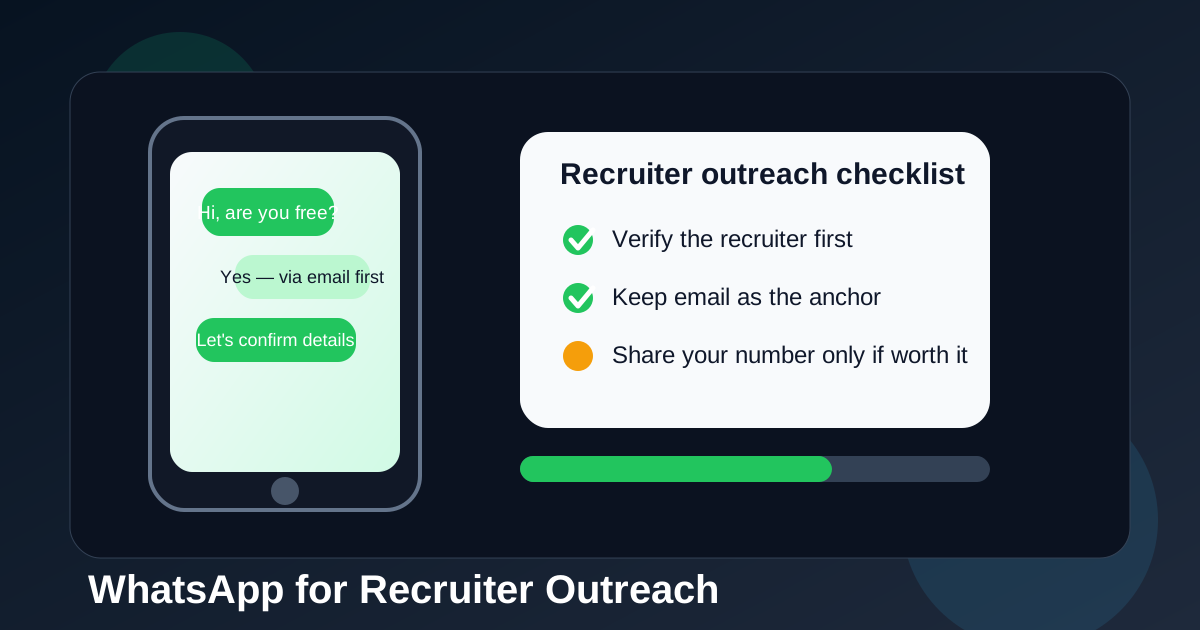
Keep email as the anchor
The smartest setup is usually simple: let email handle first contact, job details, resumes, calendars, interview documents, and anything important enough that you may need to search it later. Use WhatsApp only for the kind of short coordination that would otherwise become a chain of “still available?” messages.
This is also where Anonibox fits naturally earlier in the funnel. If you want to protect your main inbox from low-trust job-board exposure or one-off signups, use a privacy-first email setup there. Then, only if a conversation becomes real, decide whether you want to add a messaging channel at all.
Consider a separate job-search number
If you expect a lot of recruiter traffic, a separate number can create better boundaries than putting your personal line everywhere. That could be a second SIM, a business line, or a virtual number that you are comfortable using professionally. The point is not to look mysterious. The point is to keep recruiting traffic from merging permanently with your private life.
Check your privacy settings first
Before you message any recruiter, look at what your account reveals by default. Think about your profile photo, display name, read receipts, last-seen visibility, and who can add you to groups. A quick settings check is an easy way to avoid accidental oversharing.
Verify identity before moving sensitive conversations there
If a recruiter messages you out of nowhere on WhatsApp, confirm who they are before you share anything meaningful. Look for a real company domain, a credible LinkedIn profile, a consistent role description, and a legitimate hiring process. If they avoid basic verification or push urgency too hard, that is a red flag.
Do not use it for sensitive document exchange by default
Resume tweaks or scheduling notes are one thing. IDs, tax documents, background-check forms, or anything involving personal identifiers should usually stay in more formal, verifiable channels. A recruiter asking for sensitive documents over an informal chat app should make you slow down.
WhatsApp vs email for recruiter outreach
Email is still stronger for most early-stage recruiter communication because it gives you:
- cleaner search and record-keeping
- easier boundary-setting
- better separation from your personal messaging life
- less exposure of phone-number-linked identity
- more room to evaluate legitimacy before responding
WhatsApp is better only in a narrower set of cases: speed, time-sensitive coordination, and established conversations where both sides already trust the channel.
A practical decision framework
Ask yourself four questions:
- Do I know who this recruiter is? If not, stay in email until you do.
- Am I comfortable exposing this phone number? If not, do not use WhatsApp from it.
- Is the message just coordination, or is it substantive? Formal details belong in email.
- Would I mind if this person kept messaging me after the role goes cold? If the answer is yes, protect that boundary now.
That framework catches most of the mistakes people regret later.
Example of a good workflow
Suppose a recruiter emails you from a real company domain about a role you actually want. You reply by email, exchange a few details, and confirm the opportunity is legitimate. Later, the recruiter asks whether WhatsApp is okay for quick scheduling because they are coordinating across time zones. That is a reasonable moment to say yes — especially if you are using a separate job-search number.
Now flip the situation. A stranger messages you on WhatsApp first, asks whether you are interested in “remote work,” and quickly requests personal details or pushes you to another app. That is exactly the kind of outreach where staying out of WhatsApp or refusing to continue there protects you.
Final answer
WhatsApp can be useful for recruiter outreach, but it is usually best as a secondary channel after legitimacy is established and you are comfortable sharing a phone number. It is rarely the best default for first contact.
If you want the safest balance, keep email as the formal base, use privacy-first inbox tactics earlier in the job search, and only add WhatsApp when the recruiter is real, the context is clear, and the convenience is worth the privacy tradeoff.