Usually, no—you should not lead with your personal phone number for recruiter outreach unless you trust the recruiter or company and you are comfortable being reachable on that number.
For early outreach, an email-first approach or a separate job-search number is usually safer because it limits spam, scam texts, and blurred personal boundaries while still keeping you reachable for real opportunities.
Recruiter outreach sits in an awkward middle stage of the hiring process. You are not filling out a formal application inside a trusted company portal, but you are not always dealing with a random stranger either. A recruiter may contact you through LinkedIn, a job board, a cold email, a referral, or a sourcing platform. Sometimes that turns into a solid opportunity. Sometimes it turns into a noisy chain of texts, missed calls, vague messages, or outright scams.
That is why the question matters: should you use your personal phone number for recruiter outreach? In most cases, your personal number should not be your default first move. It can work, but it gives up more privacy than many job seekers realize. A recruiter who gets your real number can call, text, leave voicemails, add you to contact systems, and sometimes keep reaching out long after you have lost interest. If the opportunity is low quality, unclear, or suspicious, that tradeoff is not worth it.
A better approach is to match the contact method to the level of trust. If the outreach is early, vague, or unverified, stay on email first. If the opportunity becomes real and a call would help move things forward, then you can decide whether to share your personal number, a separate number, or another controlled contact option.
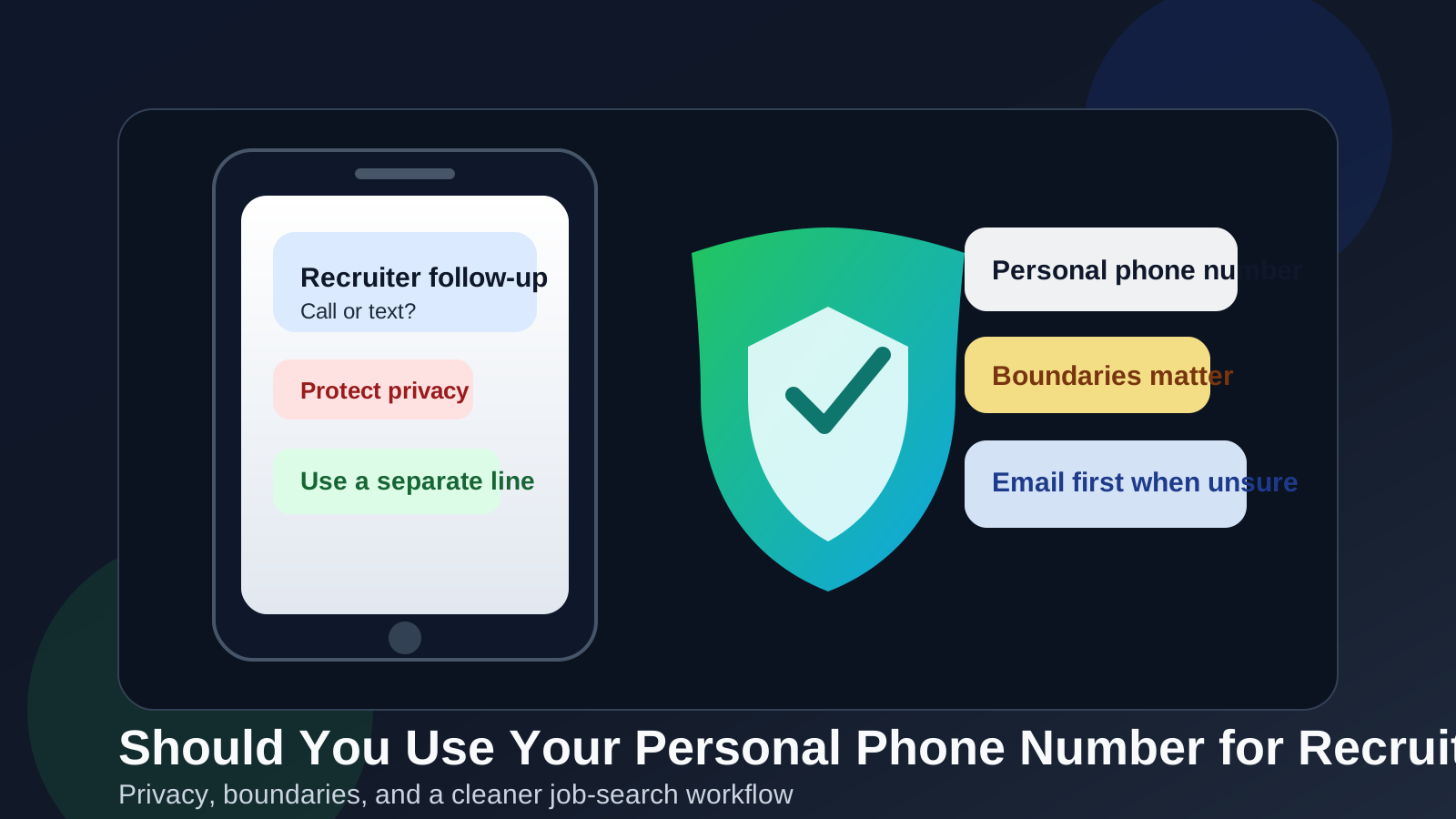
Why recruiters ask for a phone number in the first place
There are legitimate reasons recruiters ask for a phone number. A call is faster than email when someone wants to confirm your interest, schedule a screening conversation, or explain a role that is easier to discuss live. In some industries, recruiting still runs heavily on quick calls and same-day follow-ups.
That does not make the request unreasonable. It just means the request is normal, not automatically safe. A phone number is a more intimate channel than email. It reaches you instantly, follows you outside working hours, and is harder to ignore once it starts being used.
So the issue is not whether a recruiter is allowed to ask. The real question is whether giving your personal number at that stage helps you more than it exposes you.
When using your personal phone number can be reasonable
There are situations where giving your personal number is perfectly fine:
- You already verified the recruiter and company.
- The role is clearly defined and worth your time.
- You want quick contact for scheduling.
- You are actively interviewing and expect live coordination.
- You do not mind some job-search activity reaching your main phone.
If you are deep enough in the process that a recruiter needs to line up interviews or handle logistics, using your real number may be the simplest choice. The key is that you are making that choice deliberately, not handing over your number automatically to every cold outreach message.
Why your personal number is often the wrong default
1. It is harder to take back
Email noise is annoying, but it is relatively easy to filter, archive, or abandon a dedicated inbox. A personal phone number is stickier. Once it is in a recruiter database, contact list, ATS notes field, or outsourced sourcing workflow, it may keep circulating longer than you expect.
2. It opens the door to spam and repeated follow-up
Not every recruiter is careful. Some will call repeatedly, text from multiple numbers, or keep reaching out about unrelated roles months later. Even legitimate firms can be noisy. That gets old fast when it is landing on the same number your family, bank, doctor, and friends use.
3. It increases scam exposure
Job-search scams often move to text because text feels urgent and personal. Once your number is out there, it is easier for someone to send messages like “We reviewed your résumé” or “Reply on WhatsApp to start onboarding today.” A real phone number does not create the scam, but it gives scammers another path to reach you.
4. It blurs personal boundaries
A personal number is not just a contact field. It is part of your daily life. If a recruiter texts you at 7:15 a.m., calls during dinner, or follows up on a weekend, the interruption feels different than a new message in a dedicated inbox.
5. It can connect your job search to other identity trails
Phone numbers are often tied to messaging apps, caller ID records, past data-broker listings, and profile lookups. Sharing a personal number can expose more of your identity surface area than sharing an email address alone.
What is usually better: email first, phone second
For recruiter outreach, email is often the cleaner first channel. It gives you time to verify the recruiter, review the company, and decide whether the opportunity is worth pursuing. It also creates a written record of what was promised, what the role is, and how the recruiter identified you.
If you already use a separate inbox or a temporary address from Anonibox for job boards, sourcing forms, or early outreach, the same logic applies here. Keep the early stage of the funnel organized and low-exposure. Move to a more direct phone channel only when there is a clear reason.
The best middle-ground option: a separate job-search number
If you want to stay reachable without giving out your main personal number, a separate job-search number is usually the strongest compromise.
That could be:
- a second SIM,
- a dedicated mobile line,
- a virtual number you control, or
- another lawful secondary number setup available in your region.
The benefit is simple: real recruiters can still call or text you, but the activity stays contained. You can screen messages, set a professional voicemail, mute the line during personal time, and retire it later if the spam level gets stupid.
This setup is especially useful if you are doing a broad search, working with multiple recruiters, or responding to cold outreach from firms you have not dealt with before.
How to decide whether to share your personal number
Before you send your number, run through a quick checklist:
- Do I know who this recruiter is? Check their company domain, profile, and role history.
- Do I understand the opportunity? A real title, compensation range, location, and scope matter.
- Is a call actually necessary right now? Sometimes email can handle the next step just fine.
- Would a separate number work better? If you hesitate, that is often your answer.
- Am I comfortable with future follow-up on this number? Think beyond the first call.
If several of those answers feel shaky, hold the line and stay on email a bit longer.
Good signs that it is probably fine to share
- The recruiter contacted you from a real company domain.
- The role details are specific and credible.
- You independently verified the company and opening.
- The recruiter is willing to answer basic questions before the call.
- The phone conversation has a clear purpose, like a screening or scheduling step.
Red flags that mean you should not share it yet
- The recruiter pushes for your number before explaining the role.
- The message is vague, rushed, or overly flattering.
- The company name is hidden or inconsistent.
- You are asked to move immediately to text, Telegram, or WhatsApp without context.
- The outreach sounds more like lead generation than recruiting.
- The sender cannot be verified outside the message thread.
In those cases, staying on email is not being difficult. It is basic job-search hygiene.
A practical reply if you do not want to share your personal number yet
You do not need to overexplain. A short, professional reply is enough:
Thanks for reaching out. I’m happy to continue by email first while I review the role details. If it looks like a good fit, we can schedule a call from there.
That keeps the conversation moving without handing over your main line too early. Legitimate recruiters usually understand. The ones who get weirdly pushy often tell on themselves.
If you do share your personal number, protect it properly
Sometimes the best move is still to share your real number. If you do, use a few safeguards:
- Keep your voicemail simple and professional.
- Do not share sensitive documents or codes by text.
- Save recruiter details before the call so you know who is ringing you.
- Ignore pressure to install apps, click strange links, or continue entirely off-platform too fast.
- Be willing to block or filter numbers if the outreach becomes spammy.
No phone strategy guarantees zero spam or zero scams. The goal is simply to reduce unnecessary exposure while keeping access to real opportunities.
So, should you use your personal phone number for recruiter outreach?
Usually not as your default. It is better to treat your personal number as something to share after basic trust has been established, not as the first door you open for every recruiter who appears in your inbox.
If the opportunity is credible and the call will help move the process forward, your personal number can be fine. But if the outreach is early, vague, or unverified, an email-first workflow or a separate number is usually the smarter play. It protects your privacy, keeps your job search more organized, and gives you more control over who gets direct access to you.
That is the real standard: stay reachable for good opportunities without making your everyday number the public front desk for your job search.