A temp email can work for FutureLearn if you only want to browse courses, confirm a low-stakes signup, or compare the platform without giving up your main inbox right away.
It becomes a poor choice once you care about saved progress, paid upgrades, certificates, receipts, or account recovery, because those depend on an email address you can keep using.
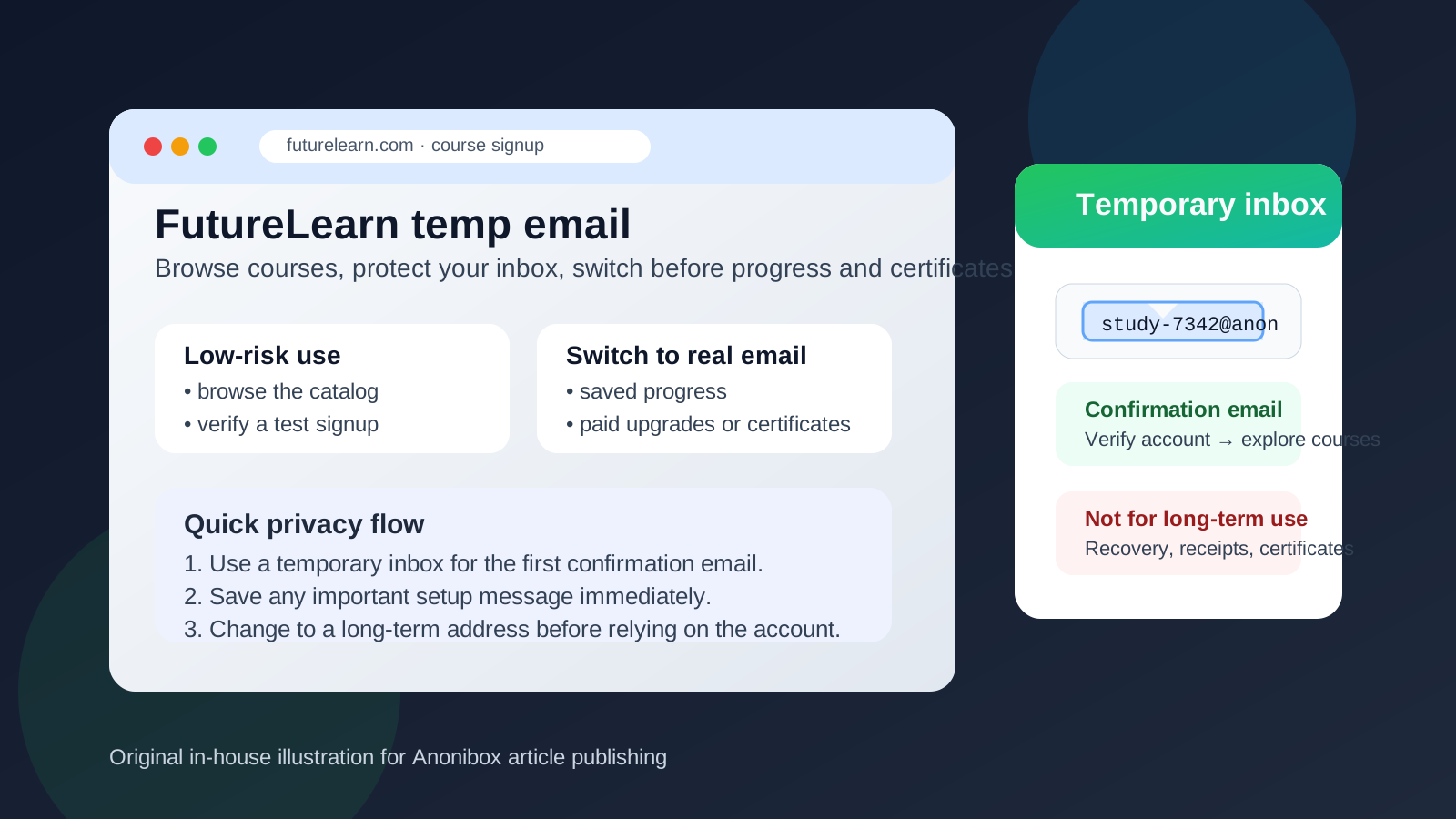
Why people consider a temp email for FutureLearn
FutureLearn sits in a familiar category for privacy-conscious learners: you may want to look around, compare course libraries, and decide whether the platform feels worth your time before turning your personal inbox into another stream of promotional mail. That is a reasonable instinct. Education platforms often send welcome emails, course suggestions, reminders, upgrade prompts, and follow-up messages long after the first signup.
If your goal is simple exploration, a temporary inbox can be a practical first step. You get the confirmation email you need, you can see how the site is structured, and you can decide whether the platform fits your learning goals before committing more of your personal information. That is especially useful if you are comparing multiple course providers at once and do not want your regular inbox collecting all of them at the same time.
In other words, the question is not whether using a temp email is inherently right or wrong. The better question is what stage of the relationship you are in. Early curiosity is different from long-term learning.
When a temp email makes sense on FutureLearn
A temporary address is most useful when the stakes are still low. These are the situations where it can make practical sense:
- You want to browse the platform first. Maybe you are comparing FutureLearn with other learning sites and only want to see the catalog, account flow, and first-time experience.
- You want to verify a one-off signup. If all you need is the first confirmation email so you can log in and look around, a temporary inbox can do the job.
- You are testing interest, not building a long-term study plan. There is a big difference between “I want to check this out tonight” and “I want to rely on this account for the next three months.”
- You want to limit inbox clutter while researching. If you are evaluating several learning platforms at the same time, separating first-pass signups keeps your main inbox calmer.
This is the strongest use case: light exploration, low commitment, and no expectation that the address will stay part of your life for months or years.
Where it starts getting risky
The downside appears when the account stops being disposable but the email address still is. That is where people get trapped: the platform becomes useful, but the inbox tied to it was never meant to last.
Saved progress can become harder to protect
If you start a course, track your progress, or return over time, the email attached to the account matters more. Even if you remember your password today, you may not remember it later. If you lose access and the only recovery path goes to an expired inbox, you have created an avoidable problem for yourself.
Certificates, completions, and upgrade-related messages matter more than promo mail
Education accounts often stop being casual once you pay for something, complete meaningful work, or want proof of completion later. At that point, the value is not in the welcome email anymore. The value is in reliable access to notices, receipts, account changes, and any message you may need months from now.
Password resets and account recovery are the biggest practical risk
This is the most important issue for most people. A temp email may help you create the account, but it usually gives you a weak recovery story later. If you forget the password, change devices, or need to confirm ownership, a throwaway inbox quickly stops being clever and starts being fragile.
Longer learning plans do not fit disposable contact details well
If you are planning to come back to the platform regularly, use a paid feature, or keep study history in one place, you are no longer in a disposable scenario. The more the platform matters to your learning record, the less sense a temporary inbox makes.
A good rule: use temporary for evaluation, switch for commitment
The cleanest approach is simple: use a temporary email only during the evaluation stage, then change to a permanent address before the account starts to matter. That gives you the privacy benefit up front without turning the account into a recovery headache later.
That handoff point usually comes sooner than people think. If any of the following becomes true, it is time to switch:
- You decide you actually like the platform and want to keep using it.
- You begin saving real progress you care about.
- You plan to pay for anything.
- You may need to retrieve proof of completion or account history later.
- You want a stable recovery channel tied to the account.
Think of a temp inbox as a short-term filter, not a forever identity.
How to use a temp email for FutureLearn more safely
If you are going to use one, do it deliberately instead of casually.
1. Start with a real purpose
Use the temporary address because you are testing the platform, not because you expect to build a long-term study record on a disposable identity. That keeps the tool matched to the job.
2. Save anything important immediately
If the confirmation email contains a useful link or onboarding detail, save it while it is still available. Temporary inboxes are convenient precisely because they are not meant to last forever.
3. Use a strong password anyway
A throwaway inbox does not mean the account itself should be sloppy. If you create a real platform account, use a unique password. Disposable signup habits should not turn into bad security habits.
4. Switch to a stable address before paying or relying on the account
Do not wait until something goes wrong. If you decide to keep using FutureLearn, move the account to an address you control long term while you still have easy access to everything.
5. Keep your privacy strategy consistent
If you already use tools like Anonibox to keep early signups out of your primary inbox, the same logic applies here: protect the front door, then move to a durable address when the account starts to matter. That approach is usually better than either extreme of using your main inbox everywhere or trying to keep every account fully disposable forever.
When a regular email is clearly the better choice
There are some situations where skipping the temp inbox from the start is probably smarter.
- You know you want to stay on the platform. If you are already committed, starting with a disposable address adds friction without much benefit.
- You expect to pay, upgrade, or keep records. Money, receipts, and long-term access usually deserve a stable inbox.
- You are using the platform for meaningful career or academic progress. If the account could matter to your résumé, professional development, or personal study plan, treat it like a real account.
- You do not want to think about migrations later. Sometimes the lowest-friction path is simply using a dedicated long-term learning email from the beginning.
That last option is worth emphasizing. Many people do not actually need a disposable inbox for this kind of site. What they need is a separate but durable email address for courses, newsletters, and learning platforms. That can give you most of the organization benefit without the recovery risk.
Two practical examples
Low-risk example
You are comparing a few online learning platforms this weekend and only want to see which one feels easiest to navigate. You sign up, confirm the account, click around the catalog, and decide whether the platform is even worth further attention. A temp email is reasonable here.
Higher-risk example
You enroll in a course you plan to finish, upgrade for more access, or want to reference later as part of your professional development. Now the account has long-term value. A disposable inbox is the wrong tool, because recovery and continuity matter more than short-term inbox privacy.
Quick checklist before you decide
- Am I just browsing, or do I expect to keep using this account?
- Would losing access later actually matter to me?
- Might I pay for anything tied to this account?
- Do I want proof of completion, receipts, or account history later?
- Would a separate long-term learning email solve the problem better than a temporary one?
If your answers point toward long-term use, start or switch to a permanent address sooner rather than later.
Final answer
Using a temp email for FutureLearn can be smart for early browsing and low-stakes signup privacy, but it is not a good long-term foundation for a learning account you may depend on later. The moment progress, certificates, upgrades, receipts, or recovery start to matter, a stable email becomes the better choice.
The best balance is usually this: use a temporary inbox only for first-pass evaluation, then move to a durable address once the platform becomes genuinely useful. That way you protect your main inbox without creating avoidable problems for your future self.