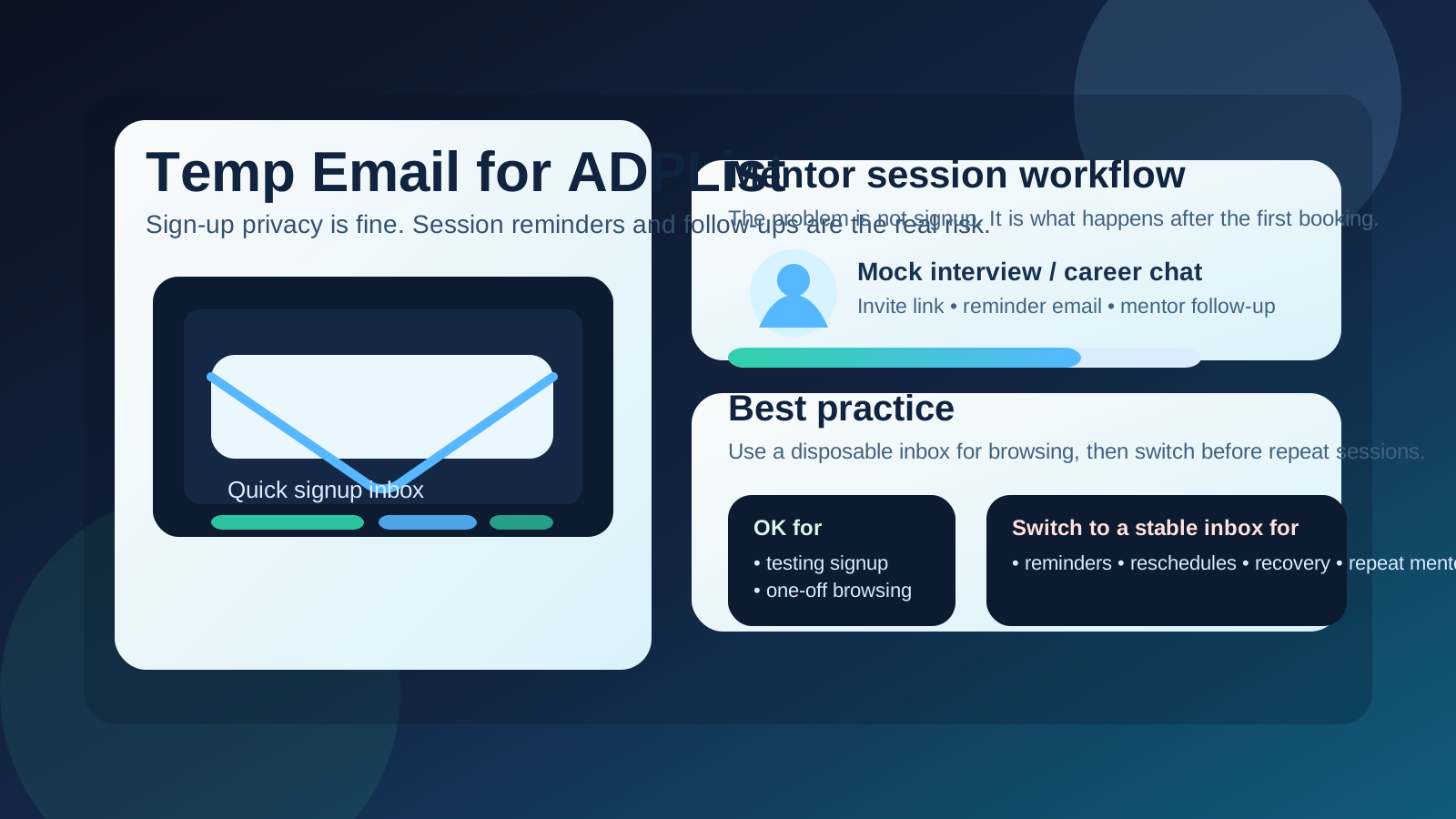
A temp email can work for ADPList if you only want sign-up privacy and a low-stakes first look at mentors. It becomes a bad long-term choice once you rely on session reminders, mentor follow-ups, repeat meetings, or account recovery.
If your goal is simply to explore ADPList without giving your main inbox to another platform too early, a disposable address can help. If your goal is actual mentorship, mock interviews, or ongoing career conversations, switch to a stable inbox before anything important depends on that account.
Why people think about using a temp email for ADPList
ADPList appeals to job seekers, career changers, designers, engineers, product people, and other professionals who want quick access to mentorship without a lot of friction. That usually means one thing: you sign up first, then decide later how much you actually want to use the platform. For many people, that creates a familiar privacy question.
You may want to browse mentors, look at session availability, test the onboarding flow, or book a single exploratory conversation without feeding more traffic into your personal inbox. If you are already doing interview prep, networking, and job applications, your main email is probably collecting enough alerts, recruiter follow-ups, newsletters, and calendar messages already. A temp inbox can feel like a clean way to keep early exploration separate.
That instinct is reasonable. The mistake is assuming that what works for the first verification email will also work once the platform starts to matter.
When a temporary email can make sense on ADPList
There are a few low-risk situations where a temporary address is usually fine.
- You only want to browse: maybe you are curious about mentor profiles, topics, and time slots, but you are not sure you will use the platform regularly.
- You want to test sign-up privacy: you do not want another long onboarding sequence landing in your everyday inbox before you even know whether the platform fits your goals.
- You are comparing several career tools at once: keeping early-stage signups in separate inboxes can reduce clutter while you decide which tools are actually worth keeping.
- You are booking one exploratory session only: if the goal is a single low-stakes conversation and you are prepared to save the confirmation details right away, a disposable inbox can be workable.
This is where a service like Anonibox can be helpful: it gives you a buffer between “I want to look around” and “I am ready to attach part of my real career workflow to this account.” That buffer is useful. It just has limits.
Where a temp email starts to break down fast
The moment you move from browsing to real mentorship, ADPList becomes more than a sign-up form. Now you may care about reminder emails, reschedules, mentor responses, booking confirmations, shared resources, and future sessions. That is where disposable email stops being a convenience and starts becoming a liability.
Session reminders are easy to miss
Mentorship platforms often depend on email for logistics. Even if the actual meeting happens on a call or video link, the details that get you there usually arrive by email first. If your temporary inbox expires, gets lost, or simply stops being part of your routine, you can miss the messages that keep the session on track.
That matters more than people expect. A missed reminder does not just create inconvenience for you. It can waste a mentor’s time and make you look unreliable on a platform built around professional goodwill.
Mentor follow-ups can matter as much as the session itself
A strong mentoring session often creates follow-up value: a recommended reading list, portfolio feedback, next steps for your interview prep, a suggested change to your resume, or a link you meant to revisit later. If those messages land in an inbox you no longer monitor, you lose part of the reason you booked the session in the first place.
That is the real difference between a throwaway signup and a useful professional relationship. The first email gets you in the door. The next few emails may contain the advice you actually needed.
Repeat sessions need continuity
Many people use ADPList more than once. You may have a good first conversation and want to book again. You may talk to multiple mentors about the same goal. You may use one session for a portfolio review and another for mock interviews or career strategy. Once that happens, continuity matters.
A durable inbox helps you keep confirmations, previous notes, follow-up threads, and recovery options tied to one stable identity. Disposable email does the opposite: it fragments the experience right when the platform starts becoming genuinely useful.
Account recovery is the obvious weak point
If you forget your password, switch devices, get logged out, or need to confirm something later, account recovery becomes important fast. A temp inbox is fine until recovery matters. Then it is often the worst possible address to have attached to the account.
That is why the safest rule is simple: temporary email is for low-stakes access, not for accounts that may become part of your ongoing professional life.
A better strategy than staying disposable forever
If you want privacy and reliability, the best approach is usually a staged one.
- Use a temp inbox for the first look. Sign up, verify the account, and decide whether the platform is even worth your time.
- Book carefully. If you schedule a session, save the date, time, and mentor details immediately.
- Switch to a stable inbox before ongoing use. Once you know you want more than casual browsing, move the account to an email address you can actually keep.
- Prefer a separate long-term career inbox over your main personal inbox. That gives you privacy without sacrificing reliability.
This middle ground is usually better than either extreme. You do not have to attach every experiment to your primary email, but you also should not anchor real career activity to an address designed to disappear.
Practical examples
Good use of a temp email
You are curious about ADPList, want to browse mentors in product design, and maybe book one short conversation to see whether the platform feels useful. You use a temporary address to sign up, save the confirmation details, attend the session, and then decide whether to continue. That is a sensible use case.
Risky use of a temp email
You start booking repeated sessions, rely on mentor follow-ups, collect advice across multiple topics, and still keep the account attached to a disposable inbox because changing it feels annoying. That is exactly when people lose access, miss reminders, or forget where important messages went.
Best overall use of email on ADPList
You use a disposable address only to test the platform, then move to a dedicated long-term job-search or career-development inbox once you know it is valuable. That keeps your main inbox cleaner while preserving continuity for the professional activity you actually care about.
A short checklist before you decide
- Am I only browsing, or am I actually planning to use mentor sessions?
- Would it hurt if I missed a reminder or reschedule email?
- Do I expect repeat sessions, portfolio feedback, or career follow-ups?
- Will I need to recover this account later?
- Would a separate stable career inbox solve the problem better than a disposable one?
If your honest answer is that the account may matter later, move away from the temp inbox early.
Final verdict
Using a temp email for ADPList is fine for sign-up privacy, quick browsing, and one-off exploration. It is a weak choice for anything that depends on reliability, including session reminders, mentor follow-ups, repeated bookings, and account recovery.
The practical rule is easy to remember: use a disposable inbox to test the platform, but not to build a real mentorship workflow. If ADPList becomes useful to your job search or career growth, switch to a stable address before something important gets lost.