Yes — a temp email for Standard Notes is fine if you just want sign-up privacy, a quick product test, or a clean way to compare the app without handing over your main inbox immediately.
No — it stops being a good idea once synced notes, paid features, account recovery, or long-term access actually matter.
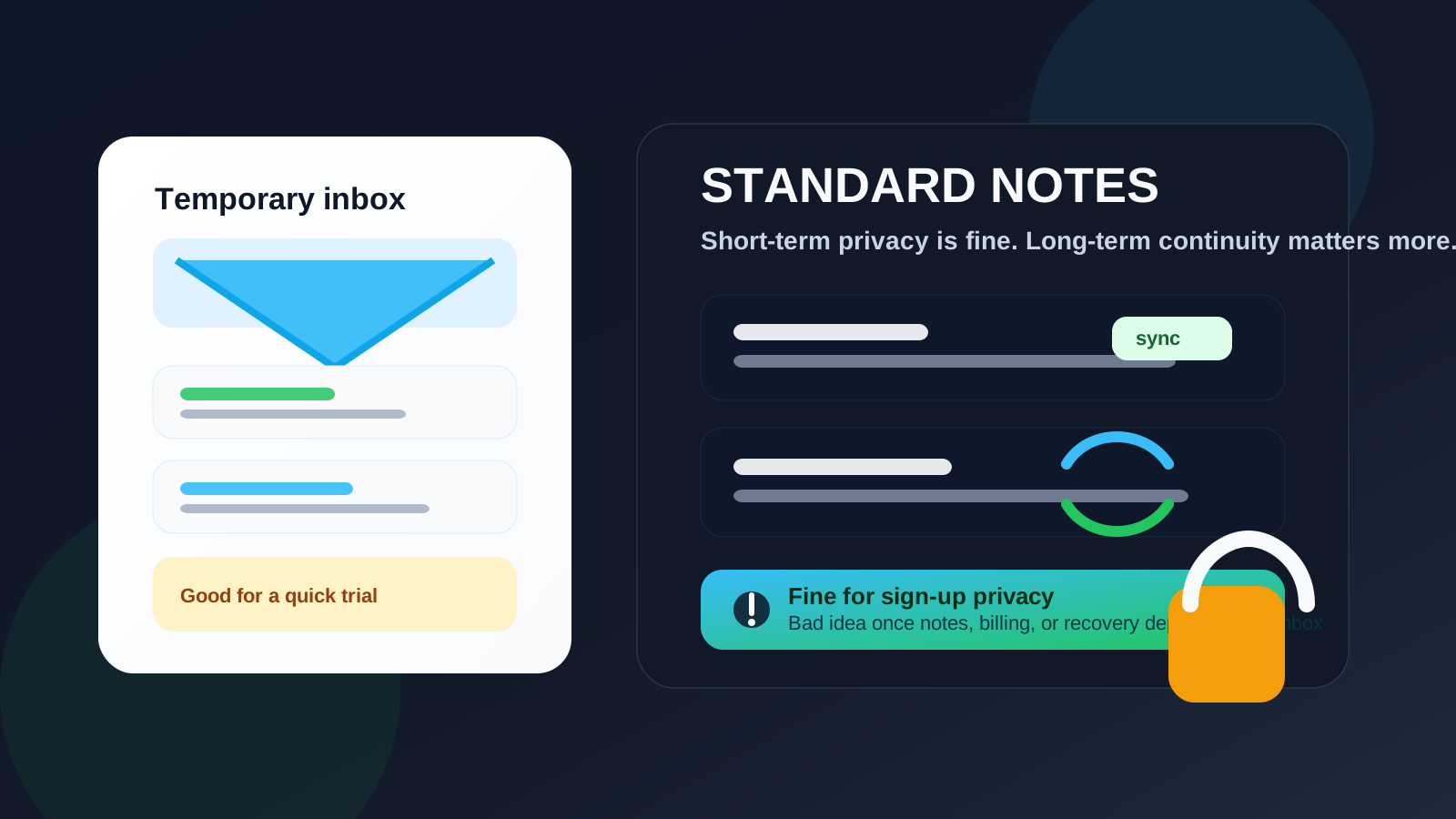
That is the practical answer most people need. A temporary inbox can be useful during the first hour of evaluation, but Standard Notes is the kind of product that can turn into real infrastructure for your personal or work life. If you keep using it, the account quickly stops being disposable even if the email address still is.
That tension is exactly why people search for temp email for standard notes. They want privacy during signup, but they also do not want to accidentally trap important notes, subscription access, or recovery links behind an inbox they may not control later.
Why someone would use a temp email for Standard Notes
The intent is usually reasonable. Most people are not trying to play games with the platform. They are trying to stay organized while deciding whether the product deserves a permanent place in their setup.
- They want to test the interface first. It is normal to check the editor, sync flow, onboarding, and general feel before using a real inbox.
- They want to reduce inbox clutter. Product trials often trigger verification emails, getting-started tips, upgrade prompts, and follow-up campaigns.
- They are comparing multiple tools. If you are testing note-taking apps side by side, a temporary inbox can keep the trial phase cleaner.
- They care about privacy. Some users simply do not want every app test connected to their main email identity from the start.
Those are sensible goals. The mistake is assuming that the email strategy that works for a low-stakes trial will still work once the account becomes part of your real note system.
When a temp inbox is usually fine
Short evaluation sessions
If you are signing up to explore the dashboard, read the first onboarding messages, and decide whether the app feels useful, a temp inbox is generally fine. That is especially true if you expect to make a keep-or-delete decision quickly.
Initial product comparison
Many people test Standard Notes alongside apps like Joplin, Obsidian, Evernote, OneNote, Logseq, or Readwise-connected workflows. In that research phase, a disposable inbox can prevent your main address from becoming a dumping ground for trial emails.
Low-stakes curiosity
If you are simply curious and not planning to store anything important, there is not much downside to using a temporary address at the start. You get the confirmation email you need, you look around, and you walk away if the app is not for you.
Where a temp email becomes risky
The risk is not the signup itself. The risk appears when the account starts collecting value.
1. Your notes stop being disposable
Once you begin storing real writing, clipped ideas, drafts, or reference notes, the account is no longer a throwaway test. At that point the login email matters because it is tied to access, recovery, and the continuity of your system.
2. Sync and multi-device access matter more than early privacy
If you keep using Standard Notes across devices, your relationship with the account becomes ongoing rather than experimental. Even if the notes themselves are what you care about most, the email on file still matters for practical account management.
3. Subscription and billing messages matter
If you ever move beyond a free trial or start paying for features, a disposable inbox becomes a weak link. Renewal notices, payment issues, receipts, account updates, and support messages should go somewhere you reliably control.
4. Recovery problems always show up later
The classic temp-email mistake is forgetting that recovery rarely feels important on day one. It only becomes important when you lose a password, change devices, need help from support, or come back to the app after a gap. That is when a disposable inbox can become a real problem.
A better privacy strategy for Standard Notes
The most practical setup is not “always use your main email” and not “always use a disposable email forever.” It is a staged approach.
Stage 1: use a temp email for signup testing
If you only want to verify the account, explore the app, and decide whether it belongs in your toolkit, a temporary inbox is fine. This is where a service like Anonibox actually helps: you can try the product without feeding another long trail of messages into your main inbox.
Stage 2: switch to a stable address once the app looks real
If Standard Notes starts feeling useful, move the account to an email you can keep. That does not have to be your oldest personal inbox. A separate permanent email reserved for tools, notes, or productivity apps is often the best compromise.
Stage 3: treat durable tools like durable accounts
Once a note app becomes part of your real workflow, treat it accordingly. The login email should be recoverable, monitored, and under your long-term control. Short-term privacy is good. Losing account continuity is not.
Temp email vs separate permanent email
This is the key distinction people often miss.
- Temporary email: best for low-stakes evaluation, basic verification, and spam control during product research.
- Separate permanent email: best for apps you may actually keep but do not want mixed into your oldest or most personal inbox.
- Main inbox: reasonable if you already know the tool is trustworthy and you do not mind centralizing everything.
For Standard Notes specifically, a separate permanent inbox is usually the sweet spot once the app survives the trial phase. You still protect your main inbox, but you avoid the recovery problems of a short-lived address.
Good use cases for a temp email here
- You want a quick look at the product before deciding whether to invest time in setup.
- You are comparing several note-taking tools in the same week.
- You want to keep early onboarding and promo emails away from your main inbox.
- You are not planning to store anything important unless the app proves itself first.
In each of these cases, the account is still disposable because your commitment is still disposable.
Bad use cases for a temp email here
- You are already writing real notes in it. That means the account has value now.
- You expect to rely on sync across devices. Continuity matters more than signup privacy at that stage.
- You may pay for the service. Billing and support should not depend on a mailbox you might lose.
- You would care if recovery failed. If losing access would frustrate you, fix the email before that becomes an issue.
- You are using it for work, school, or long-term personal knowledge management. That is exactly when the account should be tied to a durable inbox.
What to do if you already signed up with a temp email
If you already created the account with a temporary inbox, the fix is simple: change the email while you still can.
Do it before you build more value on top of the account. If the app already looks useful, move the login to a stable address now instead of waiting until you need recovery help later. Early cleanup is easy. Emergency cleanup is not.
A quick decision checklist
Before you use a temp email for Standard Notes, ask yourself:
- Am I just testing the app, or do I think I might keep it?
- Will I care about these notes next month?
- Would I be annoyed if I lost access to recovery emails?
- Am I likely to pay for this later?
- Would a separate permanent inbox solve the privacy problem better than a disposable one?
If the answers point toward ongoing use, a permanent secondary inbox is usually the better move.
How to stay private without making the account fragile
If your real goal is privacy rather than pure disposability, there is a better balance than using a throwaway address forever.
- Use the temp inbox only for the first trial if you want low-friction privacy.
- Decide quickly whether the tool is a keeper or a discard.
- Move to a stable email before you store anything important, connect multiple devices, or pay for access.
- Keep your long-term tools separated from your noisiest inboxes, but not from recoverable ones.
That gives you most of the privacy benefit without creating a brittle setup.
Final answer
A temp email for Standard Notes is a smart short-term move if you want signup privacy, a quiet trial, and a clean way to evaluate the app before committing your real inbox.
It becomes the wrong tool once the account starts holding real value. If synced notes, subscription access, recovery, or long-term use matter, switch to an inbox you control permanently. That keeps your privacy strategy practical instead of turning it into an avoidable account-recovery headache.