Yes — a temp email for AFFiNE is fine if you only want sign-up privacy while testing the app. It becomes a risky long-term choice once you depend on shared workspaces, cross-device sync, or account recovery tied to that inbox.
That is the short answer. A temporary inbox helps when you are just kicking the tires and do not want one more onboarding sequence, verification email, and follow-up campaign landing in your main address. But if AFFiNE turns into a real workspace for notes, whiteboards, planning, and collaboration, the email behind that account stops being a throwaway detail and starts becoming part of your long-term access.
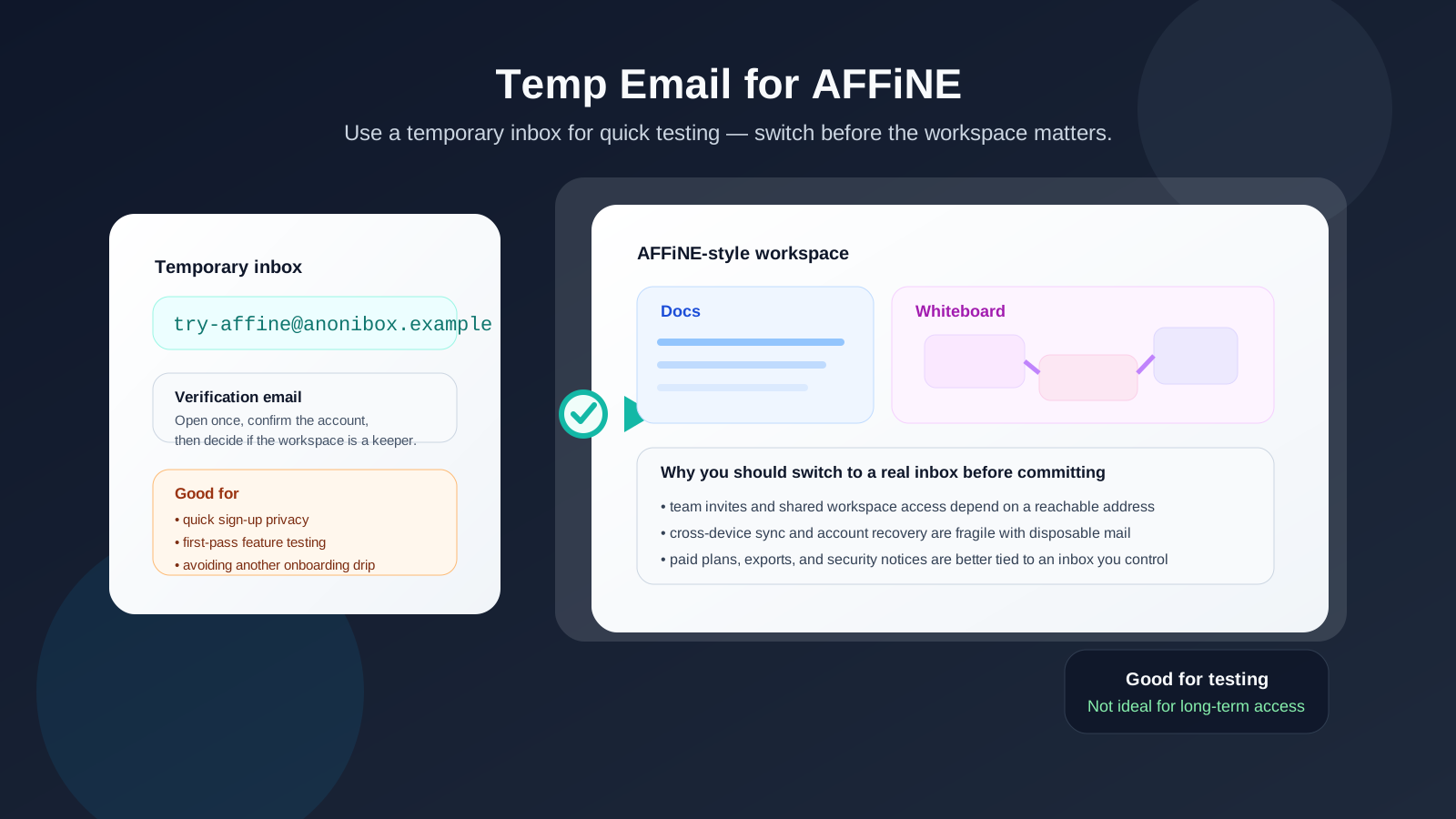
That balance is why so many people look up temp email for AFFiNE. They want privacy at the signup stage without making a bad decision for the part that comes later. The safest approach is simple: use a temporary email only for early testing, then switch to an inbox you actually control before the account holds anything important.
Why people want a temp email for AFFiNE in the first place
The motivation is reasonable. Most people do not sign up for just one productivity tool and immediately commit forever. They compare options. AFFiNE might sit next to AppFlowy, Anytype, Craft Docs, Obsidian, Notion-like workspaces, or other personal knowledge tools during that comparison process. Each signup can trigger welcome emails, setup reminders, feature announcements, upgrade prompts, and collaboration nudges.
If you are only evaluating the product, handing out your main inbox every time gets old fast. A temporary address lets you verify the account, explore the interface, and decide whether the product deserves a real place in your workflow before you attach your long-term identity to it. A service like Anonibox fits that stage well because it keeps trial signups separate from the inbox you use for work, school, or personal life.
When a temp email for AFFiNE makes sense
There are a few situations where a disposable inbox is practical rather than careless.
1. You only want to test the signup and first-run experience
If your goal is to see how account creation works, how the workspace feels, or whether the product matches your style, a temp inbox is perfectly fine. At that point you are testing, not building something permanent.
2. You are comparing several workspace tools at once
Evaluation mode is messy by default. If you are looking at multiple note-taking or collaboration tools in the same week, a separate inbox for temporary signups helps keep things compartmentalized.
3. You want less inbox noise while you decide
Some products send useful onboarding. Some send too much. A temporary inbox gives you the verification message and first instructions without committing your main address to a longer marketing sequence before you even know whether the product is a fit.
4. You are privacy-conscious but not invested yet
There is a big difference between “I want to test this” and “I want this account to hold real work.” Temporary email is strongest in the first scenario. It helps you stay private without pretending the account is already important.
Where a temp email starts becoming a bad idea
The downside appears as soon as the AFFiNE account starts mattering. That can happen faster than people expect. One day it is a test. A few days later it may contain notes, project plans, whiteboards, references, or shared workspace activity you do not want to lose.
Shared workspaces need a stable contact point
If you invite teammates, join a shared space, or use the account for collaborative work, the email address behind the account becomes part of how people reach you and how the platform confirms account actions. A disposable inbox is a shaky foundation for anything collaborative.
Cross-device access is safer when the inbox is still yours
A lot of users begin on one device, then later decide they want the same workspace on another computer or phone. That is exactly when temp email choices can create friction. If the address used for verification and recovery is no longer available, even simple account tasks become harder than they should be.
Recovery is the long-term risk people ignore
The biggest problem with temporary email is not signup verification. It is what happens later when you need a password reset, a security check, a login confirmation, or an ownership email. Disposable inboxes are great at receiving the first message. They are much worse at acting as durable identity anchors.
Paid features and account changes should not live on borrowed access
If you ever upgrade, attach billing, or rely on the account for serious work, you want invoices, renewal warnings, and account notices going to an inbox you actively monitor. Disposable mail is the wrong place for that responsibility.
A practical way to use a temp email without making a mess later
If you still want the privacy benefit, the safest method is staged and boring in a good way.
Step 1: Use the temp inbox only for the initial verification
Create the address, complete signup, and confirm the account. That keeps the early test isolated from your main inbox.
Step 2: Treat the account like a sandbox
During the test phase, use sample notes, throwaway boards, and non-essential content. Do not load the account with anything you would hate to lose before you decide whether it is worth keeping.
Step 3: Decide quickly whether AFFiNE is a keeper
The worst pattern is leaving a temp-email account in limbo for weeks while it slowly becomes important. If you like the product, promote the account to a real email early. If you do not, walk away and keep the privacy win.
Step 4: Switch to a stable email before collaboration or sync matter
The right time to switch is before you depend on shared workspaces, regular sync, or long-term access. Do it while the account is still easy to change, not after it becomes part of your daily system.
Step 5: Save anything important outside the test account too
Even if you plan to keep using the tool, it is smart to preserve key notes or exports while you are still in evaluation mode. That way a simple login issue does not turn into a bigger problem.
Signs you should stop using the temp email immediately
- You have started keeping important notes or project materials in the account.
- You are inviting other people or joining shared workspaces.
- You want to access the same setup across devices regularly.
- You are considering a paid plan or long-term subscription.
- You would be genuinely annoyed if you lost access tomorrow.
If any of those are true, the experiment phase is over. A real email is the safer move.
Common mistakes people make
Using a temp inbox because it feels clever, not because it fits the moment
Temporary email is a tool, not a rule. It helps when the account is still low stakes. It is not automatically the best choice for every signup.
Forgetting that collaboration changes the equation
Solo testing and shared work are not the same thing. The moment another person depends on that account relationship, your inbox choice matters more.
Leaving the account on a disposable address for too long
This is the most common avoidable mistake. People test the product, like it, and then never switch the email because nothing breaks immediately. The trouble only shows up later when recovery or access changes become urgent.
Assuming privacy and permanence can come from the same throwaway setup
You can absolutely use temp email for privacy. You just should not expect a disposable address to behave like permanent account infrastructure. Those are different jobs.
So, should you use a temp email for AFFiNE?
Yes, if your goal is limited to sign-up privacy, first-pass testing, or avoiding another round of early onboarding email. No, if you already know you want to keep the account, collaborate with others, depend on cross-device access, or trust that inbox for recovery later.
The best middle ground is simple: use a temporary email for the trial phase, then switch to an inbox you control before the account becomes valuable. That gives you the privacy benefit upfront without creating a fragile setup underneath notes, workspaces, and future access.
Final takeaway
Temp email for AFFiNE is a good short-term privacy move and a bad long-term identity strategy. If you only want to explore the product, a disposable inbox is fine. If the workspace starts holding real work, shared context, or anything you would want back after a login problem, move the account to a permanent email while it is still easy. That is the cleanest way to protect your inbox now without sabotaging your access later.