A temp email can work for a Trengo signup if you only want to test the product without giving up your main inbox right away.
It becomes a bad idea once the account starts holding shared inbox access, customer replies, teammate invitations, or recovery details that your team may need later.
Why people consider a temp email for Trengo
Trengo sits in a category where teams often want to explore the product before they commit. If you are comparing customer support platforms, shared inbox tools, or omnichannel help desk software, using a disposable address for the first sign-up can feel sensible. You get the verification message, the welcome flow, and a quick look at the dashboard without immediately adding your permanent work inbox to another vendor nurture list.
That logic is completely reasonable for the earliest stage of evaluation. The problem is that Trengo is not just a simple newsletter or one-off utility. It is the kind of product that can quickly become operational. Once you connect live channels, receive customer messages, invite teammates, or rely on the account for day-to-day support, the email address on the account matters a lot more than it did during the first five minutes of testing.
Short answer
If you only want to create a trial account and look around, a temporary inbox is usually fine. If you plan to keep the workspace, connect real customer communication, or let multiple teammates depend on it, switch to a stable long-term address before the account becomes important.
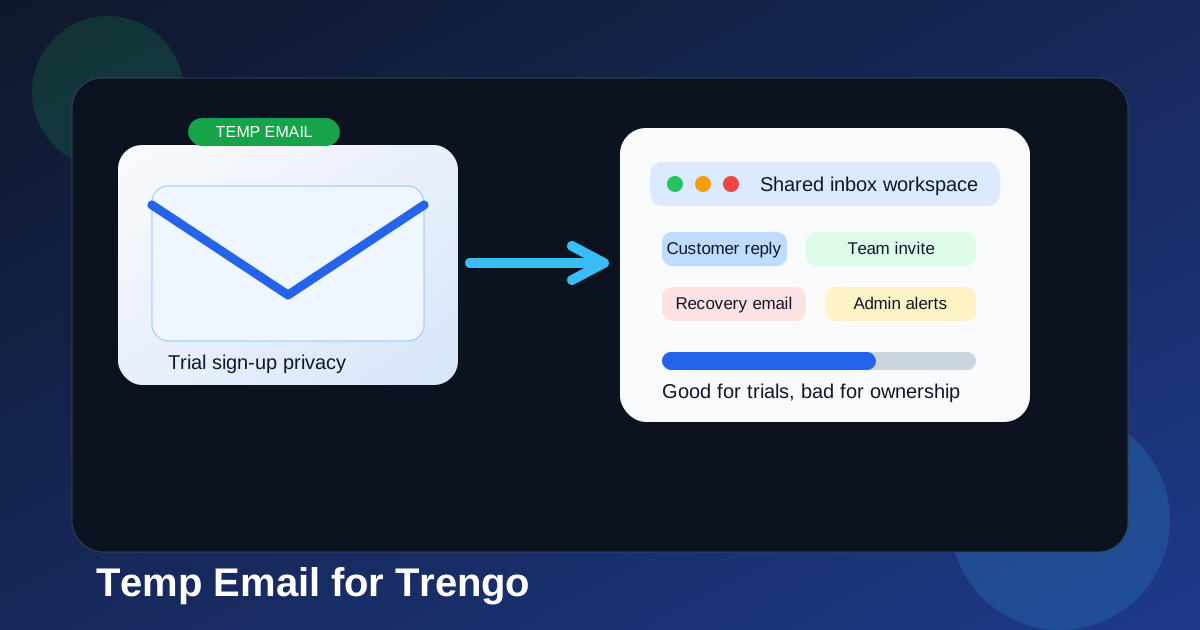
In other words: a temp email is useful for sign-up privacy, but weak for shared inbox ownership.
When a temporary email is a reasonable choice
There are a few situations where using a temporary inbox for Trengo makes practical sense:
- You are just testing the interface and do not know yet whether the platform belongs on your shortlist.
- You want to compare onboarding flows across several support or shared inbox tools without flooding your work inbox.
- You only need the verification email and a short period of access to review the product.
- You are doing solo research before bringing the rest of the team into the evaluation.
- You want to reduce follow-up sales email until you decide the platform is worth a real conversation.
That is where a service like Anonibox fits naturally. It helps you segment early testing from long-term communication, which is handy when you are exploring multiple tools in the same week.
When a temp email becomes risky
The risk changes as soon as the account starts to matter. Trengo is often used for customer support, team collaboration, and message handling across multiple channels. That means the inbox on the account is not just a sign-up form field anymore. It becomes tied to trust, continuity, and control.
1. Shared inbox ownership can get messy
If the workspace owner used a disposable email and then disappears, forgets the address, or loses access, account recovery can become awkward. That is especially true when other teammates are already using the system. A shared inbox tool should not be anchored to a throwaway identity once real work begins.
2. Customer communication may depend on timely notifications
Even if most conversations happen inside the platform, important notices can still arrive by email. That can include verification steps, invite flows, billing notices, security notifications, export instructions, or warnings about account changes. Temporary inboxes are usually worse for long-term visibility and record-keeping.
3. Team invites and admin control deserve a durable address
The moment you start inviting coworkers, the setup stops being personal experimentation and starts becoming a team system. At that point, the primary login should be an address your team expects to keep, monitor, and recover if needed.
4. Live channels raise the cost of bad account hygiene
If you connect customer-facing channels, the consequences of an inaccessible owner email go up. The issue is not that Trengo suddenly stops working because the address was temporary. The issue is that future admin or recovery problems become harder to solve at exactly the point when the workspace matters most.
A better workflow: use a temp email only for the evaluation phase
The cleanest approach is to treat temporary email as an early screening tool, not a permanent foundation.
- Create the temporary inbox first. Use it only for initial sign-up privacy.
- Verify the account and tour the workspace. Check the dashboard, inbox structure, assignment flow, automation options, and teammate experience.
- Do not connect critical live channels yet. Keep the test environment lightweight while the account is still tied to a disposable address.
- Decide whether the platform is a real contender. If the answer is no, you avoided cluttering your permanent inbox. If the answer is yes, move to a stable address before the workspace becomes operational.
- Switch ownership to a long-term inbox. Prefer a team-controlled work email that more than one responsible person can support through normal internal processes.
This gives you the privacy upside of a temporary inbox without turning a shared support system into an account-recovery headache later.
What to evaluate during a Trengo trial instead of focusing on the email address
If you are using a temporary inbox during early evaluation, the real goal is not the inbox itself. The goal is to judge whether the platform solves your support and communication problems well enough to justify deeper setup.
Useful questions to ask during the trial include:
- Does the inbox layout make it easy for your team to triage conversations?
- Can you tell who owns a thread and what has already been handled?
- Do automations, routing rules, tags, or assignment options feel practical rather than noisy?
- Would teammates be able to learn the workflow quickly?
- Does the product look suitable for the channels your business actually uses?
- Would you trust this workspace to support real customers after a proper setup?
Those questions help you decide whether Trengo deserves a stable production-grade account. A disposable inbox is useful only insofar as it makes that first evaluation cleaner.
Signs you should switch away from the temp inbox immediately
You should move to a real long-term address as soon as any of these start happening:
- You are inviting teammates into the workspace.
- You are connecting live support or messaging channels.
- You are storing customer conversations you may need later.
- You are adding payment or billing information.
- You expect the platform to stay in use beyond a quick test window.
- You would be genuinely annoyed if you lost access to admin emails or recovery links.
That last one is a good gut check. If losing the login email would be more than a mild inconvenience, the address is no longer temporary-material.
What kind of email is better than a temp email for long-term Trengo use?
For production use, a stable work-controlled address is usually the best fit. In many teams, that means an inbox tied to your actual company domain or another long-term address the business can monitor and protect. The ideal choice is not a personal mailbox one employee might abandon, and it is definitely not a disposable address you never meant to keep.
If you want separation, a dedicated support-operations or tools-admin email can work well. That gives you clean boundaries without sacrificing continuity. The important part is durability: the email should still make sense six months from now, not just during a one-hour test.
Common mistakes to avoid
Using a temp email for the entire pilot
Some teams mean to switch later and simply forget. Then weeks pass, teammates join, and the throwaway inbox is still the owner identity. If the tool seems promising after the first session, make the switch early.
Connecting real customer workflows too soon
If the account is still tied to a disposable address, treat the environment as disposable too. Once live customers are in the mix, the operational stakes are higher.
Confusing privacy with permanence
A temp inbox helps with privacy and spam control. It does not solve long-term administration, documentation, or account ownership. Those are different jobs.
Letting one person hold all the access context
Even with a stable email, shared tools are healthier when admin ownership is documented. Know who controls the account, where recovery steps live, and how the team would respond if the primary admin leaves.
A practical decision checklist
Before you use a temp email for Trengo, ask yourself:
- Am I only testing sign-up and product fit, or am I setting up a workspace the team may actually keep?
- Will this account hold customer conversations, team invites, or admin permissions?
- Would I care if I could not access the original login inbox a month from now?
- Do I want privacy during evaluation, or do I need continuity for operations?
- If the trial goes well, have I already decided what stable email should replace the temp inbox?
If your answers lean toward privacy-first short-term testing, a temporary inbox is fine. If they lean toward teamwork, continuity, or real customer handling, move to a durable address early.
Final takeaway
Using a temp email for Trengo is perfectly reasonable for a cautious first look. It helps you verify the trial, explore the interface, and keep your primary inbox out of another vendor sequence while you decide whether the product is worth serious attention.
Just do not confuse a useful trial tactic with a good long-term setup. The moment Trengo starts acting like shared infrastructure instead of a quick experiment, the email on the account should be stable, recoverable, and team-appropriate. Use temporary email for sign-up privacy. Use durable email for ownership.