Yes — using a temp email for Spike is fine if you only want to test the signup flow or protect your main inbox during early evaluation.
It becomes risky once team chat history, shared threads, login recovery, or billing notices depend on that temporary address.
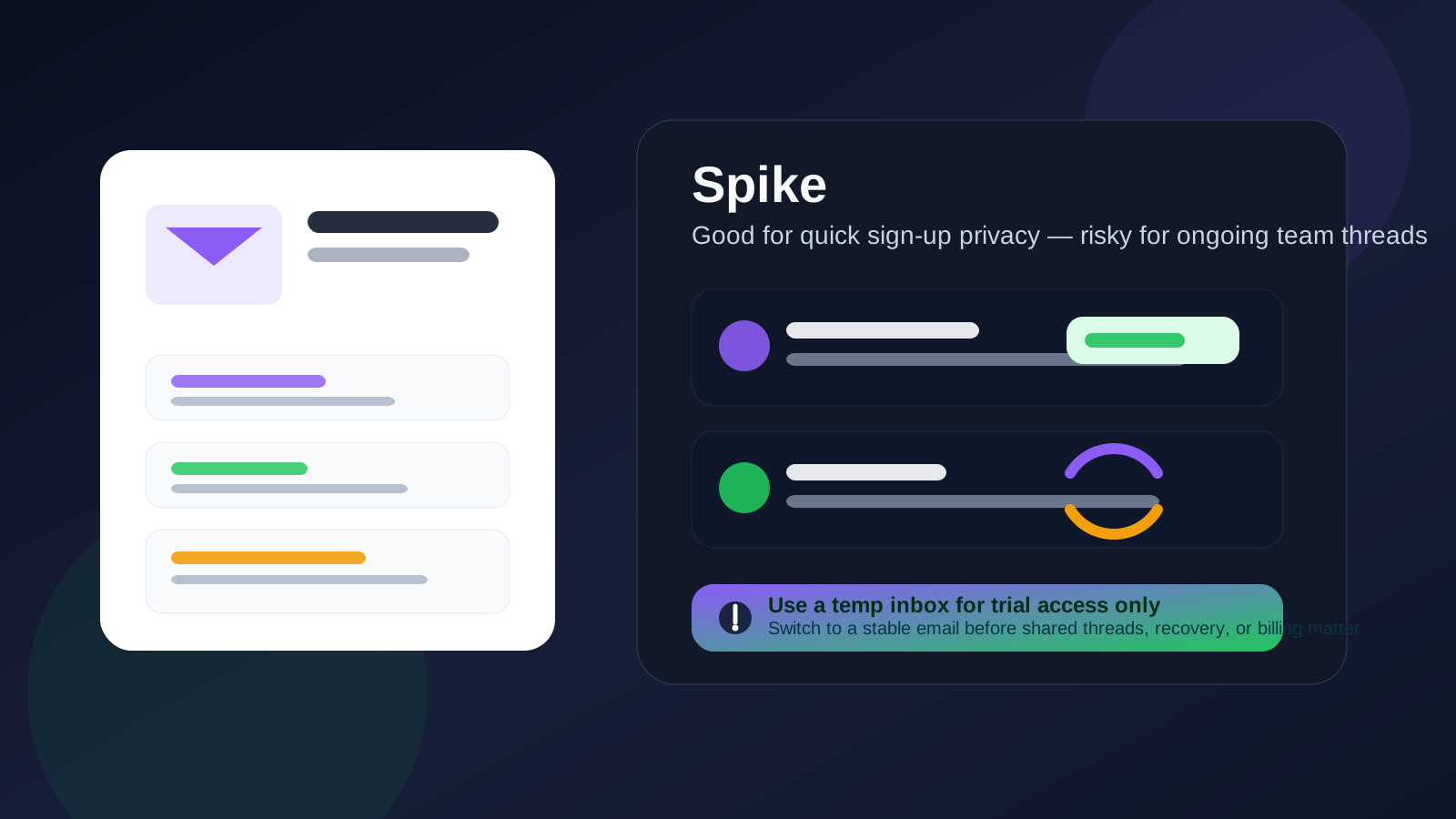
That is the real trade-off. A disposable inbox can be helpful during the first few minutes of curiosity, especially if you are comparing multiple inbox, collaboration, or customer communication tools and do not want immediate follow-up emails cluttering your primary address. But Spike is the kind of product people often keep using once they like it. The moment the account starts holding ongoing conversations, shared message history, or important team context, the temporary inbox stops being a convenience and starts becoming a weak link.
If you want the short version: a temp email is fine for a low-stakes test, but a stable address is better before you rely on the account for real communication.
Why people consider a temp email for Spike in the first place
The reason is simple: sign-up privacy. Many users do not want every tool they test tied immediately to a personal or work inbox. That is especially true when they are exploring products in a crowded category like email clients, shared inboxes, or collaborative messaging tools.
A temporary address can help when you want to:
- Check the onboarding flow before committing to the product.
- Keep promotional follow-ups out of your main inbox during research.
- Compare several tools cleanly without mixing all their emails together.
- Protect a work address until you know whether the tool is worth a serious trial.
That is a reasonable use case. A service like Anonibox can give you a quick inbox for the initial verification email and early product look-around. If you only want to get inside the product and see whether it is relevant, that can be enough.
When a temp email is actually fine for Spike
There are a few situations where a disposable inbox is a practical choice:
- You just want to see how Spike feels before inviting anyone else.
- You are comparing it against other inbox or shared-thread tools in the same week.
- You have not connected real workflows, teammates, or important mail yet.
- You are only testing interface, features, pricing, or setup friction.
In other words, it works best when the account is still disposable because the value inside it is still disposable. At that stage, the email address is just a gate to the trial.
Where the risk starts to show up
Spike is not only a place to click around for a minute. For many users it becomes part of ongoing communication: inbox access, collaborative threads, follow-ups, and team coordination. That changes the risk profile quickly.
1. Account recovery becomes fragile
If the inbox you used at signup disappears or becomes inaccessible, password resets and security checks can become painful. People often ignore this until they are locked out. Recovery matters most when a tool starts being genuinely useful, which is exactly when a disposable address becomes least attractive.
2. Shared threads are not throwaway data
If you start using Spike for team conversations, customer replies, or internal coordination, the content tied to the account may become operationally important. That is a poor time to discover that the original email address was only meant to live for a short window.
3. Billing and plan changes need a reliable inbox
If you move to a paid plan, you want invoices, renewal notices, failed-payment alerts, and security messages going to a mailbox you control long term. A throwaway address is fine for curiosity, not for ownership.
4. Team trust is different from solo testing
Once other people are involved, the account no longer affects only you. A missed recovery email or inaccessible admin message can create avoidable friction for the whole team.
A better rule: use temp email for the trial phase, not the keeper phase
The easiest way to think about this is to split your decision into two phases.
- Trial phase: you are exploring, comparing, and keeping your main inbox protected. A temp email can be reasonable here.
- Keeper phase: you decide the tool might stay in your workflow. At that point, move to a stable inbox before more value accumulates.
This is the sweet spot for privacy. You get the low-friction benefit of a disposable address early, but you do not leave a valuable account connected to an email you may not control later.
What kind of email is better once you want to keep the account?
You do not have to jump straight from disposable to your primary personal inbox. For many people, the best middle ground is a separate but permanent email address dedicated to tools, trials, or business software.
That gives you three benefits:
- Privacy: your main inbox is still protected from unnecessary clutter.
- Reliability: password resets and security notices still reach you.
- Control: you can manage product accounts without scattering them across short-lived addresses.
For a tool like Spike, that separate stable inbox is often the smartest long-term choice if you want privacy without recovery headaches.
Good and bad use cases at a glance
Good use cases for a temp email for Spike
- Checking whether the interface suits your workflow.
- Viewing the setup steps before you connect real accounts.
- Comparing multiple shared inbox or email tools without inbox clutter.
- Doing a short solo evaluation with no important messages involved.
Bad use cases for a temp email for Spike
- Inviting teammates before you switch to a stable address.
- Using the account for customer-facing or business-critical threads.
- Attaching a paid subscription to the account.
- Depending on that inbox for future password resets or admin notices.
A practical checklist before you sign up
If you are unsure, ask yourself these questions:
- Am I only testing Spike, or do I expect to keep using it next month?
- Will other people join this account or depend on it?
- Would I care if I lost access to shared threads or settings later?
- Could this account end up tied to a paid plan or admin role?
- Would a separate permanent email give me the privacy benefit with less risk?
If the answers point toward ongoing use, a stable inbox is the safer move. If you are still just poking around, a temp email is probably fine.
If you already signed up with a temp email
If you already created the account with a disposable inbox, the fix is simple: change the email while you still can. Do it before you add teammates, depend on the account for real message history, or forget that the original inbox was temporary.
That small cleanup step is usually much easier today than an account-recovery problem later.
So, should you use a temp email for Spike?
Yes, for a quick private trial. No, for a real long-term setup.
The practical answer is to use a temp inbox only while the account is still low stakes. Once Spike starts holding important conversations, shared threads, admin access, or paid account details, switch to a stable email you control. That gives you the privacy upside without betting your future access on a mailbox that was never meant to last.
Used that way, a temp email can be a smart first step — just not the final one.