A temp email for Edison Mail is fine for private sign-up testing, but it becomes a poor long-term choice once connected accounts, daily use, or account recovery depend on that address.
If you only want to explore the app without handing over your main inbox immediately, use a disposable address for the trial, then switch to a durable monitored email before Edison Mail becomes part of your real routine.
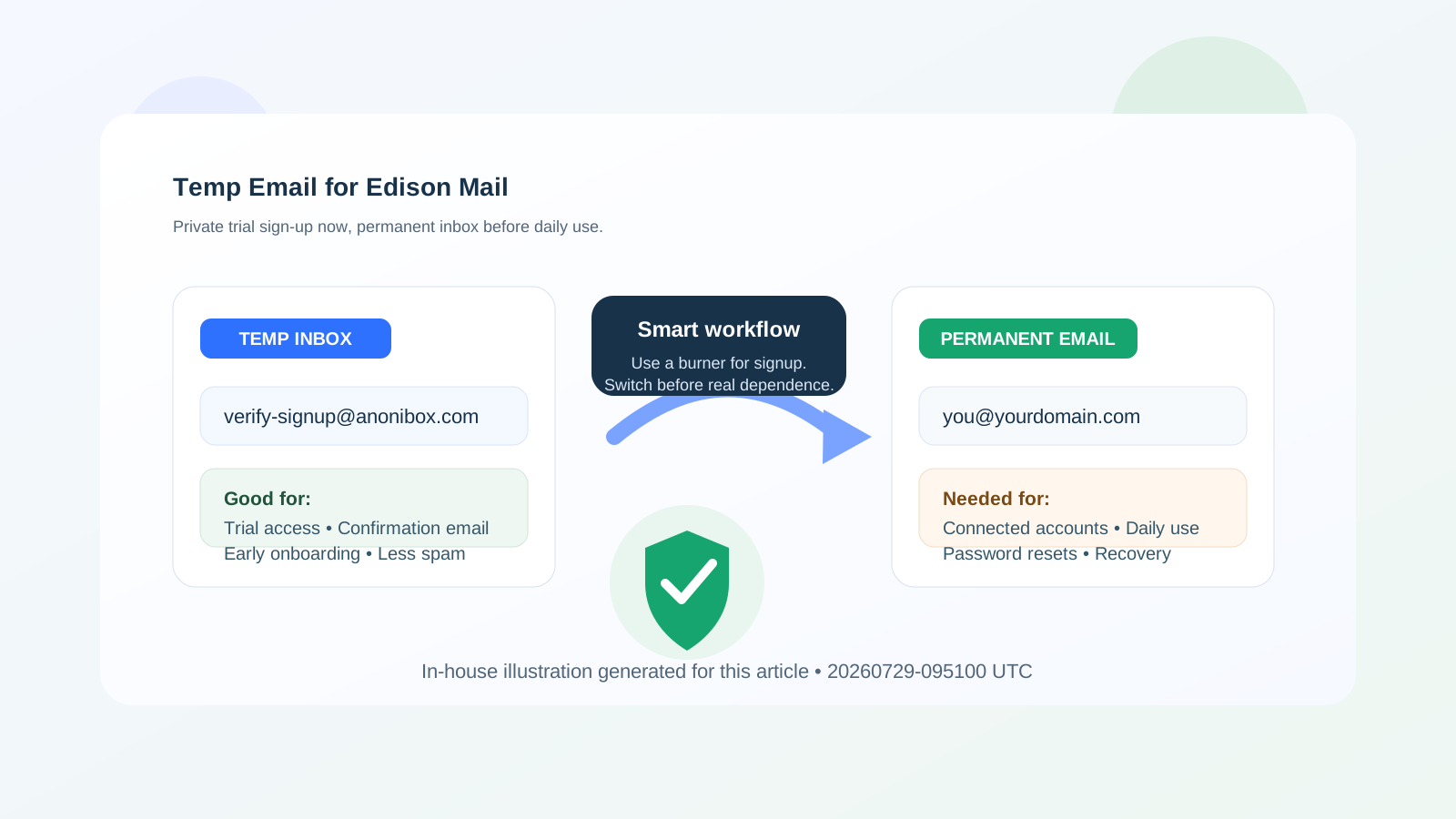
Why people ask about a temp email for Edison Mail
This is a reasonable question because Edison Mail sits in a category where curiosity comes first and commitment often comes later. A lot of people want to test an email client privately before letting it start shaping daily workflow. They want to see the interface, try the setup process, check how the app handles messages, and decide whether it feels better than whatever they already use.
That early evaluation stage is exactly where a temporary inbox can help. It keeps the first confirmation email and onboarding messages out of your primary address, and it lets you test quietly without inviting follow-up messages into the inbox you actually depend on.
The catch is that an email client stops being “just a trial” pretty fast. Once you start connecting real inboxes, using the app across devices, or depending on that account for access and recovery, the sign-up address matters more than it did on day one.
Short answer: yes for a trial, no for long-term dependence
If your goal is simple evaluation, a temp email for Edison Mail usually makes sense. You can verify the account, open the app, review the first setup steps, and decide whether it deserves more time.
If the account is becoming something you rely on, a burner address turns into a weak foundation. Password resets, security notices, device changes, premium receipts, and recovery messages are all much easier to manage when the account belongs to an email address you control long term.
When using a temp email for Edison Mail makes sense
There are several low-risk situations where a temporary inbox is a practical choice.
- You are comparing email clients. Maybe Edison Mail is on a shortlist with other tools and you do not want every test account tied to your main inbox.
- You want less promotional follow-up. Trial signups often trigger welcome emails, product tips, upgrade nudges, and reminders. A disposable inbox keeps that noise contained.
- You only need the verification message. If the first step is just proving the address works and unlocking the app, a temporary inbox is enough for that early stage.
- You are doing a private, personal evaluation. When you are simply asking “Do I like this app?” rather than building a long-term workflow around it, the downside is small.
That is the clean use case. A service like Anonibox fits well here because it gives you a fast throwaway inbox for the sign-up and first messages without forcing you to expose the email address you use every day.
Where a temp address starts causing trouble
The trouble usually starts when Edison Mail stops being a curiosity and starts becoming part of your actual communication setup.
Connected accounts raise the stakes
Email clients become more important once they sit in front of real inboxes you care about. The sign-up email may not be the same as the inboxes you connect, but it still matters for account administration. If that sign-up address disappears, account changes and recovery steps can get harder than they need to be.
Daily workflow is not a throwaway use case
If you begin checking messages there every day, customizing the experience, or making the app part of your normal routine, the account has moved beyond safe experimentation. At that point you want the account identity to live on an address you can keep, monitor, and recover.
Device changes happen at annoying times
People upgrade phones, reinstall apps, reset devices, or sign into a second computer when they are in a hurry. That is exactly when a forgotten burner address becomes frustrating. What felt convenient during signup turns into friction later.
Recovery is the obvious failure point
Most people underestimate recovery risk because nothing seems wrong until the day they need a reset link or a verification message. A temporary inbox is great at being temporary. That is the problem. If the address is gone when you need it, convenience disappears fast.
A safer way to test Edison Mail without creating a future mess
You do not have to choose between total exposure and reckless throwaway behavior. The smarter approach is staged adoption.
1. Use the temporary inbox only for the first look
Use the disposable address to sign up, receive the verification message, and inspect the onboarding flow. This keeps your main inbox out of the trial stage while still letting you evaluate the product properly.
2. Decide what you are actually testing
During the trial, focus on the practical questions that matter more than the sign-up form:
- Does the interface make email feel easier rather than busier?
- Can you find the views and controls you care about quickly?
- Does the app feel dependable enough for daily use?
- Would you realistically keep using it after the novelty wears off?
These are the questions that decide whether the app belongs in your real workflow. The temporary inbox is only there to give you privacy while you answer them.
3. Switch before the account becomes important
If Edison Mail makes the shortlist, move the account to a permanent email address before you settle in. Do not wait until you have used it for months, connected everything, and forgotten which throwaway address you used. Switching early is cleaner than repairing the setup later.
4. Keep your durable address boring and stable
The best long-term account email is usually not the clever one. It is the address you actually keep access to, check consistently, and trust for recovery. Boring wins here. Stable beats fancy.
Signs it is time to stop using the temp email
If any of the following are true, the privacy benefit is now smaller than the continuity risk:
- You are using Edison Mail every day instead of occasionally testing it.
- You would care if you missed a password reset or security notice.
- You have configured the app enough that rebuilding it would be annoying.
- You are relying on the account across multiple devices.
- You are considering paid features or any account-related billing.
Once you cross that line, stop treating the account like an experiment and give it a real home.
Common mistakes people make
Keeping the burner email “just for now”
This is the biggest one. People assume they will switch later, but later usually arrives after the setup has become valuable. The small task gets postponed until it becomes an annoying task.
Confusing privacy with permanence
A temp email is excellent for privacy at the front door. It is not a good long-term foundation for anything that may need resets, notices, or account continuity.
Forgetting that the admin address still matters
Even if the app is mainly acting as a layer over inboxes you already own, the account email still controls important moments in the product lifecycle. People often ignore that until something goes wrong.
Overvaluing signup convenience
Easy signup feels good in the moment, but long-term reliability matters more once the tool becomes part of your routine. It is worth spending one extra minute on the account email if it saves you an hour of recovery pain later.
If privacy matters to you, use a split strategy
The most practical privacy strategy is not “always use a burner” or “never use one.” It is using the right identity at the right stage.
For early curiosity, a disposable inbox protects you from unnecessary follow-up and keeps your real address off one more marketing list. For real adoption, a permanent monitored address gives you stability. That split keeps both goals intact: privacy up front, reliability later.
This is also why temporary email tools work best when you treat them as filters, not as permanent anchors. Anonibox can help you keep the evaluation stage tidy and private, but it should not become the forgotten root of an account you depend on every day.
So, should you use a temp email for Edison Mail?
Yes, if you are only signing up to test the app privately and decide whether it is worth deeper use. No, if you expect the account to support connected inboxes, daily habits, or future recovery needs.
That is the useful line to draw. A temp email for Edison Mail is smart during evaluation because it reduces exposure and inbox clutter. It becomes a liability when the account stops being temporary in practice.
Conclusion
A temp email for Edison Mail is a good privacy move when you are still in trial mode. It lets you receive the confirmation email, review the first onboarding steps, and explore the app without immediately tying the experiment to your main inbox.
But if Edison Mail becomes part of your real email routine, switch to a durable address before that trial identity turns into a future problem. Use the burner for the first step, not for the foundation. That way you get the privacy benefit without inheriting avoidable recovery pain later.