A temp email for Zammad is fine if you only want to verify a trial account, open the dashboard, and see how the helpdesk works. It is a poor choice once you start connecting shared inboxes, inviting agents, routing customer replies, or relying on the account for recovery later.
That is the short version: use a disposable inbox for a quick look, not for anything you expect to keep. Zammad sits too close to real support operations for a throwaway address to be safe once tickets, teams, and customer conversations matter.
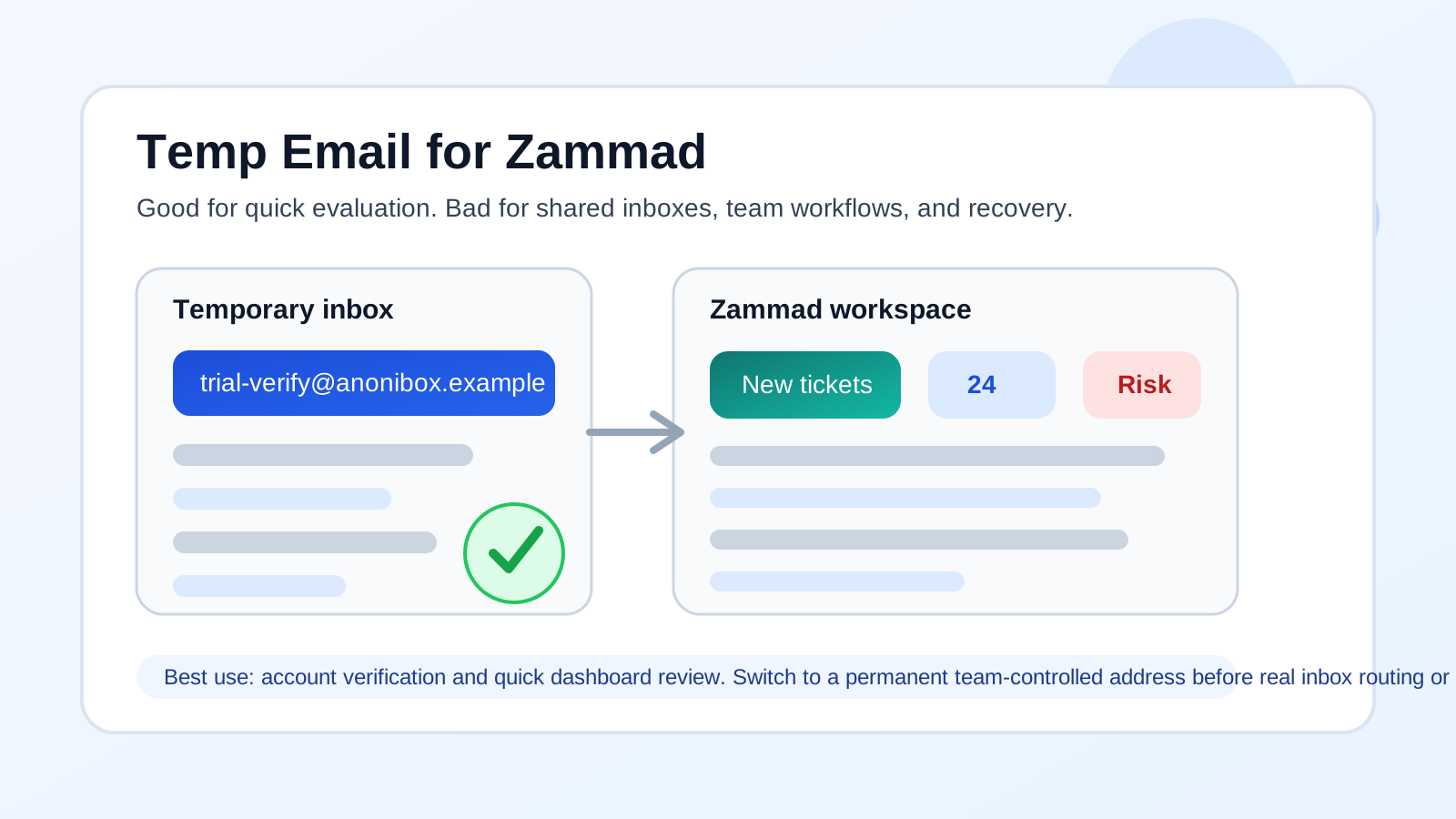
Zammad is not just another lightweight signup. Even in an early evaluation, you are often testing email channels, ticket creation rules, agent notifications, groups, escalations, macros, and ownership workflows. Those pieces can become messy fast if the account is tied to an address you cannot reliably revisit. If you are only checking the interface or confirming whether the product fits your team, a temporary inbox can help. If you are even slightly serious about continuing, it is smarter to switch early.
When a temp email makes sense for Zammad
There are a few situations where using a temporary address is completely reasonable.
- You want a fast first look. Maybe you only need to confirm that the product feels usable, the agent view makes sense, and the setup is worth a deeper test.
- You are comparing several helpdesks at once. If you are also testing platforms like Help Scout, Freshdesk, LiveAgent, or Deskpro, a disposable inbox keeps those early verification emails from cluttering your everyday mailbox.
- You are doing solo research, not team rollout. If no one else needs access yet and you are not connecting real customer channels, the risk stays low.
- You are trying to reduce vendor follow-up noise. Trial signups often trigger demos, nurture emails, and sales outreach. A temporary inbox contains that noise while you decide whether Zammad deserves more time.
That is the sweet spot for a service like Anonibox: short-lived verification, light product exploration, and a clean separation between curiosity and commitment.
Why Zammad becomes risky with a disposable address
The problem is not the first login. The problem is everything that tends to happen right after it.
1. Shared inbox and email-channel setup are not throwaway tasks
Many teams evaluate Zammad specifically because they want better ticket routing from support inboxes, contact forms, or customer reply channels. The moment you start connecting real mailboxes or testing how inbound messages become tickets, the account owner address matters more. You may need follow-up confirmations, mailbox notices, connection warnings, or admin alerts. If those go to a temp inbox that expires or disappears from your workflow, you create friction before the trial even becomes useful.
2. Agent invites and permissions create ownership questions
Helpdesk evaluations are rarely solo forever. Someone from support, operations, or IT usually wants a look. As soon as you invite another agent, assign groups, or test admin roles, the person controlling the main account needs to be reachable. A disposable inbox is weak account ownership for a shared support environment.
3. Ticket notifications and escalations can get lost
Zammad is built around operational flow: new tickets, state changes, mentions, reminders, SLA-like expectations, and internal collaboration. Even if your test is small, notification patterns matter. If the primary account sits on a mailbox you do not monitor closely, you can miss the very signals you were trying to evaluate.
4. Recovery becomes annoying at exactly the wrong time
Temporary addresses are fine when nothing important depends on them. The moment you forget a password, need to confirm ownership, or want to recover access after a pause in testing, a throwaway inbox turns from convenient to fragile. That is especially annoying if the trial already contains ticket rules, test agents, or imported settings you wanted to keep.
5. A trial often becomes a pilot faster than expected
This is the sneaky part. Teams often start with “we are just looking around,” then within a day they are forwarding sample emails, drafting macros, or inviting two agents to test handoffs. If that happens, the temporary address you used for convenience at the start can suddenly become the weak link.
A better way to test Zammad without overexposing your real inbox
If your goal is privacy without chaos, the best workflow is a two-stage approach.
- Use a temp inbox for the first verification step if you only want to inspect the product and avoid immediate sales follow-up.
- Switch to a permanent, team-controlled address early if the trial passes the first-look test and you plan to explore real helpdesk workflows.
That permanent address does not have to be your personal inbox. In many cases, the smartest move is a dedicated evaluation address that your team controls, such as a neutral operations or support-testing mailbox. That gives you continuity without dumping every vendor sequence into your daily personal account.
In other words: privacy first, permanence second, but only after the product earns it.
A practical step-by-step workflow
Step 1: Decide what kind of test you are actually doing
If you only want to answer “Does Zammad seem promising?” a temporary address is enough. If you want to answer “Can our team run support here?” start with a real controlled mailbox instead.
Step 2: Use the temp inbox only for the low-stakes phase
Create the trial, verify the account, and check the basics: dashboard layout, ticket views, filters, groups, automations, and whether the general workflow fits your team.
Step 3: Avoid connecting production channels too early
Do not attach real shared inboxes, customer-facing addresses, or critical reply channels to an account you registered with a disposable inbox unless you are prepared to migrate immediately.
Step 4: Promote the account to a permanent address if the test becomes serious
Once you know the platform is worth deeper evaluation, move the account to a stable address that multiple stakeholders can recover or document internally. Do this before agent invitations and before building too many automations.
Step 5: Document ownership
Even during a trial, note who owns the account, which mailbox controls recovery, and which test channels were connected. That tiny bit of discipline prevents a lot of “who can still log in?” nonsense later.
Common mistakes people make
- Using one throwaway inbox for a full team pilot. Fine for a solo click-through, bad for shared testing.
- Connecting a real support mailbox too soon. If real customer messages are part of the test, your account foundation should already be stable.
- Ignoring recovery until it matters. Password resets are easy when the inbox still exists and is being watched. They are much harder when the address was meant to be forgotten.
- Letting the trial become permanent by accident. This happens constantly. People start temporary and never cleanly transition to a real account owner.
- Confusing privacy with disposability. You can protect your main inbox without making the account impossible to manage later.
So, should you use a temp email for Zammad?
Yes, but only for the earliest and lightest part of the evaluation. A temporary inbox is useful when you want to verify the account, inspect the interface, and avoid turning one product test into a stream of marketing emails. It stops being a good idea once you begin treating Zammad like a real support environment.
If you are testing shared inbox routing, agent collaboration, ticket ownership, automations, or anything you may want to keep, switch to a durable address before the trial gets serious. That gives you the privacy benefit upfront without sabotaging setup, recovery, or team continuity later.
The cleanest rule is simple: temporary for curiosity, permanent for operations. That is the line that keeps a Zammad trial useful instead of messy.