Yes — a temp email for Vonage Business can be fine for a quick trial signup if you only want to verify the account and look around.
It becomes a bad idea once team access, phone numbers, call routing, billing, or account recovery depend on that inbox.
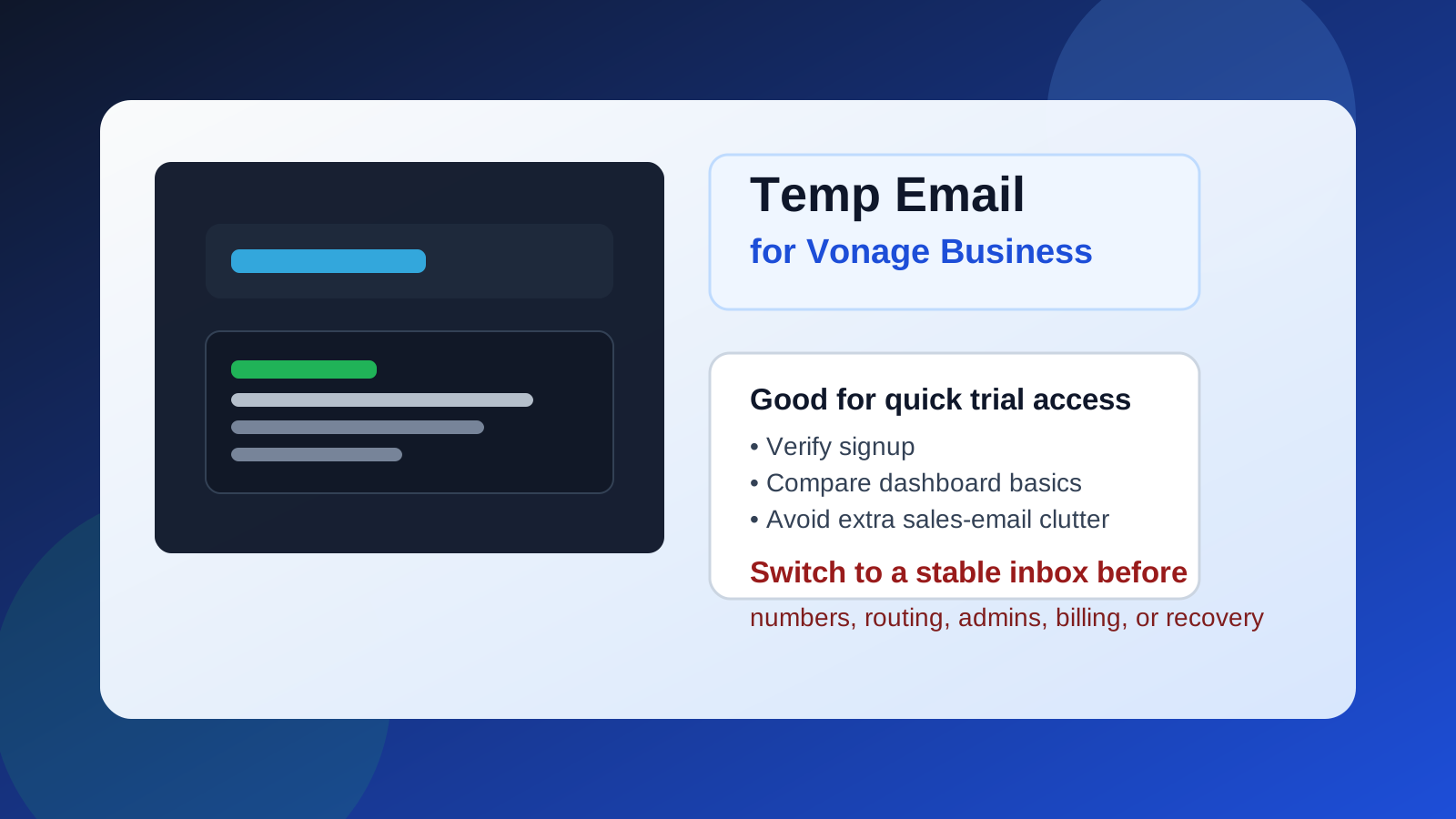
That is the short answer, and for most people it is the right one. If you are comparing cloud phone systems, contact-center tools, or unified communications platforms, using a disposable inbox can be a practical way to keep your main email cleaner during the first round of testing. You get the verification email, the welcome sequence, and the chance to check the product without instantly tying your permanent work address to another vendor relationship.
Vonage Business is not just a lightweight app trial, though. Even a “quick test” can turn into something more operational faster than people expect. You may start by clicking through the dashboard, then move into user setup, call routing, extensions, voicemail, mobile apps, or admin access. Once that happens, the inbox on the account stops being a minor signup detail. It becomes part of continuity and control.
If you want privacy during early evaluation, a temp inbox can help. If you are moving toward a real rollout, you should switch to a stable address before the account holds anything important. Tools like Anonibox make the first stage easy, but the safe move is knowing when to stop treating the trial like a throwaway.
When a temp email for Vonage Business makes sense
There are situations where a temporary inbox is completely reasonable. The key is that the use case stays narrow, short-term, and low-stakes.
- You are comparing several phone systems at once and want to keep early vendor follow-up out of your main inbox.
- You only need the initial verification email to access the dashboard and see whether the platform deserves deeper testing.
- You are doing first-pass research on interface, feature layout, pricing flow, or admin complexity.
- You do not plan to add teammates yet and you are not attaching anything operational to the account.
In that limited window, a temp inbox can be useful because it keeps the evaluation separate from your long-term business email. It also reduces the usual noise: webinar invitations, nurture campaigns, trial-expiry reminders, and sales follow-ups from platforms that may never make your shortlist.
Why Vonage Business stops being a disposable trial so quickly
Some products are easy to test with temporary credentials because there is very little to lose. A one-off design tool or casual content download may stay low-risk. Business communications platforms are different. They tend to collect real value almost immediately.
Even during evaluation, you may end up doing things like:
- creating admin accounts
- adding teammates or test users
- checking how extensions are assigned
- building basic call flows or routing rules
- reviewing voicemail, queue, or transfer behavior
- testing mobile and desktop access across devices
- looking at how the tool might fit into a real customer-support or sales workflow
Once you start doing that, the email on the account matters. It may receive password resets, role invitations, account alerts, billing notices, or service-related messages. If that inbox disappears or goes unmonitored, the risk is no longer theoretical.
The real risks of using a disposable inbox too long
1. Team access can get messy
As soon as more than one person is involved, the account email becomes part of coordination. If a temporary inbox is still the anchor when users are being added or permissions are being tested, you are creating an avoidable weak point.
2. Call routing setups may outlive the “trial” mindset
Plenty of teams say they are just exploring, then quickly build something half-real: a test number, a queue, a voicemail path, or a basic routing tree. That setup work has value. A disposable inbox is a poor foundation for anything you might want to revisit or recover later.
3. Billing and conversion messages may start to matter
Even if you are not ready to buy, messages about plan limits, upgrades, trial deadlines, or account changes can become important. Missing them because they were sent to a temporary inbox is an unnecessary own goal.
4. Recovery is where temp inboxes fail hardest
Disposable email feels convenient when everything is going smoothly. The real test comes when something breaks: a login issue, an access dispute, a missing invitation, or an ownership handoff. That is exactly when an expired or forgotten inbox becomes a liability.
A safer way to evaluate Vonage Business
You do not have to choose between total privacy and operational chaos. The better approach is to use a staged workflow.
Step 1: Use the temp inbox only for the first look
If your goal is simply to get inside the platform and decide whether it deserves serious time, a temp inbox is fine. Use it for the initial verification email and the first dashboard review.
Step 2: Decide early whether the trial is becoming real
Ask yourself a simple question: if we like this, will we start testing numbers, call flows, admins, or integrations right away? If the answer is yes, move the account to a stable monitored inbox before that work starts.
Step 3: Switch before inviting teammates
Do not wait until several people are already touching the account. Move to a permanent work address while the evaluation is still easy to control.
Step 4: Save key account details
Whether you use a temp inbox or not, keep track of important information: who created the account, what email it is tied to, who has admin access, and where recovery messages should go. Small documentation prevents stupid problems later.
Good use cases vs bad use cases
Good use cases
- Quick product comparison against RingCentral, Dialpad, Nextiva, or other cloud phone systems
- Checking the admin interface before committing to a real sales conversation
- Protecting your main inbox during the earliest stage of vendor research
- Separating light trial activity from your long-term business communications
Bad use cases
- Keeping the temp inbox on the account after numbers or routing start to matter
- Using it for a team pilot with multiple admins or agents
- Letting billing, recovery, or security messages continue to go to an inbox you do not control long term
- Assuming a short trial will stay low-stakes when the evaluation is clearly becoming operational
What to watch for during the trial
If you are using a temp email for Vonage Business, keep an eye on these decision points. They tell you when to stop treating the account like a throwaway:
- Someone else needs access.
- You begin testing real calling flows.
- The account receives messages you would regret missing.
- The platform becomes a serious shortlist candidate.
- You are putting time into setup you would want to keep.
Any one of those is a good reason to switch the account email to something stable.
Does a temp inbox hurt the evaluation itself?
Not necessarily. For a fast top-of-funnel comparison, it can actually improve the process by keeping your inbox cleaner and making each vendor easier to separate. The mistake is not using a temp inbox at all. The mistake is failing to graduate away from it when the account starts to matter.
That is especially true in communications software, where user management and continuity show up early. A phone platform is rarely “just a signup” for long.
Practical checklist before you use one
- Use the temporary inbox only if your goal is early evaluation, not deployment.
- Confirm you can access the verification email promptly.
- Do not attach the account to any real number, workflow, or teammate before switching to a stable inbox.
- Move the account email as soon as the tool becomes a genuine candidate.
- Keep one clear owner responsible for account access and recovery.
Conclusion
A temp email for Vonage Business is useful for short-term privacy during a quick trial. It helps you compare the product, cut down on inbox clutter, and avoid giving every vendor your permanent address too early.
It is the wrong choice once the evaluation becomes real. If team access, call routing, numbers, billing, or recovery matter, switch to a stable inbox before those pieces are tied to the account. That way you get the privacy benefits at the start without creating an account-management mess later.