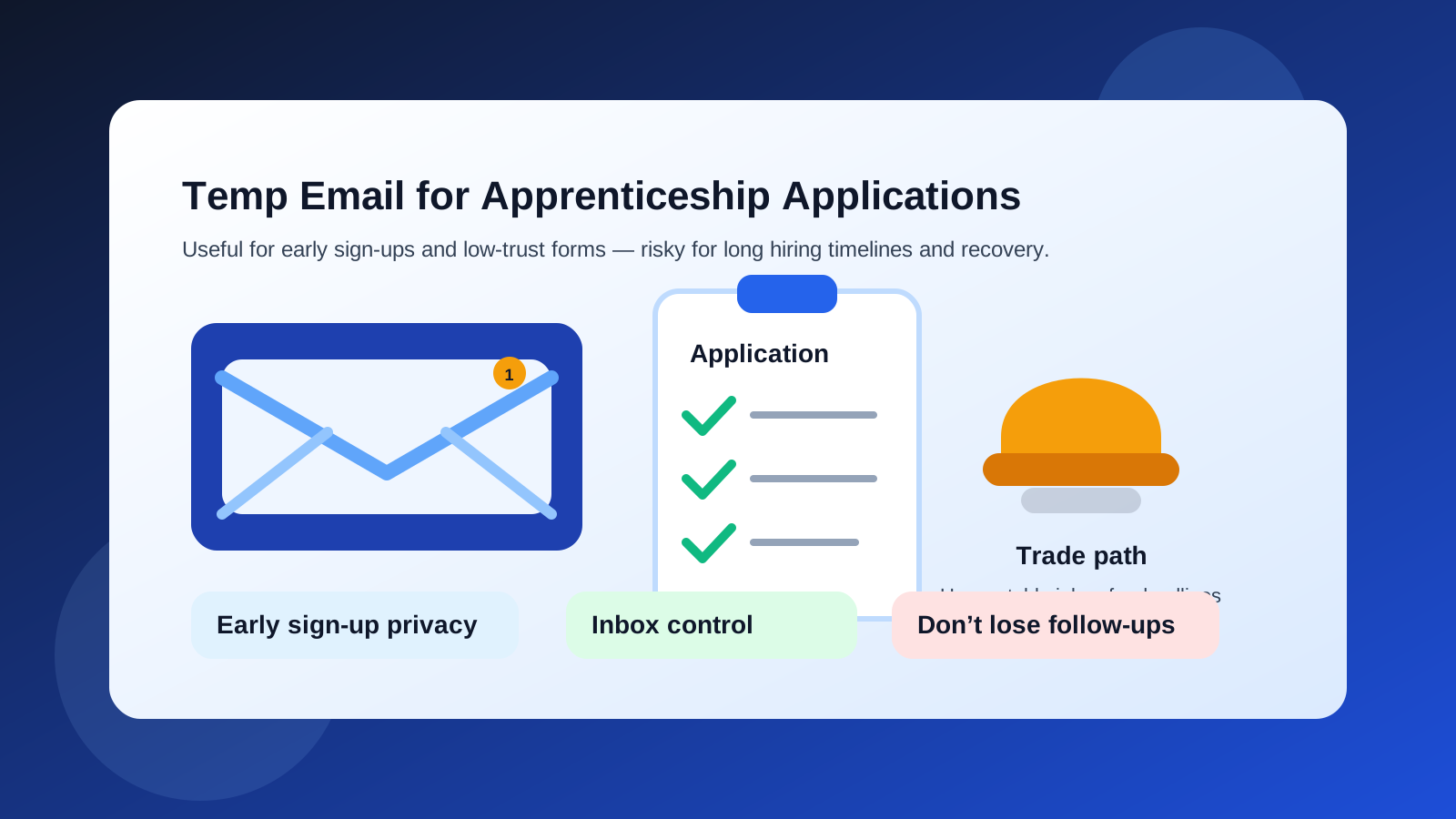
Usually, only for early sign-ups and low-trust forms — not for the final stage of a serious apprenticeship application. Apprenticeship timelines often stretch over weeks or months, so losing access to an inbox can mean missed tests, interview invites, or paperwork.
If you are asking whether a temporary email for apprenticeship applications is smart, the practical answer is this: it can help you protect your privacy during the research phase, but you should usually switch to a stable inbox before anything time-sensitive or official starts moving.
That balance matters because apprenticeship applications are not always simple one-page forms. Depending on the trade, employer, training provider, or union program, you may be dealing with several rounds of communication: confirmation emails, aptitude tests, interview scheduling, skills assessments, safety information, onboarding documents, and start-date updates. A throwaway address is good at reducing spam. It is not always good at staying reliable long enough to support the full process.
The best approach is to treat temporary email as a privacy tool, not as a one-size-fits-all communication strategy.
Why people consider using temporary email for apprenticeship applications
Apprenticeship seekers often sign up in multiple places before they apply anywhere seriously. You might register for alerts from employers, training boards, trade organizations, local colleges, skills programs, job boards, or apprenticeship directories. Each signup can add more email volume than expected.
That creates a familiar problem: you want access to opportunities, but you do not necessarily want your main inbox pulled into every newsletter, reminder sequence, promotional message, or third-party follow-up list tied to those signups. A temporary inbox can help you keep that early-stage research separate from your personal or long-term professional email.
This is especially useful if you are:
- Comparing apprenticeship programs across several employers or providers
- Signing up for alerts on unfamiliar job boards
- Downloading guides, wage charts, or application packets from sites you do not fully trust yet
- Trying to reduce spam while testing which sources are actually useful
- Protecting your main inbox during a broad exploratory search
In that narrow context, a temporary inbox is doing exactly what it should do: giving you a buffer between your real identity and a lot of early-stage noise.
When a temporary email makes sense
There are real cases where using a temporary address for apprenticeship-related activity is reasonable.
1. Early research and opportunity discovery
If you are browsing apprenticeship directories, training portals, local trade-school listings, or employer alert pages, a temporary address can be useful for one-off signups. You still receive the confirmation email or download link, but you do not commit your main inbox to every source immediately.
2. Low-trust or unknown lead forms
Some sites look more like marketing funnels than real application channels. If the page is vague, full of generic promises, or light on real program details, protecting your primary email is sensible until you verify the opportunity.
3. Event registrations and info requests
If you are registering for open days, introductory webinars, or information sessions, a temporary email can be fine when the communication window is short and the stakes are low.
4. Spam control while comparing options
If you are exploring plumbing, electrical, HVAC, welding, carpentry, construction, manufacturing, or IT apprenticeship routes at the same time, the combined email volume can get messy fast. A temporary inbox can help you filter the noise before you decide which programs deserve real follow-up.
When a temporary email is risky
This is the part many people underestimate. Apprenticeship applications often become more operational than a standard newsletter signup. Once a program is real, the inbox matters.
1. Formal applications with multi-step follow-up
If the employer or training provider may email you more than once, a short-lived inbox becomes risky. You might need access again for reminders, missing-document requests, rescheduling, or portal links.
2. Aptitude tests and assessment invites
Many apprenticeship programs use tests, online assessments, or interview scheduling links. Those emails are time-sensitive. Missing one because the inbox expired is an avoidable own goal.
3. Background checks, medical forms, or onboarding paperwork
Once a process gets official, a temporary email is usually the wrong tool. At that point, reliability matters more than privacy buffering. You want a long-term address you control, monitor, and can recover.
4. Union or training-center communication
Some apprenticeship paths involve longer administrative timelines, intake windows, rank lists, or staged follow-up. A disposable inbox is a bad fit when messages may arrive weeks later.
5. Any application you genuinely care about
If you would be upset to miss the reply, do not rely on a fragile inbox. That is the simplest rule in the whole article.
A better strategy than going fully disposable
For most serious applicants, the strongest setup is not “temporary email for everything.” It is a layered approach:
- Use a temporary address for low-stakes discovery such as alert signups, unknown forms, or one-off downloads.
- Use a separate stable job-search inbox for real applications so apprenticeship messages do not mix with your everyday personal email.
- Switch early once a program looks legitimate instead of waiting until after you miss something important.
That gives you the privacy benefit without the reliability downside. A tool like Anonibox fits best at the top of the funnel: quick signups, research, and form testing. For live applications, interviews, document requests, and longer timelines, a dedicated long-lived inbox is usually smarter.
How to decide which email to use
Ask yourself these questions before you apply:
- Is this just an alert signup, or is it the real application?
- Do I trust the site or employer behind the form?
- Could follow-up emails arrive days or weeks from now?
- Would I be frustrated or harmed if I lost access to this inbox?
- Am I likely to receive test links, interview invites, or onboarding steps here?
If the answer points to a longer or more important process, use a stable address. If it is only early exploration, a temporary inbox may be enough.
Practical examples
Good use case
You sign up for apprenticeship alerts from three job boards and download a wage guide from a site you have never used before. A temporary inbox is perfectly reasonable there.
Bad use case
You submit your formal application to a plumbing apprenticeship program that uses email for testing, interview scheduling, and document follow-up. A disposable inbox is risky and could cost you the opportunity.
Best middle-ground use case
You use a temporary inbox to explore programs at the start, then move serious applications to a separate long-term job-search email account once you identify real targets. That keeps your main inbox cleaner without putting deadlines at risk.
Mistakes to avoid
- Using the same throwaway address everywhere: that makes organization worse, not better.
- Forgetting that apprenticeship timelines are long: a message may arrive well after the first signup day.
- Assuming every site is low-stakes: some forms look casual but lead directly into real screening.
- Waiting too long to switch: if the program looks legitimate, move to a stable inbox before the important messages start.
- Ignoring recovery issues: if the inbox disappears, you may lose access to links, portals, and context.
Best practices if privacy matters to you
If you want both privacy and reliability, keep the process simple:
- Use a dedicated email for job and apprenticeship applications rather than your everyday personal inbox
- Reserve temporary email for unknown, early-stage, or low-value signups
- Save important emails, dates, and attachments as soon as they arrive
- Verify the employer or training provider before sharing more personal information
- Check spam and junk folders when you are waiting on a real response
- Do not use a temporary inbox for anything tied to contracts, identity checks, or onboarding documents
The goal is not to hide from real employers. The goal is to control when your main contact details start circulating and to avoid turning a practical search into a long-term spam problem.
Final answer
Should you use a temporary email for apprenticeship applications? Sometimes — but mostly at the beginning, not at the most important stage. It is a smart privacy move for early signups, low-trust forms, and broad research. It is usually a poor choice for serious applications that involve deadlines, tests, interviews, documents, or long follow-up windows.
If you want the safest balance, use temporary email to explore, then switch to a separate stable inbox for any apprenticeship opportunity you genuinely want to pursue. That gives you privacy without sacrificing reliability.